

London, UK | — | —Artists | Core Programme
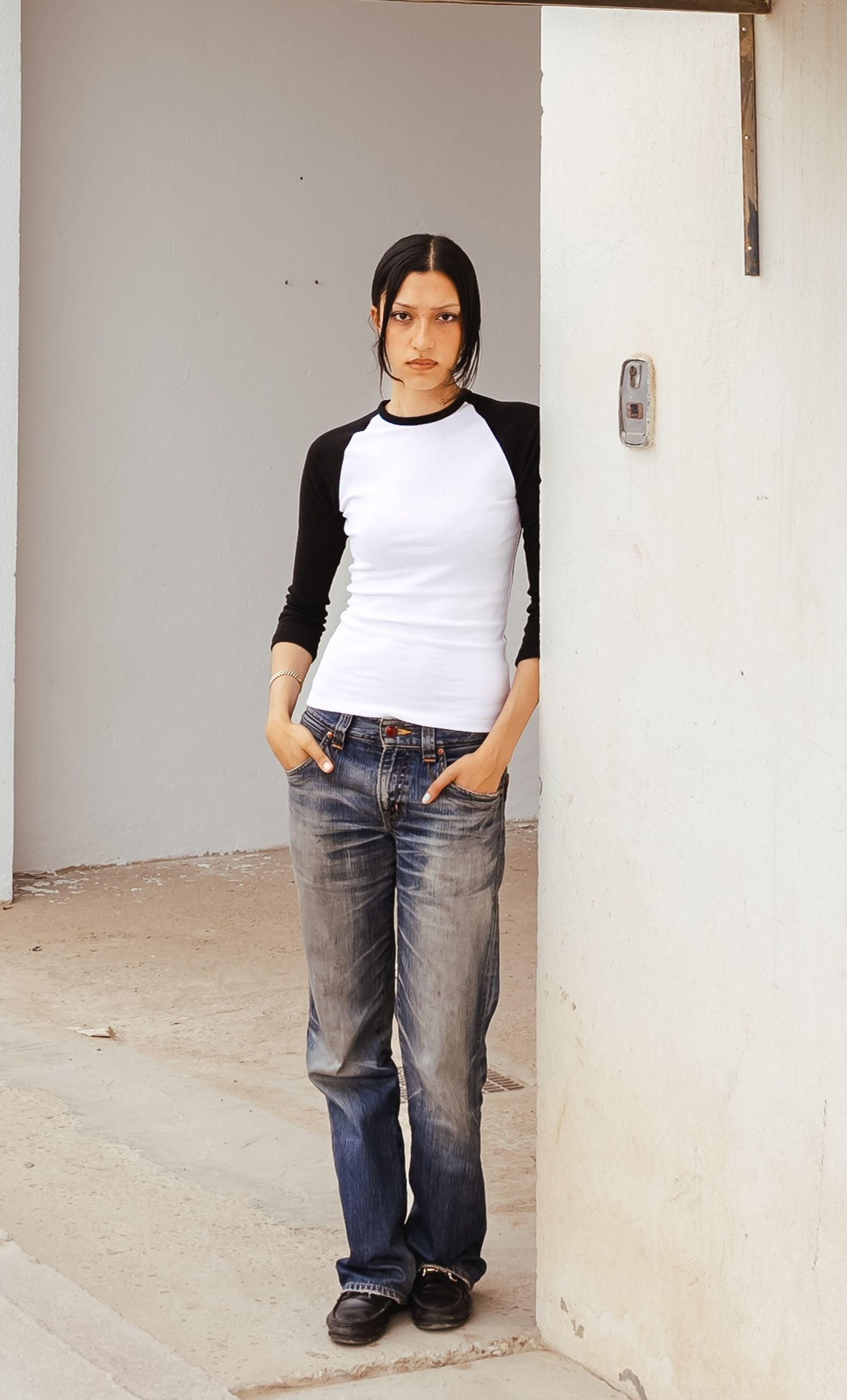
b. 2002, Portland, United States
Born in Portland, Oregon in 2002 to Libyan immigrant parents and now based in New York, Tasneem Sarkez works across painting and sculpture in a practice she describes as "Arab kitsch." Working primarily in oil, she builds compositions sourced from Arab social media and the visual grammar of early-2000s internet design: images that arrive on canvas already once removed, their blurs and crops becoming painterly qualities. "Arab kitsch" names the aesthetic territory this produces: consumer objects that acquire cultural weight through circulation and mistranslation, addressed to two audiences at once. The car is Sarkez's most persistent subject. In Good Morning (2023), a muted rendering of a Jeep is overwritten with Arabic script that functions, within WANA internet culture, as a meme category invisible to anglophone viewers. Text operates throughout as an image in its own right: First Lady pairs a portrait of one of Gaddafi's Amazonian bodyguards with soap packaging playing on virginity and purity, while Heart Notes No. 2 (2025) reassembles found perfume bottles, their labels replaced with Sarkez's own, recording an acculturation arrested mid-process. Solo presentations include White-Knuckle at Rose Easton, London, and Just For You at ROMANCE, Pittsburgh (both 2025). She received the Martin Wong Award in 2023. Artist text by Victoria Comstock-Kershaw.
Learn More →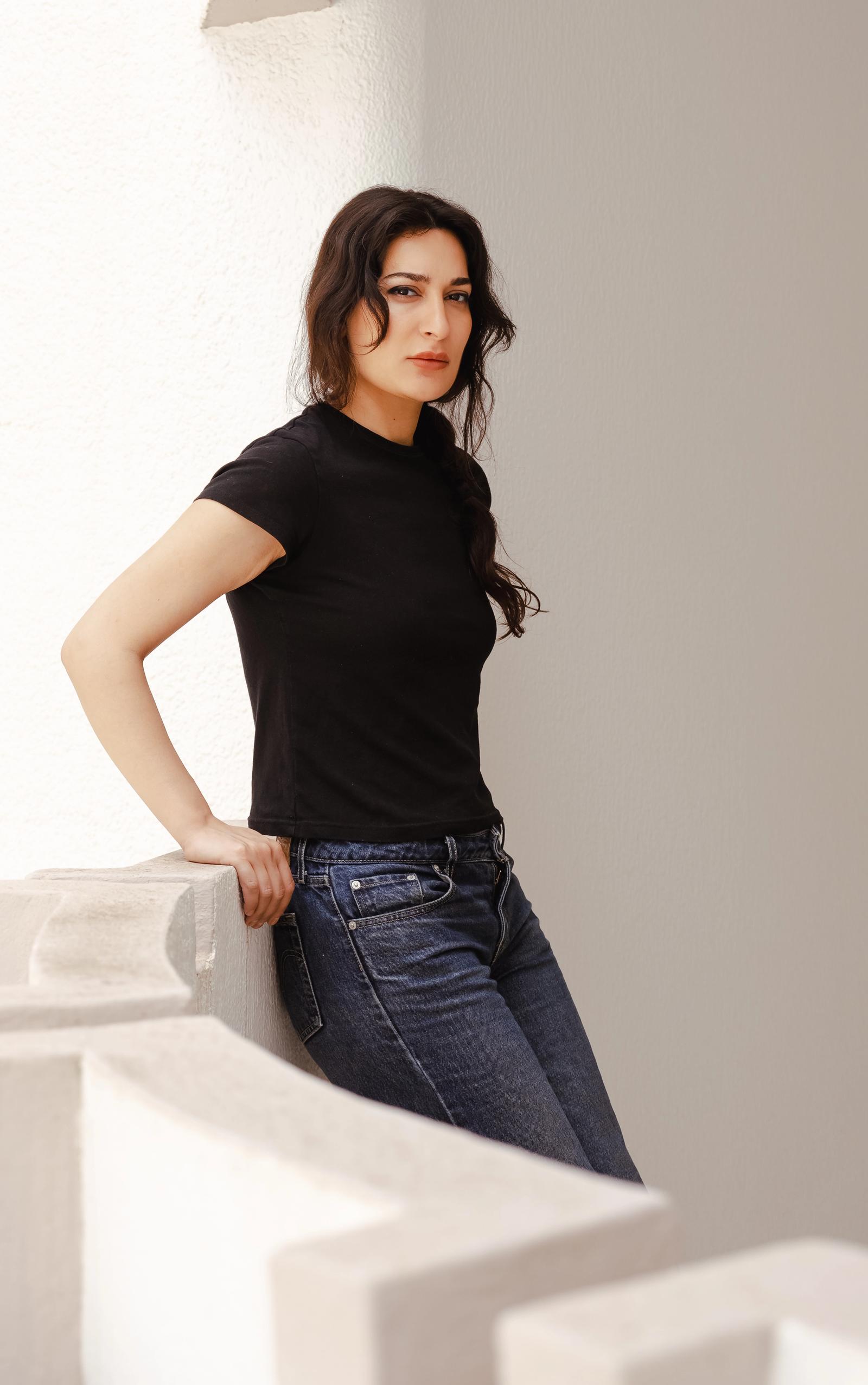
b. 1992, Tbilisi, Georgia
Born in Tbilisi in 1992 and now based in New York, Nina Kintsurashvili works in painting. Her practice is shaped by mediated access: growing up in Georgia, encounters with art history and cultural imagery came through books, reproductions, and the second-hand materials of Tbilisi's Bukinist street book dealers. As the daughter of a fresco conservator and an icon painter, she grew up around images in states of damage and repair, and around a tradition in which painting operates through convention as much as through ambiguity. Her paintings sit at the threshold between abstraction and figuration. Forms accumulate through layered, gestural brushwork and are then partially erased, revised, and overwritten. What remains are shapes simultaneously too ambiguous to name and too decipherable to dismiss: figures, objects, landscapes held at the point of visibility. Solo presentations include Udabno at Konsthall C, Stockholm, and I Met A Traveller at Polina Berlin Gallery, New York (both 2025). Artist text by Victoria Comstock-Kershaw.
Learn More →By signing up, you agree to our Privacy Notice.
Privacy Notice