

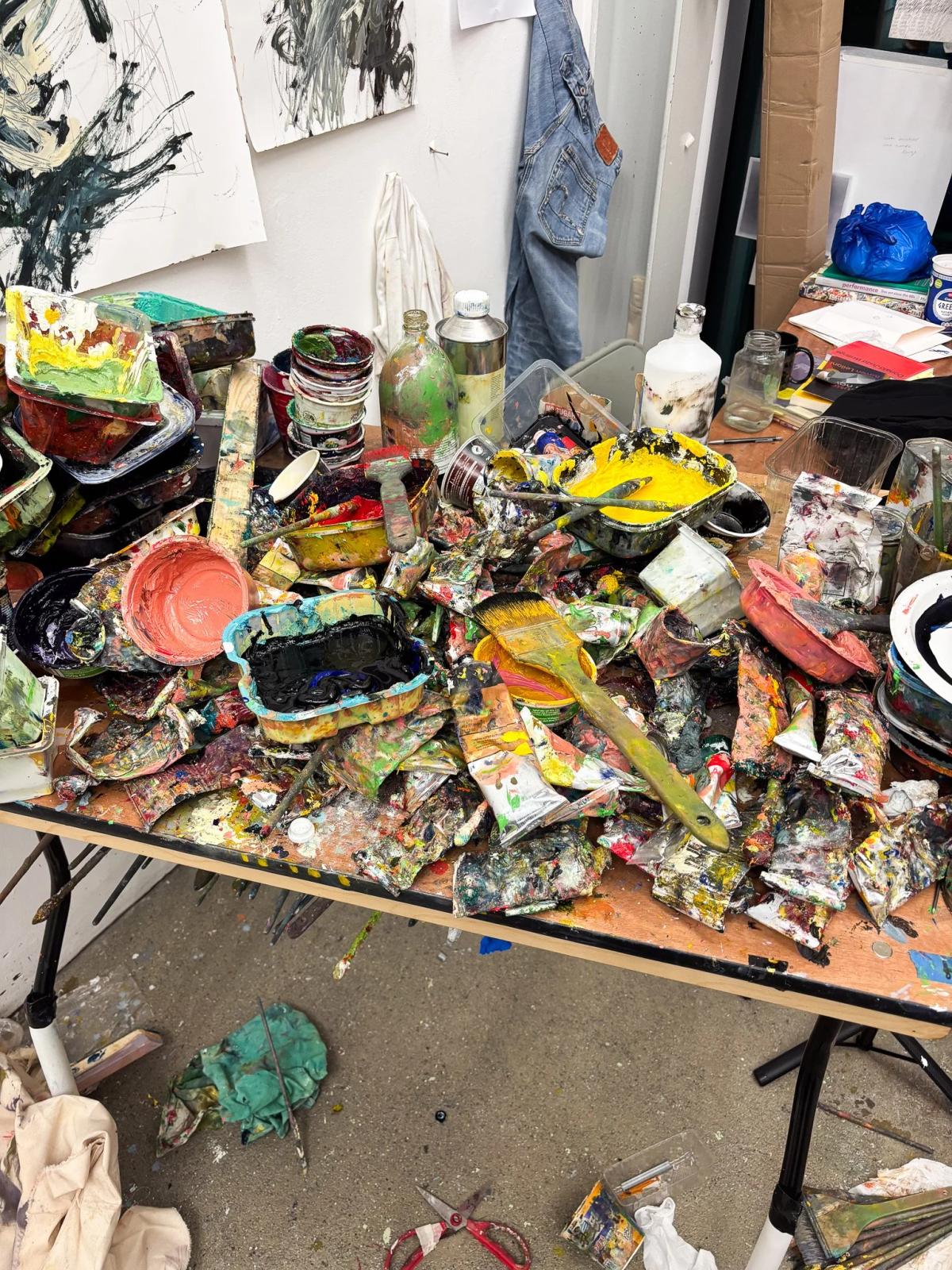
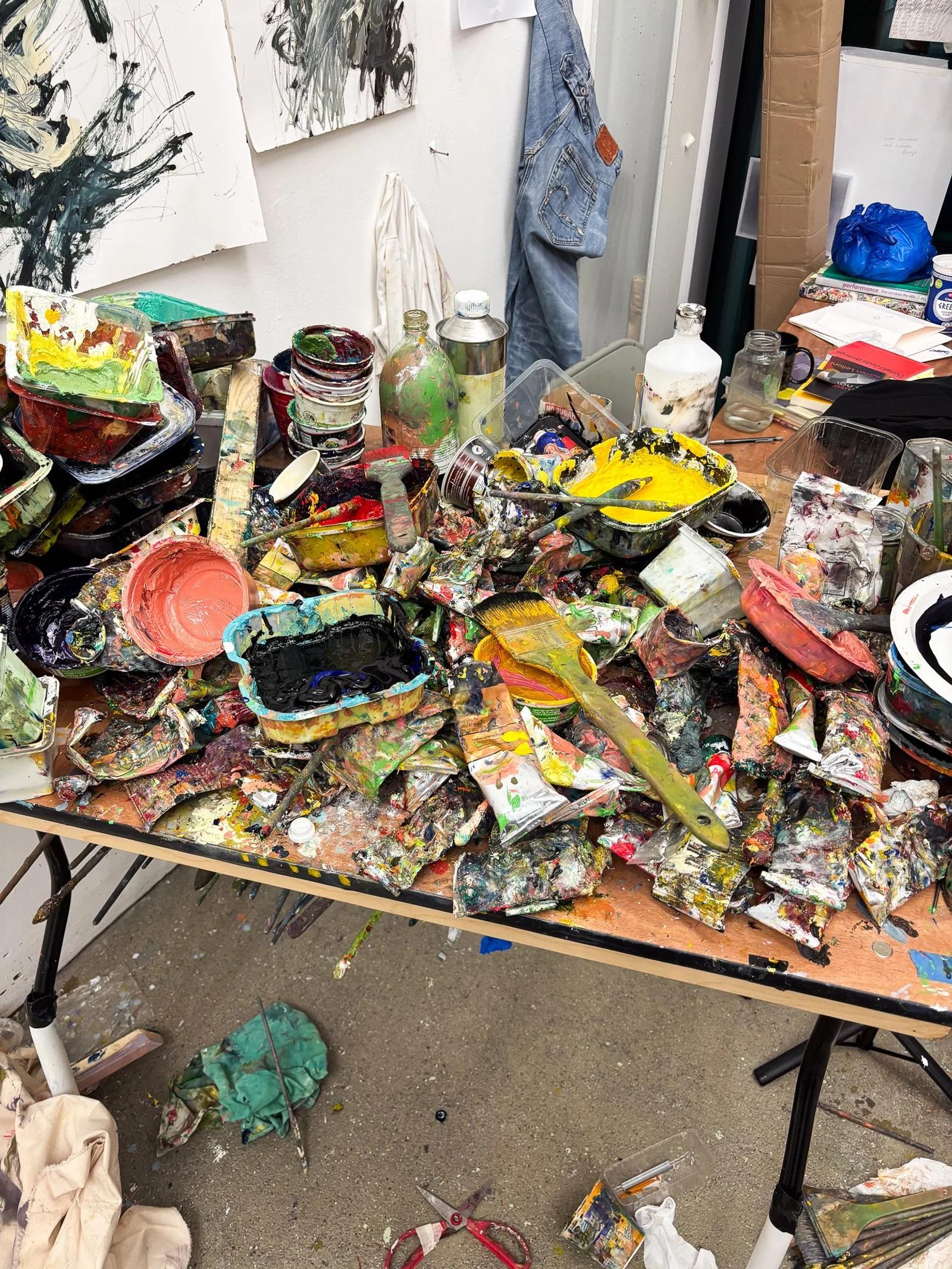
I’ve just finished two open studio “industry” days in my MFA program at the Royal College of Art. “Industry” here means we were required to state who these people were to us, and confirm that we indeed had a viable professional relationship in order for their name to be on the list. Gallerists, directors, curators, photographers, and art world professionals are encouraged to come! One hundred people, six hours, two days. A whirlwind of re-painting walls, purchasing midrange charcuterie trays, and tastefully re-arranging studios ensued.
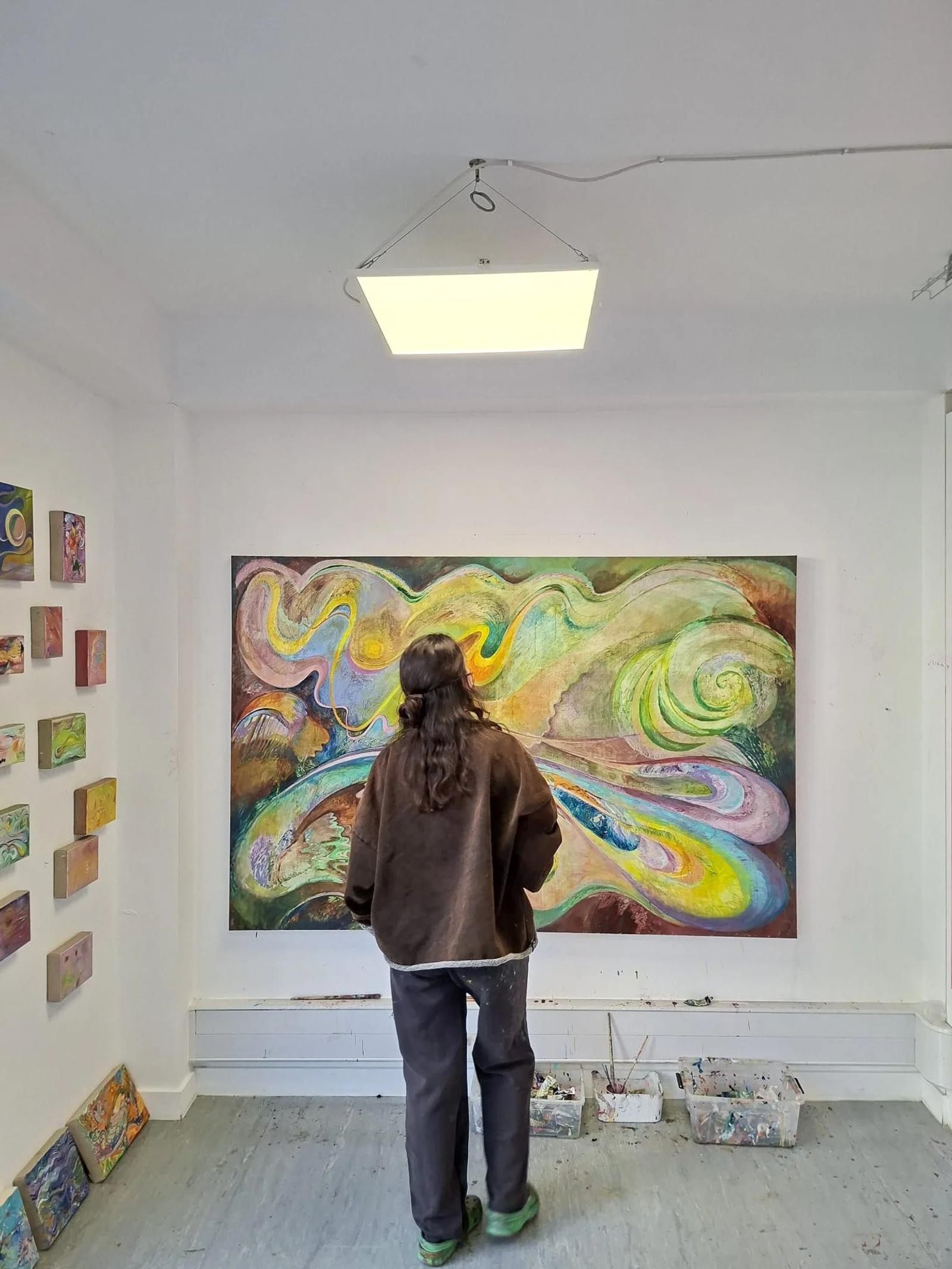
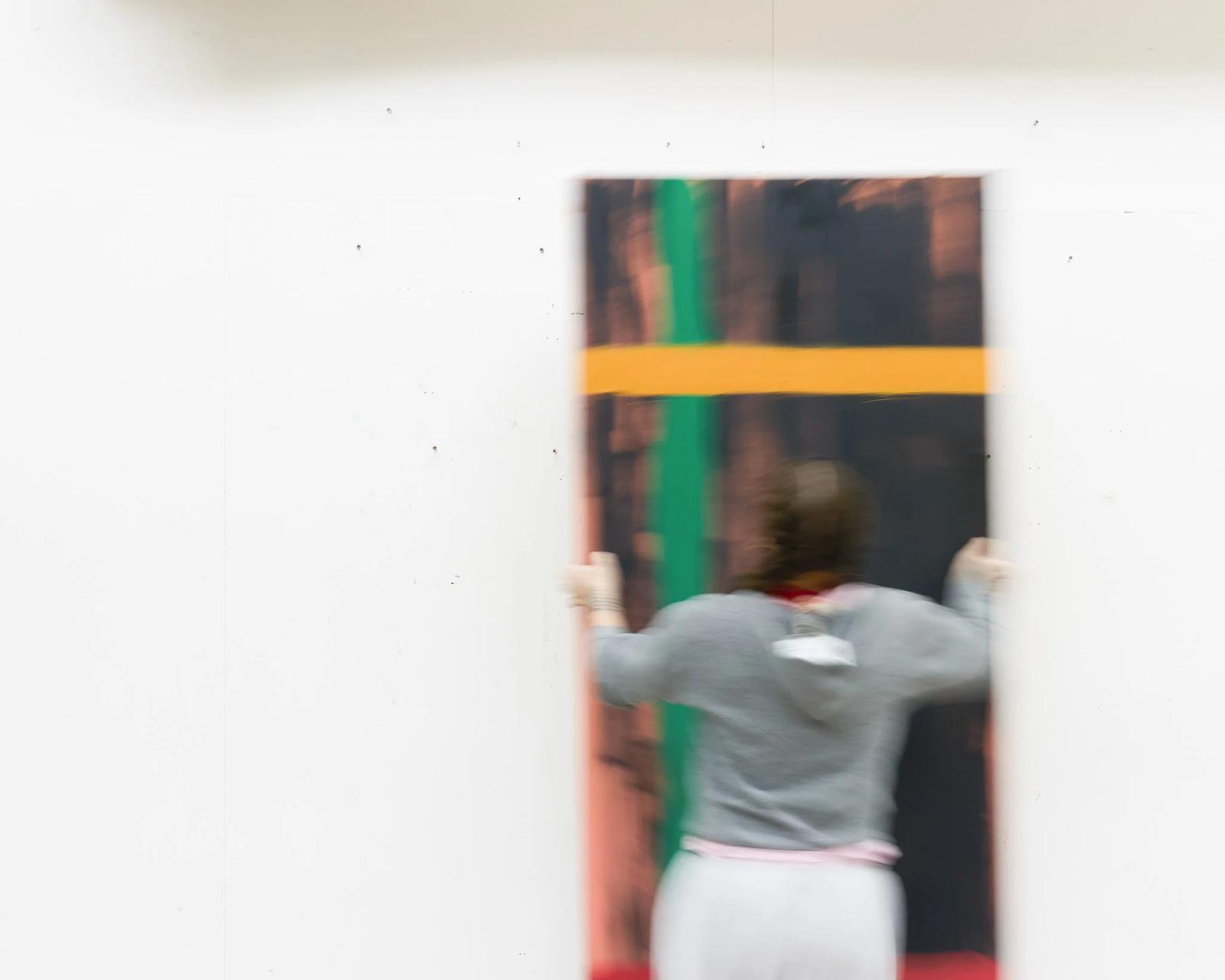
Ksenia Dermenzhi in her studio. Photo by Jordan Mckenzie.
So what actually happened? People walked into your studio and walked out. People walked in, did a turn, and walked out. If you were lucky you were asked the dreaded question: “So what’s this all about?” Score if you had a conversation, double score if they took a picture of your name. One woman came by – “I think I saw this one on the internet,” she said, as I flipped through paintings I had in a stack. “I’ll keep an eye out.” She turned and left, no name given. “Do you know who that was?” “No clue.” I shrugged.
“What makes a good studio visit is one where both parties can walk away with a little more understanding of a practice.”
This anonymity became a recurring trend. Come in, do a quick take, say thanks and walk out. “It’s like shopping,” my curator friend remarked excitedly. If questions were asked they were sharp and short. “Where did you do your BA?” “Who are you looking at?” Deeper questions floated through in the undercurrent, unspoken, unsaid. “Who are you? What do you know? Are you sellable?”
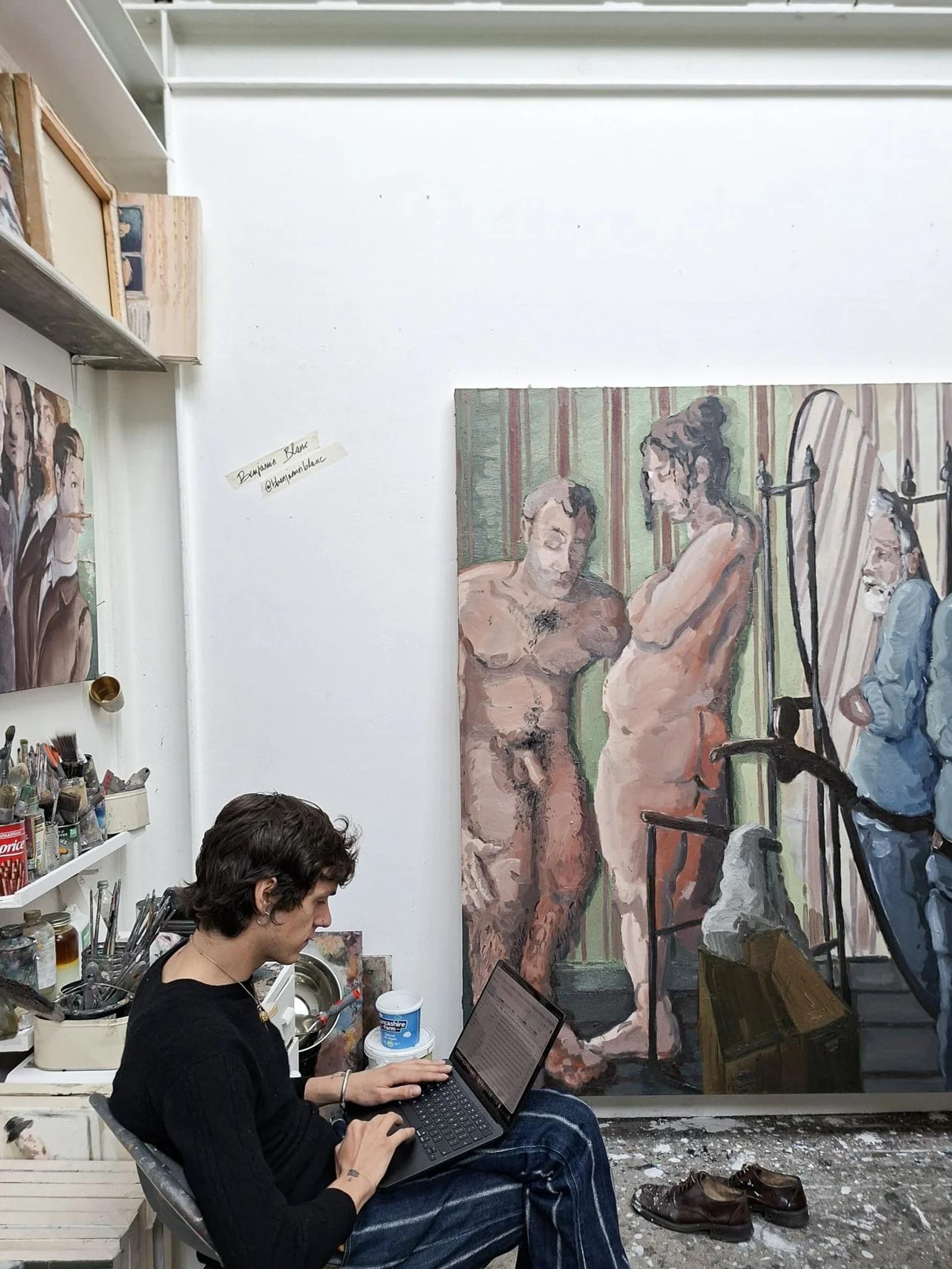
Benjamin Blanc in his studio. Photo by Jordan Mckenzie.
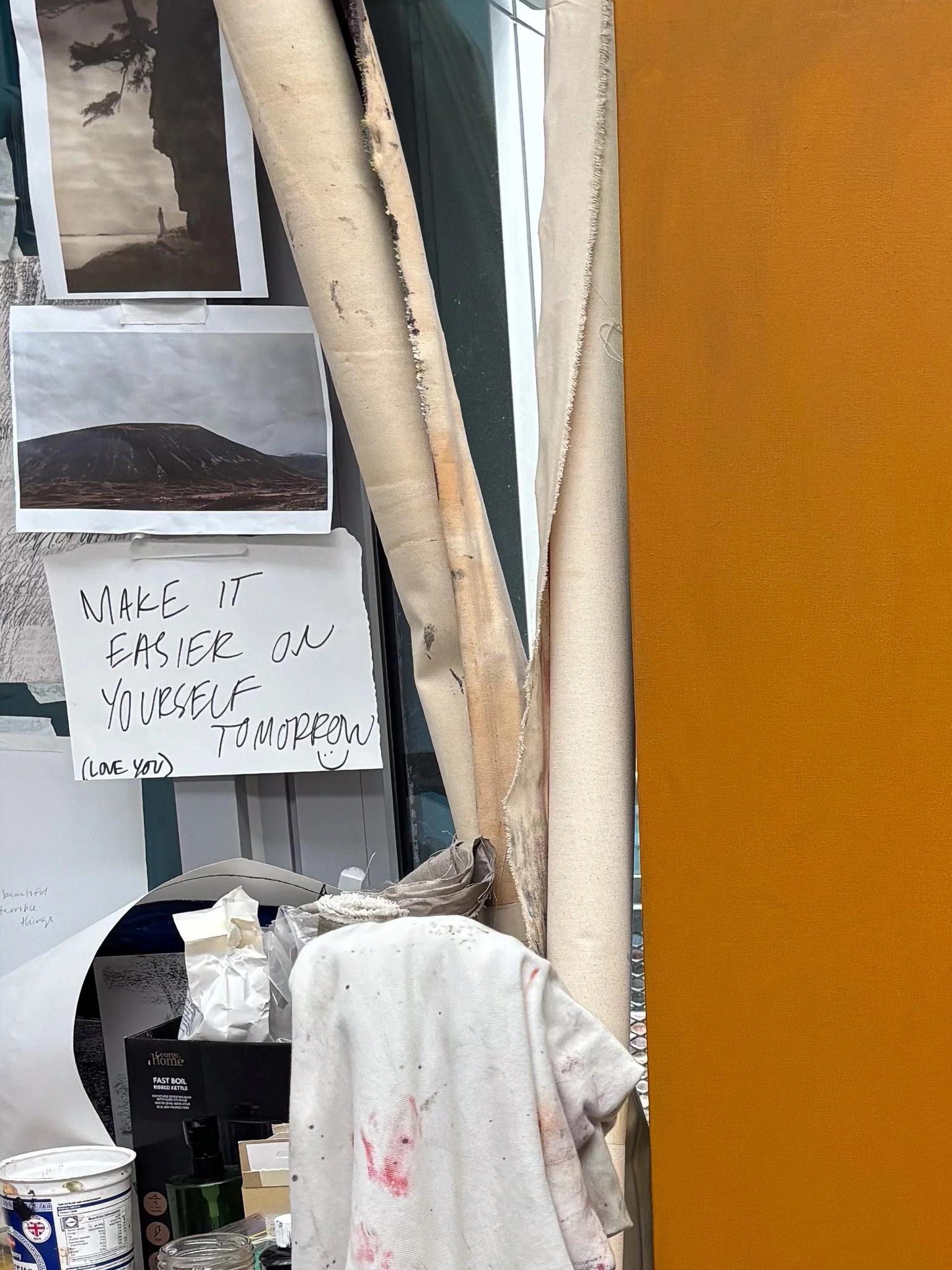
Studio photograph courtesy of Anna Lauree.
People came, people saw. A certain slice of the London art scene got a first look at what the “next generation” of artists could potentially be. Hype, excitement, or disappointment - “art schools are just getting worse” overheard at the pub, I wondered which of my cohort they had spoken to. Although this was an experiment, posed as a student-led initiative, it does raise the question: what is studio visit etiquette? How do you navigate the power dynamic of a studio visit between an establishment and early career artist? Do you, or should you even prepare for a studio visit?
“I couldn’t imagine going to dinner with any of these people, much less discussing prices of art”
Even though this was a voluntary experience, and as artists we were very grateful to those that had chosen to show up, it was hard not to feel like a shop or a stall. The lack of eye contact, vague questioning, and vagueness of introductions made the entire experience feel transactional in nature. I couldn’t imagine going to dinner with any of these people, much less discussing prices of art. Out of the people I had a conversation with only one eventually introduced themselves. As artists not yet in the market, it’s well known to us that we exist at the bottom of the proverbial industry food chain. I think any early career artist could tell you that.
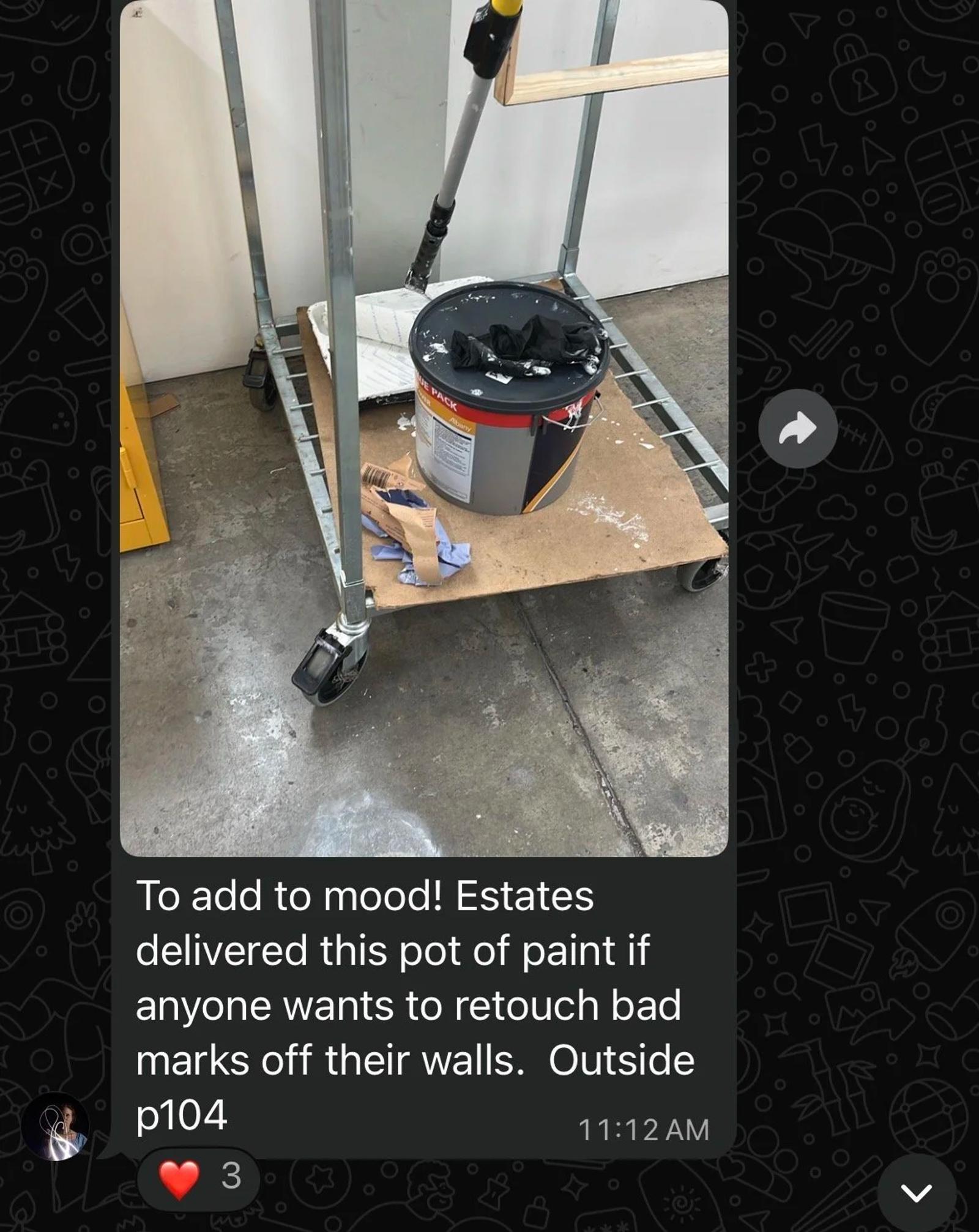
Image courtesy of Anna Lauree.
However, there is still a certain amount of power that being “new,” brings. For one, our success (or lack thereof) acts as marketing for the school itself, helping convince other artists from around the globe to apply for the program. Graduates act as a wave of “freshness” into the system, bringing in new eyes, new practices, and a new set of ideas into a system that constantly demands innovation.
“How does one accomplish that when the barrier to even get someone's name seems so high?”
The question of the studio visit is not straightforward. I could list do’s and don’ts from what I’ve heard and experienced in my own practice of how to prepare for a visit. I could make a list of what to talk about, and what work to put on the walls. I wish I could tell you that a fresh coat of paint, or having snacks makes a difference, but I’m not sure that it does. What I feel makes a good studio visit is one where both parties can walk away with a little more understanding of a practice: as an artist it is my job to present myself and my work as something I believe in.
I want to impart the viewer with a perspective into my practice and potentially get feedback in return. Although feedback is not expected or required, I think many artists expect it, which contributes to the overall anxiety of a visit. The truth is feedback in any form, both positive and negative, should be taken with a grain of salt: as the artist, you have the final say in your work and your presentation. I would rather walk away from a studio visit knowing I was authentic and sure of myself than become an artist willing to mold their practice around whoever's (and whichever market's) expectations.
In our program we are told to develop our relationships with those that will support us in the market, curators, directors, gallerists and the like. How does one accomplish that when the barrier to even get someone's name seems so high?
“What is actually required when it comes to selling art: relationships, understanding, and respect.”
I understand that this is their career and you cannot speak to everyone, nor make everyone feel heard. However, maybe it isn’t speaking more, but a certain shift in perception, that can help bridge that gap and help develop what is actually required when it comes to selling art: relationships, understanding, and respect.
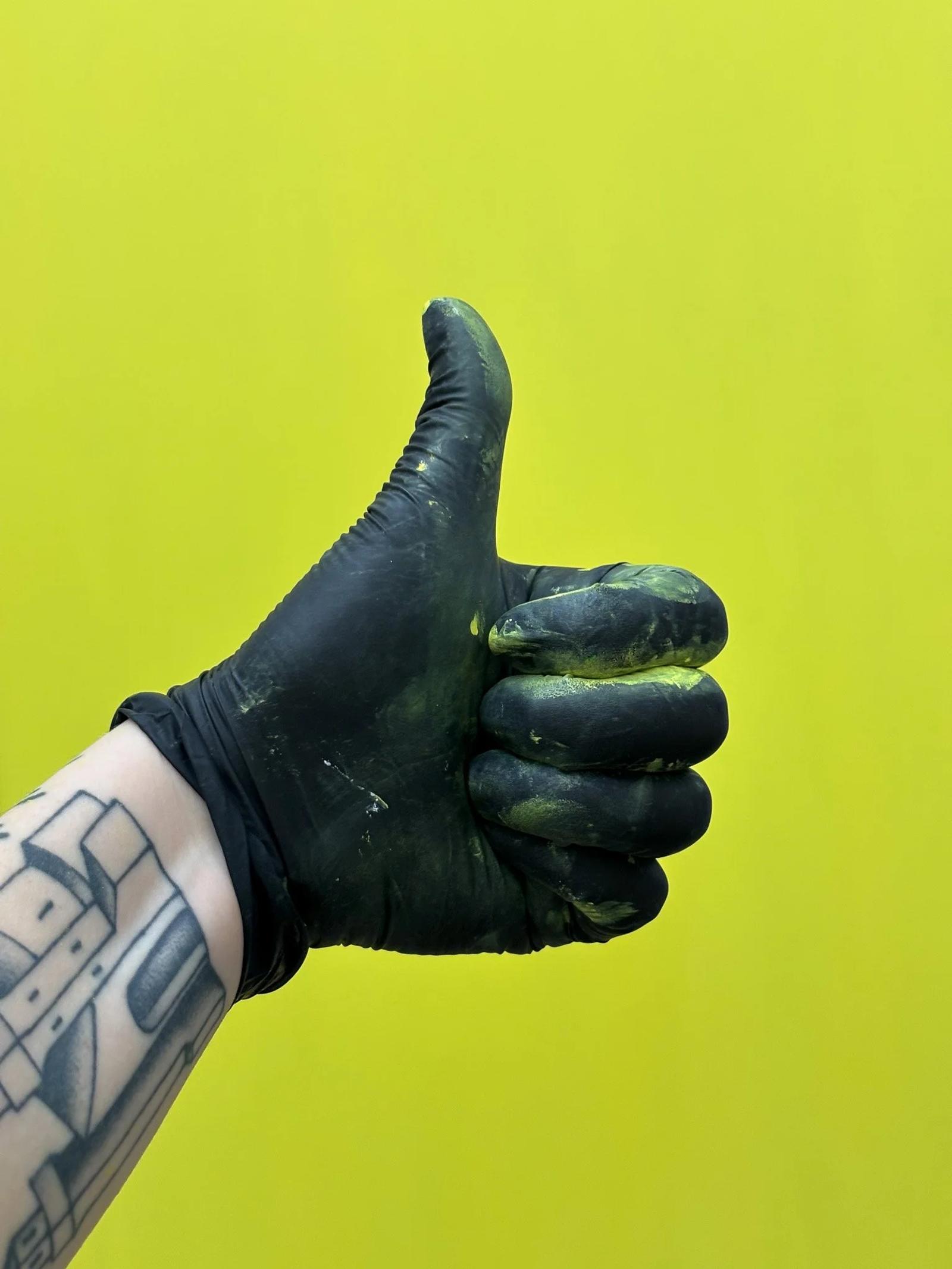
Studio photograph courtesy of Anna Lauree.
I’ll leave you with this anecdote: I was once doing a photography project in Los Angeles and as a bit of a Hail Mary I messaged an influencer, asking if they would be interested in participating in my project. I had no expectation that they would reply. Not only did they come back to me, they showed up, and posed for me. They were kind and composed, unfazed by my low budget studio rental, and the whispering in the background from the other models I had casted through free ad sites and friends of friends on instagram. I was surprised. I asked why they decided to come. “I try to say yes to whoever I can,” they told me. “You never know who someone is going to be.”
Comments
Leave a comment