
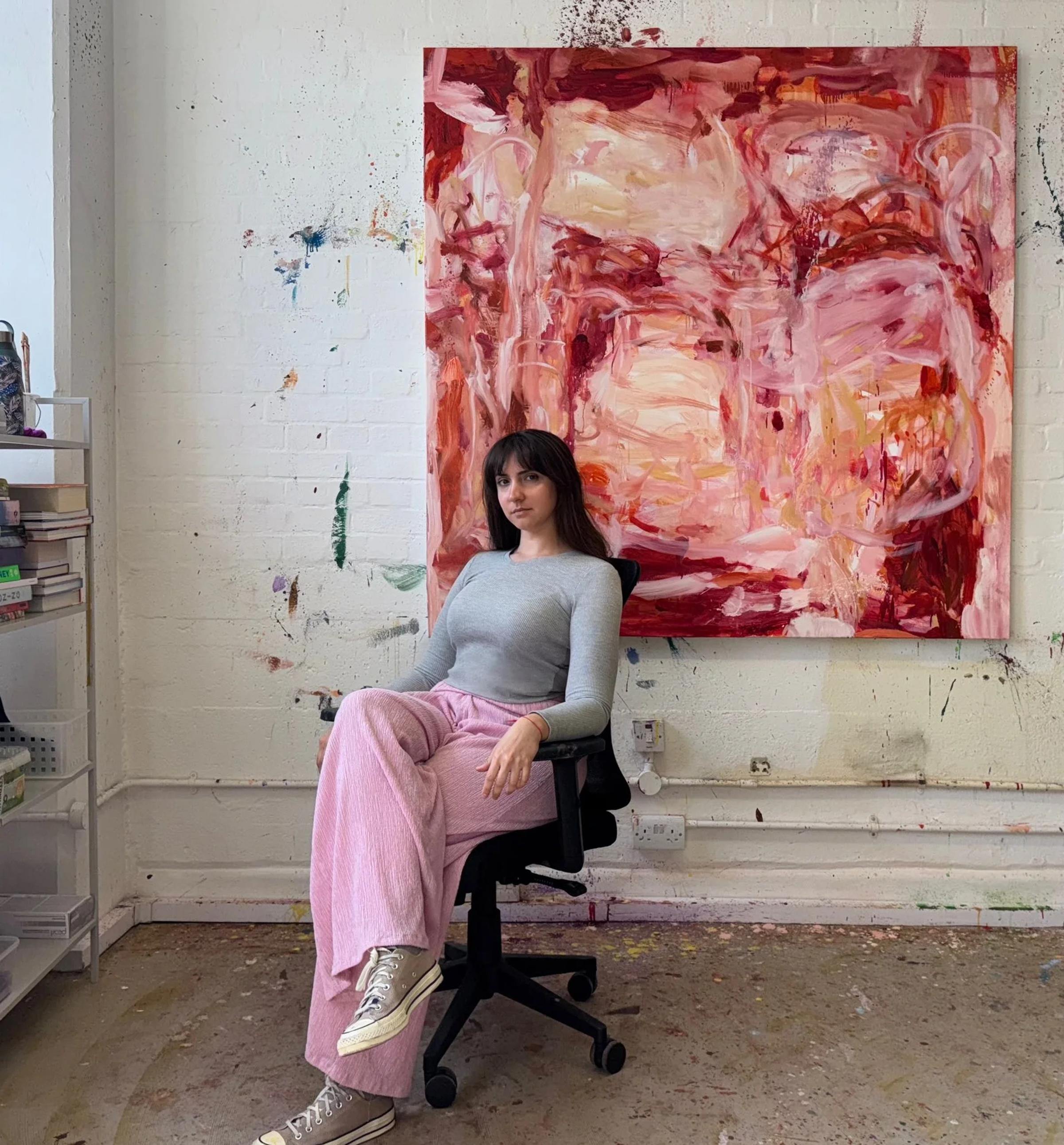
bP: You are Turkish and Venezuelan, studied at Brown in the US, and have just completed your MA at the RCA in London. Have these different countries and their context shaped the way you approach your practice?
IA: Absolutely. Growing up in a household where four languages were spoken and having lived in several countries, I've become familiar with navigating multiple geographies and social codes. This has embedded a kind of epistemic uncertainty in how I understand meaning and how it's constructed, fractured, or imposed. Moving through different contexts has made me skeptical of fixed narratives (whether cultural, familial, or institutional) but not dismissive of them altogether. Instead, there's a flexibility and a willingness to let narrative bend, overlap, or even momentarily reinforce itself in unexpected ways. This unsettledness is integral to what I do at the studio. Formally it manifests through marks, colours and materials that obscure, clash with, or support one another. In many ways there is a constant, deliberate refusal of closure. This births curiosity and keeps me going. I've also come to realise that this isn't just an aesthetic strategy, it's also a critique of how easily we naturalise meaning when it might actually be unstable, contingent, or complicit in dominant narratives.
bP: How would you describe your practice at this moment — what themes, questions, or materials are you currently drawn to?
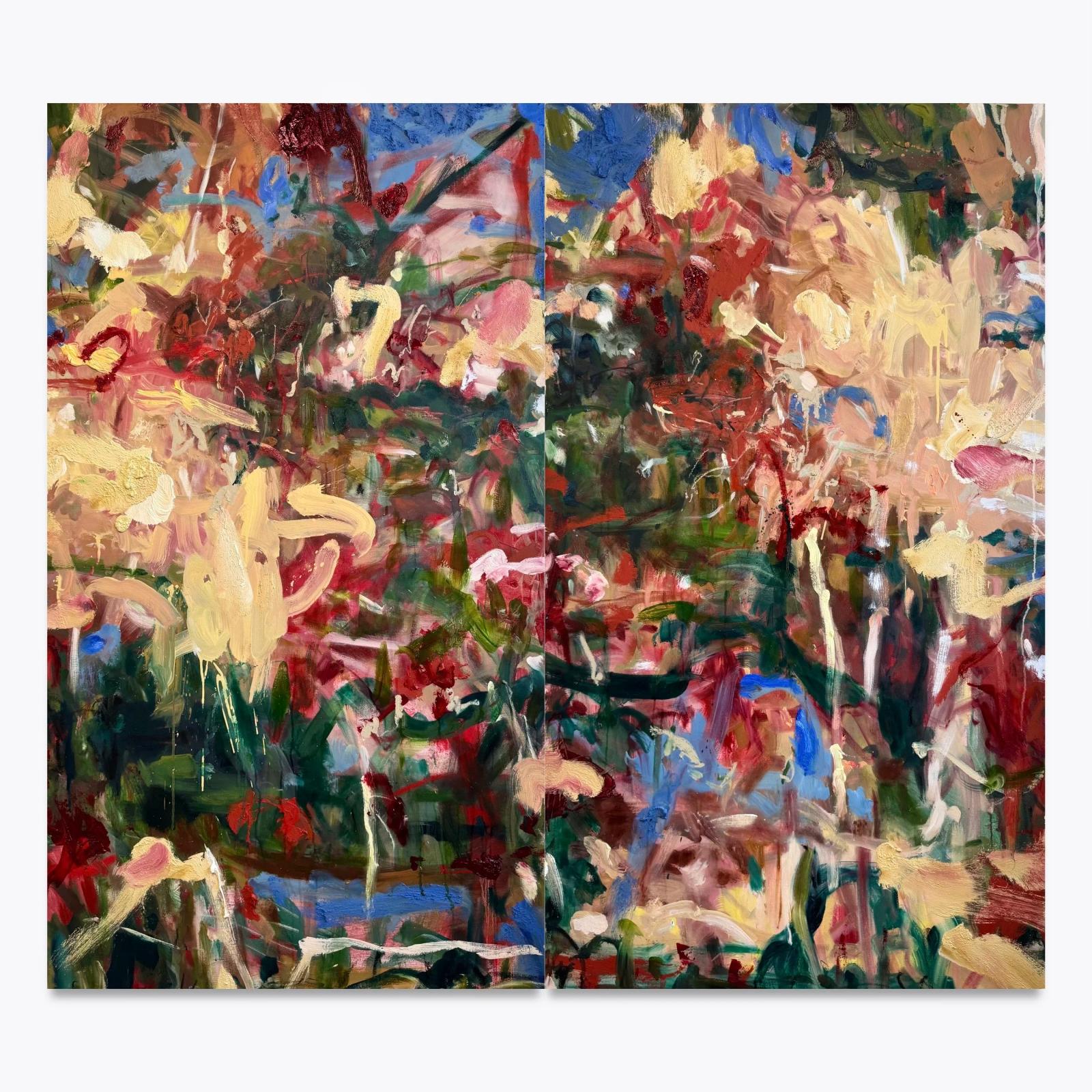
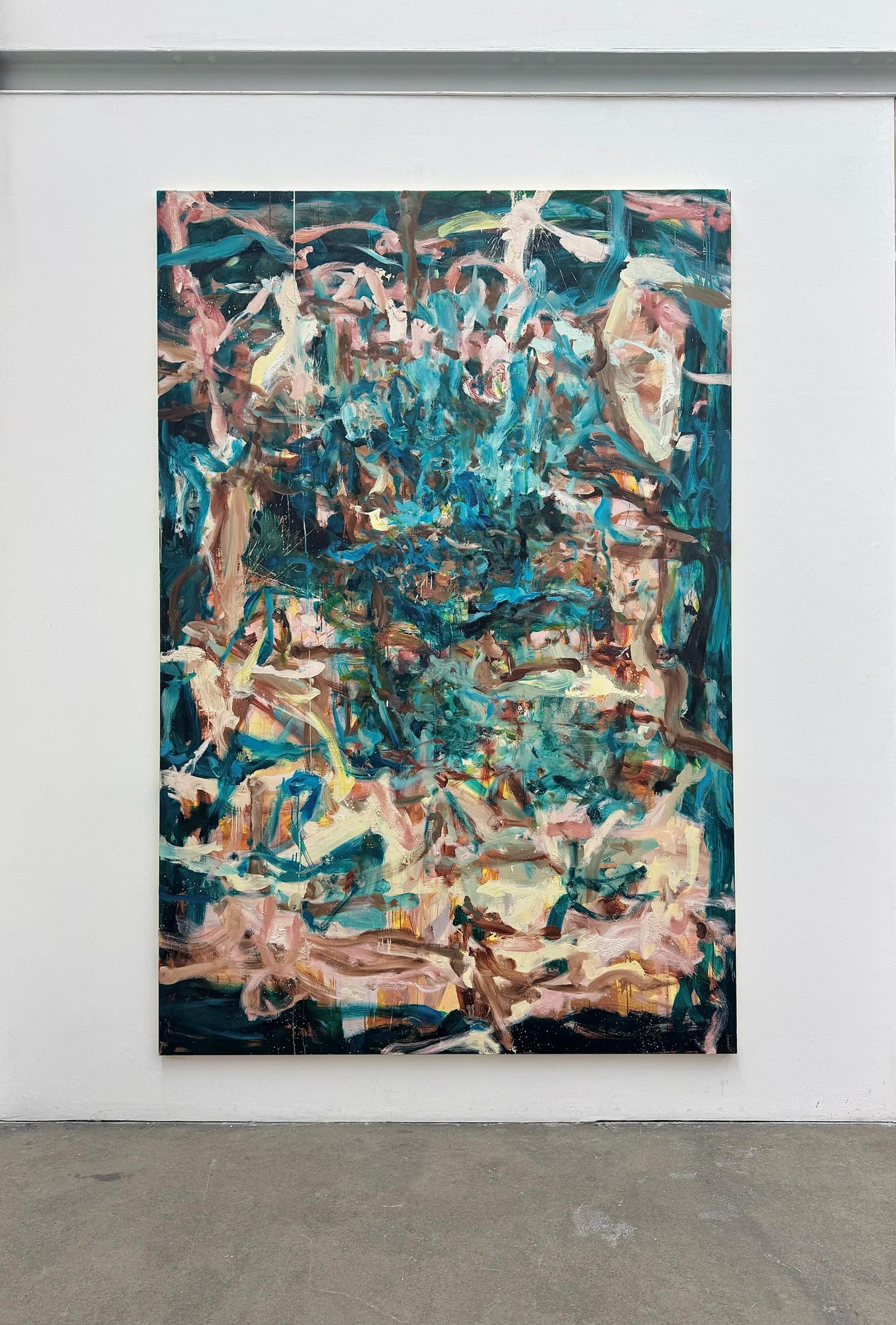
IA: I pass a few hours each day walking through West London's parks, where I've become attuned to the seasons since I moved to this city almost seven years ago: the way trees, the sky, bodies of water, light, and wind shape one another, and how time inscribes itself through cracks, stains, or shifts in colour palettes that can at times offer moments of striking intensity that almost hurl themselves forward. In the studio, these observations and their photographs open up lines of inquiry and interest that might take the form of material experimentation, further delving into imagery of other natural phenomena, or revisiting memories stirred by something I encountered on a walk. These daily walks become a kind of gateway, prompting me to follow threads that branch outward and circle back in unexpected ways. These threads feed into how I build the surface, through layering, scraping, and returning to areas months later with earlier marks continuing to haunt what follows. Colour and texture are crucial vehicles for holding these accumulations and shifts. At a broader level, I'm probing the limitations of painting as a site for presence in a digital economy that increasingly abstracts and flattens experience. What does it mean to insist on slow, tactile and embodied processes when our perceptual habits are constantly recalibrated by algorithms and screens? I am driven by a sense of curiosity about what painting can reveal.
bP: You have just completed your degree show at the RCA and are currently part of several group exhibitions. What has it been like to see your work move through these different spaces and has it shifted how you think about your own practice?
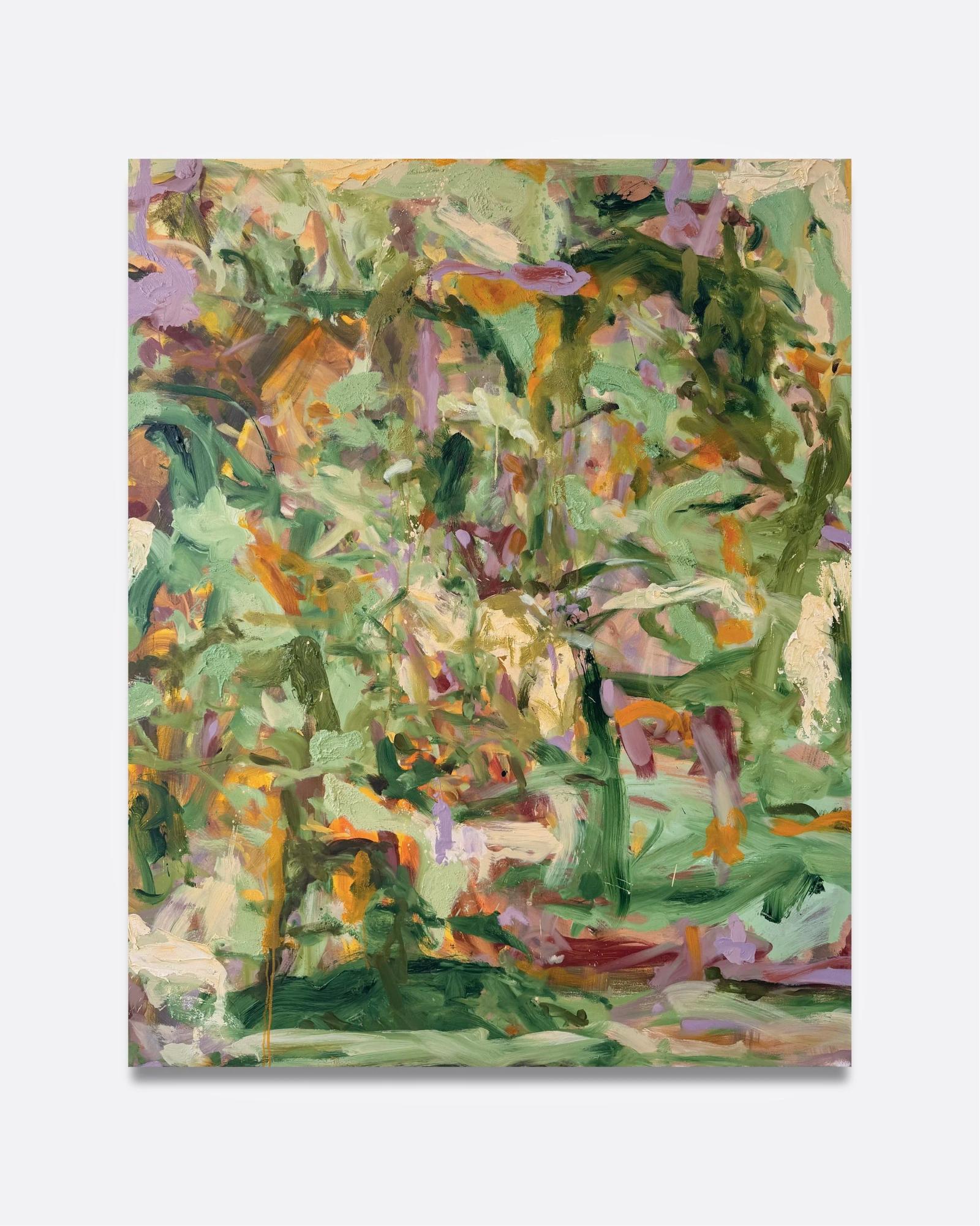
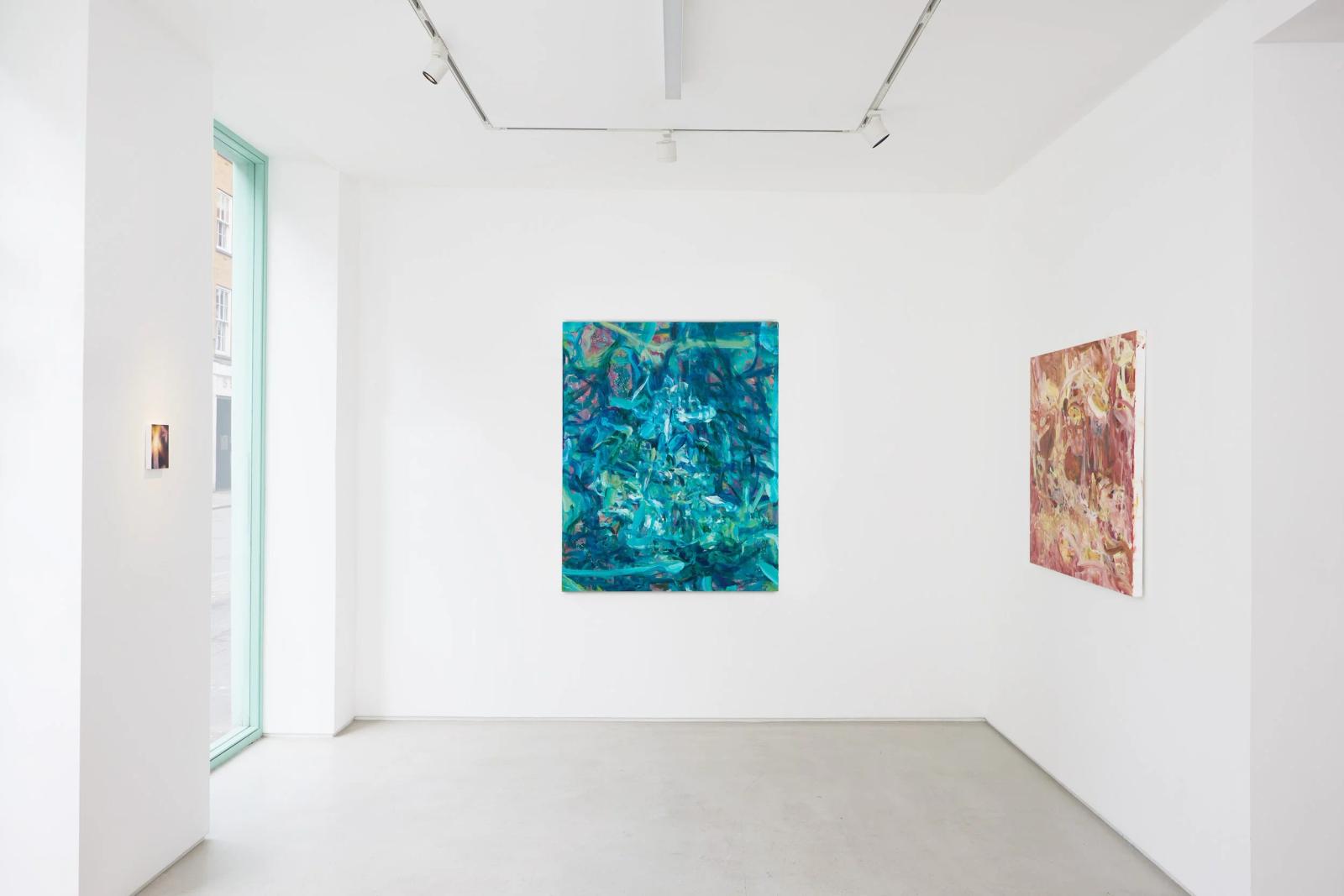
IA: It's been both grounding and surprising to see the work move beyond the studio into these different spaces. In my studio, the paintings exist in a very private space of negotiation. They're constantly in flux, sometimes even contradictory, shaped by shifting ideas or simply by how I'm feeling that day. Once they enter a show, they start to assert themselves differently. The scale of the walls, the light, the distance viewers can take, and the presence of surrounding works all change how a painting breathes. Choosing to be part of so many different shows while nearing the end of my time at the RCA felt important. I had a lot of work built up from the months prior, and being fresh to the scene, I wanted to explore as many different people, contexts, and conversations as possible. It's been meaningful to share the work with a wide range of viewers, from curators and other artists to collectors, and to hear the diverse readings they bring. Ultimately, it's deepened my sense that painting isn't just about my own process, but about the relationships the work creates once it's in a room: with the architecture, with other works, and with viewers, whether they linger or simply pass by.
bP: When you look at a painting you've just finished compared to one from a year ago do the works feel different or a continuation of your path?
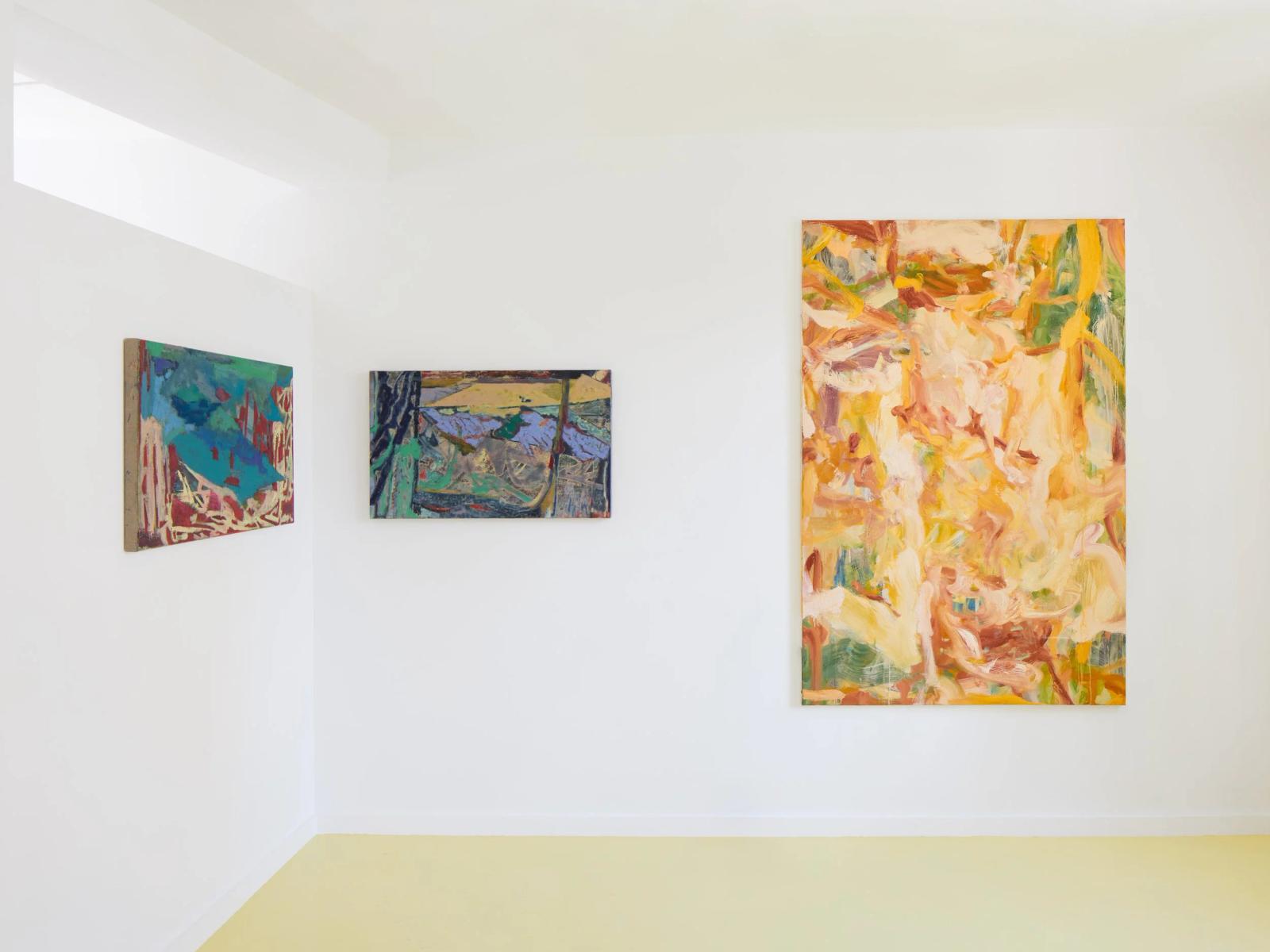
IA: When I look at a painting I've just finished next to one from a year ago, they might look very different visually, but to me they're very much a continuation of the same path. Over the past year, I've moved away from layering thin veils of black over fields of colour, which once felt like a way of quieting or submerging what lay beneath, toward allowing underlying layers to remain exposed without needing to be totally obscured. This has opened up the paintings, making more space for tonal variation, mark-making, material plurality, colour, and composition to assert themselves more directly while trying to retain that sense of visual depth. A lot of this change was shaped by my time at the RCA. Having the space to push the work materially and conceptually, along with critical conversations with peers and tutors, encouraged me not only to let things remain unresolved for longer, but also to reveal more and work the surfaces more thoroughly. So, while the visual language might appear quite different now, they're still driven by the same questions I had a year ago and will likely continue to have for a long time. In that sense, it feels like a deepening and broadening of the same concerns rather than a departure.
bP: If you could invite anyone into your studio for a day who would it be and what would you want to ask them?
IA: I'd invite my grandfather, who passed away in 2013 before I ever had the chance to show him any of my work. I'd be most interested just to see how he would move through the studio, what he'd stop in front of, what details he might notice or overlook. I don't think I'd even want to ask him anything too direct. It would be more about being able to share that space with him, to watch his reactions, and maybe to hear the kinds of stories or memories the paintings bring up for him. It feels important to connect not just across generations, but across entirely different ways of perceiving the world. In a way, that's what painting offers me: a place to bridge private sensations with shared realities, and to invite someone else into that space, even momentarily.
Comments
Leave a comment