

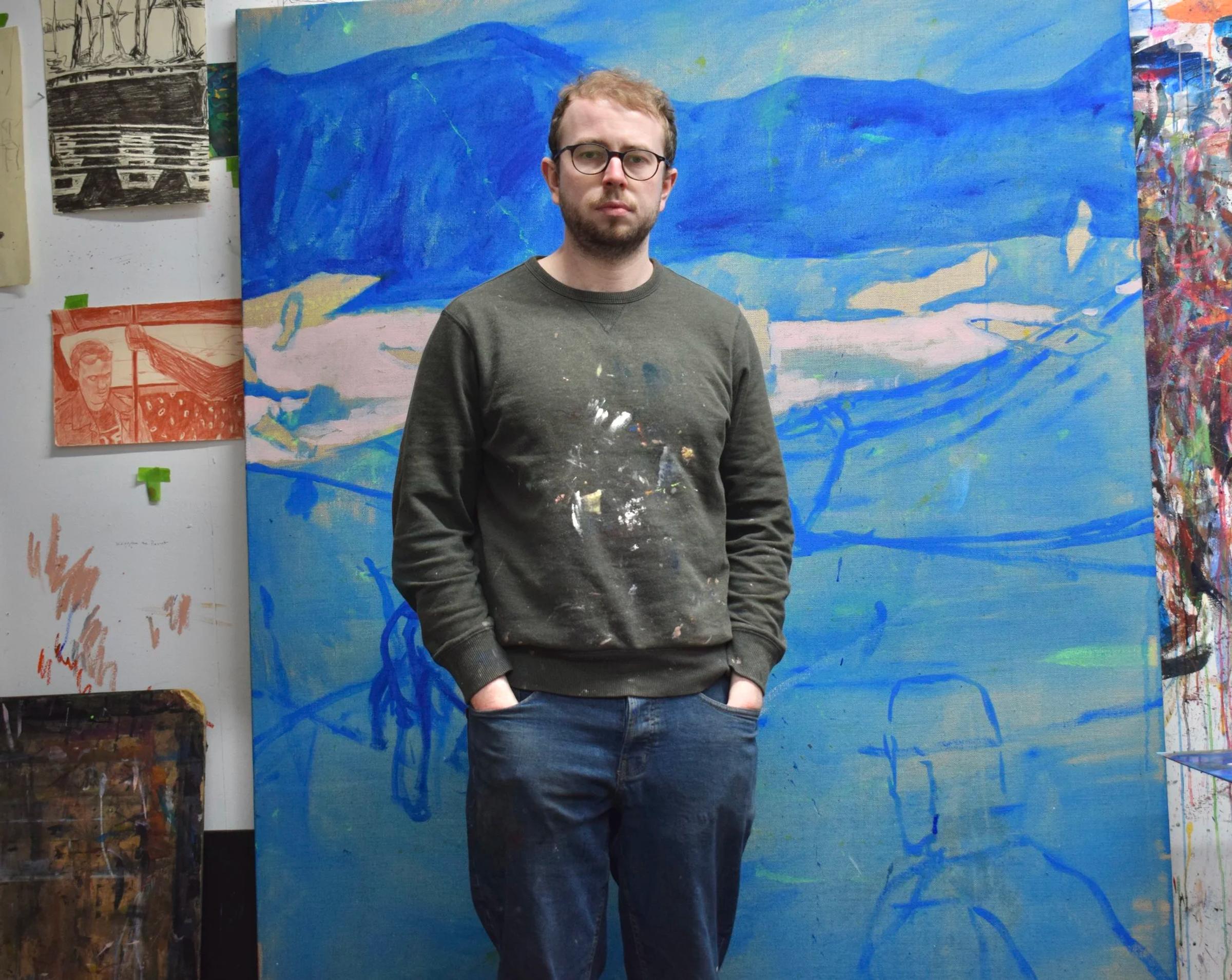
bP: Hi Jack! Having grown up in the West of Scotland and now living in London how have these contrasting environments influenced your artistic perspective?
JM: When initially moving to London I found it extremely overwhelming. It felt like there was too much to try and make sense of and I think this is what led to me becoming interested in depicting smaller quieter moments. With the paintings I was making in Scotland I think I had this urge to try and paint things as grander than they were. I was interested in trying to mix classical myths with my everyday environment. I think in London the paintings became more about focusing on one thing or scenario and trying to explore it more fully. I do think the works still have a certain Scottish quality about them though. I feel there's a reluctance to take things too seriously but also hints at something darker and how these two moods can sometimes go hand in hand.
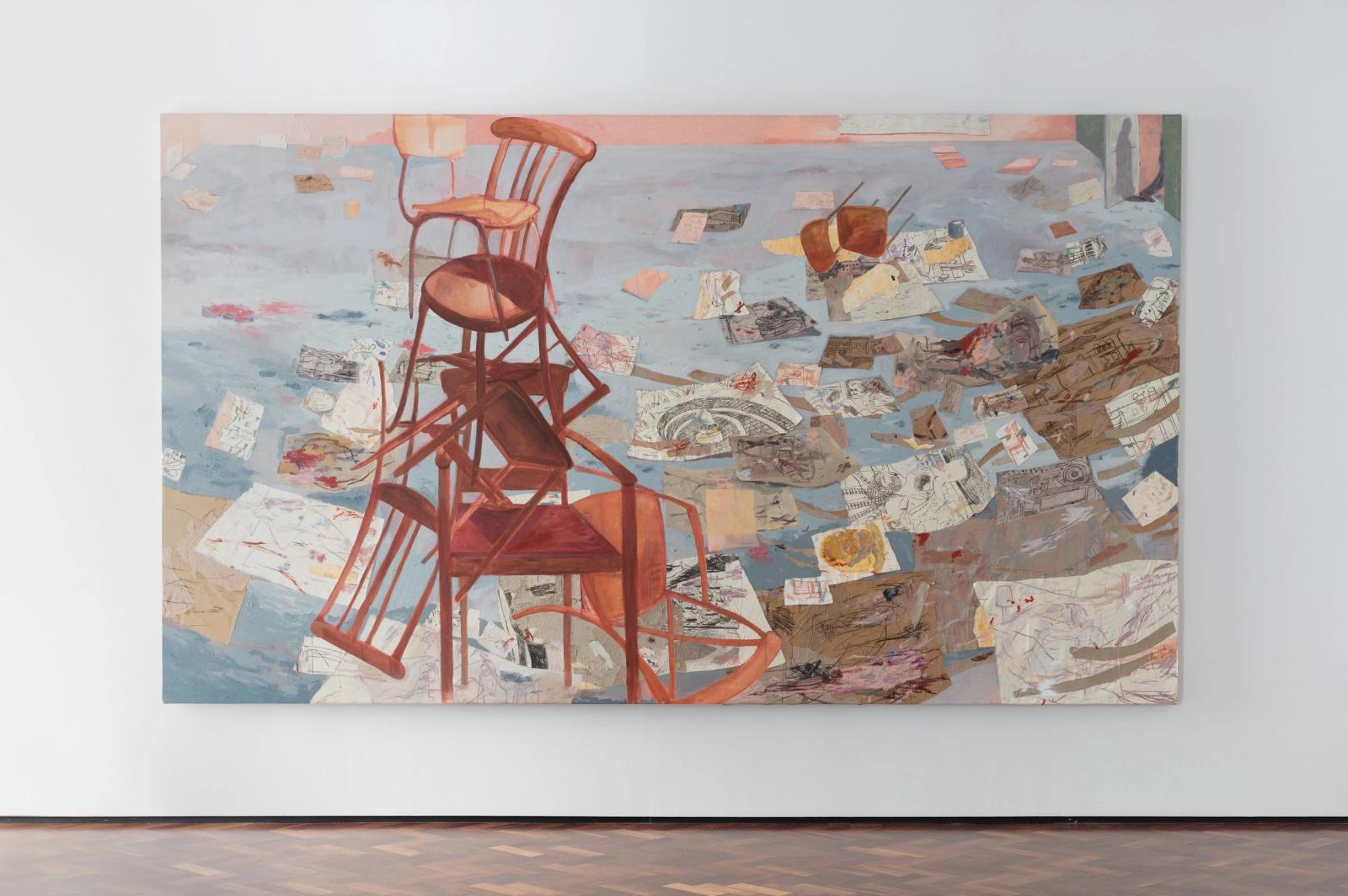
bP: Your work frequently explores themes of absurdity stillness and alienation. What is it about these themes that captivates you?
JM: I think what I am primarily interested in is trying to capture, in some way, objects or moments that are often overlooked. When you really focus on something or some moment, excluding everything else it can often seem absurd. As if the interaction or item on its own doesn't really make any sense but also sometimes context of something can heighten the strangeness of it. I like the idea of using painting as a means to try to condense moments we might not pay much attention to and as a way to slow down the viewer.
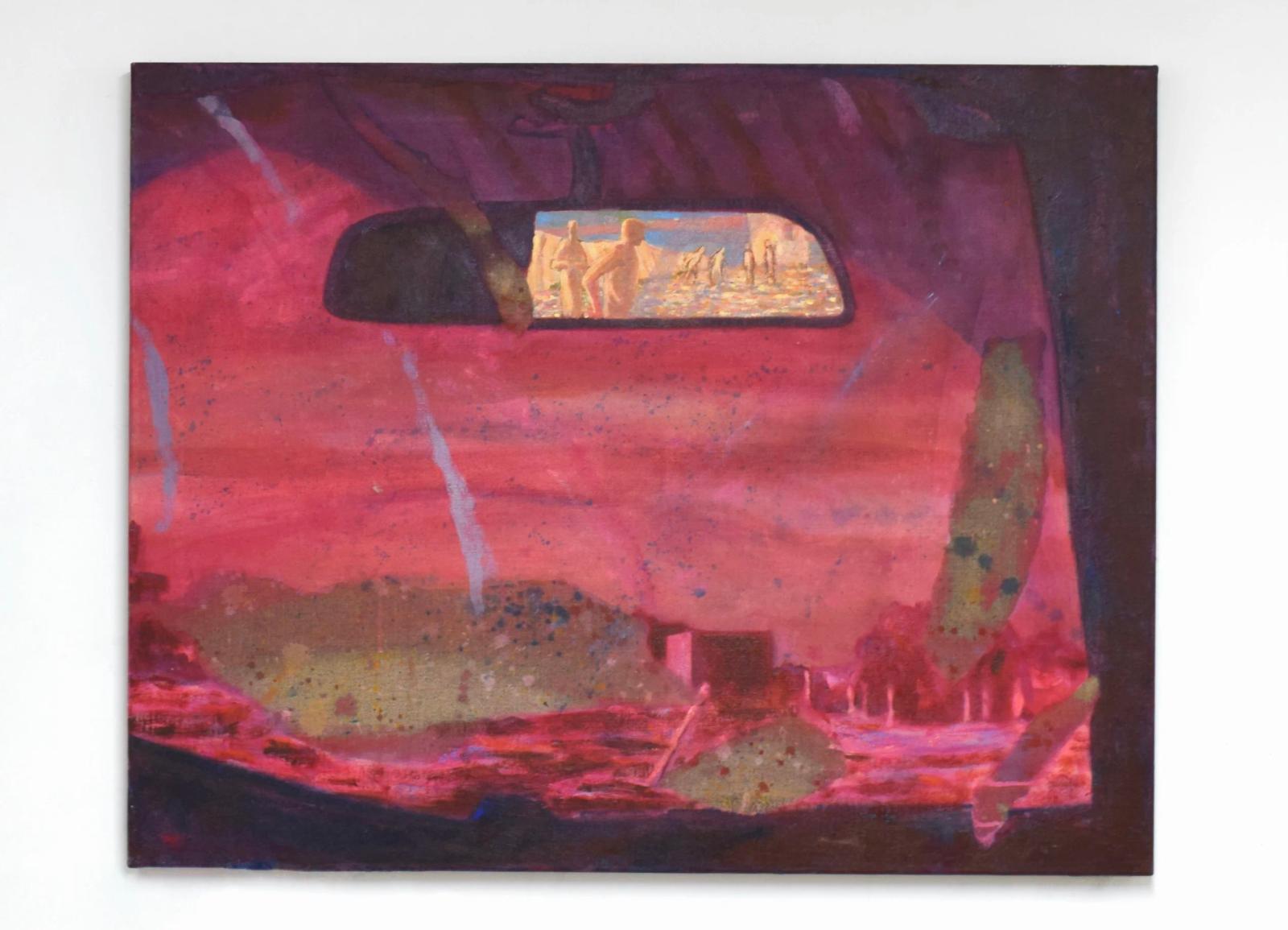
bP: Your pieces are included in esteemed collections such as the Scottish Royal Collection and the British Royal Collection. How does it feel to have your work recognised and preserved in such prestigious institutions?
JM: It's a great privilege to be included in such historic collections. The work for the British Royal Collection was selected from my end of year show at The Royal Drawing School and the work in the Royal Scottish Collection is a sketchbook from the time I spent in Florence as part of the John Kinross Award which I was awarded when graduating from The Glasgow School of Art. I'm forever grateful for this fantastic opportunity to completely immerse myself in the art of the city which has had a profound impact on my work since.
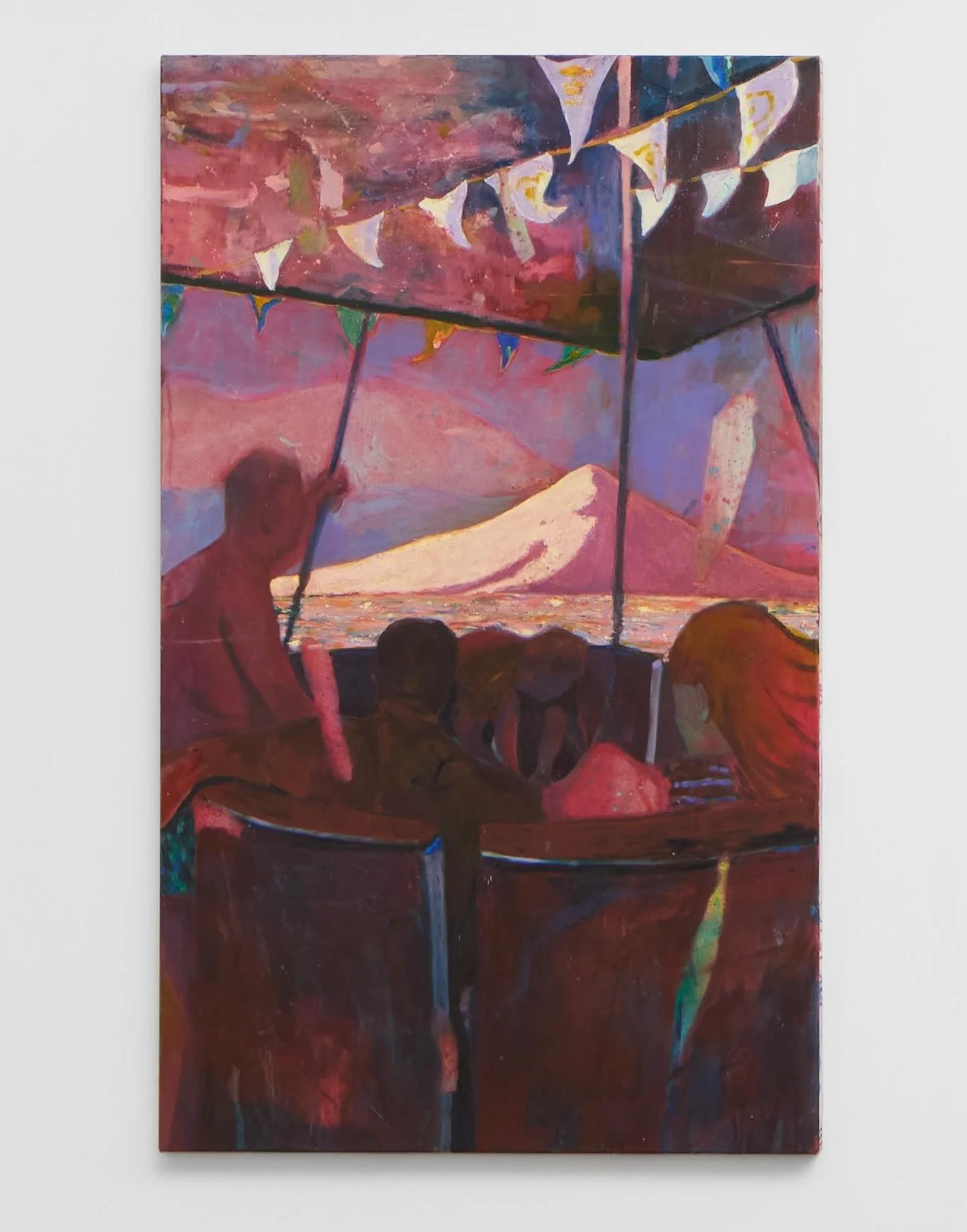
bP: Your painting Drummer Boy 2022 portrays a juxtaposition of chaos challenge and frustration alongside a sense of method and calm. Would you say this reflects your personal artistic process in the studio?
JM: Yes absolutely. There's a lot of frustration in the paintings. I feel that if a work comes too quickly then it's usually not there. I think the more successful works come from the unpredictability that frustration can bring and getting to the point in a work where you don't mind taking risks with it anymore because there's nothing to lose. This painting Drummer Boy was part of a series where I made paintings of my studio using ripped up drawings I had lying around at the time. I'm really drawn to the idea of using something that you think has failed as a springboard to make new work. I think it's only after a work is almost completely ruined that it begins to make sense and I can find some sort of direction in it.
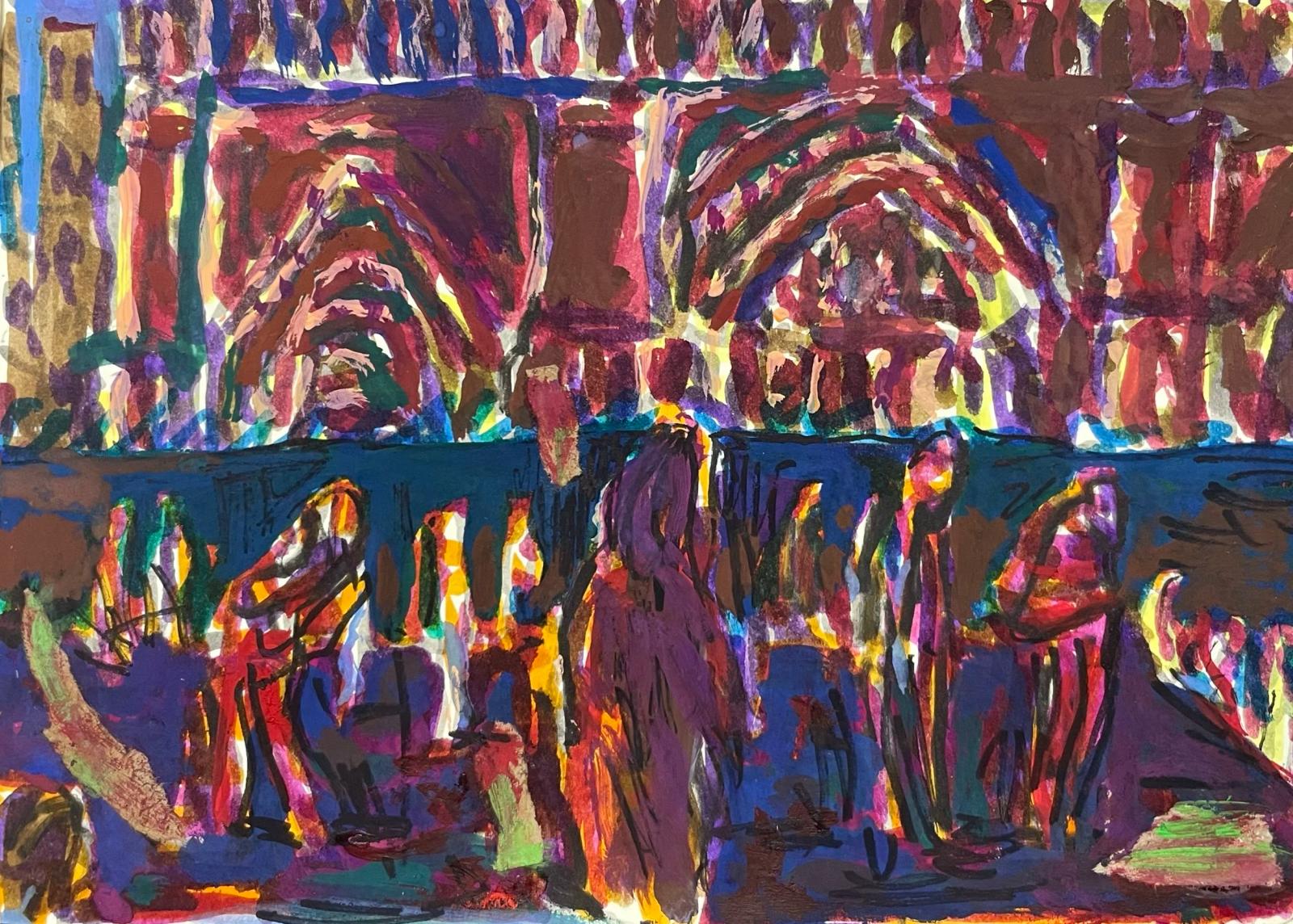
bP: Your talent shines across mediums, with your drawings, works on paper, and paintings being truly exquisite. How do you decide which medium to use when starting a new piece?
JM: Thanks very much! I think a lot of the time it's just quite intuitive and how I feel on the day. Whilst studying we were encouraged to constantly change the pace at which we work and this is something I've tried to bring into my studio practice. A lot of the time it's practicality as well. I draw outside a lot as a way of generating ideas. These drawings are usually small, using pens or pencils and are then developed back at the studio into larger works on paper and then sometimes further into works on canvas.
Comments
Leave a comment