
KW: Tell me about EL CONSULADO. What is it, and why did you form it?
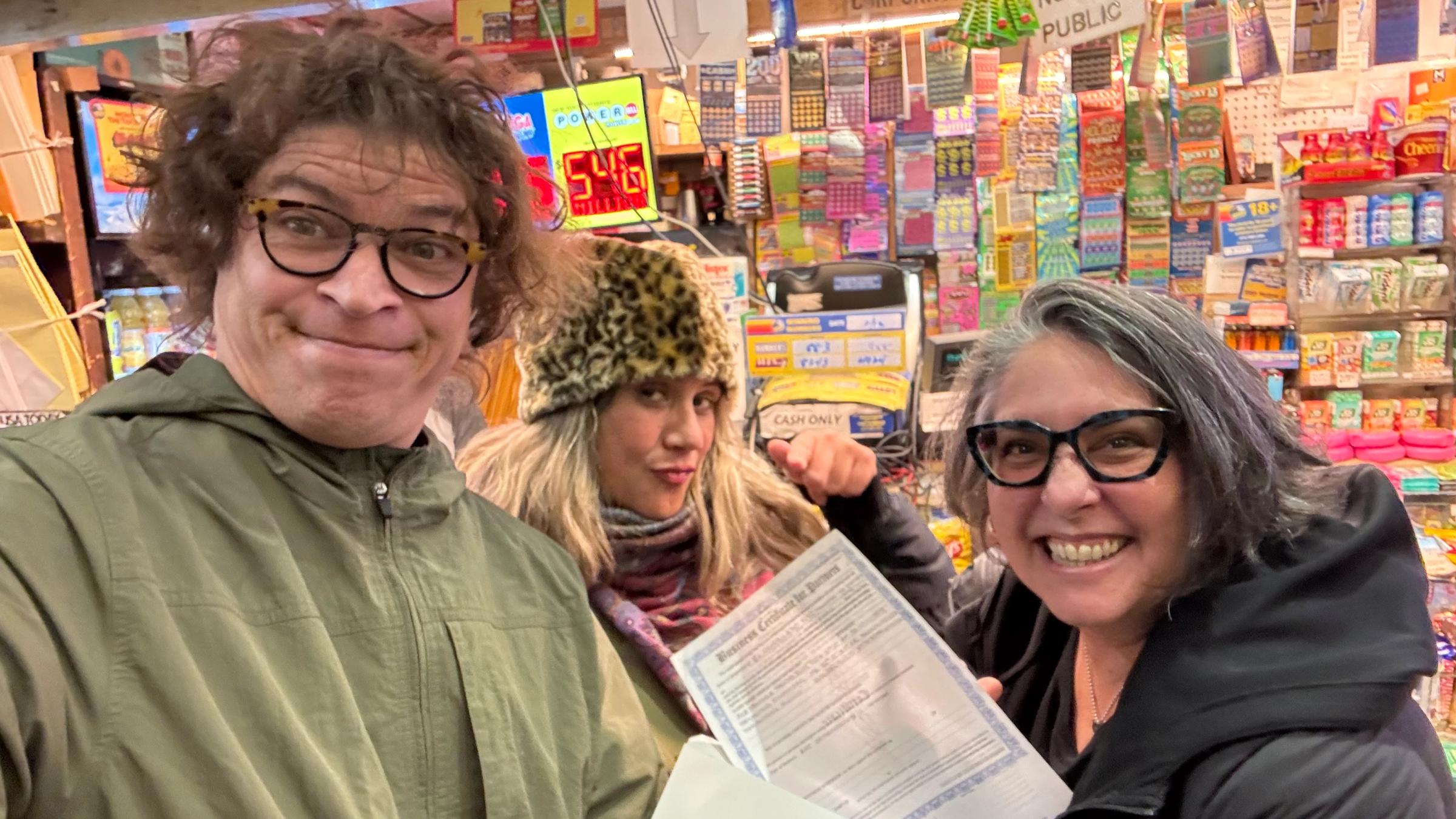
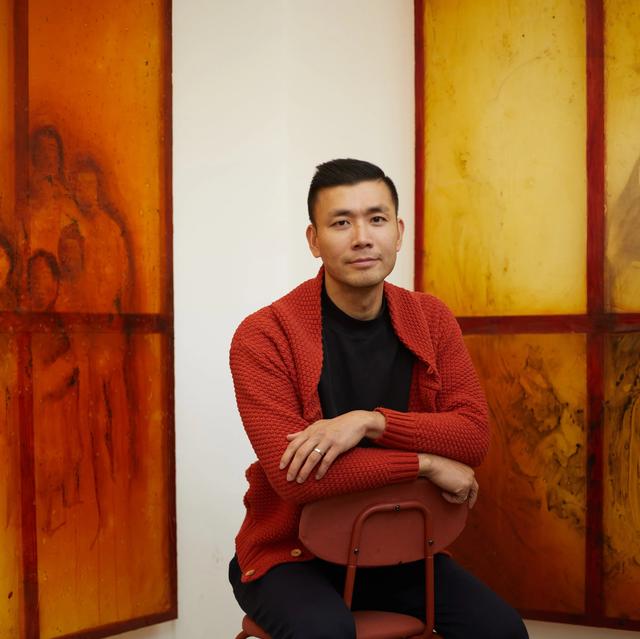
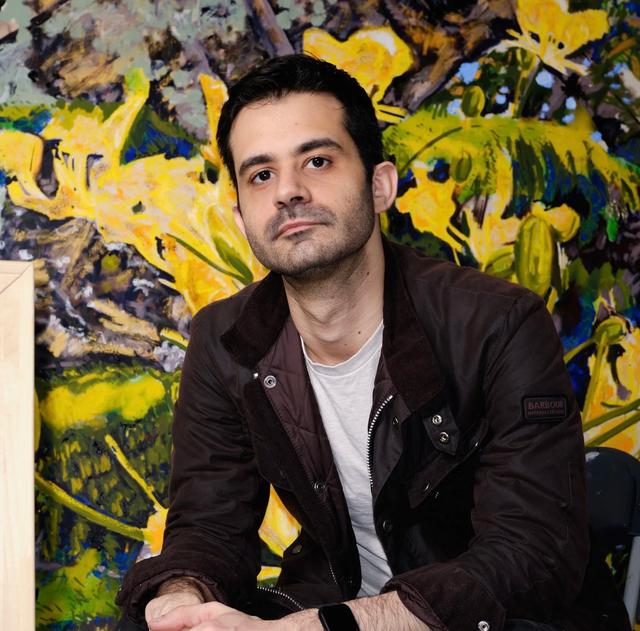
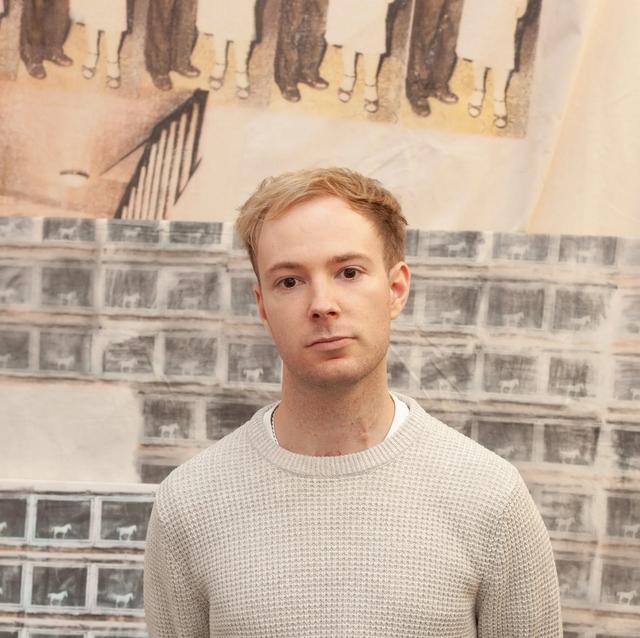
EC: EL CONSULADO is a multidisciplinary arts collective founded by Alejandra Mandelblum, Helwing Villamizar, and Mariantonia Blanco. Based in New York, the collective operates as a symbolic cultural embassy for the Venezuelan diaspora: a platform for artistic visibility, gathering, exchange, and representation in the absence of the official structures that once performed those roles.
We formed EL CONSULADO in response to what curator Michel Otayek describes as a condition of “double precarity”: the experience of being politically marginalized in host countries while also being severed from representation at home. For Venezuelans abroad, this condition is not only legal or bureaucratic, but also cultural. As consulates have been shuttered or hollowed out, and as the possibility of renewing documents, voting, or accessing civic services has become increasingly obstructed, Venezuelan communities have also been left without the infrastructures that historically supported cultural diplomacy, artistic circulation, and international visibility.
EL CONSULADO symbolically usurps that abandoned representational role. It is not a consulate defined by stamps, passports, or paperwork, but by art as resistance, public presence, and collective creation. We are interested in transforming “bureaucratic abandonment” into a living cultural infrastructure: a space where artists, writers, curators, designers, editors, collectors, and communities can gather, circulate, and be seen.
In that sense, EL CONSULADO is both a response to absence and a proposition for what can be built from it. It emerges from the collapse of institutional support, but it does not remain trapped in that collapse and ultimate entropy. It creates new forms of visibility where none exist, using mobility, informality, and collaboration as tools for cultural presence.
KW: In what ways do you try to support Venezuelan culture and strengthen the community being based in New York? How do you decide what form your organizing and programming takes?
EC: We support Venezuelan culture by creating improvised, contingent circuits of support where official institutional frameworks have evaporated. EL CONSULADO works as both a platform and a gathering structure, connecting Venezuelan artists in New York, Venezuela, and the broader diaspora with audiences, collectors, institutions, and one another.
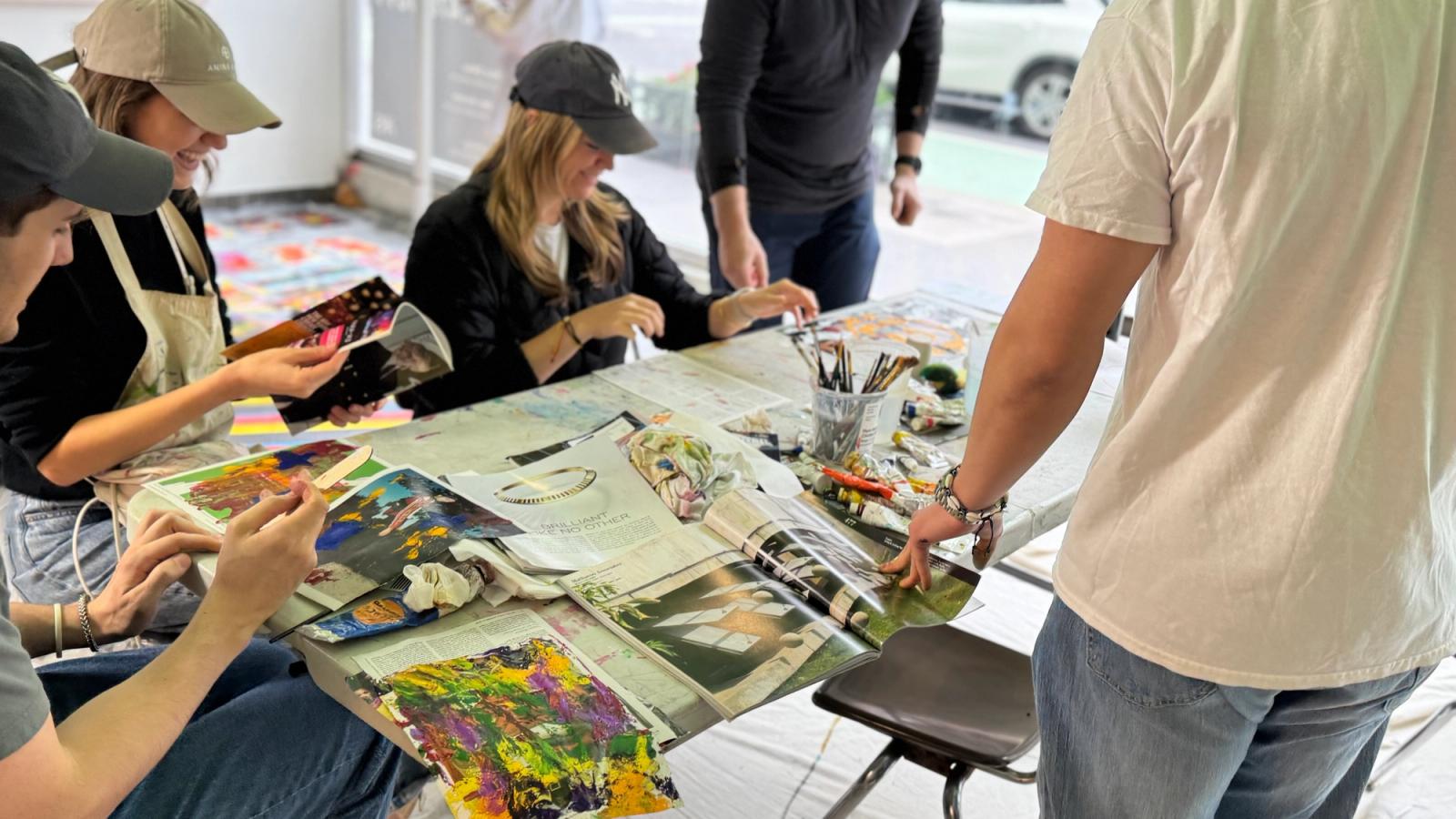
Our programming often begins with the question of form: what kind of structure is needed for a community whose cultural life has become deterritorialized? Sometimes the answer is an exhibition. Sometimes it is a pop-up, a storefront activation, a digital crowdsourced artwork, a dinner, a conversation, or a street presence. We are interested in forms that are lightweight and mobile, yet capable of generating a localized grounded sense of belonging amid displacement.
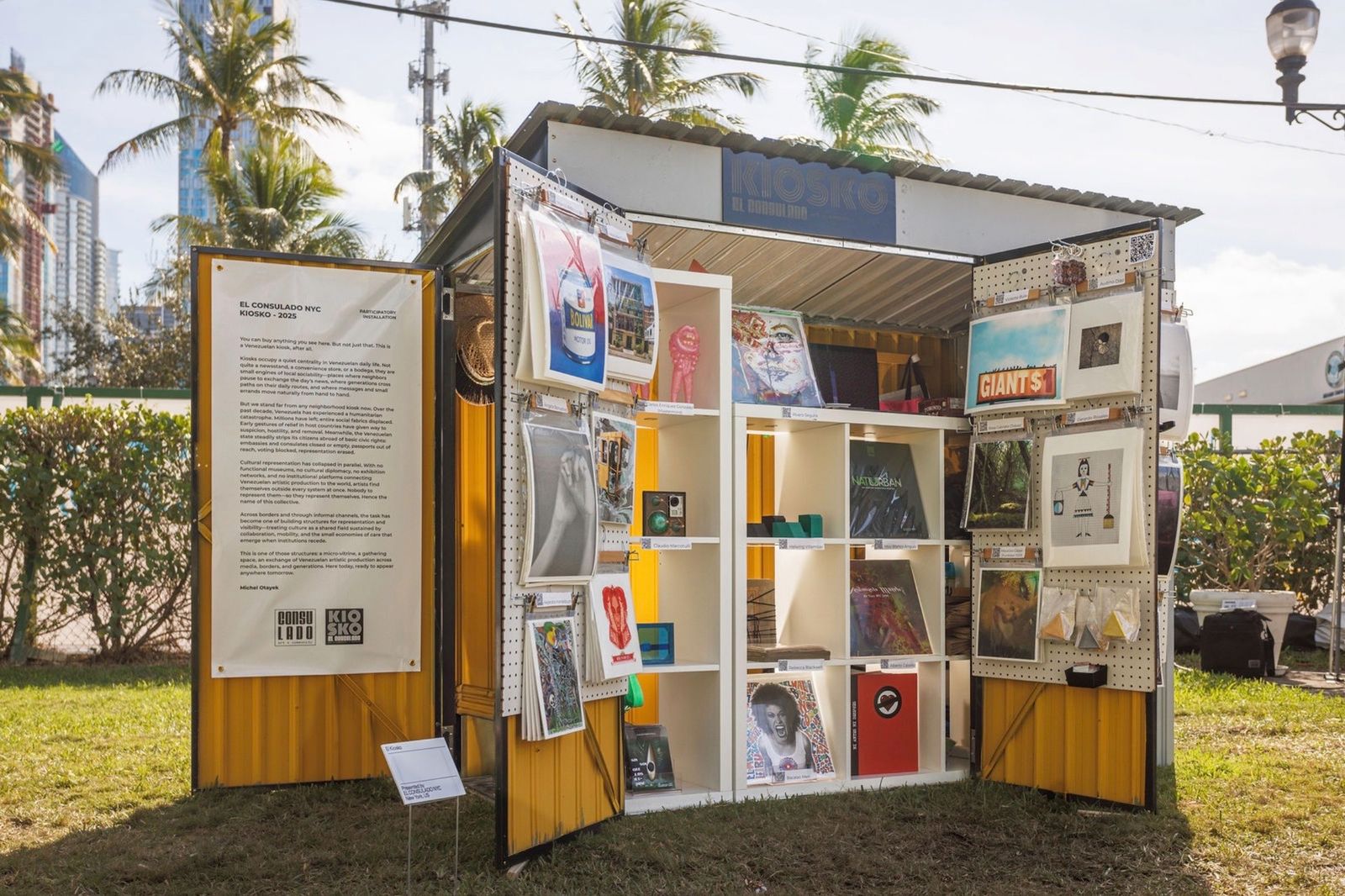
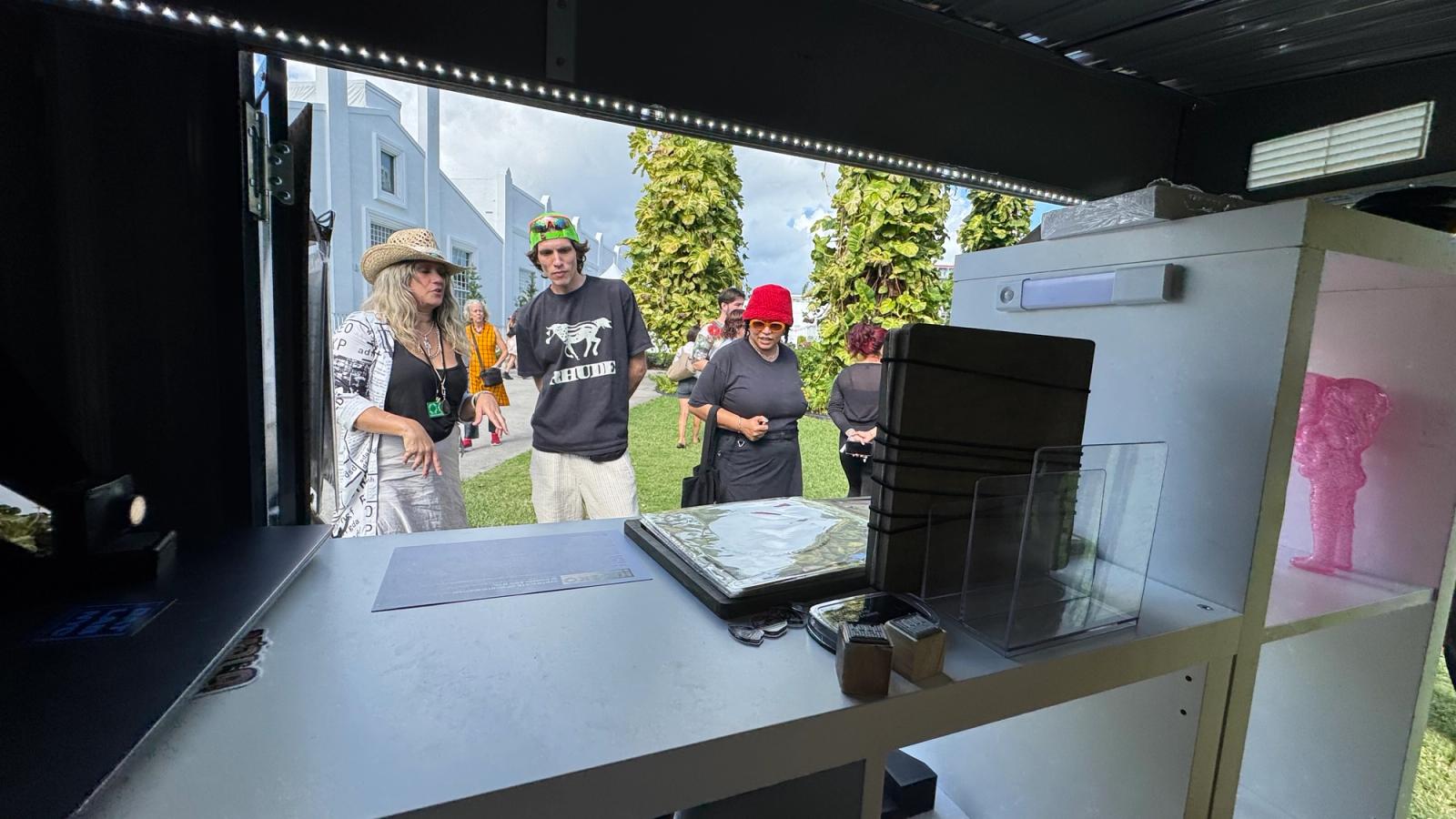
KIOSKO, our first major initiative beyond New York, reflects this approach. Presented at NADA Miami 2025, KIOSKO was conceived as a micro-vitrine, a gathering space, and an anthology of Venezuelan artistic production across media, borders, and generations. Its structure borrows from the Venezuelan neighborhood kiosk: a modest, familiar architecture that, as Otayek writes, has long functioned as an anchor of neighborhood sociability and a form of “micro-territorial memory.”
For Venezuelans abroad, the kiosk becomes a “mnemonic device” for a vanished urban intimacy: the corner where neighbors met, news circulated, children bought sweets, and trust-based forms of exchange shaped everyday life. KIOSKO reimagines that social architecture for a diasporic present. It becomes a portable point of encounter, a compact space where artworks, books, prints, fanzines, records, stickers, pins, and other cultural objects converge.
The form of our organizing is therefore dictated by need: the need for visibility, the need for contact, the need for shared memory, the need for access, and the need to create cultural routes where institutional ones have disappeared. EL CONSULADO is nomadic by necessity, but it is not provisional in its commitments. Its mobility is a method.
KW: This interview series looks at non-conformity as a mode for shaping alternative ways of working in response to structural inequities and other constraints. How does this resonate within EL CONSULADO NYC’s work?
EC: Non-conformity is at the center of EL CONSULADO because the collective was born from a refusal to let Venezuelan cultural production in the U.S. disappear into an institutional vacuum, a refusal to wait for legitimacy from structures that no longer function, and a refusal to reproduce the same exclusive models that often define the global art system.
We do not neatly fit into the categories of gallery, nonprofit, embassy, artist-run space, or commercial platform. EL CONSULADO borrows from all of these structures while also resisting them. It can become a kiosk, a storefront, a fair booth, a public program, a street activation, a micro-institution, or a social device. That flexibility is not a lack of structure; it is our structure.
KIOSKO is a clear example of this. Within the context of an art fair, where single artworks often circulate at exorbitant prices, KIOSKO activates a different economy of cultural participation. It presents small-format works and editions at modest prices both in situ and through an online shop, opening a space where authorship becomes porous and creative labor appears as a shared field.
This is important to us. EL CONSULADO rejects the mythology of the lone creator and foregrounds instead what Otayek calls a “relational ecology”: the broader constellation of artists, designers, editors, writers, printers, documentarians, promoters, artisans, and audiences who make cultural production possible. In KIOSKO, anyone who purchases an item receives not a certificate of authenticity, but a certificate of participation. That gesture matters. It shifts the emphasis from ownership to belonging, from exclusivity to participation, from the singular artwork to the collective field that sustains it.
In this sense, our non-conformity is practical as much as symbolic. It is a way of building an alternative infrastructure under conditions of scarcity, instability, exile, and political fracture. We are not only presenting Venezuelan art; we are testing forms through which Venezuelan, and more generally, diasporic cultural life can continue to move.
KW: In times of political upheaval—when what is happening in the US or Venezuela impacts the individual lives of artists and artistic communities—what keeps you motivated? What fuels your desire to keep building?
EC: What keeps us motivated is the belief that cultural work can create continuity where political life has produced rupture. Venezuelan artists and communities have experienced not only migration, economic collapse, censorship, and political disenfranchisement, but also the erosion of the institutions that once made cultural visibility possible. State-owned museums have been neglected, public collections have been destabilized—and sometimes raided from within, exhibition circuits have weakened and siloed, and the channels that connected Venezuelan artists to the world have largely disappeared.
In that landscape, building becomes an act of refusal. We call it art as resistance. EL CONSULADO is motivated by the urgency of creating new routes of visibility, connection, and cultural presence. These routes unfold as a shared undertaking, moving between the analog space of group exhibitions like KIOSKO and the broader reach of tactical media in forthcoming projects.
More importantly, we are fueled by the artists who continue to work despite displacement and precarity, and by the communities that continue to gather despite exhaustion of the status quo, the uncertainties of belonging, the pendulum of political pressure, or state-sponsored whims.
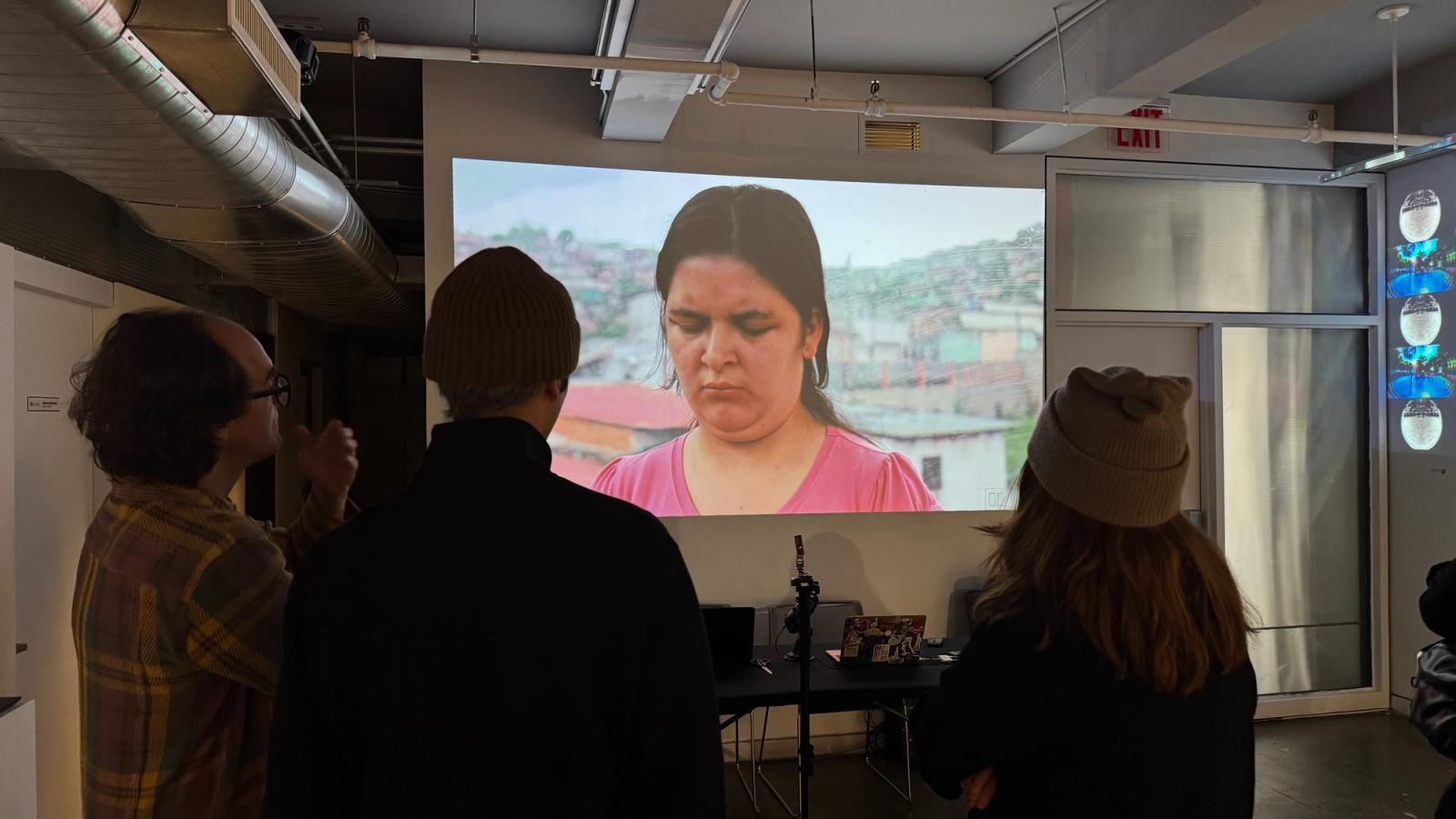
There is also joy in the work. Even when the context is difficult, EL CONSULADO is sustained by the energy of encounter: people discovering an artist and artist working with other artists on projects that are feasible only from a collective approach to the work, but the encounters also come from people buying a small work, sharing their memories of what is lost, exchanging stories, attending an artist talk where the artist is on another continent that’s not her own, or simply recognizing something familiar in a temporary space. These moments may seem modest, but they accumulate. They create a living archive of our presence in the world.
The kiosk, as a cultural image, is important here; it’s a reminder that memory does not only live in monuments or institutions. It also lives in small architectures, repeated gestures, neighborhood exchanges, informal economies, and the warmth of daily contact. For us, EL CONSULADO carries that spirit into the diaspora. It becomes a “mobile site of exchange,” a gathering point set loose from place.
What drives us is the possibility of building something that can move with our communities while still producing belonging. Something fragile, perhaps, but persistent. A temporary form, but permanent in commitment.
KW: What exciting things are on the horizon for EL CONSULADO NYC?
EC: The next eighteen months mark an important expansion for EL CONSULADO. We are moving from a primarily Venezuelan diasporic platform toward a broader conversation with diasporic artists in general, while remaining rooted in the Venezuelan experience that gave the collective its original urgency.
This does not mean leaving Venezuela behind. Venezuela remains our point of departure: the place from which we understand displacement, institutional collapse, improvised infrastructures, and the need to create new routes of visibility. But we are increasingly interested in placing that experience in relation to other histories of migration, exile, political pressure, and cultural survival. EL CONSULADO is beginning to open itself as a space where Venezuelan artists can be seen alongside other diasporic artists whose practices also emerge from fracture, translation, memory, and movement.
This summer, we are continuing to develop KIOSKO through pop-ups and collaborations with galleries and cultural spaces in New York, including our first gallery interaction with Henrique Faria Fine Art, the premier and most established Venezuelan-founded art gallery in New York City. In light of the devastating earthquake in Venezuela, the exhibition has been reframed as a space for solidarity, gathering, and support. Proceeds from KIOSKO will support World Central Kitchen's relief efforts in Venezuela. Located in Manhattan, Henrique Faria Fine Art is globally recognized for pioneering the market for historic Latin American conceptualism and geometric abstraction. This iteration extends the life of KIOSKO beyond NADA Miami 2025 while allowing us to test how the project behaves across different contexts: the gallery, the street, the storefront, the fair, and the neighbourhood.
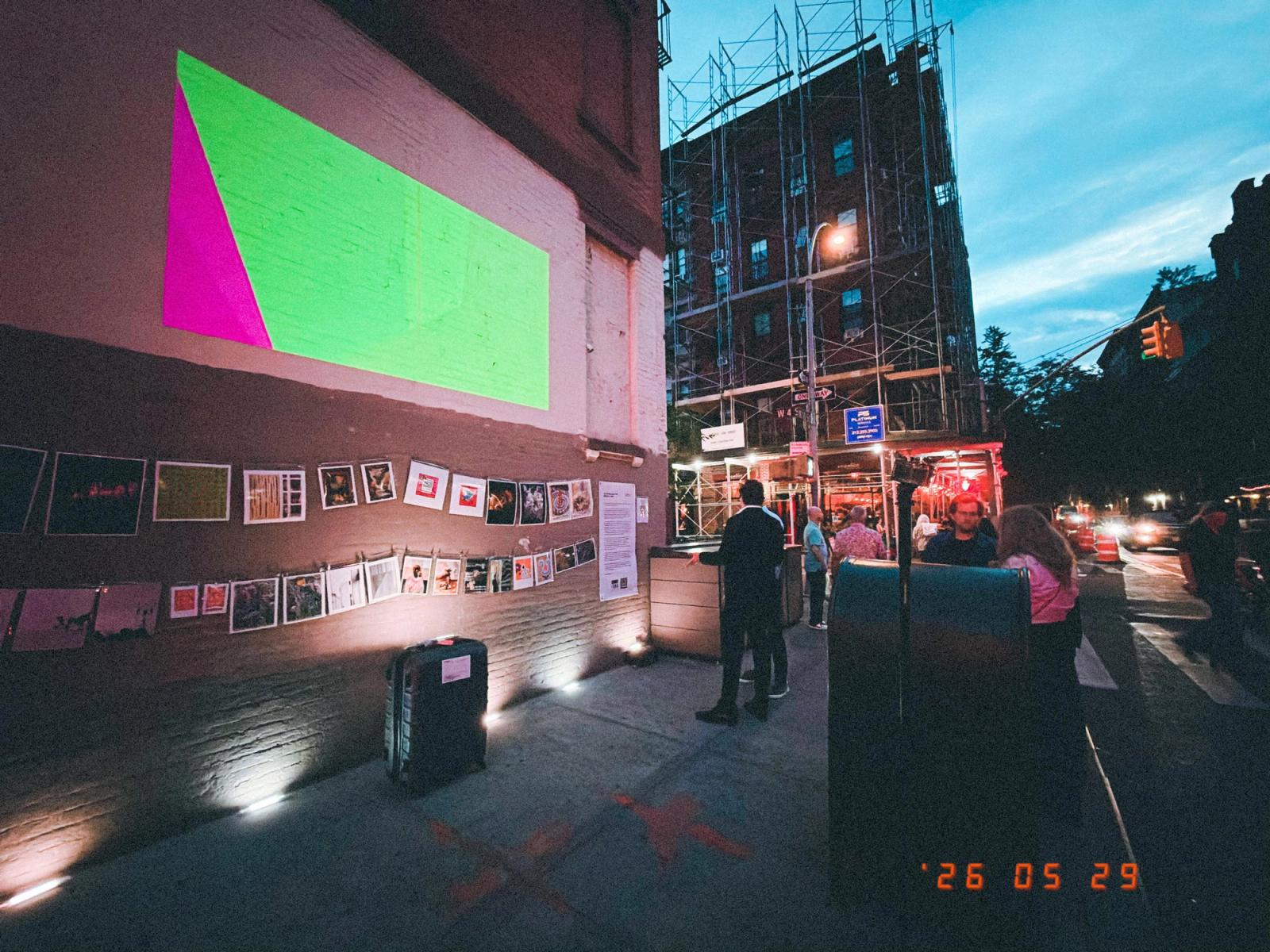
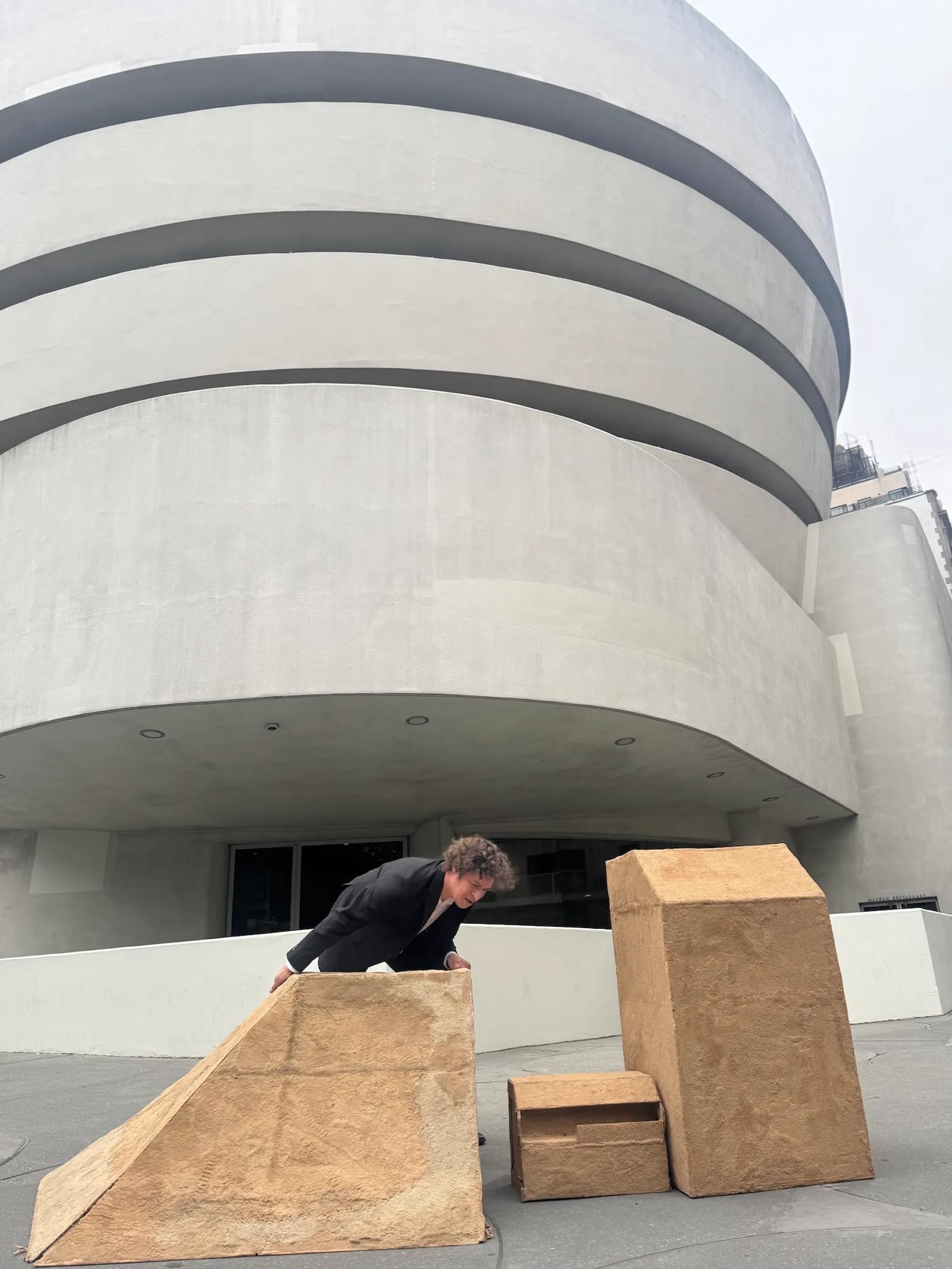
We are also activating a recurring public presence in the West Village: EL CONSULADO Takes the Street. Every other Saturday, the collective brings works, editions, printed matter, conversation, and informal public encounters directly into the neighborhood. It is a way of taking the symbolic embassy outside, making it visible at street level, and allowing the project to meet people without the formal threshold of an institution, while at the same time performing the duties—and dressed institutionally accordingly—of consulates doing consular work.
Alongside these confirmed activations, we are developing a series of larger curatorial projects that expand EL CONSULADO’s field of action. These upcoming exhibitions move through questions of the body and self-inscription, state-sponsored space debris, economies of extraction, and the strange afterlives of failed systems. They are projects about what continues to circulate after structures collapse: images, resources, gestures, memories, vessels, bodies, and forms of relation that amalgamate in uncommon locations no one ever transits, ones we cannot unveil publicly at the time of this interview.
What we can say is that we are interested in the spaces where political histories become material; where displacement is registered not only as geography, but as pressure, residue, repetition, and form. Some of these projects will bring Venezuelan artists into dialogue with artists from other diasporic communities in New York. Others will think through infrastructure, resource economies, and symbolic architectures as unstable containers for memory and power.
What excites us is that EL CONSULADO is becoming more than a single project or event. It is becoming a happily undefined cultural infrastructure: consistently mobile, experimental but committed, diasporic and grounded on a deeper level. Our goal is to keep creating spaces where artists can gather, circulate, and be seen, while building alliances across communities whose histories of displacement, political pressure, and cultural resilience and resistance resonate with our own.
In this next phase, EL CONSULADO remains a nomadic structure of presence, a movement of cultural life across borders, through contingencies, and in the hands of many. A gathering point set loose from place. A replicable, “radicant” model that aims to expand through outposts and cultural dispatches worldwide. “An everywhere kiosk.”
Comments
Leave a comment