

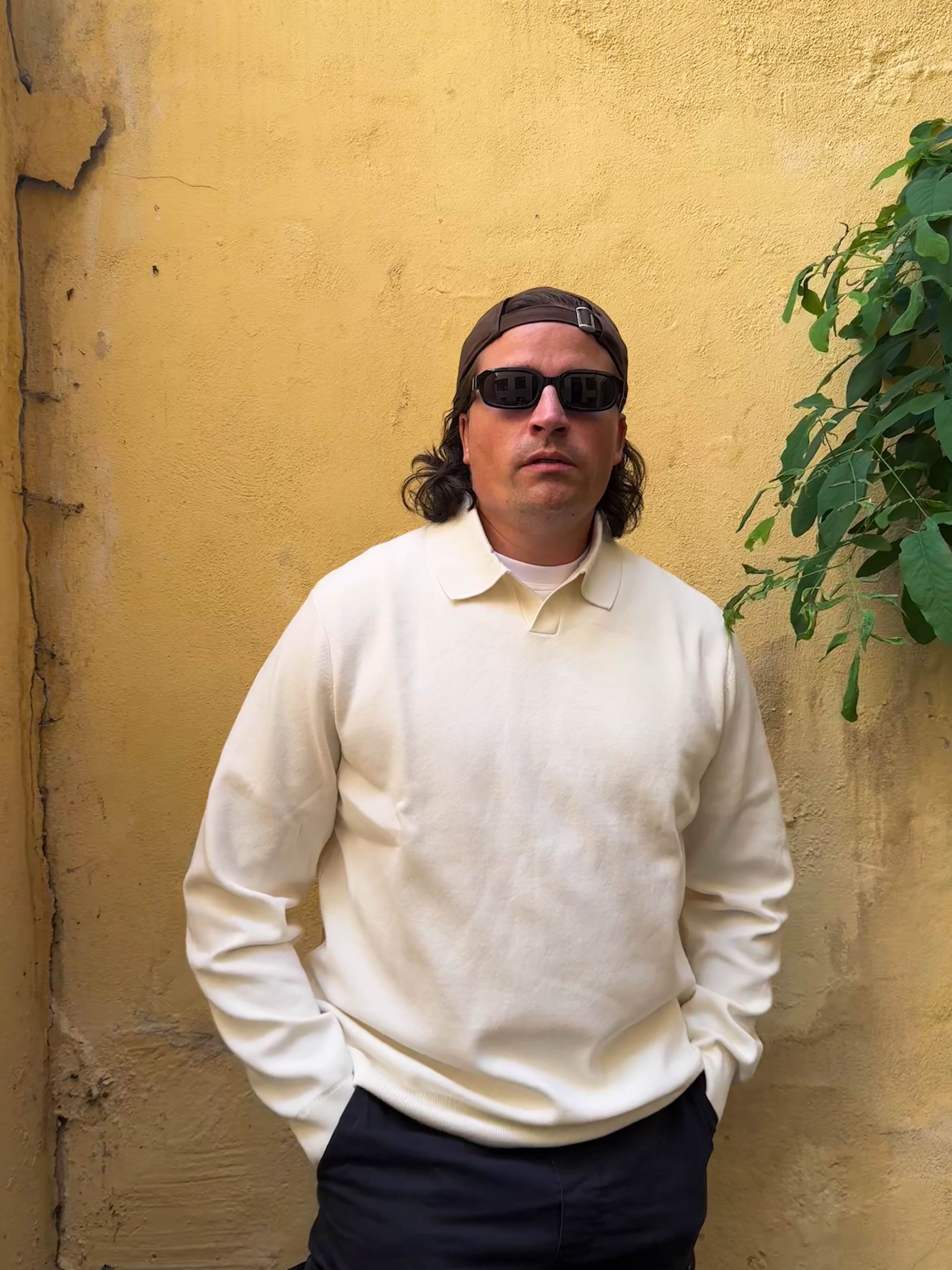
BB: When you first launched OVERSTANDARD in 2021, Rubén, what did you feel was missing from the existing landscape of cultural publications?
RP: I was looking at the cultural landscape here in Denmark, Copenhagen in particular, and nothing resonated with me. The media / publications felt boring and repetitive. The creatives that were spotlighted were super uninteresting to me.
You could tell that the people who was running them, were trying to be cool and hip, but in reality they were 40-50 year old hype beasts, from small towns, academic backgrounds and no clue of what was really moving out there. They were hoping to get into good graces with the various Danish “in-people”, by featuring them. That inauthenticity, as well as my curiosity for people, made me start OVERSTANDARD.
BB: OVERSTANDARD has remained independent since 2021. Has that independence become essential to the magazine's editorial identity, or simply the practical way you've chosen to work?
RP: I think it’s both. Independence was initially the only way for us to build OVERSTANDARD, but over time it’s become essential to the publication’s editorial identity.
It allows us to follow our curiosity, support emerging voices and cover work because we genuinely believe it deserves attention, rather than because it fits an established agenda or commercial expectation. It also gives us the freedom to move between disciplines, formats and perspectives without having to define the publication too narrowly.
Of course, independence comes with limitations. It often means working with fewer resources and taking on more responsibility ourselves. But those challenges have also shaped the character of OVERSTANDARD. The publication has grown through personal relationships, trust and a direct engagement with the people we feature. So independence is no longer simply a practical arrangement. It has become part of how we think, how we make decisions and how we preserve the openness and sincerity that we want the magazine to represent.
BB: Reading OVERSTANDARD, I had the impression that the magazine is less interested in delivering conclusions than in creating space for thoughtful conversations. Is that something you've consciously tried to build into its editorial voice?
RP: That’s an interesting observation that I’ve never thought of before. Thinking back to the very beginning, when it was just me, writing every article, and doing every interview, it was never the goal to deliver any type of conclusion. Conclusions often come from being uninformed or ignorance, so that was never the goal. The vision has always been to document each creatives journey, as well as possible. From early childhood, loss, failure, depression, success, and everything in between, because I’m genuinely curious about that. I look at the 300+ interviews I’ve done as written documentaries. So you’re right, thoughtful conversations.
BB: If someone encountered OVERSTANDARD for the first time today, what would you hope they understood about the publication beyond the stories themselves?
RP: I would hope they understood that we are driven by genuine curiosity and a belief in giving creative people the space to express themselves in their own words. We are interested in the people behind the work: their experiences, doubts, motivations and ways of seeing the world. I would also hope readers sensed that we are not interested only in what is already established or widely recognized, but also to create a space for emerging voices, unexpected perspectives and work that might otherwise be overlooked.
BB: What conversations do you hope to elicit after readers finish an OVERSTANDARD piece?
RP: There’s so many genres, and so many different pieces to choose from. There’s the “happy, everything is good” pieces, and then there’s the, “I’ve been through some shit” pieces. I guess, overall, when a person has finished reading a piece, I hope that they’ll find something to relate to, whether it’s good or bad. Ideally, it should create curiosity, challenge an assumption or encourage someone to look at a subject from a different perspective. The most meaningful conversations are often the ones that continue beyond the article itself: discussions about why certain images affect us, how culture reflects wider social changes, whose voices are being heard and which ones are still overlooked. I also hope our pieces can create a sense of connection between the reader and the people behind the work. To go back to what we were talking about before, we are not interested in providing a final conclusion. Sometimes the best outcome is that a reader finishes a piece with a new question, a shifted perspective or a desire to explore further.
BB: OVERSTANDARD covers art, fashion, photography and design, but they rarely feel like isolated subjects. Do you think contemporary culture benefits from treating these disciplines as part of the same conversation?
RP: Definitely. Everything is connected. You can throw sports, cinema, and erotica, in there as well. It all fits under the same umbrella, it’s culture. it’s just a matter of how you see things.
Contemporary culture is increasingly shaped by exchange rather than separation. Artists work with fashion houses, photographers move between editorial, documentary and fine art, and designers draw from architecture, music, politics and digital culture. Treating these disciplines as isolated categories can therefore feel artificial.
For us, the most interesting stories often emerge in the spaces where those boundaries become unclear. A fashion collection can function as social commentary, an exhibition can influence visual identity, and a photograph can communicate ideas about beauty, class or belonging. Bringing these fields into the same conversation allows us to understand not only the work itself, but also the wider cultural conditions that produced it. At the same time, it’s important not to erase what makes each discipline distinct. The goal is not to collapse everything into one category, but to explore the connections between them. Culture becomes richer when different practices are allowed to challenge, inform and transform one another.
Comments
Leave a comment