

I curl up on the sofa with a coffee and unwrap the book. It’s thick like a religious tome, suitably weighty, bound in a magenta cloth cover with a butter yellow flyleaf. I open it at random and my eye lands on: ‘Kind of at a loss’ (something in me releases). ‘I am a little high on pernod’ (relax even further, although pernod is definitely an acquired taste). It’s like I’m reading my own thoughts.
The book is the collection of notebooks that belonged to the American artist Eva Hesse. In this entry, dated 4 August 1966, Hesse is waiting for a friend to photograph her work. Filling time, she goes into detail about the dinner she’s prepared: ‘I made a salad consisting of cheese, ham, capers, red onion, jersey tomatoes, Italian egg tomatoes, pepper, cucumber, egg & lettuce […] Then ice-cream + good cookies – Drinks.’ This is just the kind of detail I like, an inventory that stretches back sixty years and immediately gets me thinking: what’s a good cookie in Eva’s book? I plan to make some version of this dinner myself very soon. She goes on to write ‘Almost one year’s work. There is lots! It is good! Very Good.’ I do some digging to find out which pieces were being photographed, pieces Hesse finds ‘impossible to dust, arrange plan on wall, even paint wall for photographing.’
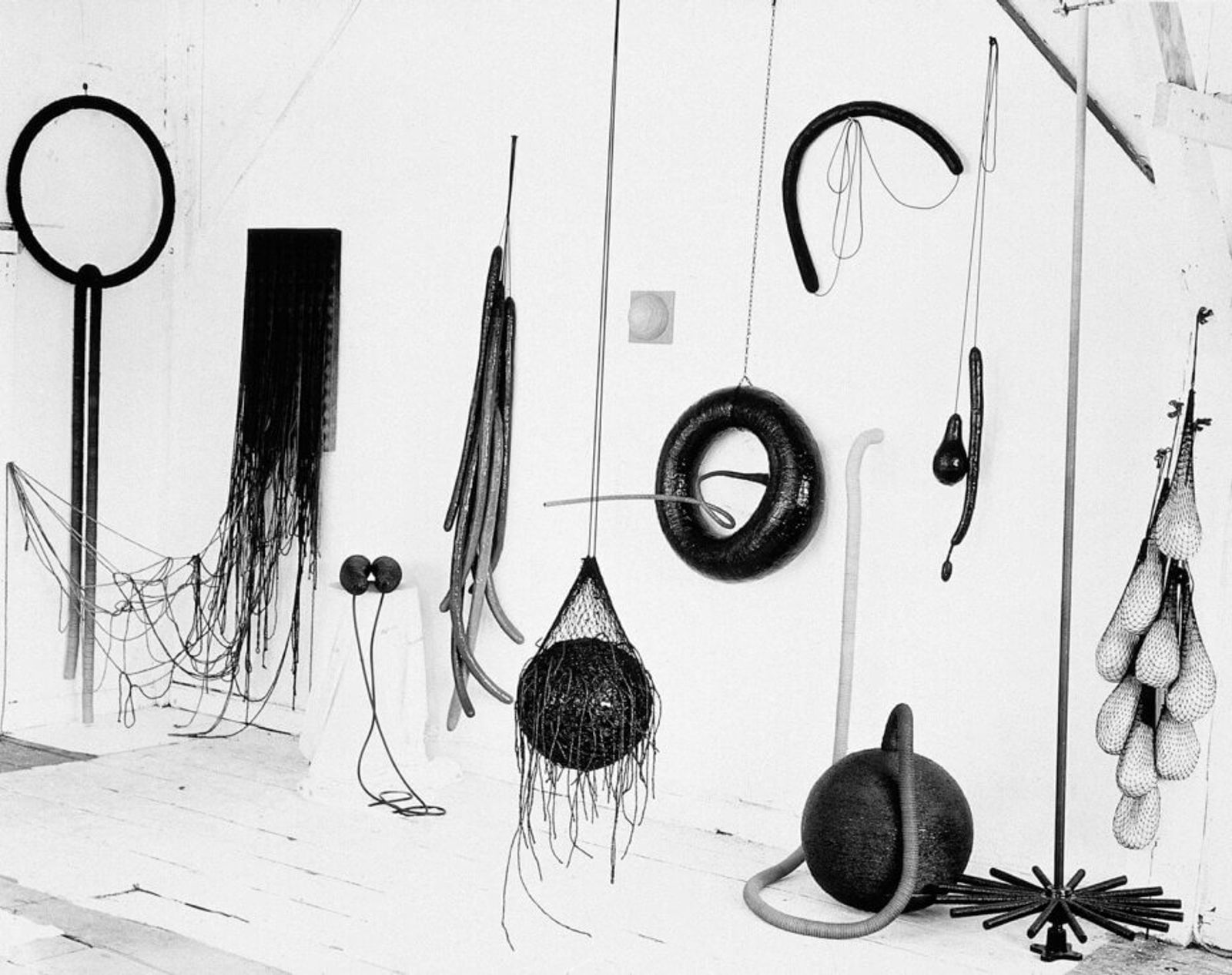
Eva Hesse's Studio. Photo Gretchen Lambert. © The Estate of Eva Hesse. Courtesy of Hauser & Wirth.
“Not a fear of failure, specifically – more like the risk of being seen.”
Dwelling on the dinner rather than the work, and not being able to bring herself to dust, mixes up priorities in a way that feels familiar. It’s not a lack of confidence that she’s describing. It’s more nuanced, a kind of mild paralysis that can hit when there’s something important to do, something meaningful that deserves our attention. Not a fear of failure, specifically – more like the risk of being seen. I’m sure Gretchen enjoyed the salad and that they had a good time photographing the work, chatting about all that lovely, sticky latex. Possibly they dusted the work together. But it speaks to certain times I want to go to the studio or talk to someone at an opening whose work I like and want to connect with, and part of me gets in my way. Ruminating about other things. To read someone else doing it in real time – Eva Hesse, no less! – is reassuring.
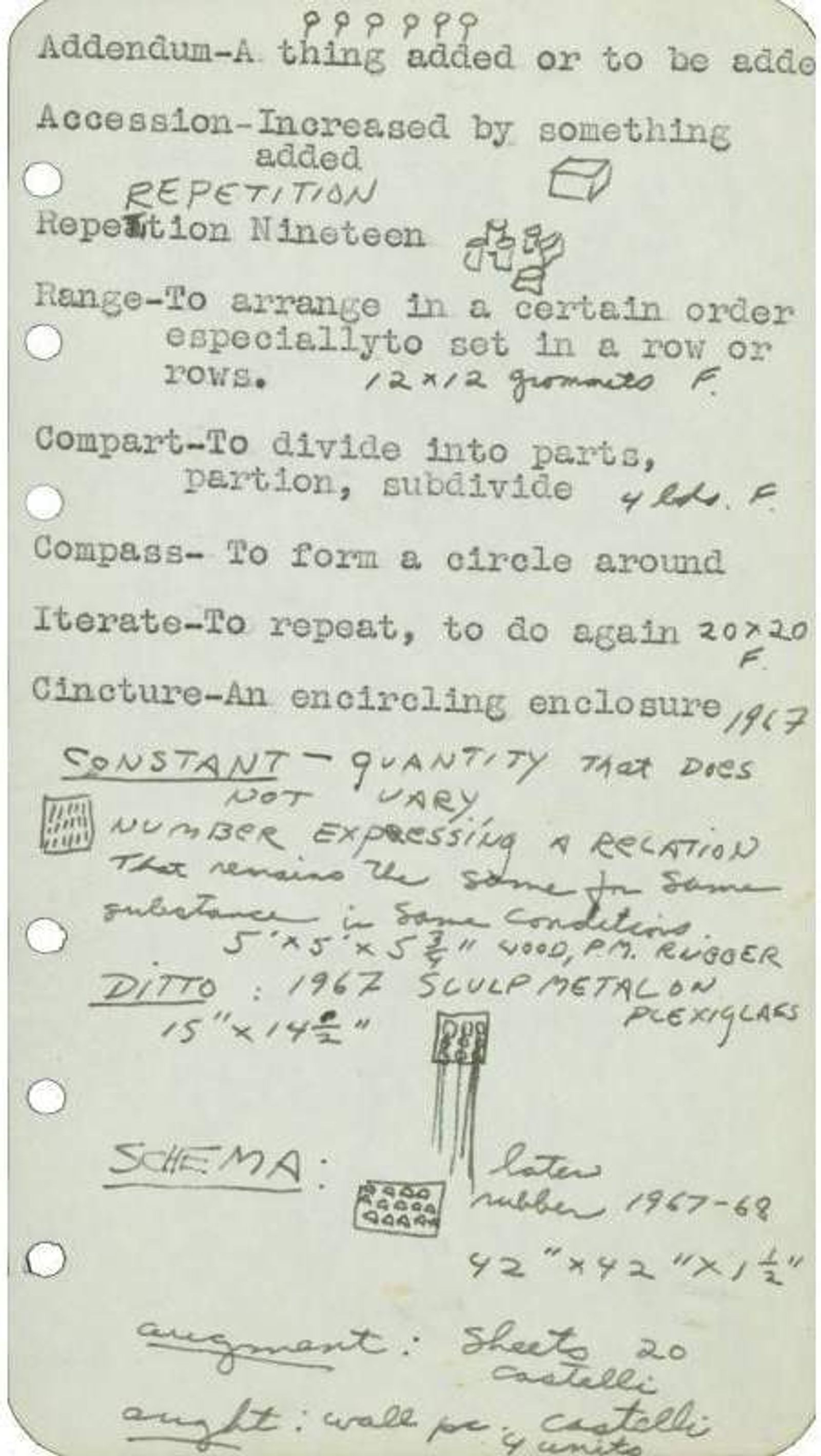
Notes and sketches from Eva Hesse's notebook 1967-8. Eva Hesse Archive, Allen Memorial Art Museum, Oberlin College, Oberlin. © The Estate of Eva Hesse. Courtesy of Hauser & Wirth.
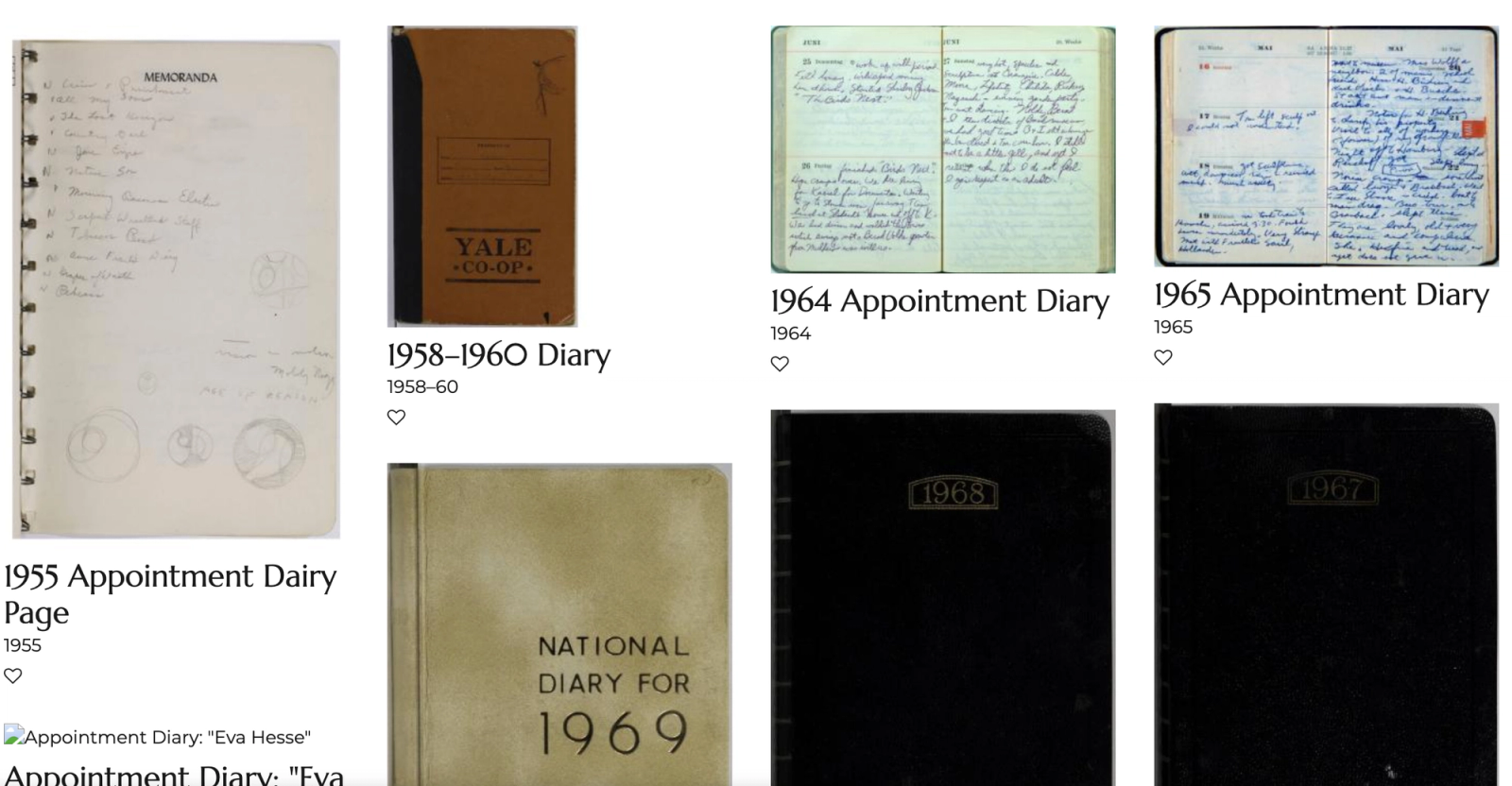
Written between 1955 and 1970, the diaries cover everything: from materials and heartache to taxi fares, lists of people to call and errands to run, books she’s read and minor (and major) grievances. They contain reflections on artmaking, ideas for pieces, notes, and to-do lists. Reading the diaries gets me thinking about how artists’ writings can help us navigate a creative life with all its ups and downs: ‘Where am I going, why and is there an idea or too many different ones?’ These questions echo across contexts and time.
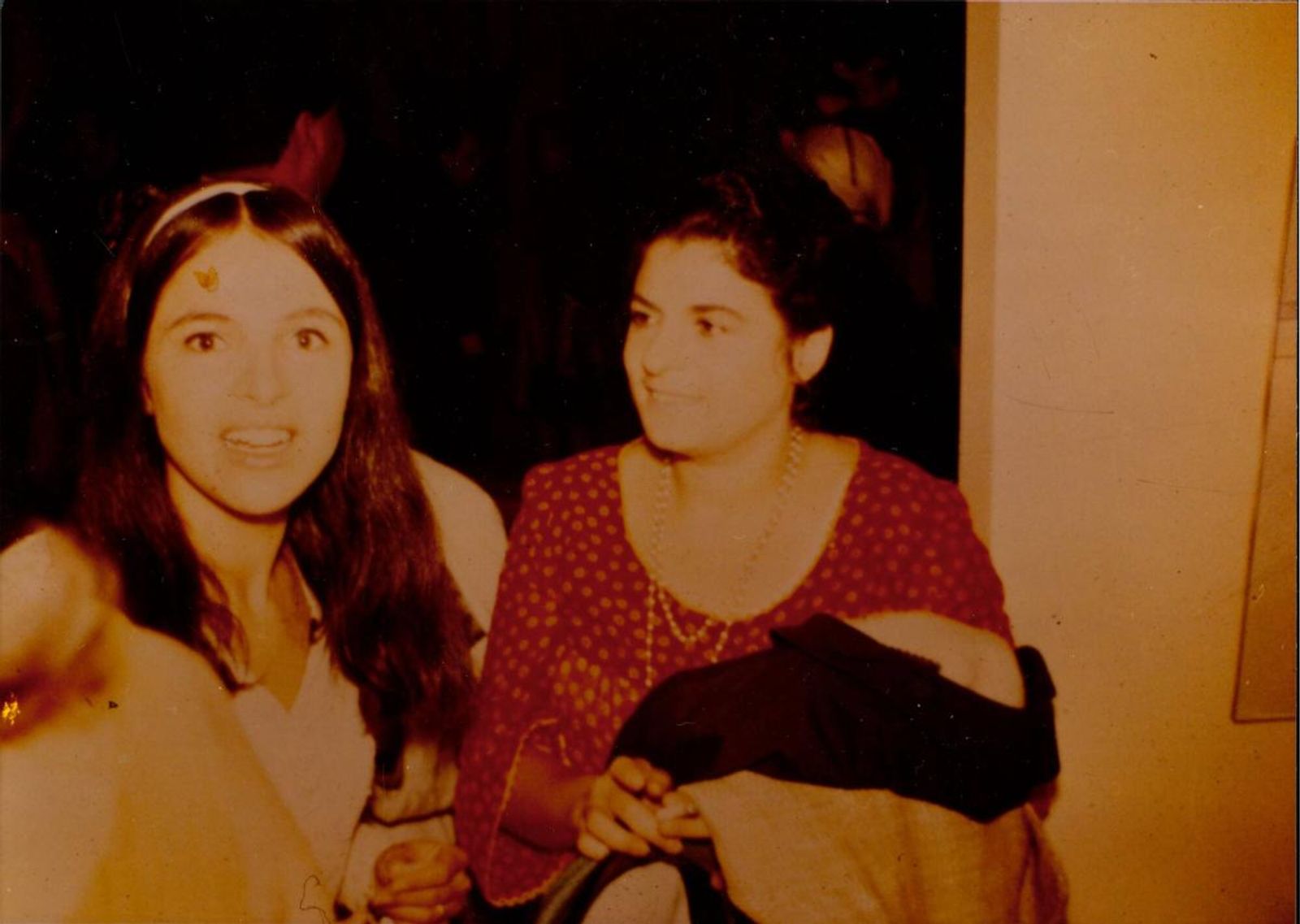
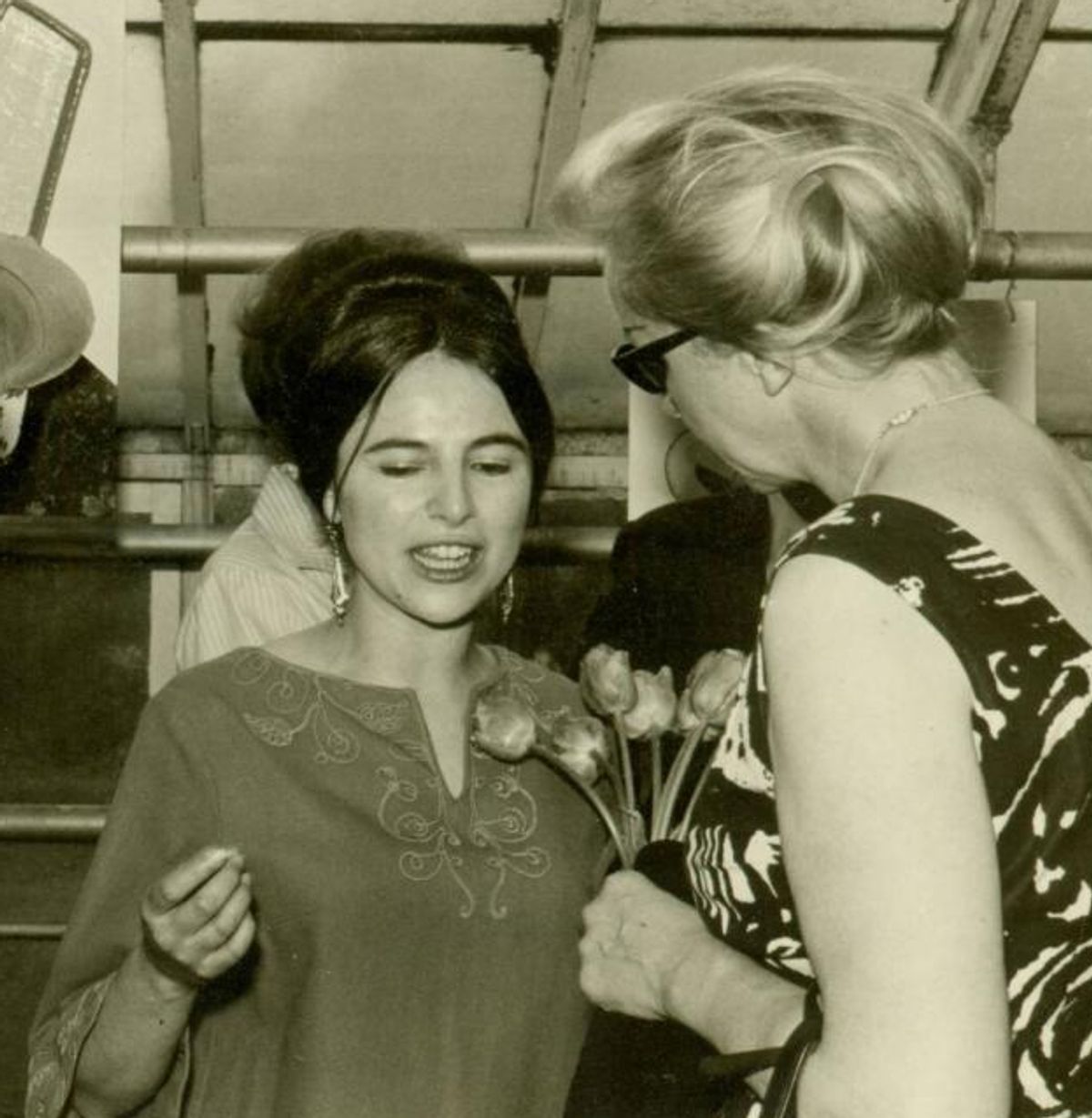
Photograph of Eva Hesse and Rosie Goldman at the opening of Eccentric Abstraction, Fischbach Gallery 1966. Eva Hesse Archive, Allen Memorial Art Museum, Oberlin College, Oberlin © The Estate of Eva Hesse. Courtesy of Hauser & Wirth.
“... A kind of ecosystem where art practice sits in the intersection between chores, dreams, ideas, frustrations, social faux-pas, and the occasional romantic catastrophe (ugh).”
Hesse writes: ‘I dread to be accepted – respected & loved for what I am not’, and switches to ‘I want to be surprised. To find something new’. There is a back and forth here that gets to the heart of wanting to pursue something in the work that is real, that is about your own weirdness, making more of it. (It reminds me of something Simeon Barclay said during a Q&A about making sure your shame is in the work somewhere, as in: the stakes have got to be high.) Trying to get somewhere new and surprising yourself along the way seems like the best sort of invitation into the practice. Re-centring. But immediately Hesse shifts to comments such as: ‘I will make toast. Have very little butter […] Hardly the point at all.’ It is hardly the point at all, but it’s also exactly the point. The eye is in the detail, the little things that surround the work. This mixing up of the everyday with more serious reflections speaks to the way we constantly move between roles, a kind of ecosystem where art practice sits in the intersection between chores, dreams, ideas, frustrations, social faux-pas, and the occasional romantic catastrophe (ugh). The writings inspire work and help steer us through moments of uncertainty, both in the studio and beyond.
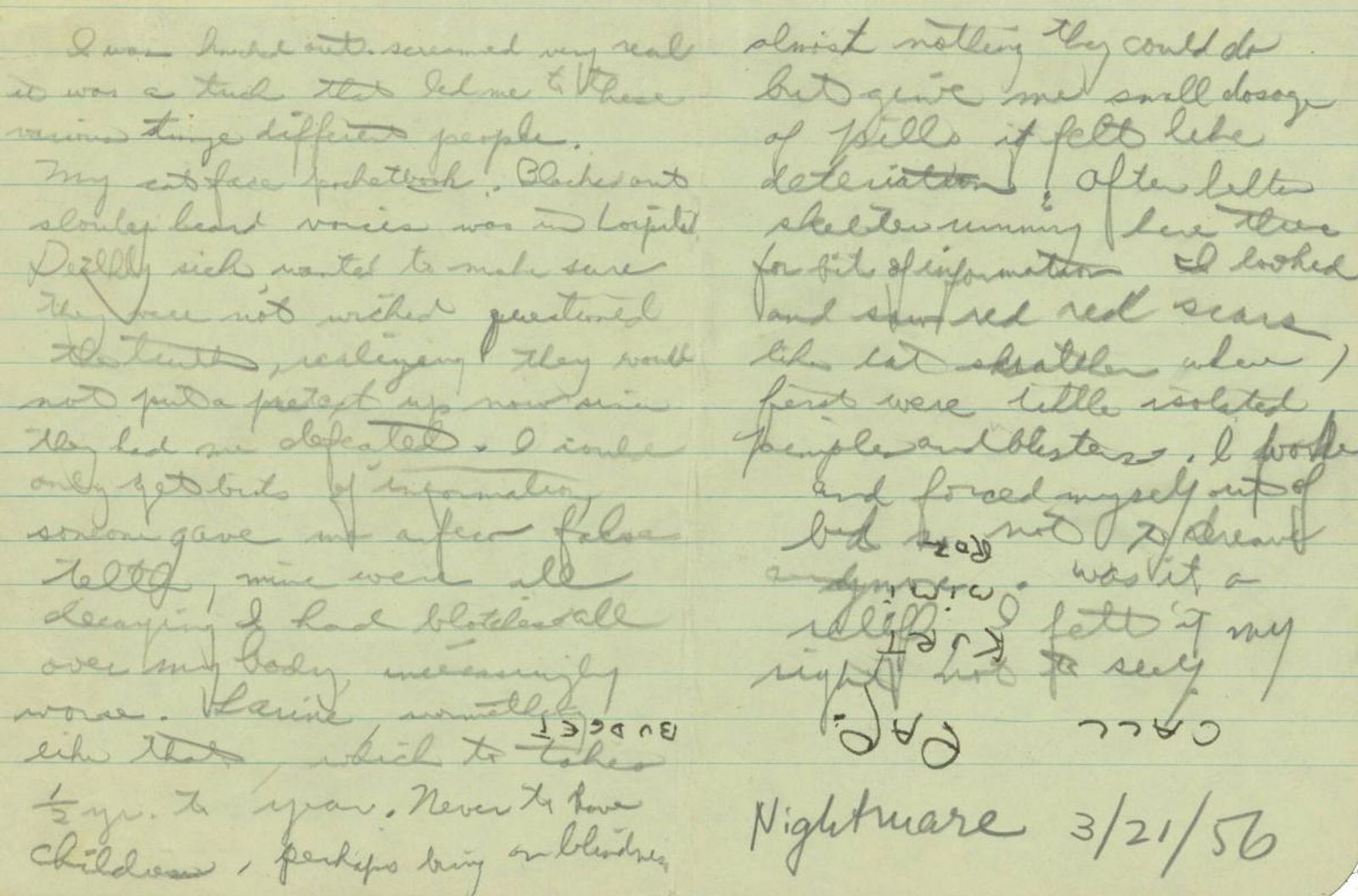
Personal Writings Nightmare. Eva Hesse Archive, Allen Memorial Art Museum, Oberlin College, Oberlin © The Estate of Eva Hesse. Courtesy of Hauser & Wirth.
Hesse oscillates between freedom and restraint: ‘I must be totally engrossed in my own work, it is the only thing that is permanent, matures and is lasting’ and ‘Get to studio as soon as you can / Remember not to bug yourself nor others’ This entry is crossed out – because she managed not to bug herself (nor others)? Or because she didn’t? Bugs are then fresh in my mind when I read: ‘The gutters filled with creepy things and people and my creepy thoughts fill me and I cannot rid myself or myself – nor live!’ Bugging people, creepy things… it’s visceral, visual.
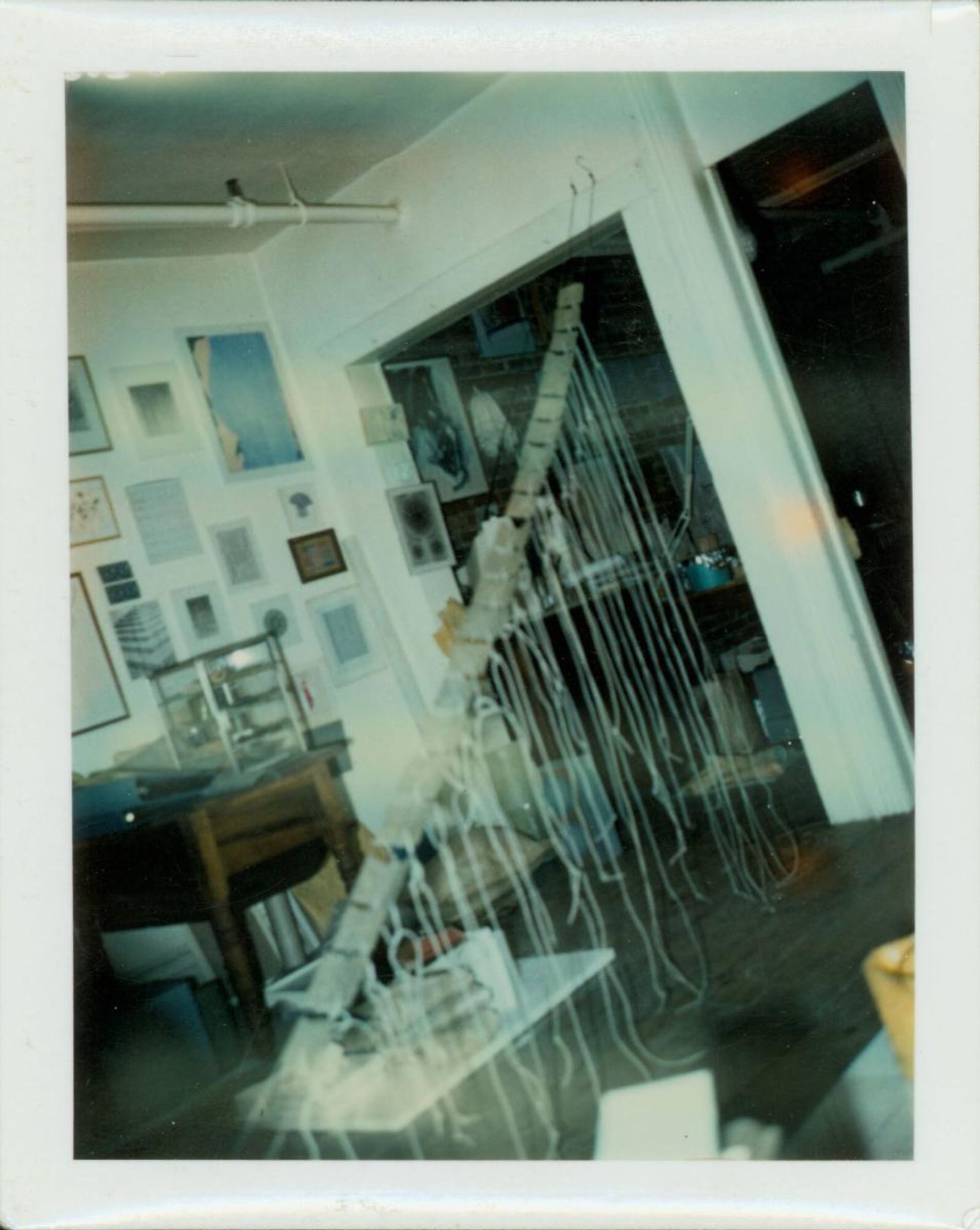
Photograph of Eva Hesse Artwork: Vinculum II ca. 1965. Eva Hesse Archive, Allen Memorial Art Museum, Oberlin College, Oberlin © The Estate of Eva Hesse. Courtesy of Hauser & Wirth.
“Reading the diaries feels like sitting in the pub after a PV, or having a studio chat with a close friend, where you move from engrossed material conversation to the latest series you watched or book you read to who you saw and that strange dream you had last night…”
Running late for work, I open the diary for a quick scan: ‘This canvas is a bitch. Now I can’t read it nor do I understand it’; ‘It’s all shit! ! shit!’ The melodrama! The way it’s mixed up, moving between deep thoughts about structure, and a more gossipy, sardonic side. Reading the diaries feels like sitting in the pub after a PV, or having a studio chat with a close friend, where you move from engrossed material conversation to the latest series you watched or book you read to who you saw and that strange dream you had last night… These writings affirm how the work is happening in real time within the folds of other conversations and tasks. She airs frustrations with ‘all those men with their great big sculptures’, and rants about a particular gallery being ‘the new thorn in my life’ (I’m not naming names, you’ll need to read the Diaries to find out who she’s talking about). There’s an edge that comes through, revealing the raw human thoughts that bring their own energy to making. I love the sense of community that emerges through the numerous mentions of friends Mel Bochner, Rosie Goldman, Nancy Holt, Sol LeWitt and Lucy Lippard, prominent figures on the scene, yet also just people she went for a drink or dinner with. It all connects.
These entries provide solace, catharsis. It’s the kind of writing I like best: generous and dialogic. Reflections such as: ‘it’s not what you’re used to seeing / that does not mean it is negative’ inspires me to get back into the habit of writing about shows I’ve seen, as well as things I’m working on: ‘I did a drawing. I really like. now at moment. will eagerly await tomorrow, with hope that it will still mean something to me then…’ She encourages or even coaches herself: ‘Risk take new chances’. This note goes up in my studio.
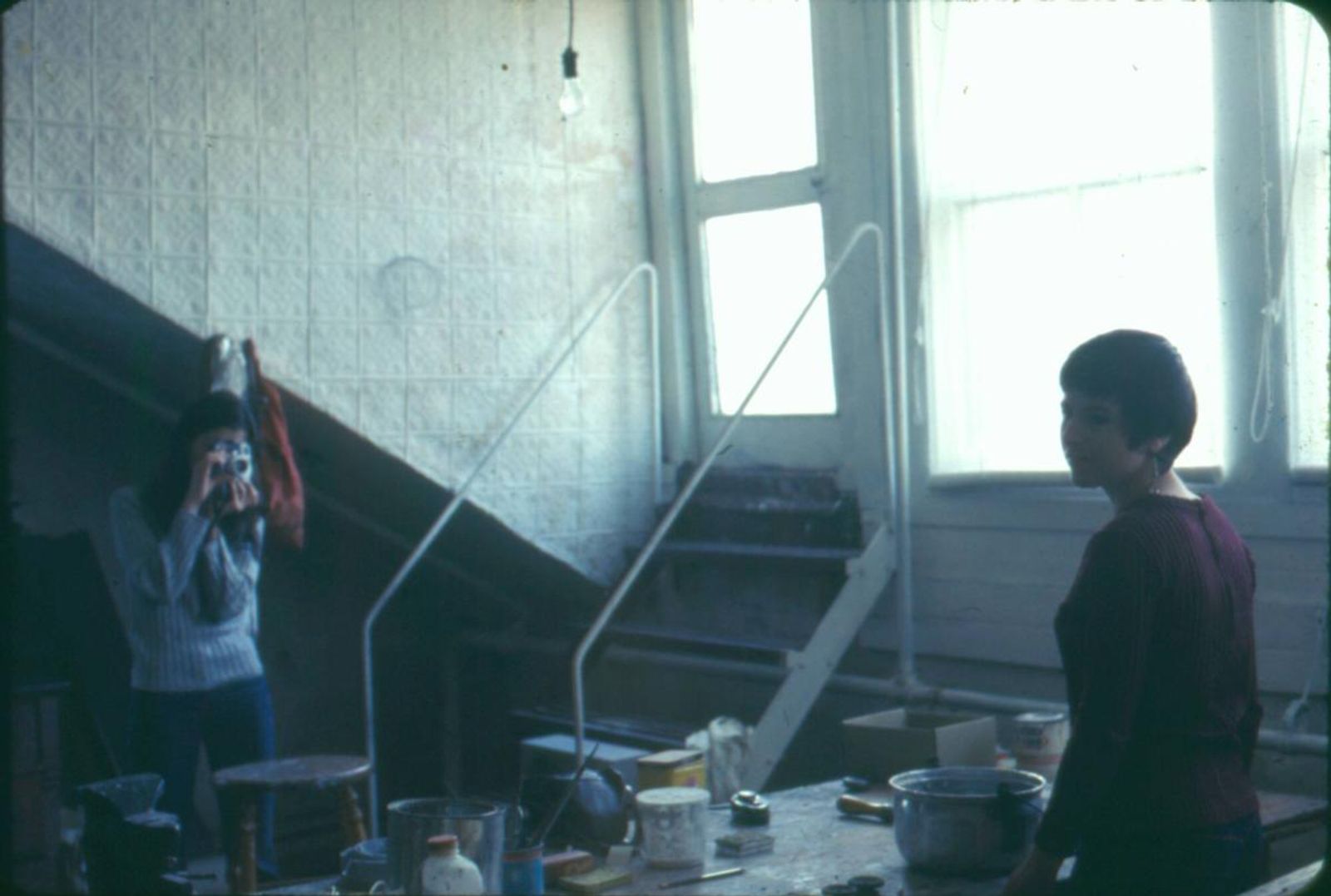
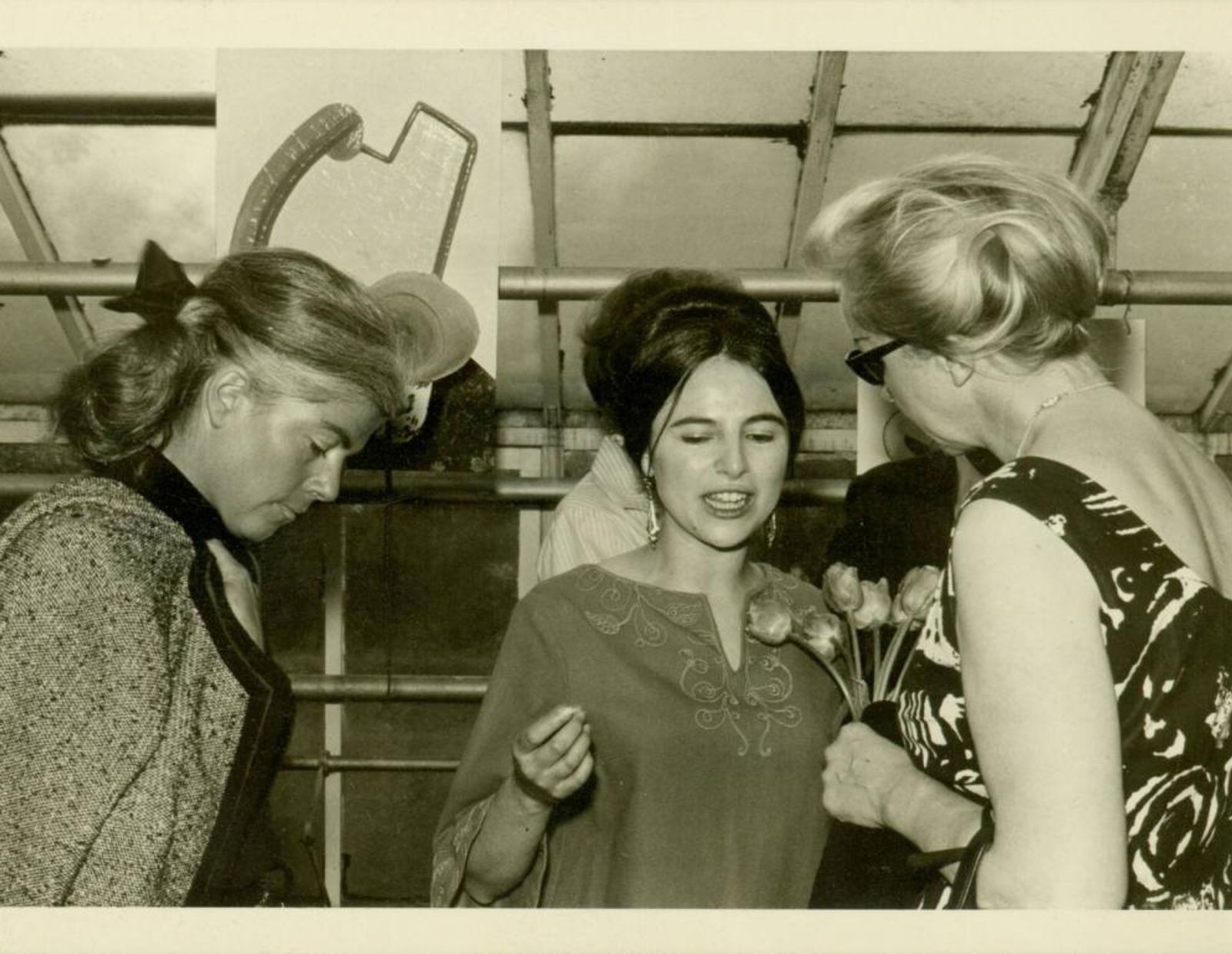
Colour Slide of Hesse and Rosie Goldman. Eva Hesse Archive, Allen Memorial Art Museum, Oberlin College, Oberlin © The Estate of Eva Hesse. Courtesy of Hauser & Wirth.
Her approach to working is ambitious: ‘I want to free myself of all falseness, misconceptions, dishonesties but mostly from the bonds of self-doubt + torment. How to do it’. ‘How to do it’ is not posed as a question, nor actually answered (can it ever be?), but just left there, floating in the air. A kind of direction. Or non-direction, within which ‘kind of at a loss’ is a necessary part.
The writing shows how art is part of this enmeshed knot into which everything feeds. Of course, reading an artist’s personal notebooks comes with all sorts of considerations, and it would be neglectful not to mention the recurrent illness, the breakdown of her marriage, emotional turmoil… At points it’s stark and even painful to read. She feels things deeply and uses the notebooks as a tool to work through her emotional states. Yet this also encourages empathy, and through this, a deeper personal connection to her and the work. The personal nature of the writing and its attention to the practice is also what is real and refreshingly frank. And the frankness is what makes her work just so good. My copy of the diaries is too heavy for me to carry around in my bag, but it’s on the table, butter yellow flyleaf catching my eye.
[Eva Hesse: Diaries are published by Yale University Press and Hauser & Wirth, London: 2020. All entries quoted above preserve her idiosyncratic spelling, punctuation and grammar.]
Comments
Leave a comment