

As an artist, teacher and curator, I’ve got a problem with people.
More specifically, I have a problem with what it means to work with people in an artistic practice.
This is not a new affliction. It has been developing for about 25 years.
It started when I was an eager A Level Art student, fascinated by the technicolour imagery of Martin Parr. One afternoon, skiving off period 6 English Literature, I drove my 1984 Vauxhall Nova to Manchester Airport. I had the idea to photograph retirees on their way for some winter sun.
Strolling up to the holiday makers, I zoomed in on what I then thought were amusing visual codes: pristine white Reebok Classics, blue rinses and tracksuits. I felt extremely sophisticated. In the check-in queue, I asked people about their destinations. Benidorm, Gran Canaria, Tunisia. I asked them to pose, delaying their journeys and duty-free purchases. I printed the images, capturing these people within the pages of my sketchbook. Returning to school, I had accessed an in-joke: that of the “knowing artist”. Yet humming underneath was an awareness that an exploitative one-way transaction had taken place.
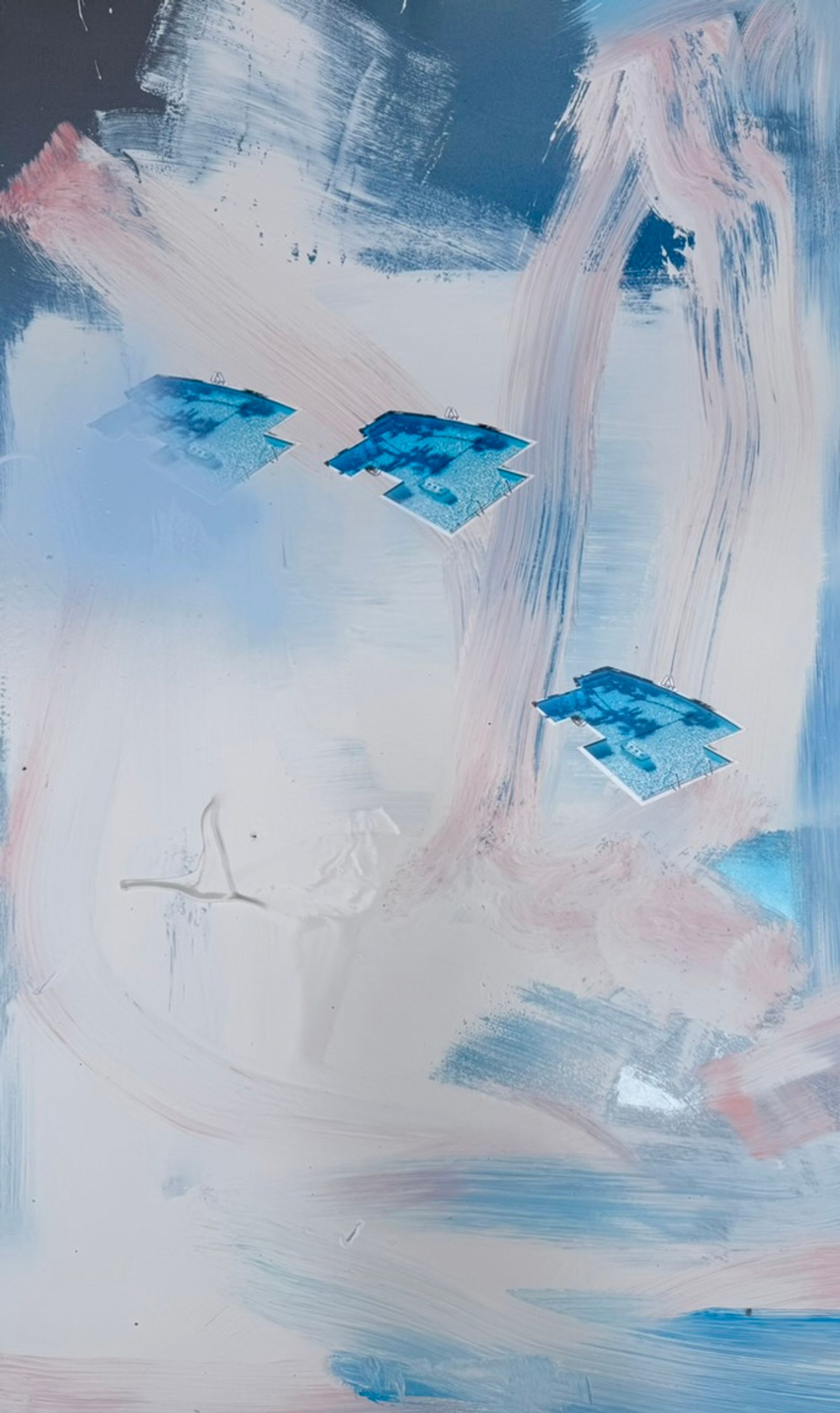
Oliver Herbert, Resort 1,2,3 (detail), Oil, acrylic and mixed media on aluminium sheets, 180cm x 100 cm, 2025.
Like so many moments from my teenage years, I cringe when I look back at my first misadventure into this kind of work. I had wasted people’s time for the sake of my own academic benefit. I had extracted something from them. Yes, my prefrontal cortex was still developing, but I wish I had the critical language to understand the assignment: the delicate nature of what we might call engagement or public practice.
I’ve continued to work with people, and perhaps this initial problematising shaped my interest in what engagement really means. I was a secondary school art teacher for ten years, and within that role I became increasingly aware of the power dynamics at play: what I embodied as a white cis man in my 30s, and how curriculum design could reproduce exclusions, silences and colonial ways of seeing.
“My discomfort was with the fantasy of abundance on one side (teachers, artists, galleries and experts) and deficiency on the other (communities and audiences).”
I then began working beyond the classroom, in community spaces, galleries and museums, continuing to question who I was, where I was, and what I was there for. My discomfort was with the fantasy of abundance on one side (teachers, artists, galleries and experts) and deficiency on the other (communities and audiences).
Al Barrett’s writing on radical political theology has helped me to understand this unease. Using the metaphor of centrifugal forces, Barrett talks about how churches, like galleries, seem to believe they already know how to gather, serve or include. But what would it mean to reverse the direction of travel? Not to invite people into our centre, but to allow ourselves to be pulled outwards.
This question followed me into my year at The Showroom, where I had the pleasure of running a one-year pilot youth engagement programme. Named Imagining Futures, it was a schools and young people’s engagement initiative within a long-established and respected central London space. It was incredible to be part of an institution with such a rich history of questioning what it means to have a socially engaged practice.
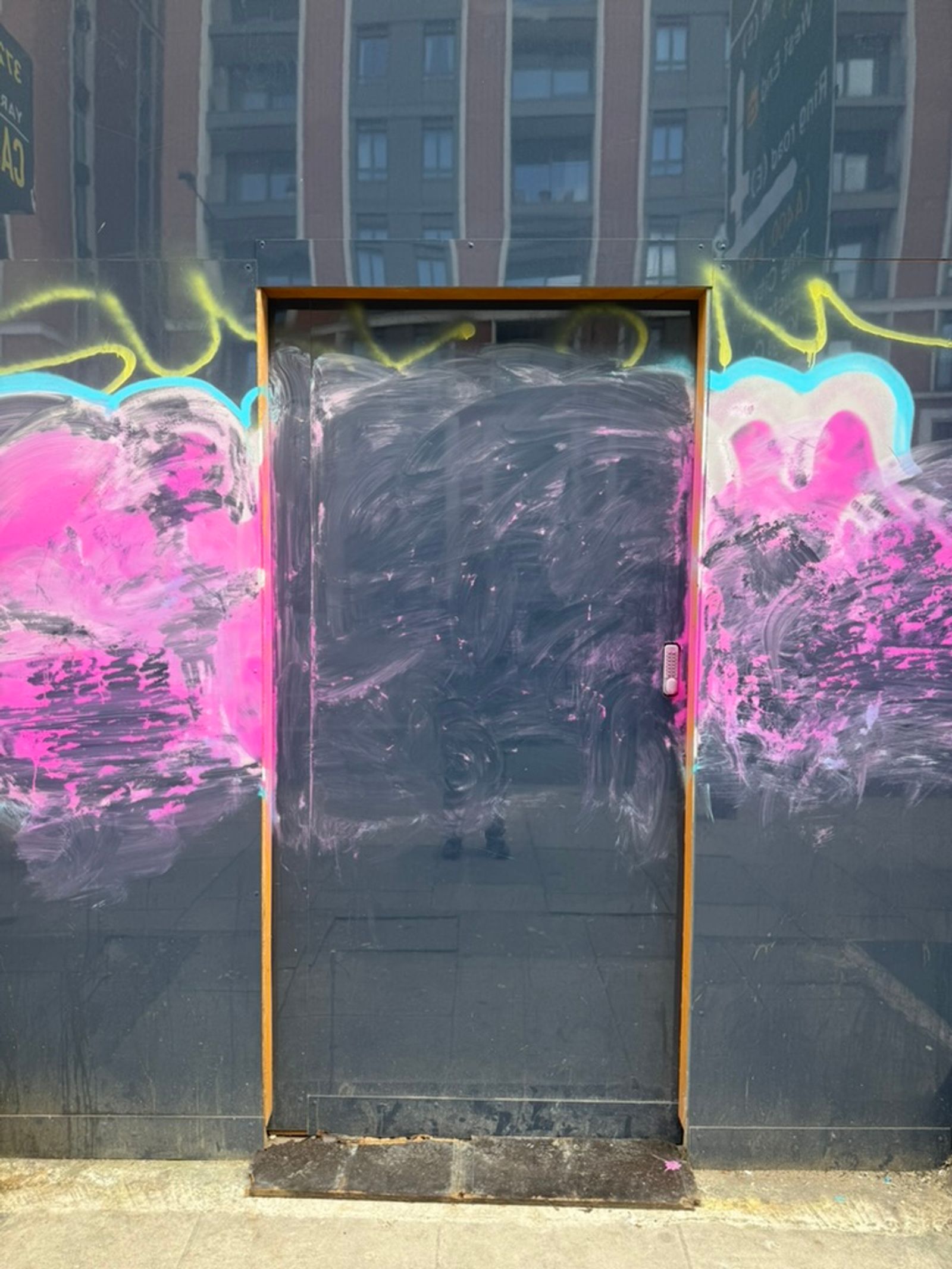
Edgware Road, 2026.
When I first arrived, I was handed a plastic storage box labelled “youth workshop materials”. Inside were lollipop sticks, a jumbled roll of plasticine, some mod-rock and elastic bands.
“I found this in storage. I don’t know if it’s any use, feel free to throw away anything you don’t need,” my colleague explained.
Alongside the box, I inherited a steel office engagement cupboard with a rolling sliding door, which had a slightly 1980s executive realness about it. Rifling through the storage box and the cupboard felt like an act of excavation. I became an archaeologist, piecing together the remains of a youth engagement programme that had come before me, while trying to understand how my own work might operate within this institution and this area of London.
What did I have to offer that meant I needed to be here?
At first, I tried to label, contain and order the cupboard. I categorised the materials and asked them to behave. This became a parallel and futile exercise: planning a curriculum for a community I did not yet know. In a way, I had metaphorically shut myself inside this cupboard, expecting the community to come in and use the materials we provided.
Neat, structured and knowing.
Within a few weeks, I realised that this wasn’t going to work. I had inadvertently positioned the gallery as a space of abundance and the community as a space of need. I had my organised cupboard. We had exhibitions, a library, artists, an archive and experts.
Something felt wrong.
Walking around the local area, I realised that this dynamic needed to go into reverse. My programme didn’t need to bring people in. It needed to do something less centripetal. It needed to ‘outgage’ rather than ‘engage’.
The area surrounding The Showroom is often described through the language of deprivation, despite being located in one of the UK’s wealthiest boroughs. Every day I would walk through the market and get to know people. I met people whose expertise in tailoring, cooking, perfumery and informal community care far exceeded anything my cupboard could contain.
I could see this was an area of abundance.
These walks began to guide a material architecture that supported and structured my work with young people. For every workshop I organised, I decided to source materials from the market. The market seeped into my pedagogy.
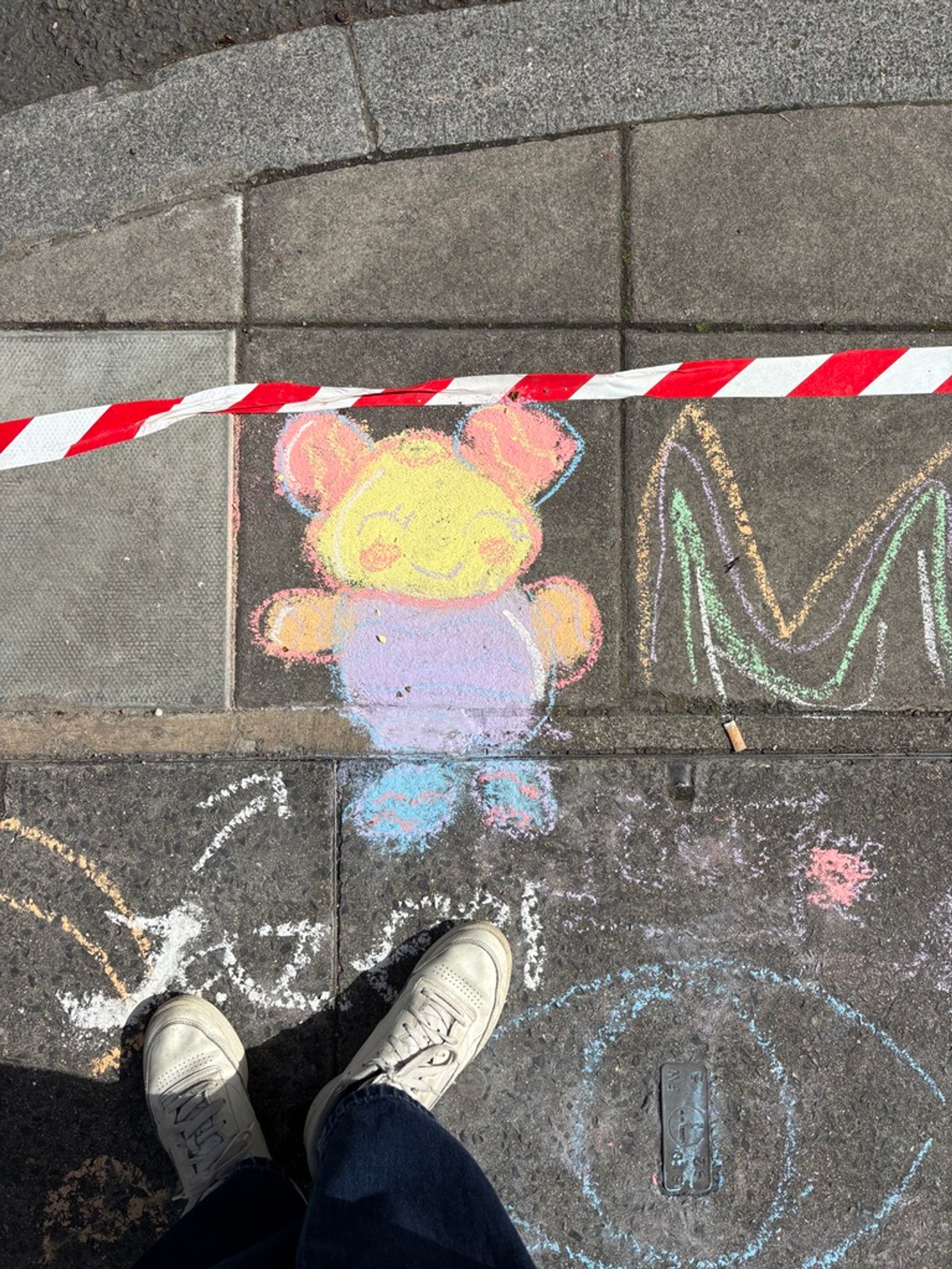
Drawing on the pavement with local young people, Penfold Street, 2025.
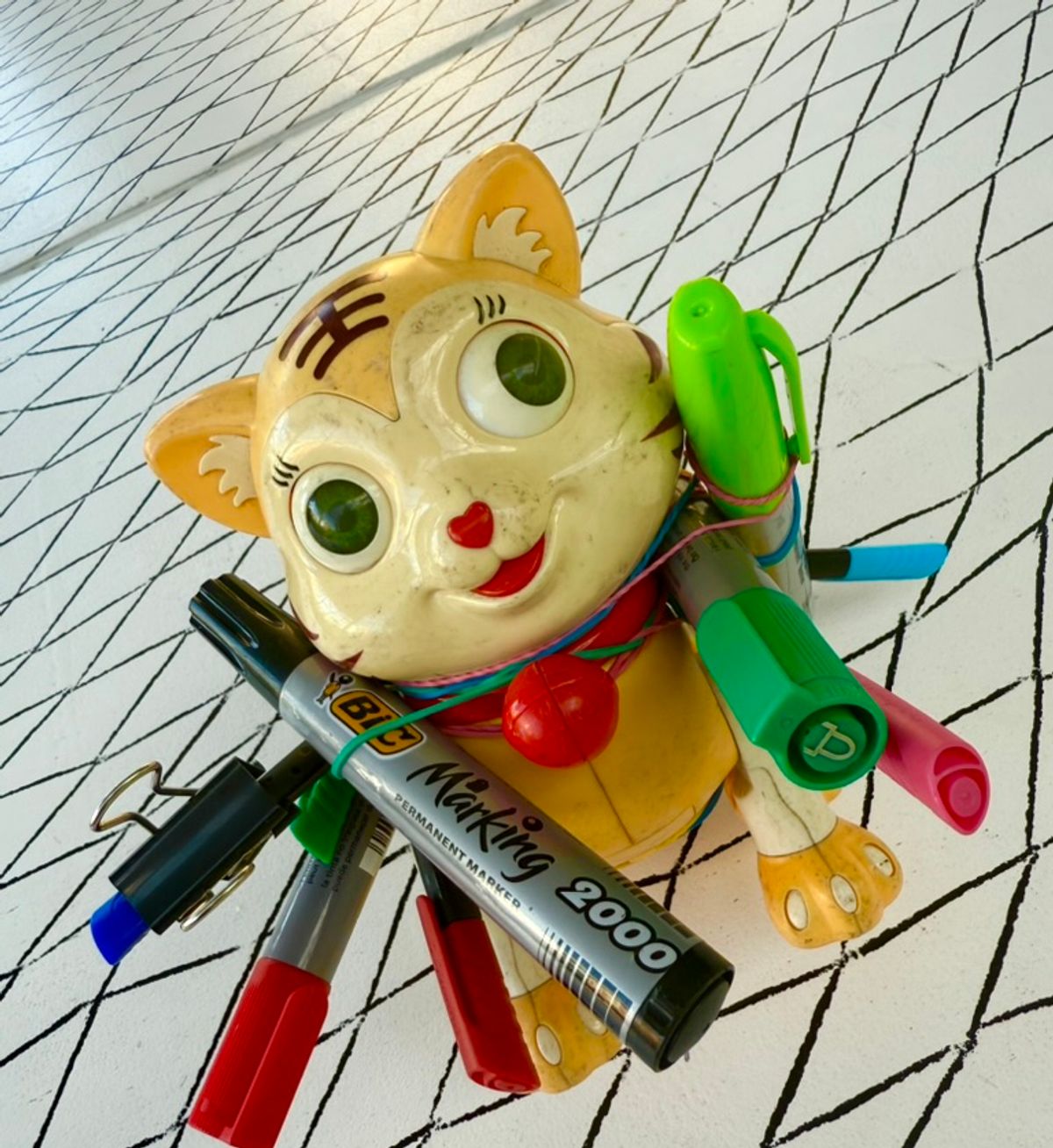
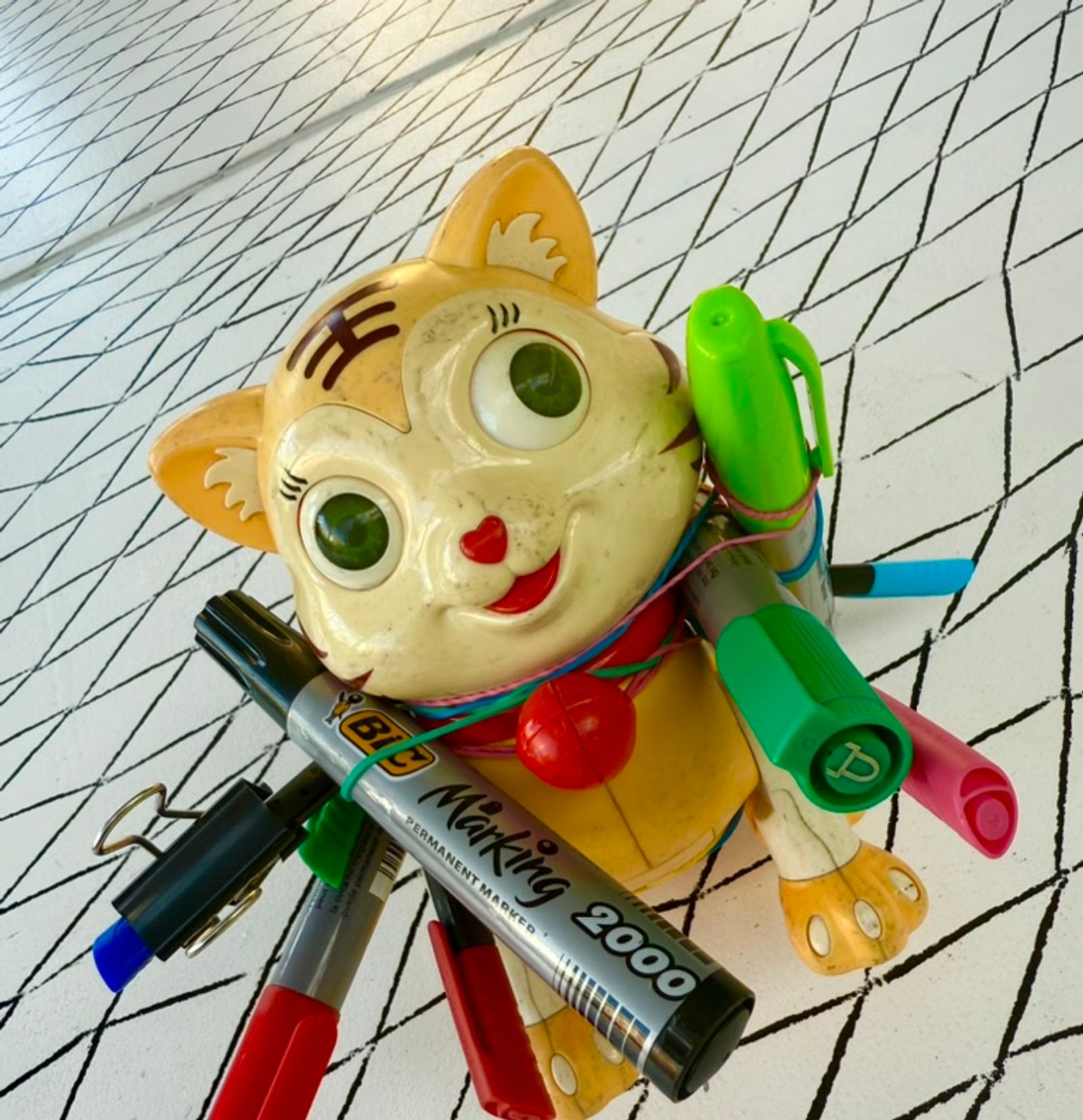
The office-coded residue that came with ordinary files and folders on my desk was replaced with fruit boxes and pallets from local traders. From market stalls, I acquired a collection of alien babies suspended in eggs of slime. I found a stack of vintage National Geographic magazines, with all their complicated colonial framings of looking, collecting and knowing the world. I bought a badge-making machine, which was a real hit; some thermal instant-print cameras, also a huge success; LED disco fingers, too complicated to explain. I also adopted a battery-operated chihuahua with light-up eyes and some Labubus.
By bringing these materials into the space, they became accomplices in an ongoing attempt to find ways of working together. Local young people would come to our workshops and events and use the materials they had just seen in the market they’d walked through.
They held the outside inside.
Mary Louise Pratt’s phrase “contact zone” feels useful here. She describes it as a social space where cultures meet under unequal conditions. That feels much more honest to me. A contact zone admits friction and that an encounter does not happen on level ground. This is closer to what I want from my work. Not the fantasy that artists and galleries carry culture from one world into another, but the possibility of making spaces where different histories, knowledges and energies become newly legible in relation to one another.
The engagement cupboard became its own contact zone.
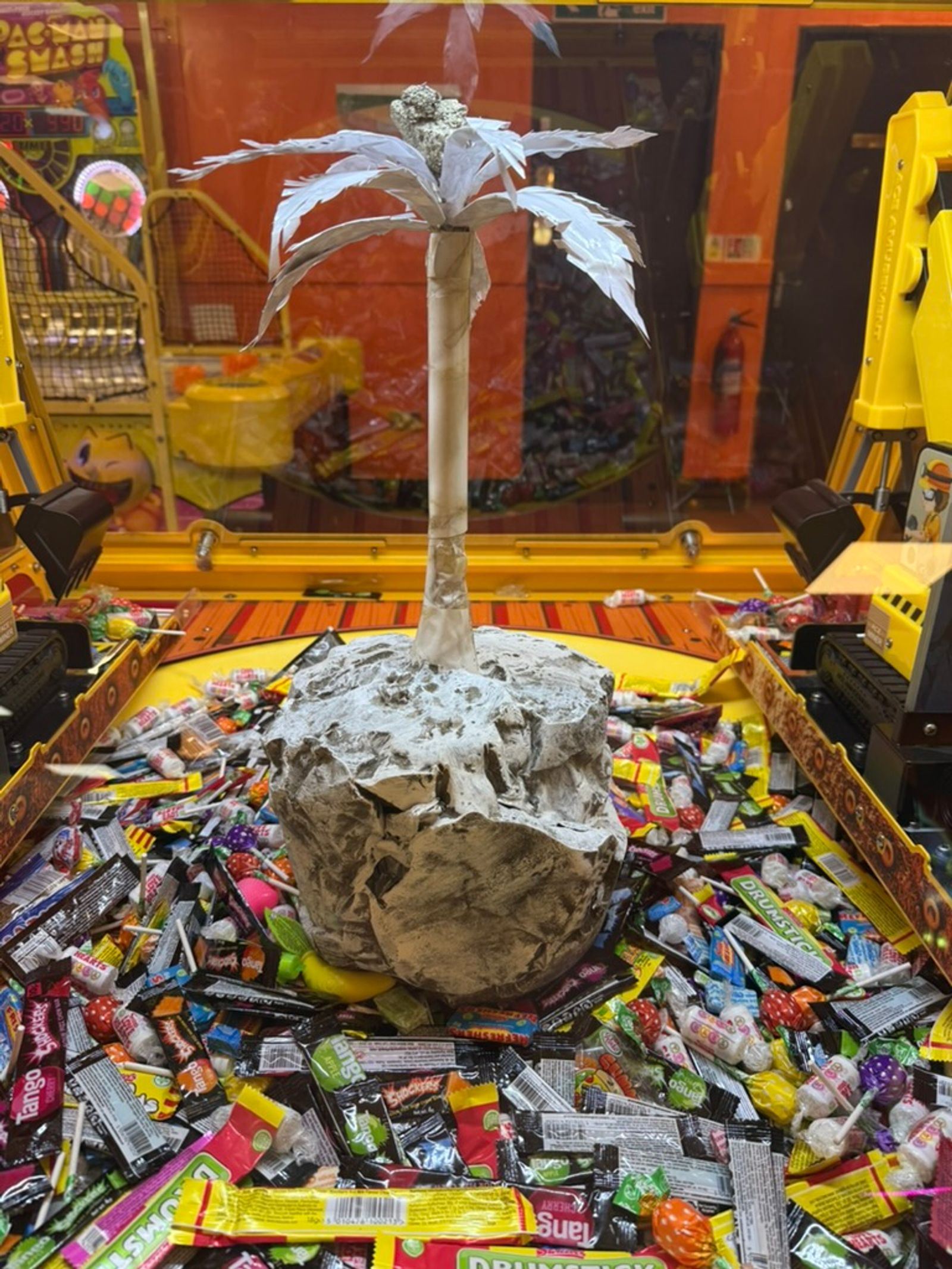
Island Thinking, mixed media site specific installation, variable dimensions, 2025.
Disco fingers and Labubus. Alien babies and National Geographic magazines. Fruit boxes, badge making, plasticine and elastic bands. Untidy, because that’s how my work needed to be. The cupboard became a materialisation of my own thinking. Its messiness was about something trying to permeate the walls of the gallery and its programme. A small space of disorder.
“If engagement has any value, it is not in its ability to deliver culture to others. It is in its capacity to undo the fantasy that culture was ever held by one side alone.”
If engagement has any value, it is not in its ability to deliver culture to others. It is in its capacity to undo the fantasy that culture was ever held by one side alone.
My year at The Showroom was transformative because I had to work from multiple directions. By the end, the cupboard was no longer a place where materials were stored until a community arrived. It had become a record of being pulled outwards, a tornado in reverse, air moving out rather than twisted in.
I’ve come to learn that public practice can never be mastered through practice. It has to remain vulnerable to what enters, what interrupts, and what refuses to fit.
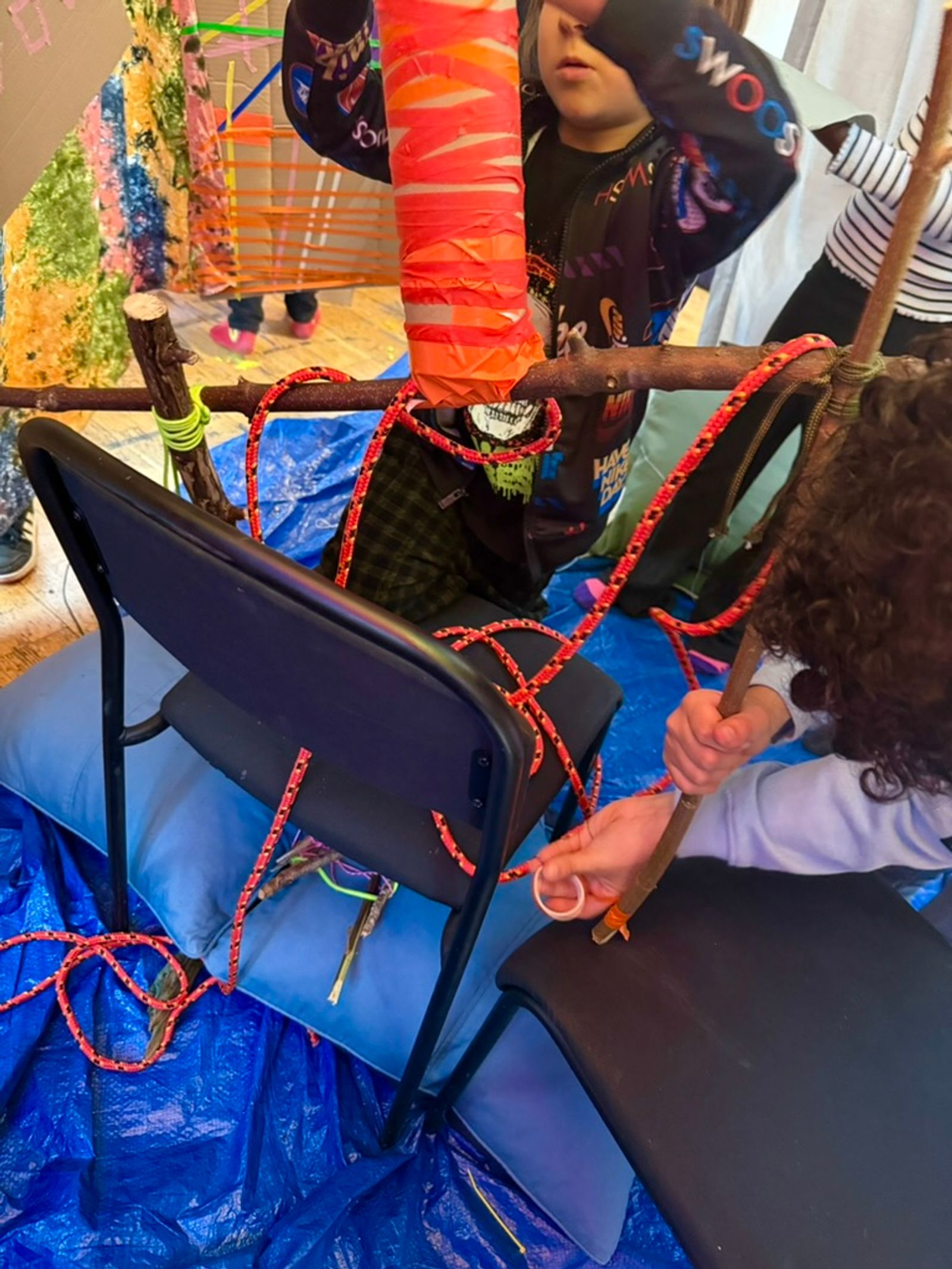
Den making workshop using found materials from Church Street Market in collaboration with Anna Chrystal, 2025.


Comments
Leave a comment