

I allow myself very few parasocial relationships with celebrities or their ideas about culture. I have worked with enough PR companies to know it is foolish to entertain any idea about famous people being ‘right’ or being ‘wrong’, or in fact ‘being’ any thing at all, because whatever conclusion any of us come to has been inevitably curated by a team of two hundred people and millions of dollars. This is something more and more people are becoming aware of (see the recent deep dives into the public relation firm Chaotic Good, whose guerilla TikTok comment campaign is behind the meteoric rise of the band Geese). As a long-time advocate of ‘not listening to or thinking about celebrities’ I can only be pleased at the increased scrutiny of the fame machine. As I argued in my article Can We Separate Art from Artist?, the collapse between the private and the public is a direct result of hypercapitalism and is in no small part responsible for a lot of very bad media.
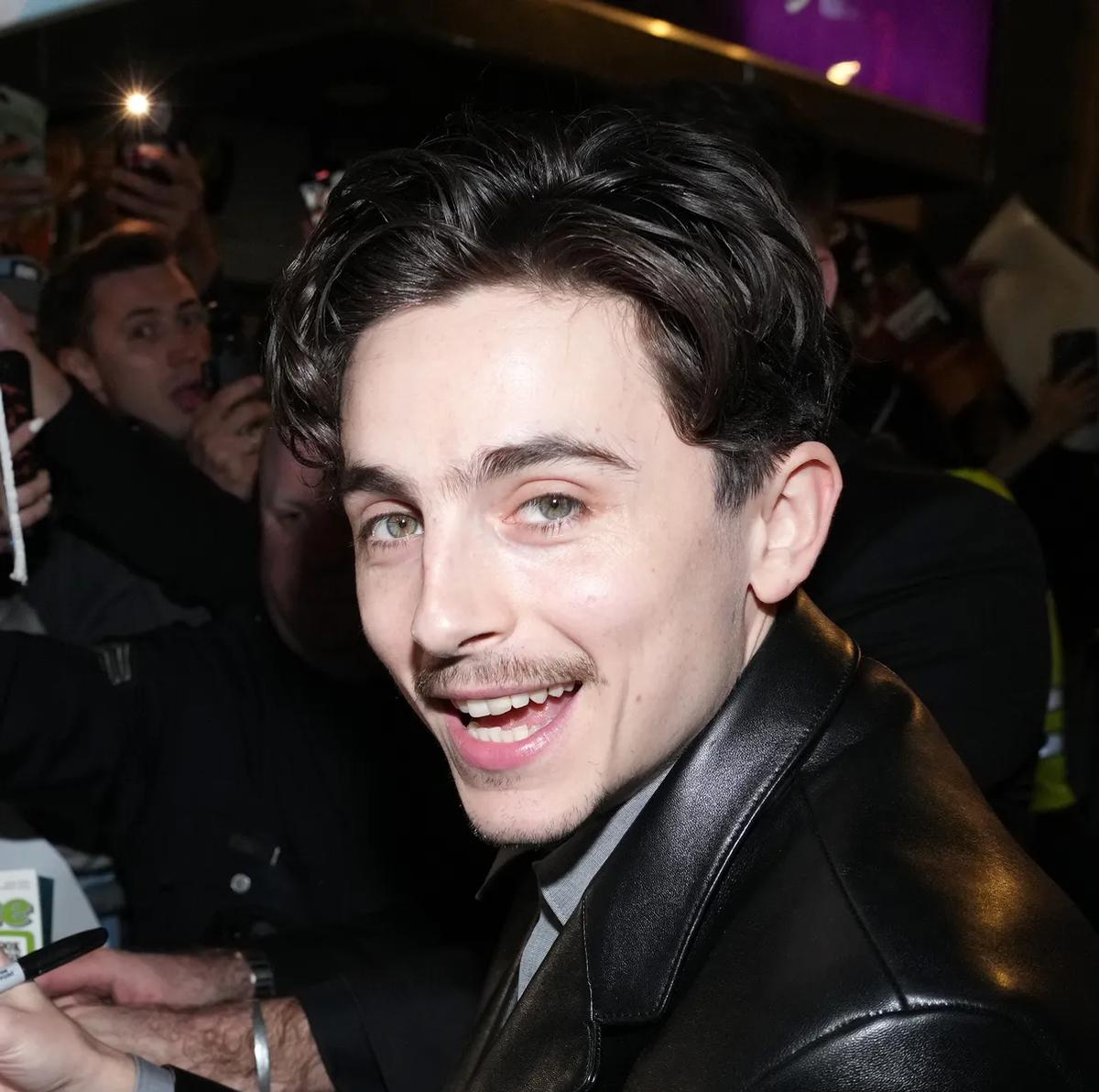
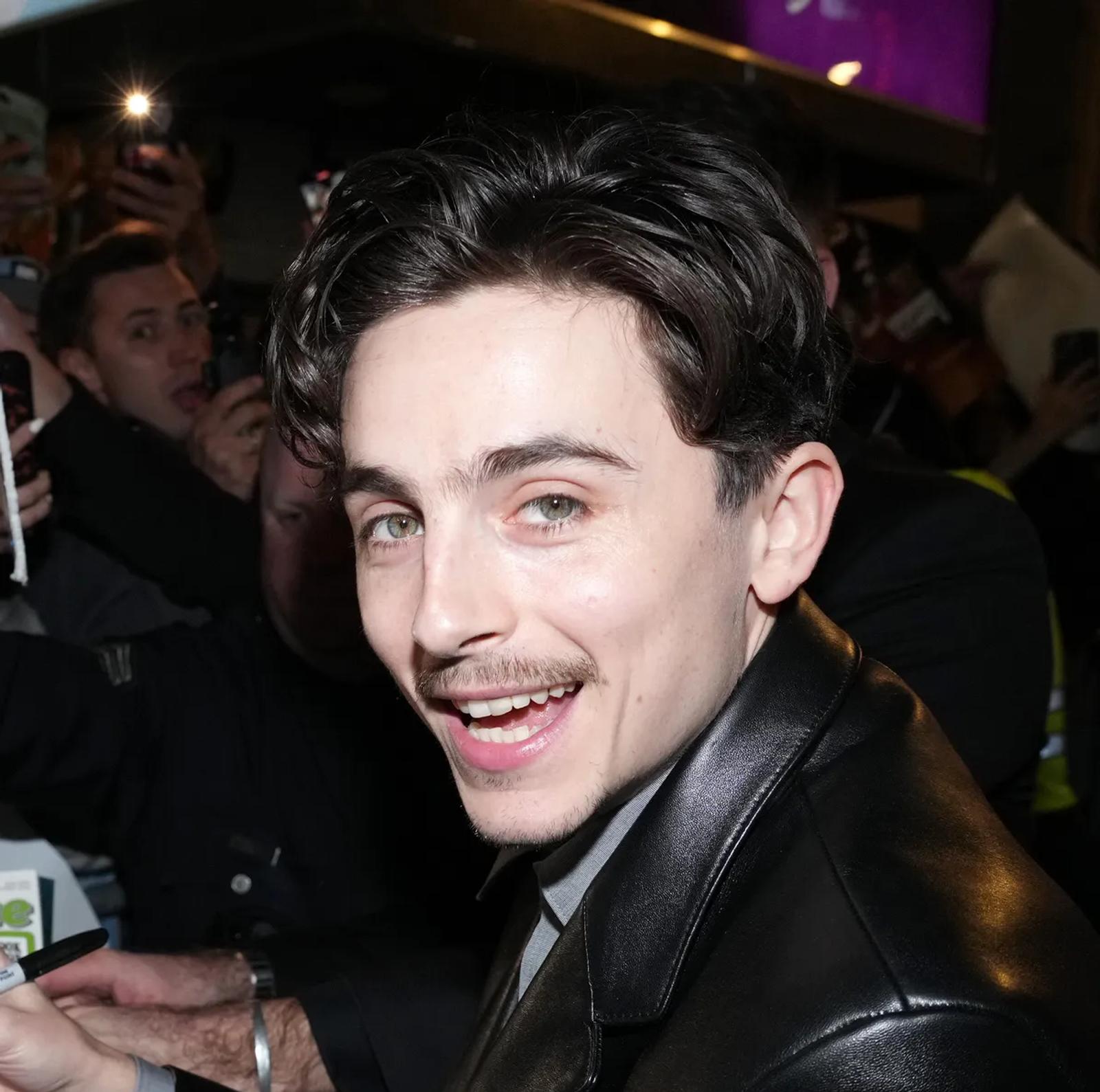
I do, however, allow myself one exception: Kylie Jenner and Timothy Chalamet.
I’ve tried working out why I feel such a deep affection towards the couple, and as far as I can tell it comes down to the fact I think they would be really good dinner party guests. They have both come from differing points on the celebrity-as-creator spectrum, and both presumably have extremely interesting anecdotes and ideas about celebrity and its relationship to the act of creation. Kylie represents, perhaps, the most complete expression of the celebrity-as-product that the twentieth century made possible and the twenty-first perfected, a person whose primary creative act is the curation of a self, and who has performed this act with such rigour and consistency that it has become, genuinely, an aesthetic achievement. Whatever one thinks of lip kits, she (or at the very least her team) understands perfectly that in the attention economy, the self is the artwork, and that (as various leftist thinkers predicted decades ago) personal brand and artistic output have now collapsed into a singularity. Timothy, by contrast, speaks French and smokes cigarettes and so is a de facto guest of honor at any party I throw.
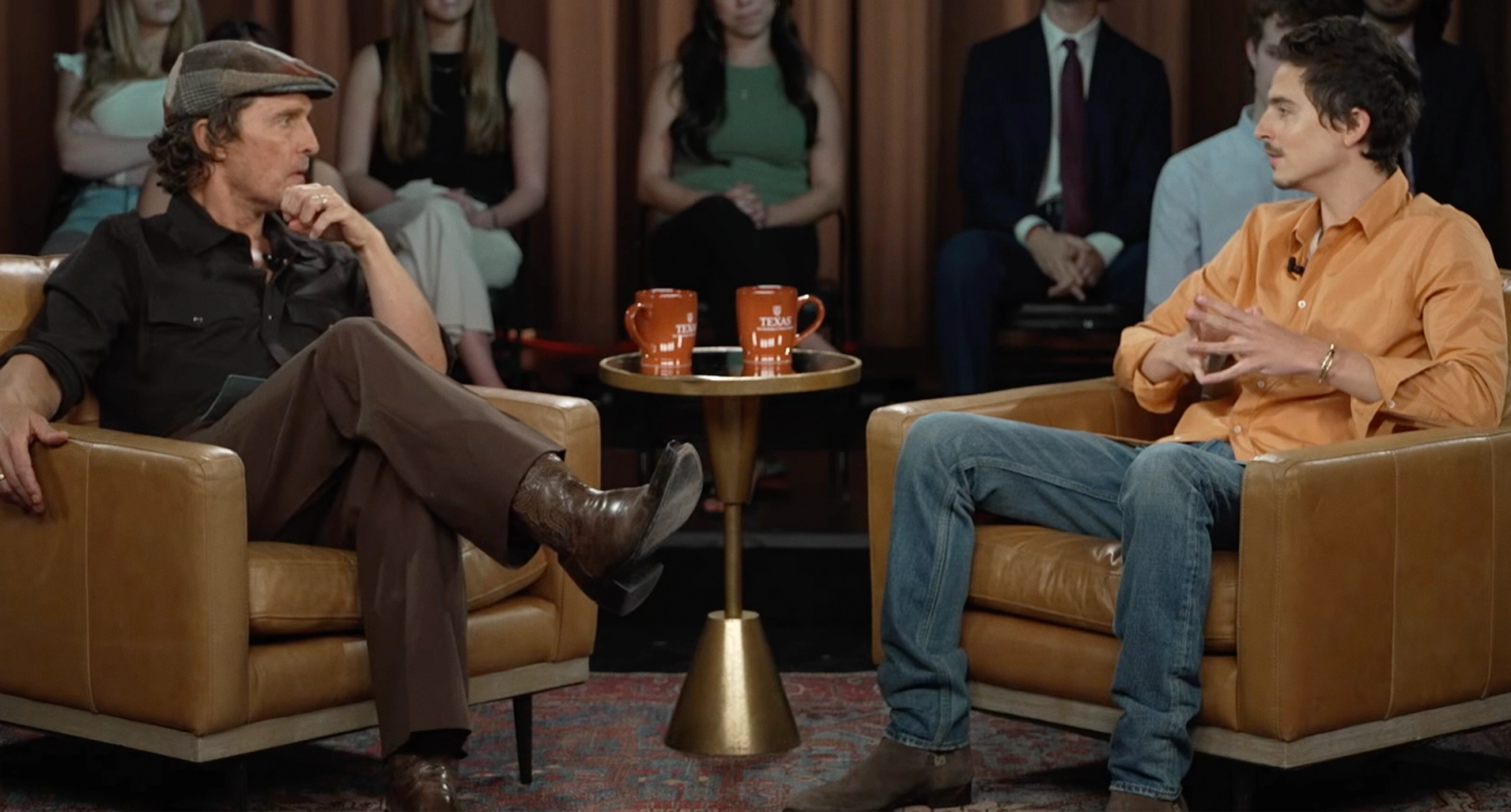
Monsieur Chalamet has been on our collective minds recently, following comments made at a CNN and Variety town hall in February, in which he declared that "no one cares" about ballet or opera anymore. The culture, predictably, lost its mind: the Royal Ballet and Opera issued a statement, The Seattle Opera launched a discount code using his name, his own alma mater, the Fiorello H. LaGuardia High School for the Performing Arts, wrote an open letter, and Misty Copeland, whom he had personally asked to promote Marty Supreme off the back of her dance career, noted that she found the timing "very interesting."
I found myself, once again against my better instincts, on his side.
Before we dig in, we must do our due intellectual diligence and take into consideration the full context of the statement. The actual conversation, watched in full, is considerably less damning than the clipped video of him saying that “I don't want to be working in ballet or opera or things that are, hey, let's keep this thing alive even though it's like no one cares about this thing anymore." Chalamet and Matthew McConaughey had been discussing the erosion of audience attention spans, and whether filmmakers have a responsibility to actively advocate for cinema as a medium, to go on talk shows, to wave flags, to engage - as Jenner does - the cultural marketplace on its own terms. Chalamet said he found himself in two minds about it: on one hand, he admires the impulse, but on the other, he suspects that if people genuinely want to see something they will go out of their way to do so, and no amount of pleading from the talent will manufacture an appetite that isn't there. It was at this point that he reached for ballet and opera as his examples of art forms kept on cultural life-support by institutions and advocates despite an indifferent public.
On at least one front, Chalamet is undeniably correct. According to the NEA's Survey of Public Participation in the Arts (SPPA), opera attendance stood at 3% of the U.S. adult population in 1982, and ballet at 4.2%. Figures that were not that impressive have only fallen since: adult attendance at ballet has declined 52% since then. The institutions keeping these art forms alive are not doing so on ticket sales: even at the best American houses, box office revenues cover only half the cost of a production. In the UK, opera and ballet performances fell 17.3% compared to 2019 figures, with average attendance per performance down 26%.
The funding and subsidies picture only re-enforces his point. Outside of London, the median proportion of opera organisations' turnover derived from grants sits at 68%. The English National Opera and English Touring Opera both receive more than half of their income from Arts Council. Even the Royal Ballet and Opera House (the institution that issued the most diplomatically worded rebuke to Chalamet) received £23.6 million from the Arts Council in 2022-23, representing 15% of its total unrestricted income, and has estimated it needs at least £50 million over the next three years simply to keep the building open.
“When Chalamet said no one cares, he was right, and in fact ‘people not caring’ is a structural reality that the institutions responding to him on Instagram are living every day.”
This is not, to be clear, an argument against public subsidy of the arts. I’m an old-fashioned leftist, I believe if the government is going to exist it should help people live, and art in its many forms is a part of life. Regardless of who or how often anybody goes to the opera, I would much rather see my taxes go to the ENO than to arm manufacturers. I am simply noting that when Chalamet said no one cares, he was right, and in fact ‘people not caring’ is a structural reality that the institutions responding to him on Instagram are living every day.
However, what Chalamet's market-demand argument cannot account for, and what the institutions responding to him on Instagram conspicuously did not address, is why the appetite isn't there. I return, as I did in my article about Why Rich People Aren’t Buying Good Art Anymore, to Bourdieu's theory of high versus low art. The indifference of the general public to opera and ballet is not an accident, but it is also not simply a symptom of shortened attention spans: the capacity to appreciate ‘high’ art forms is itself a form of cultural capital acquired through class position and transmitted through education, family, and environment. Opera and ballet require an audience that has been, in some meaningful sense, initiated into their reception via a set of aesthetic codes that function simultaneously as class markers, and the result is a self-reinforcing system. The Western institutions protesting Chalamet's remarks are, in many cases, the same institutions that have spent centuries cultivating exactly this exclusivity and are now dealing with the fact it has produced a narrow audience.
“You don’t have to have seen Citizen Kane to enjoy a Marvel film, but you do need to know Italian to even understand (yet alone enjoy) Tosca.”
This is in huge contrast to Chalamet's industry: film. Cinema has been for decades the everyman's artform: cheap, accessible, requiring no prior initiation, no inherited cultural vocabulary. You don’t have to have seen Citizen Kane to enjoy a Marvel film, but you do need to know Italian to even understand (yet alone enjoy) Tosca.
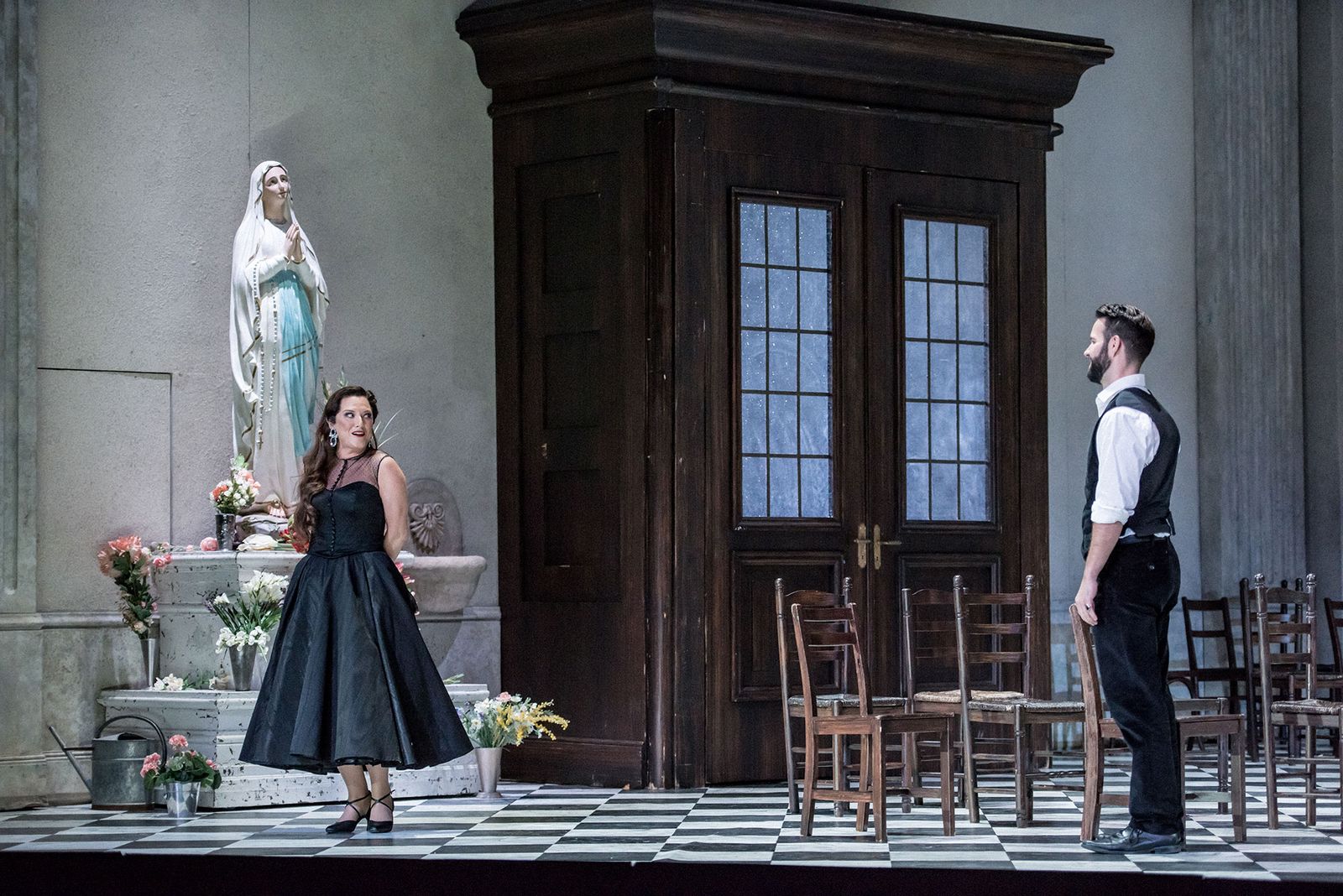
Tosca, English National Opera. Photography courtesy of ENO.
This has been achieved by making a series of strategic capitulations that the opera world would consider humiliating, mostly undertaken by actors. Every press tour and talk show appearances, every viral clip on social media, every bit of fanservice in interviews or sponsored thinkpiece performs a kind of Bourdieusian service by dismantling the hierarchy that separates the art from the person who might watch it. Of course, none of this is new, the Hollywood studio system was built on it. MGM and its contemporaries fed carefully manufactured gossip to columnists like Hedda Hopper and Louella Parsons. The private lives of Clark Gable, Joan Crawford, and Lana Turner were being turned into serialised content designed to sell tickets before Chalamet was even born. It went both ways, of course: when Elizabeth Taylor and Richard Burton began their affair on the set of Cleopatra in 1963, the ensuing scandal generated column inches worth more than any conventional advertising budget could have bought. The curated parasocial relationship between art’s creator and art’s audience is one that has, simply, been taken to its logical conclusion. How many of us went to see Die My Love because of those charming clips of Lawrence and Pattinson proving why they didn’t ask for an intimacy co-ordinator? How many saw Wuthering Heights because of the thinkpieces about BDSM and race? How many indulged in Anyone But You after the Sydney Sweeney and Glen Powell affair rumours? Speaking of Sweeney, how many of us are now watching Euphoria after the whole nazi-jeans thing? (not me, by the way, I haven’t seen a film made after 1998 since Paddington 2 came out in theatres).

Sydney Sweeney in an advertisement for American Eagle, 2026. Courtesy of American Eagle/YouTube
Helen DeWitt, the novelist, has recently made something of a principle of refusing to partake in the PR machine. Her reasons were health-related, but it has sparked a renewed interest in the idea that creators should have to participate in the promotion of their art. How much does the artist owe their audience? How much of the act of creation need be dedicated to ensuring that people actually see the art? Bourdieu identified the "anti-economic" stance (the performance of indifference to the market, to promotion, to audience-building) as itself a form of cultural capital, one that accrues specifically to producers of high art and functions as a class signal. The question of whether creators owe their audience participation in the promotional apparatus is, at its root, a question about who art is for.
The institutions that have survived and occasionally flourished in the attention economy are, almost without exception, the ones that made their peace with the apparatus of promotion. Yesterday was the MET Gala, which is in and of itself a case study in what it looks like when a high art institution conscripts the celebrity-industrial complex directly into the service of cultural preservation. The Costume Institute is, within the Metropolitan Museum of Art, something of a poor relation (this year's theme, "Costume Art," was born from curator Andrew Bolton’s realisation that “fashion has often been treated as the ‘stepchild’ of the art world”). It is historically underfunded and almost entirely dependent for its operations on a single annual fundraising event organised by Vogue (as opposed to the city of New York - the Mayor of New York, good socialist that he is, declined to attend on principle). This year's gala raised a record $31 million in a single evening, with Jeff Bezos and his wife Lauren Sánchez as honorary chairs and lead sponsors, and Beyoncé among the co-chairs.
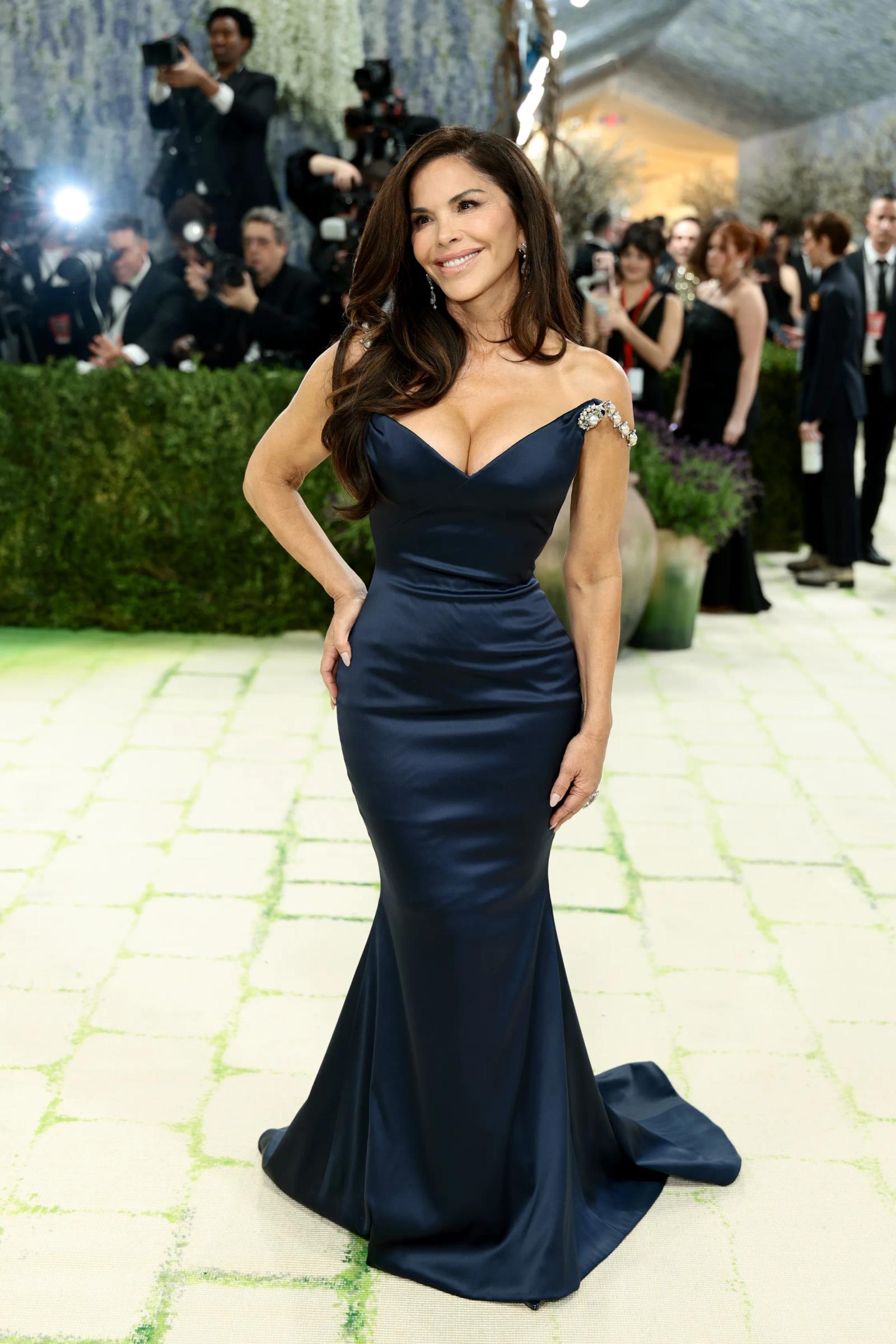
Lauren Sanchez at the MET Gala, in a gown inspired by madame X, 2026. Sanchez’s husband, Jeff Bezos, sponsors the Gala. Photograph courtesy of Dimitrios Kambouris/Getty Images.
The question of what this means for the average working artist is one the discourse around both Chalamet and the Met Gala conspicuously avoids. Jeff Bezos can write a cheque and Timothy can do forty-seven press junkets for a film that cost $150 million to produce. The apparatus is available to them because the apparatus was built for them, or for people like them, with agents, publicists, managers, and a pre-existing audience.
“I assure you that the Bourdieusian machine is at work in Hollywood and New York just as hard as it is in Hackney.”
For the artist who is not Chalamet, however, the question of how you get people to see your work is considerably less glamorous and considerably more structurally intractable. You post on Instagram, you do the humiliating little turn towards the camera while holding your canvas for audience retention, you email the journalists, you apply for the residency, the grant, the open call, all very noble, all very useless. You wonder whether you need a PR company and then you look into PR companies and discover that there are, in London, approximately five of them who work in the arts, all of whom represent the same two dozen galleries (see Holly Superstar Review’s fantastic breakdown of the ‘Dildo-Fleshlight Theorem of the Art World’ for the full list). I assure you that the Bourdieusian machine is at work in Hollywood and New York just as hard as it is in Hackney.
Chalamet was right about the numbers. He was right that appetite cannot be manufactured by pleading, and right that cinema has survived in ways that opera and ballet have not partly through its long and unsentimental embrace of the promotional apparatus. What neither he nor the Royal Ballet's Instagram statement managed to address is that access to the apparatus is itself a class question.
Comments
Leave a comment