

London Gallery Weekend arrives, as it always does, slightly too fast. You spend the Friday convincing yourself you'll be systematic about the whole thing, but inevitably by Saturday afternoon you're standing in a basement with powder on your shoes and no idea how you got there.
Powder was a major theme this year; charcoal, chalk, clay, the Aristotelian hyle before the morphe lands. These are pre-individual fields, charged and unstable, waiting for some encounter, or activation, that will ultimately serve to resolve them, or at least make them static, complete, whole. This year, many artists seemed less interested in their objects than in the condition before objecthood. Against that ran emblematic appetites for Bosch-adjacent imagery, of iconography that takes (as all medieval art did) form as vehicle for meaning. In the same vein, sculpture leant towards the grammar of Antiquity: plinths, busts, Baroque drapery, Rococo ornament.
“London in 2026 seems, at least, to know the difference between a monument and a monument-shaped object.”
So what does this say about the sort of art being made and shown in London in 2026? Probably nothing so neat as a diagnosis. London's galleries are not a movement and LGW is not a manifesto. But there is something in the collective turn toward the unresolved that suggests that London's artists are thinking harder about matter and meaning, and less trustingly about form. I spoke last year about what I call the Ozymandias effect; the act of creating art that addresses its own eventual decay or destruction. London in 2026 seems, at least, to know the difference between a monument and a monument-shaped object.
“The spatial depth of the paper should be unthinkable for a suspended piece but by God she pulls it off.”
Elena Njoabuzia Onwochei-Garcia: Grown: The Altering of Innocence and Experience – William Hine
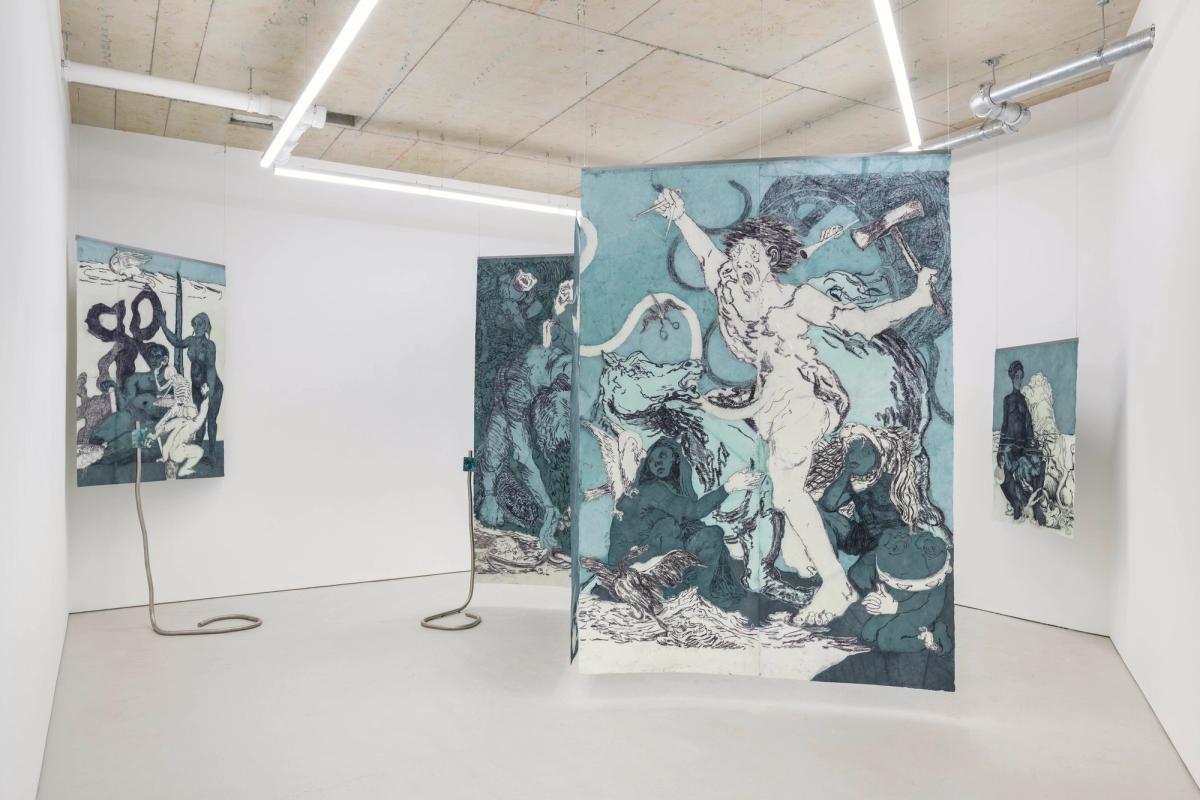
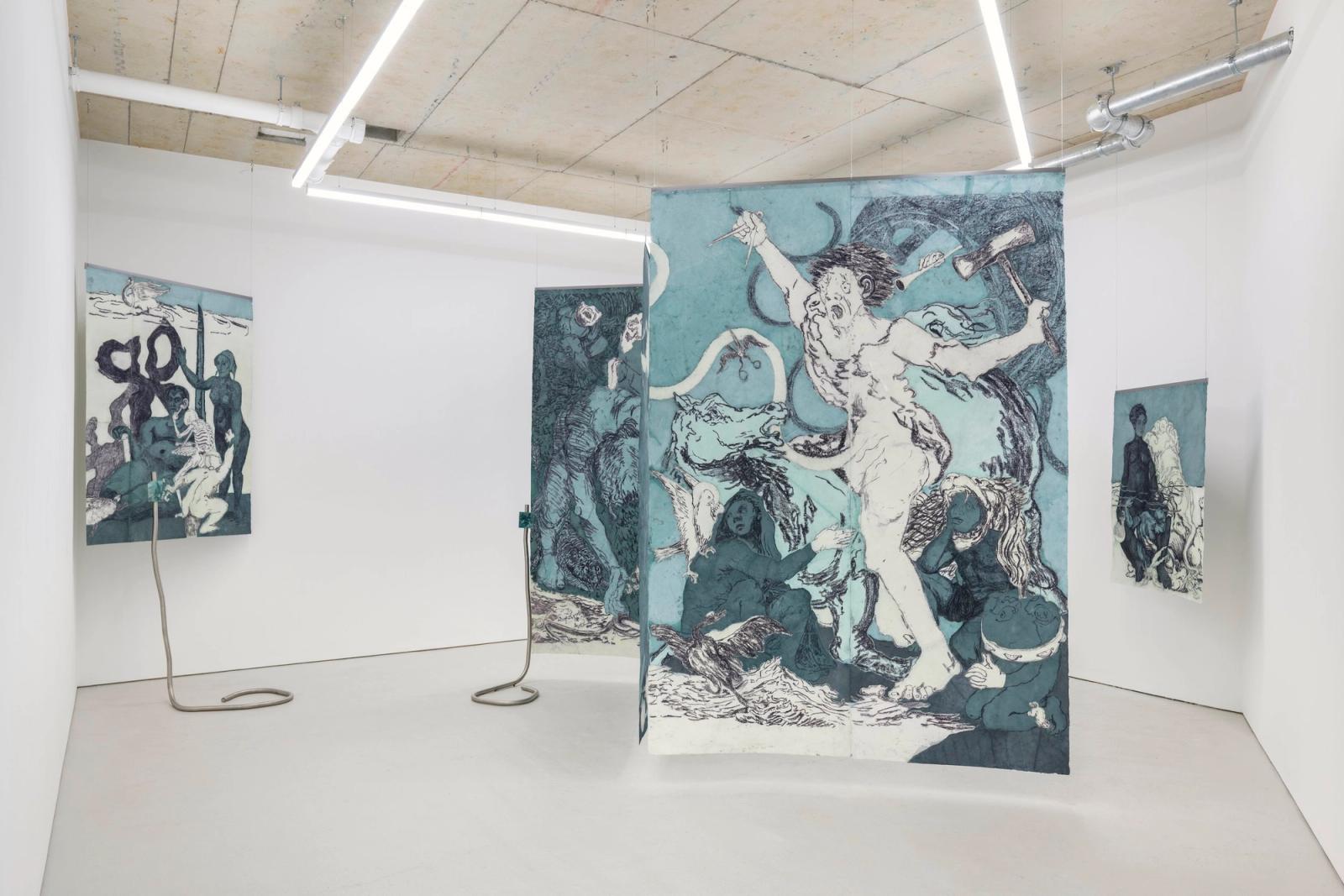
This is the second show this week to explicitly take after both Blake’s Songs of Innocence and Experience as well as Homericism (H.E Morris’ Songs of War at LBF Gallery cites both as inspiration too). Onwochei-Garcia’s suspended works are enthralling watercolours and pastels on Japanese washi paper that explore the Persephone myth. This is a good subject, don’t get me wrong – I am especially appreciative of any work that engages the myth with all the violence and grief that it actually entails as opposed to treating it as a love story – but the real gem is the pictorial intelligence. The works are compositionally dense, with the fluid wrongness of Bosch and the richness of his medieval emblematic logic. The spatial depth of the paper should be unthinkable for a suspended piece but by God she pulls it off. The phallic steel and marble-watercolour sculptures are just as commanding and clever, literal stand-ins for the myth's other half (cf: Adam, the Snake, Freud). Top notch.
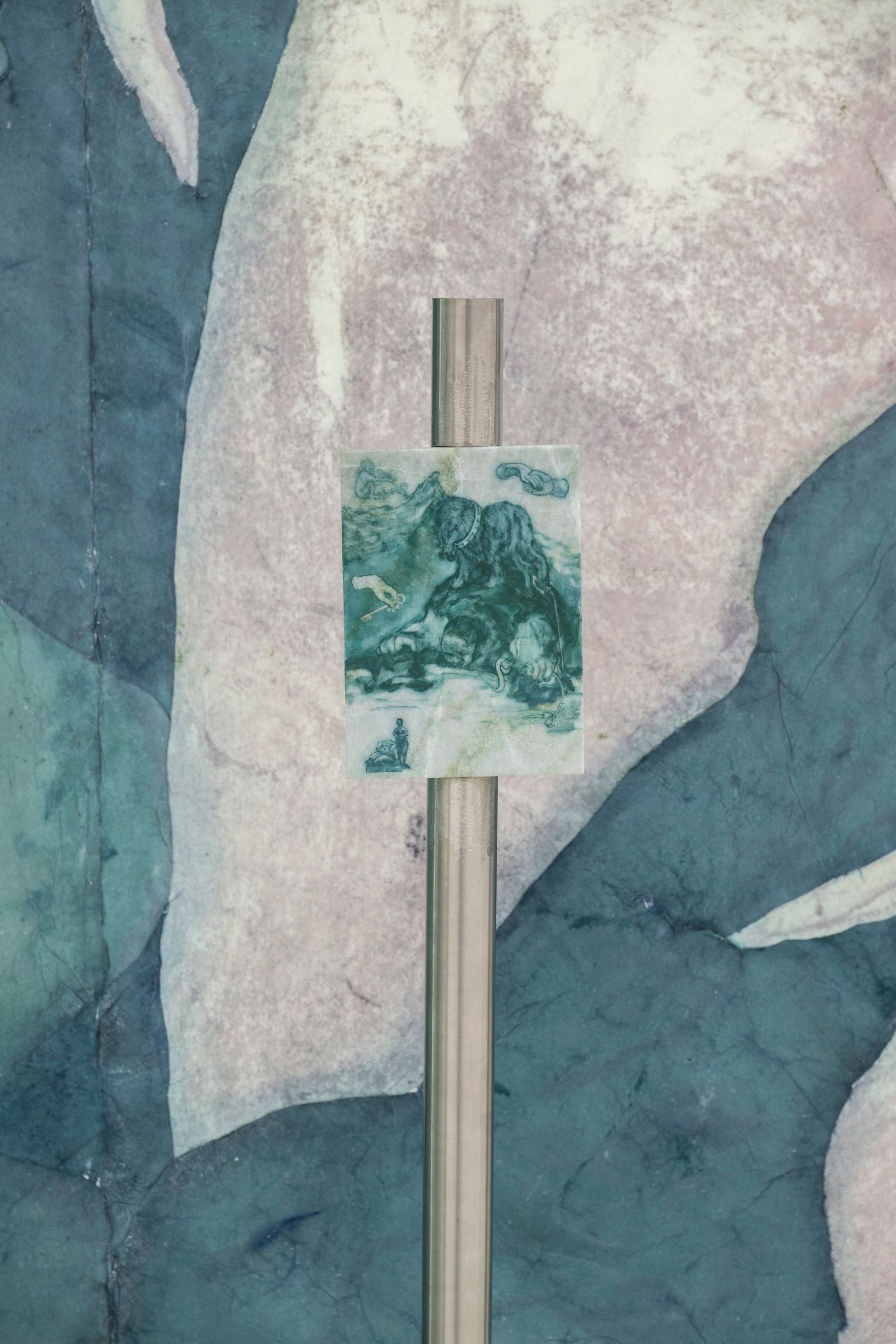
Elena Njoabuzia Onwochei-Garcia, Grown: The Altering of Innocence and Experience (detail).
“This might be a chronically online take, but the digital age has made painters like Rouy more exciting.”
George Rouy: Reprise – Hannah Barry
Last year I saw Rouy at H&W in Los Angeles and was particularly taken not by his figurative works but a singular abstract piece (Rib Cage, 2025), more in the neighborhood of a Twombly than Bacon. In Reprise, he has leant further into these gestures of/at abstraction, and to huge success. Rouy has never shied away from markmaking but there is something sumptuous, new, and oddly tender about the outlines of his bodies in this collection. I’m reminded, funnily, enough of the golden age of AI art – anybody remember ‘secret horses’? – in the way his bodies compress and overlap. This might be a chronically online take, but the digital age has made painters like Rouy more exciting. The scale in particular offers an uncanny jump in substrate; the visual grammar of compression and data-loss is now so familiar at thumb-scale that to encounter it in oil, at body-height, is to feel its strangeness returned to it. Unsettling, and affective.
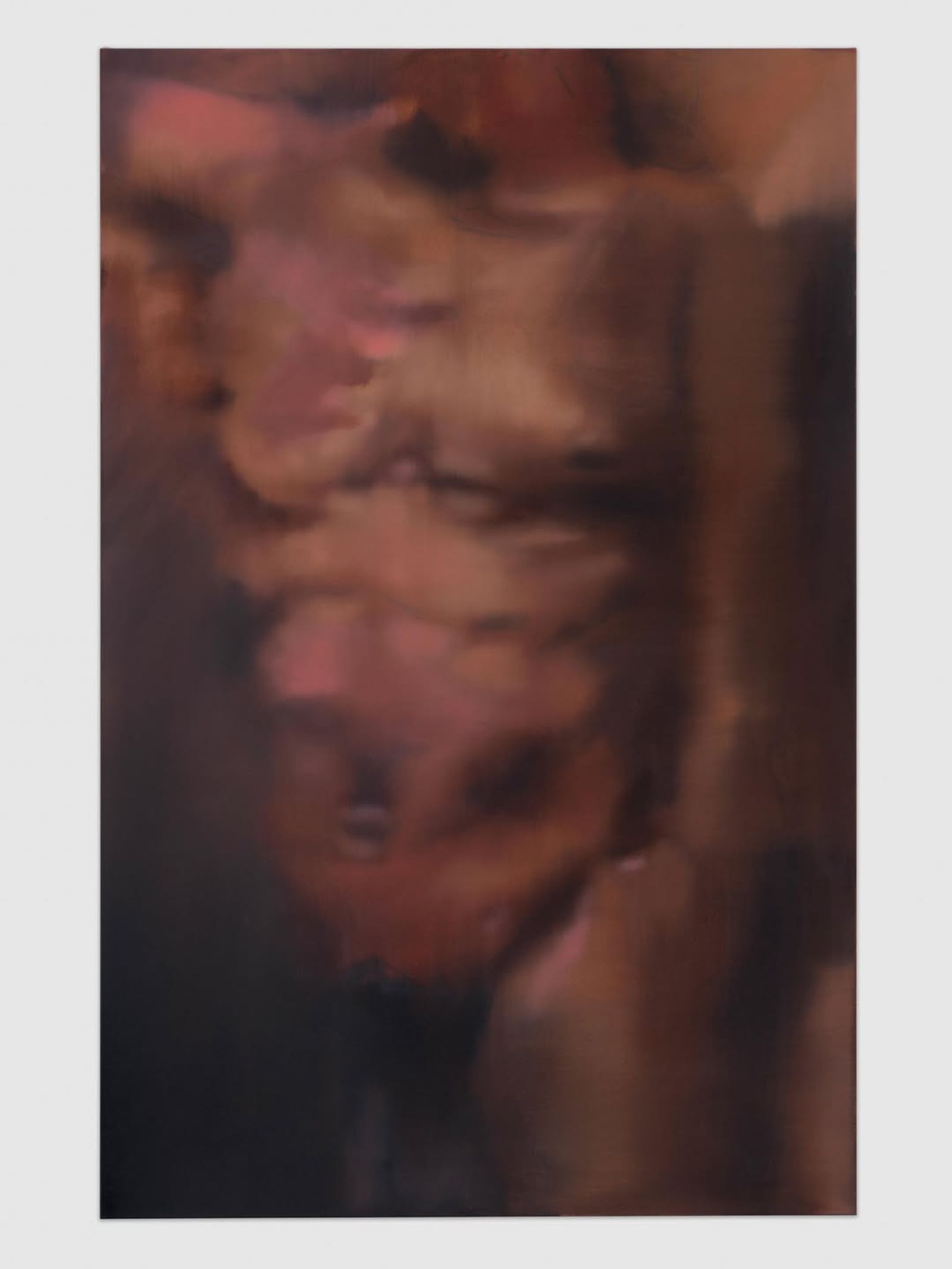
George Rouy, Torso, 2026.
“...These are simultaneously petri dishes and topological landscapes and God and the inside of your eye...”
Terry Winters: Along the River – Modern Art
It’s a task to make these sort of optically-heavy works without it becoming formulaic, or indeed overly-geometric, but Winters manages to keep each piece unique and exciting. He sidesteps the obvious problems of this kind of work by, quite simply, being a good craftsman. He clearly understands his chromaticism at an af Klimfian level, of weight and composition too. The colour is doing something different in every canvas and he pulls the spatial logic of his own in unexpected and delicious directions. It’s all very organic, naturally – these are simultaneously petri dishes and topological landscapes and God and the inside of your eye – but the mathematical charm doesn’t get lost in the sprawl. Winters has been making work like this for over four decades and the remarkable thing is that it continues to appear effortless, which is either a great gift or an excellent deception, and with art this good it barely matters which.
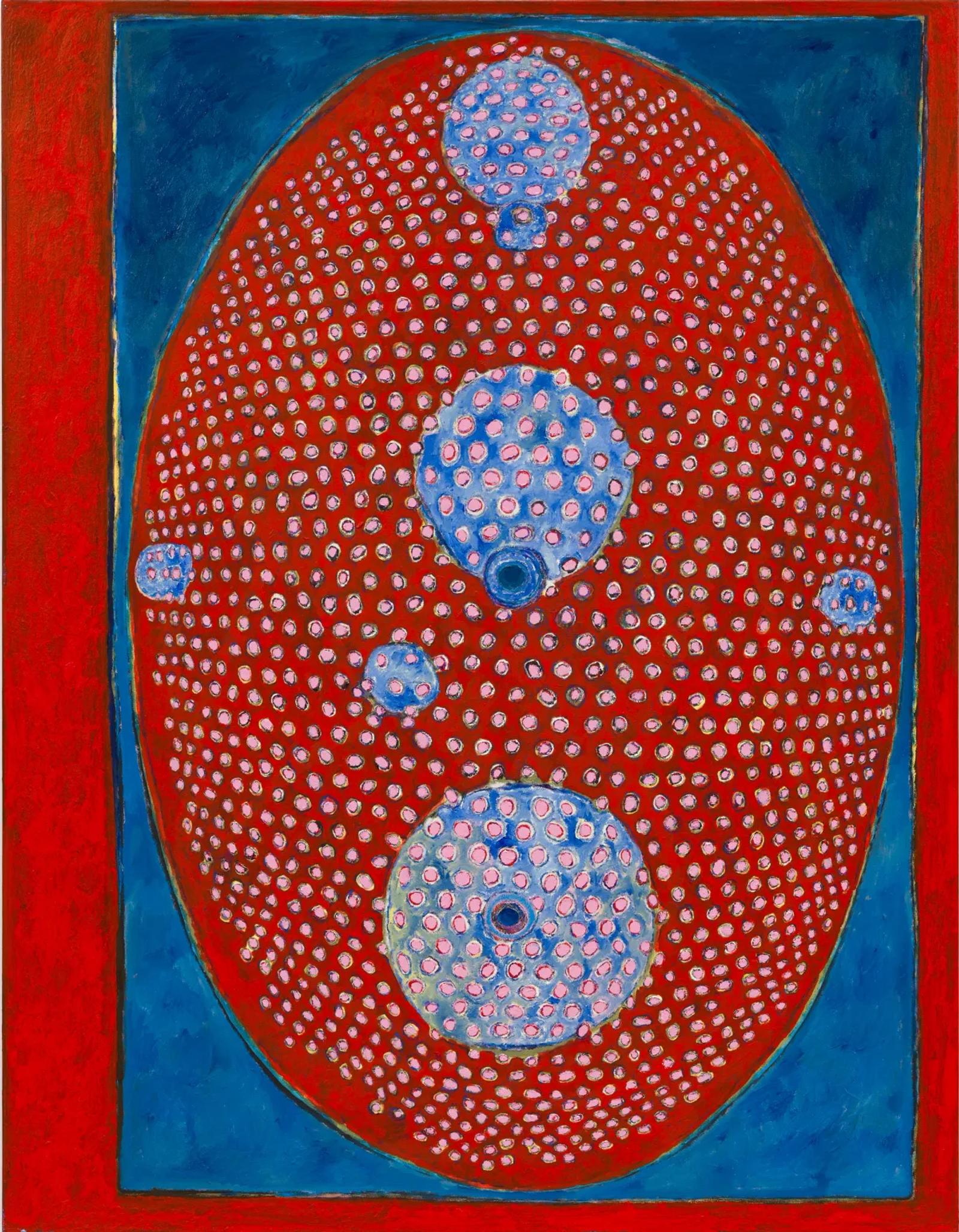
Terry Winter, Locus, 2026.
Jamiu Agboke & Elli Antoniou: Antechamber – Cob Gallery
Best duo, hands down. Agboke works from the subconscious outward, whereas Antoniou works by subtraction. Both artists are interested in working in the pre-individual: Agboke's grounds are copper and aluminium before they are landscape; Antoniou's panels are steel before they are imaged. The forms, in both cases, are translators of thresholds, of becoming. It’s cheap to mention Serra the moment metal is involved, but the phenomenological results of Antoniou are activated by environmental light, which means they are never the same work twice, which speaks so cleanly and concisely to the slightly ghostly forms in Agboke’s works. Spooky, in a good way.
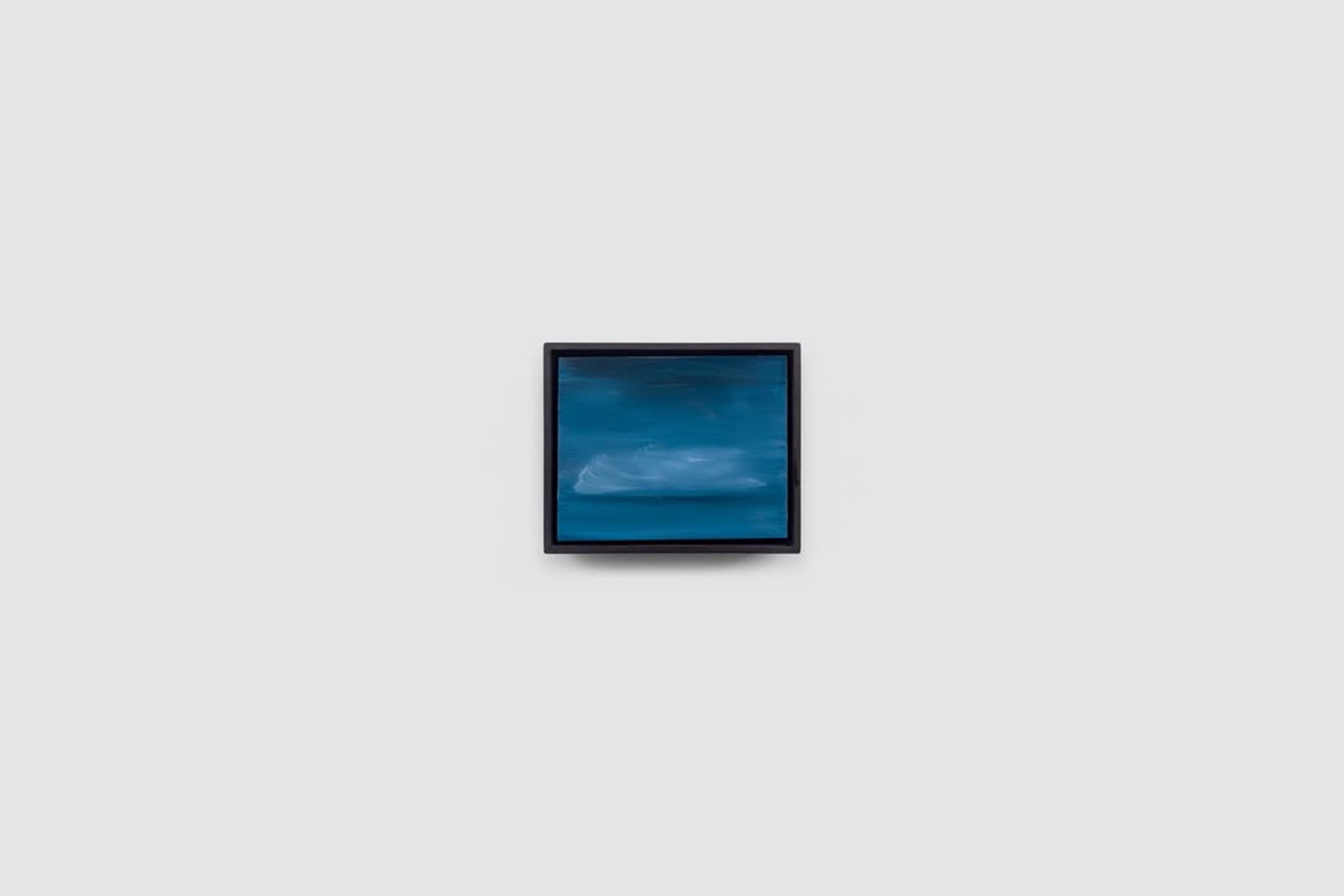
Jamiu Agboke, Blue Murmur, 2026. Installation photography courtesy of Cob Gallery.
Modern Figures – Ben Hunter
I wish I had something clever to say about this show. It’s just good art all around, top to bottom, tens across the board, no notes, lots of women artists. Why can’t it all be like this, all the time? Also, my feet hurt by now, and they have a very nice sofa on the top floor you can sit on and stare at a Paula Rego for a bit.
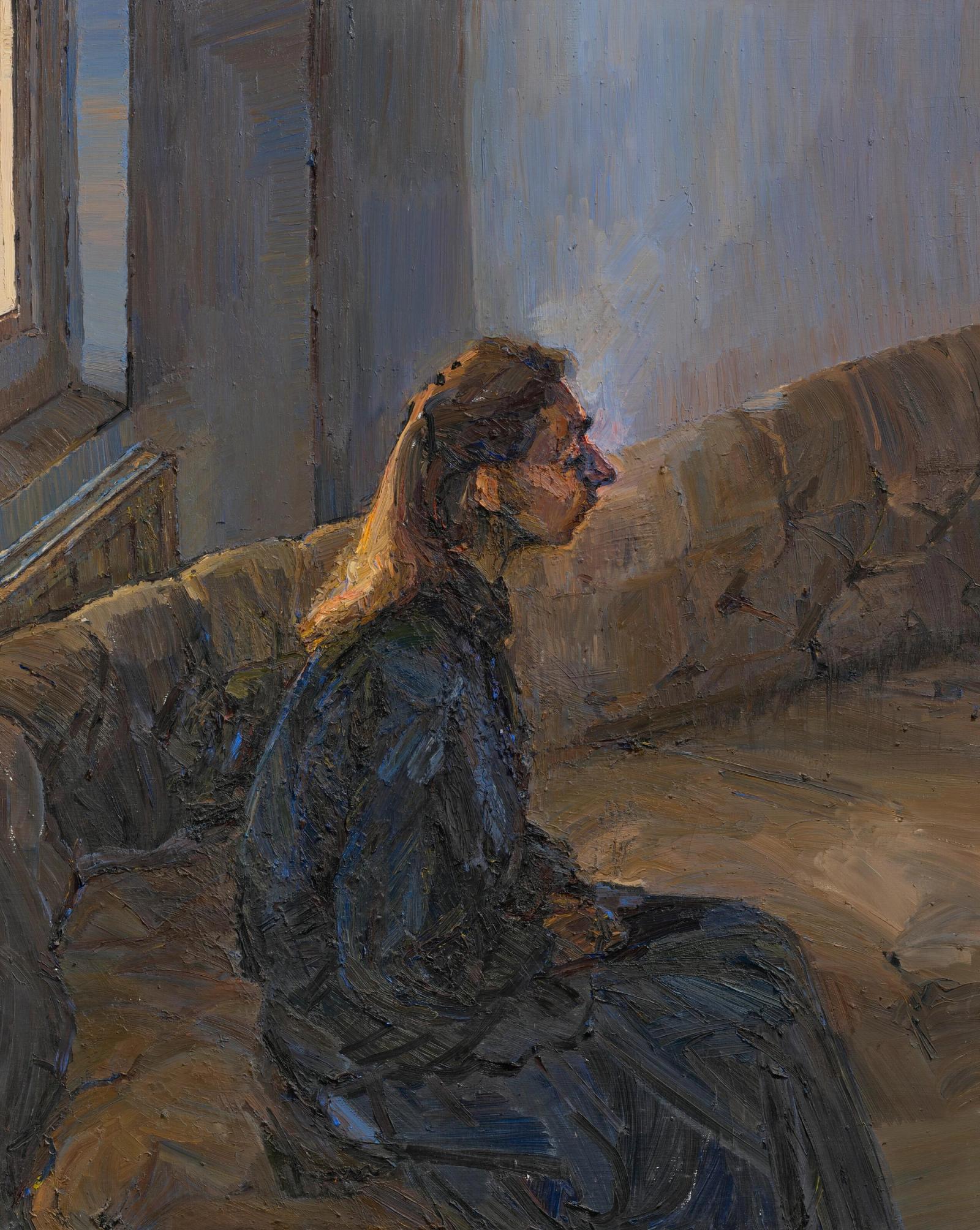
Celia Paul, Kate by the Window, 1987-88.
Comments
Leave a comment