

“This society tends to reduce, and even absorb opposition in the realm of politics and higher culture.” (Herbert Marcuse, One-Dimensional Man, 1964)
It would be intellectually dishonest to begin a critique of the Venice Biennale protests without acknowledging the reasoning behind it. The argument for the effectiveness of protests can be best summed up by what is known as the ‘3.5% rule’: based on a dataset covering 1900 to 2006, Harvard University political scientists Erica Chenoweth and Maria J. Stephen found that “it takes around 3.5% of the population actively participating in the protests to ensure serious political change.” They argue that nonviolent campaigns are twice as likely to achieve their goals as violent campaigns and that if a movement includes students, workers, professionals, clergy, and ordinary citizens, it becomes harder for authorities to isolate it as a fringe threat. They use cases like Iran, the Philippines, the Palestinian Territories, and Burma/Myanmar to show that nonviolent campaigns can indeed achieve major political goals such as regime change, independence, or major concessions. In their eyes, mass participation is what gives nonviolent campaigns leverage: it disrupts normal political and economic life while also signaling that the regime is losing power and support.
“The goal of any protest should be the generation of cost, of making continued inaction more politically, economically, or militarily expensive for those in power than conceding to the campaign's demands.”
Such is the logic, and hope, behind all protests. In Chenoweth and Stephan's framing, the goal is the generation of cost, of making continued inaction more politically, economically, or militarily expensive for those in power than conceding to the campaign's demands. There is an enduring idea that protests large enough to cause institutions supporting a regime to begin to fracture from within (what the authors call loyalty shifts) can generate real, genuine change.
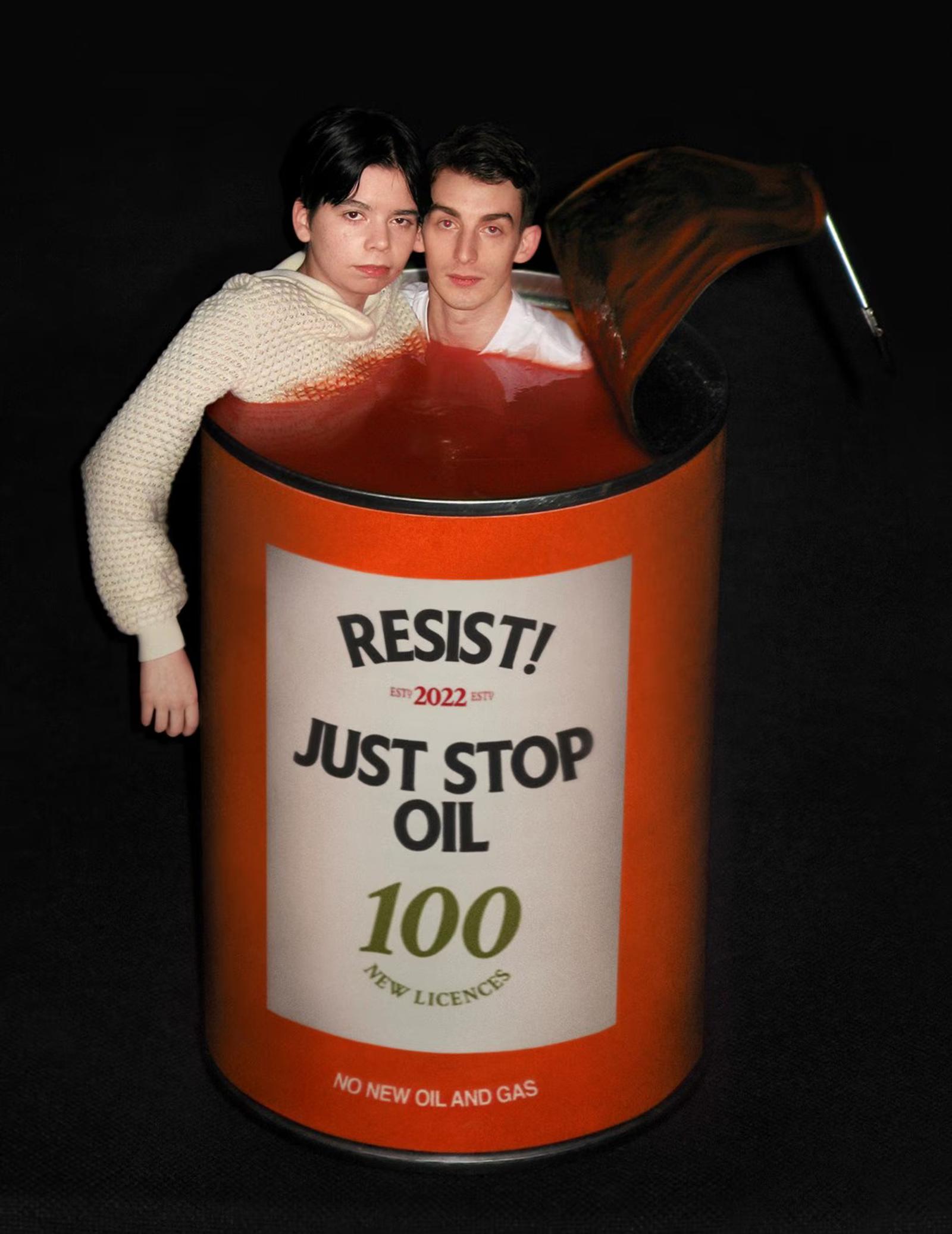
British environmental activist group Just Stop Oil for Dazed magazine. Photography by Harley Weir, styling Imruh Asha. 2024.
Art’s role in the history of protest is triple-edged. Art can be used to protest (Ai Weiwei’s Sunflower Seeds, The Atelier Populaire posters of May '68), art can be acted upon in protest (The Suffragettes slashing the Rokeby Venus, Just Stop Oil’s throwing soup at Van Gogh’s Sunflowers), and finally, art can be protested (the 2023 protests of ENO and Royal Opera House over oil company funding, the Decolonize This Place occupation of the Brooklyn Museum and Whitney in 2020). However, as Joyce Polistena, adjunct professor of art history in the History of Art and Design Department in Pratt Institute’s School of Liberal Arts and Sciences points out, one of the most common criticisms of activist art is that “it is not art, it’s sociology.”
“We read [protest art] now as powerful because it is evidence of suffering, of resistance, of historical and socioeconomic conditions; we confuse the communicative force of the archive with the political force of the act.”
Twentieth century alone is littered with examples of this truth; Picasso's Guernica protested Franco's bombing of the Basque country, Goya's Disasters of War the violence of the Peninsular War, Käthe Kollwitz's woodcuts the poverty, hunger, and war of Weimar Germany, Nancy Spero's War Series the American Invasion of Vietnam. We look at these works now and experience them as searing indictments of political violence, but these are proleptic readings. Goya’s Black Paintings were never exhibited in his lifetime; Heartfield fled Germany in 1933; Franco ruled until ‘75. We read these objects now as powerful because they are powerful evidence of suffering, of resistance, of historical and socioeconomic conditions; we confuse the communicative force of the archive with the political force of the act. This is not to say they are unimportant or ineffectual artworks, rather that they serve as ‘political’ only insofar as they tell us about the dialectic conditions of their creation, ‘effective’ only insofar as translators of historical and material reality.
“The Venice strikes will look extraordinary in a dissertation in 2045, but that is not the same thing as it doing anything in 2026.”
We are currently watching the same error run in the other direction, in art being protested: we assume that the marches and rallies happening now will be read by future audiences the way we read Heartfield or Goya, and we mistake that imagined future recognition for present-tense political efficacy. The Venice strike will look extraordinary in a dissertation in 2045, but that is not the same thing as it doing anything in 2026.
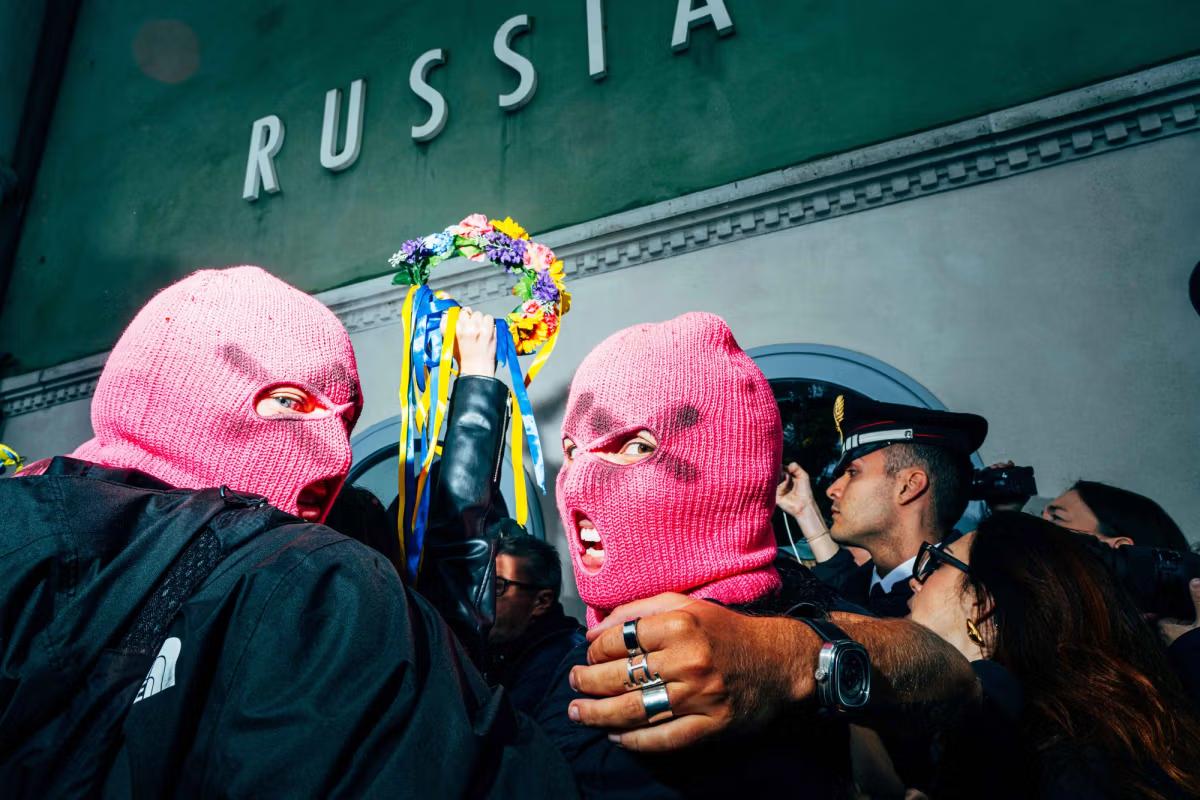
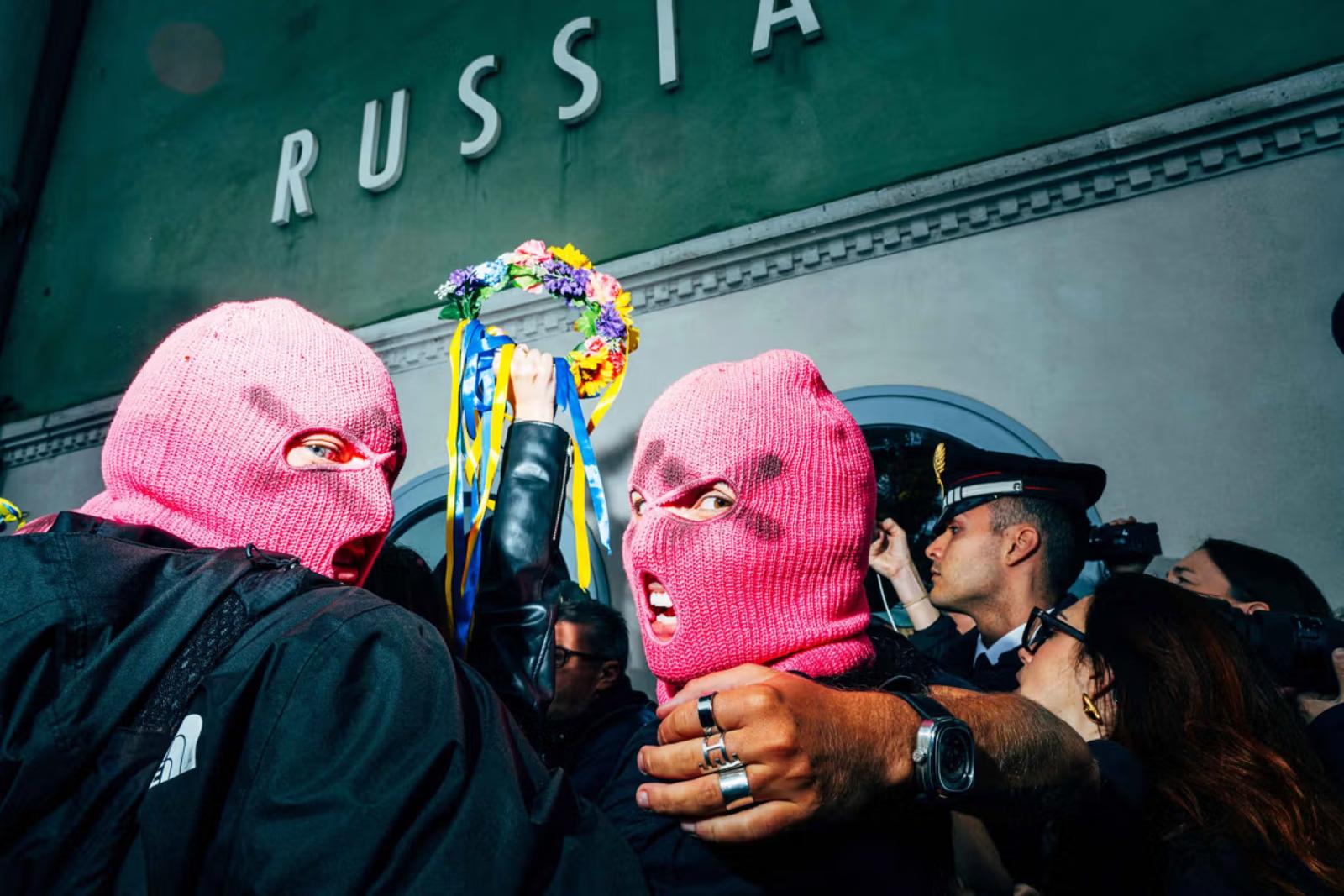
On 8 May 2026, the Art Not Genocide Alliance organised a 24-hour strike at the 61st Venice Biennale in protest of Israel's participation. 27 of the exhibition's 100 national pavilions closed fully or partially, over 3,500 people marched through the city in what ANGA described as the largest protest of its kind in the Biennale's history. Two days earlier, Pussy Riot had stormed the Russian pavilion in pink balaclavas and their tits out to set off smoke flares, dozens of artists withdrew from awards consideration, and the prize jury resigned. The Slovenian pavilion, unable to close entirely because of its position as a transitional space in the Arsenale, dimmed its lights and replaced its sound installation with a livestream of the Palestinian radio station Radio Alhara. By late afternoon, the Arsenale had closed entirely, with riot police stationed outside.
Apply Chenoweth and Stephan's framework to any of this and the results are immediate. Did the strike generate cost? Did it disrupt the normal political or economic functioning of the regimes being targeted? Did it trigger what the authors call loyalty shifts, fractures within the structures of power serious enough to force concession? No. Israel's pavilion remained open. Russia's pavilion remained open (closing only after the previews, and under pressure from EU sanctions rather than anything that happened inside the Giardini). The Biennale itself issued a statement affirming its "commitment to ensuring the orderly running of the event, in a spirit of respect for freedom of expression and pluralism of opinion," which is the institutional equivalent of a shrug. Netanyahu did not telephone the Knesset to say that a few flags at the Giardini had changed his mind about the ethnic cleansing of Palestine. Putin did not withdraw from Ukraine because Pussy Riot set off a smoke flare. The protest generated coverage, which is not the same thing as generating cost.
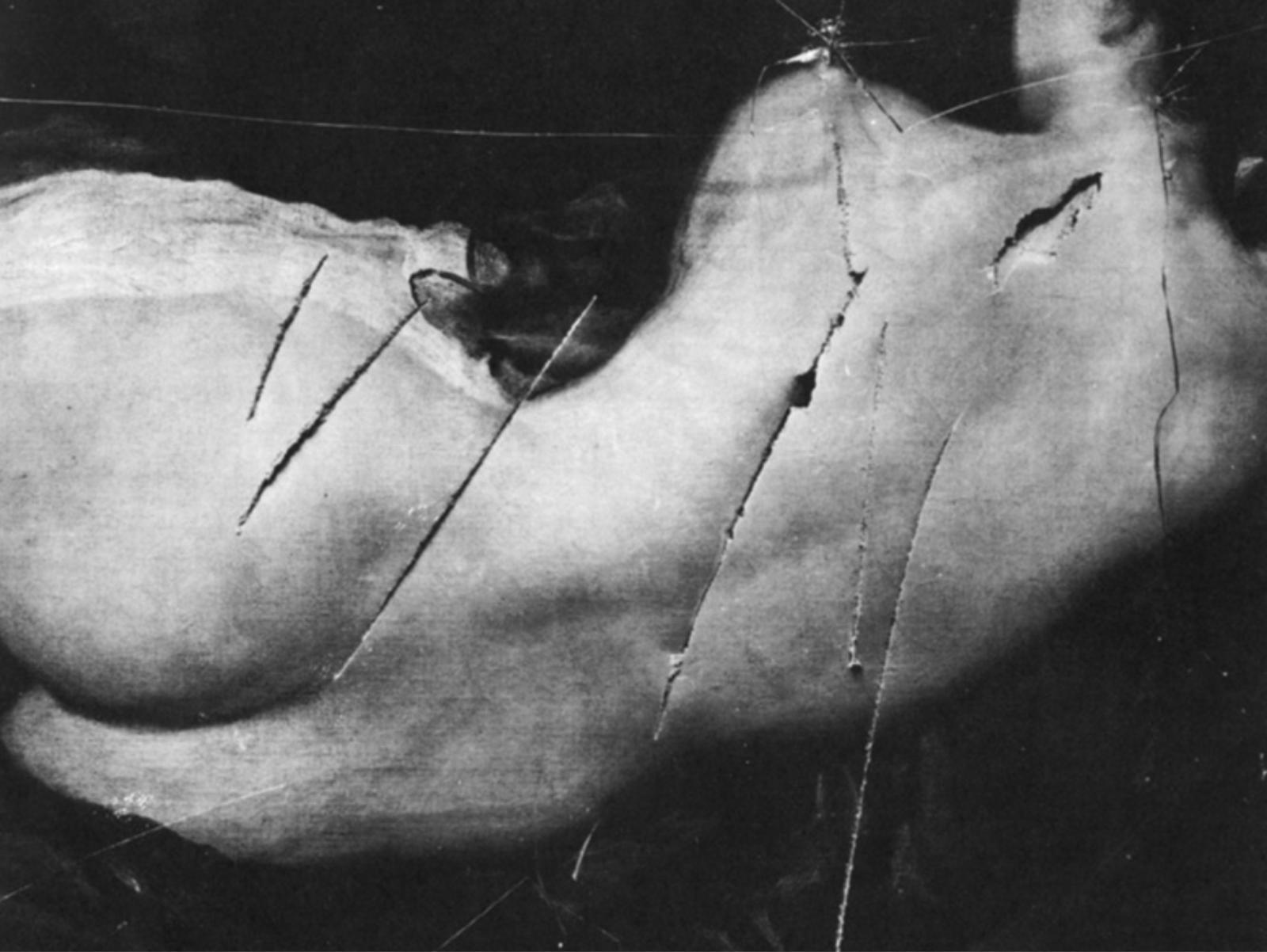
Damage done to Robuky’s Venus (c. 1647-1651) by Suffagrettes in 1914. Courtesy of National Portrait Gallery.
Well, Vic, I hear you say, coverage is important! Awareness is important! Showing support for the victims of genocide and war is important, because it sends a message and sets a precedent! To which I reply, to and for whom?
The structural problem runs deeper than tactical signaling. The national pavilion model means that the people representing, are overwhelmingly, artists who are themselves critical of their governments, working with funding that in many cases comes with no editorial strings attached. A government is not its people and an artist is not their country, which I thought we had all sort of wrapped our heads around but apparently not. The most instructive example from this year's Biennale may be the South African pavilion: the culture minister requested that artist Gabrielle Goliath edit her work to remove tributes to a Palestinian poet murdered in Gaza. Goliath refused and the pavilion now stands empty. In Australia, artist Khaled Sabsabi and curator Michael Dagostino were dropped by the country's governmental arts advisory body after right-wing politicians accused them of antisemitism, only to be reinstated following backlash from the arts community. In both cases institutional pressure went the wrong way by landing on the artist, not their governments.
Meanwhile, the audience at the Venice Biennale is overwhelmingly liberal, culturally educated, and already sympathetic to the causes being invoked (or, as Henrich, Heine, & Norenzayan coined in 2010, WEIRD: Western, Educated, Industrialized, Rich, and Democratic). Chenoweth and Stephan's model depends on protest reaching beyond the already converted; that is how the 3.5% threshold functions. The Venice protests were addressed to an audience that already agrees that war and genocide are bad. Very few people walking through the Giardini during opening week are unaware of what Israel is doing in Gaza, or what Russia is doing in Ukraine. Even fewer are in favour. The art world skews left, or at the very least liberal, and the protest was asking this audience to perform a conviction it already held.
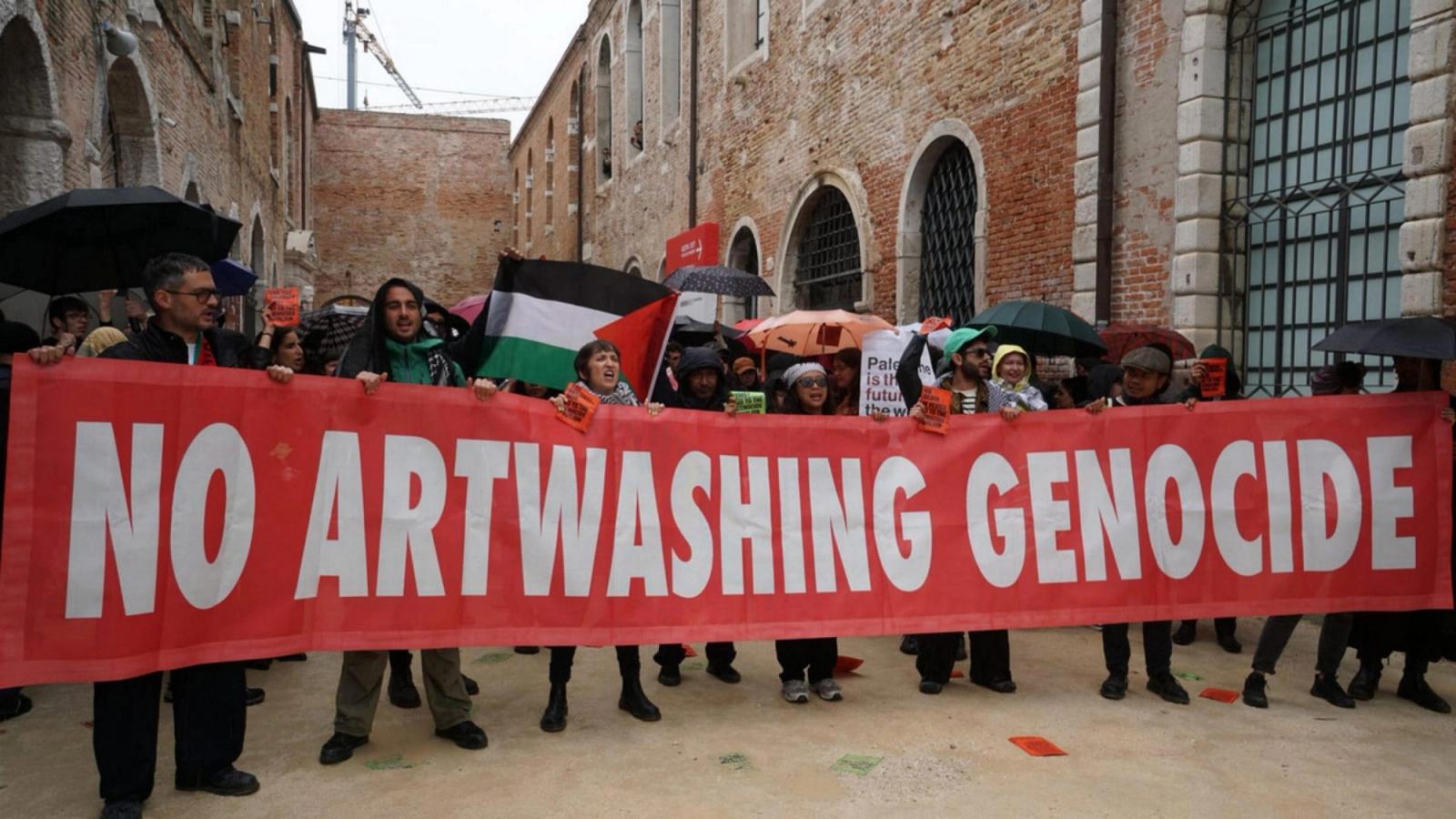
This, of course, is a further problem with the Venice protests, and it is a class problem. Signing the ANGA open letter, closing your pavilion for 24 hours, withdrawing from awards consideration, wearing the Krišs Salmanis badge that reads DEATH IN VENICE are all acts that generate social capital within the field. They mark you as politically serious to an audience of your peers. However, they cost you nothing (or close to nothing; a day's footfall, an award you may not have won). I know I’ve been yapping about Bourdieu a lot recently, but I invoke him again to illustrate how the protest functions as a distinction-generating act, a way of positioning yourself within a cultural field. The Slovenian team even admitted to the fact that nobody at Venice actually wanted to lose anything when they told Artnet: "we're not trying to demolish the Biennale, we're trying to save it."
“It’s no secret that the art world enjoys performing its politics to itself, but the Venice Biennale is a near-perfect illustration of an institution absorbing the protest and being strengthened by it.”
The Frankfurt School made a version of this argument decades ago. Adorno and Horkheimer argued that culture under capitalism functions as a safety valve by giving participants the feeling that something is being done, that a conscience has been exercised, which actually defuses any political energy rather than directing it. They argued that the culture industry does not offer an alternative to the structures of global power: “Amusement under late capitalism is the prolongation of work." Their broader claim was that mass-produced culture renders people docile and content regardless of their material circumstances, by providing the feeling of participation and satisfaction that forecloses the need for genuine political action. It’s no secret that the art world enjoys performing its politics to itself, but the Venice Biennale is a near-perfect illustration of an institution absorbing the protest and being strengthened by it.
If this sounds cynical, consider what the best-case scenario actually looks like: Chilean arpilleras, studied by Jacqueline Adams. Working-class women in Santiago's shantytowns, most of them wives of unemployed men, made cloth wall hangings depicting soldiers, hunger, arrests, and the disappeared during the Pinochet dictatorship. The Vicaría de la Solidaridad, the Church-backed human rights organisation that ran the workshops, smuggled the arpilleras out of the country in old washing powder boxes through chains of clandestine sympathisers, including an airport official who tried to ensure customs wouldn't open them. As Adams documents, this protest art that acted not only as social testimony, but created income for the women and as a solidarity-generating tool that raised awareness and funding from abroad (churches, human rights organisations, sympathetic individuals in Europe and North America bought them).
But even this - the most sympathetic, most materially grounded, most explicitly useful example of protest art you could ask for - was eventually absorbed. Adams traces how, over the course of the 1980s and 1990s, the arpilleras' political content was steadily diluted. The Church became more conservative and began rejecting sharply denunciatory images, foreign buyers who had originally purchased the works out of solidarity, lost interest as Chile ceased to be perceived as a crisis country and turned their attention to Yugoslavia. New buyers emerged who wanted something attractive to hang on a wall, not a depiction of soldiers beating civilians and eventually fair trade organisations replaced solidarity networks, applying rational commercial criteria rather than political ones. The women, who needed the income desperately, censored themselves according to what they believed would sell. By the 1990s, what had once been images of repression and hunger had become cheerful depictions of bread-baking, children dancing, and fruit markets. As one Vicaría employee told Adams: “Previously the subject of the arpillera was the theme of human rights and everything that was happening here in Chile during the dictatorship, but now that does not sell any more so you have to renew the designs.”
“An institution and its participants cannot meaningfully dismantle any structure they actively reinforce by treating it as the arbiter elegantiae of cultural capital.”
If the best-case scenario for protest art is that it produces moving historical testimony while being systematically defanged by the market, and the cause it was protesting is resolved by entirely separate political mechanisms, then the question of what the Venice protests actually achieved answers itself. Herbert Marcuse predicted this in One-Dimensional Man all the way back in 1964 when he explained that advanced industrial society flattens out “the antagonisms between culture and social reality through the obliteration of the oppositional, alien, and transcendent elements in higher culture.” If it assimilates everything it touches, if it absorbs the opposition, if it plays with contradiction, it demonstrates its cultural superiority - which is precisely what people who still believe in protests think they achieve, which is a cultural signalling. But an institution and its participants cannot meaningfully dismantle any structure they actively reinforce by treating it as the arbiter elegantiae of cultural capital. This only re-enforces their powers of absorption, which in turn makes them further removed, less useful, less accountable. You cannot be both the mouthpiece and the microphone it’s plugged into.
I want to be precise about what I am arguing here, because I know how this reads. This is not a conservative case for keeping politics out of art. I am not arguing that the people who marched through Venice don't care, or that the causes they were marching for aren't urgent, or that genocide and occupation are somehow acceptable because the Western protests against them are structurally flawed. I am a leftist who has spent too long studying history to believe that what happened in Venice constitutes political action in any meaningful sense of the term.
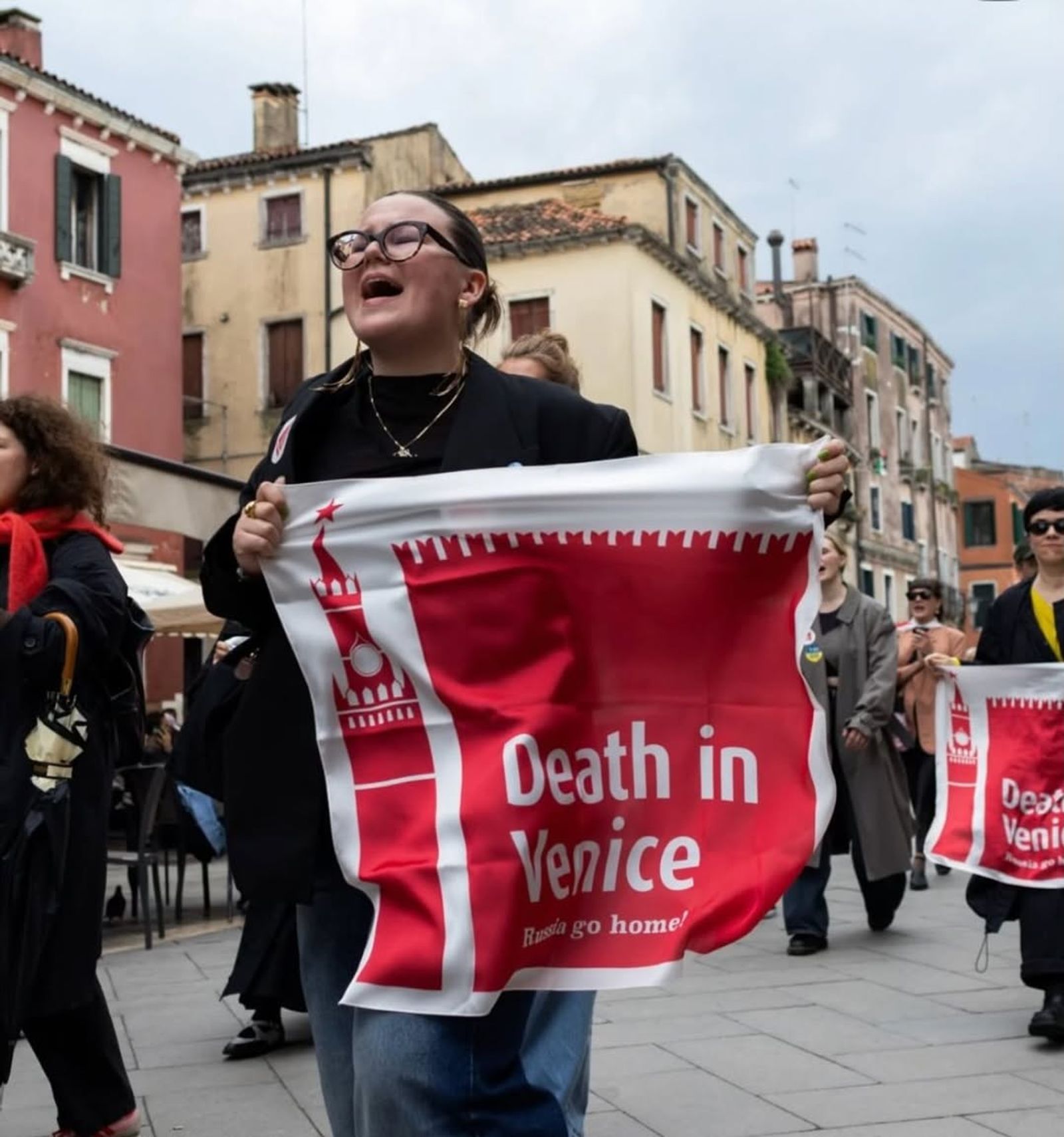
Death in Venice protesters. Photography courtesy of Design Emergency.
The honest position is this: if you believe, as I do, that what Israel is doing in Gaza is an act of ethnic cleansing, and that what Russia is doing in Ukraine is an illegal war of territorial aggression, then the response has to be proportionate to the seriousness of the claim. Closing your pavilion for a day and reopening it the next morning is not proportionate. Withdrawing from an award you might not have won is not proportionate. A 24-hour strike that was, by design, temporary, structured so that everyone could return to business, is not proportionate.
Chenoweth and Stephan's research tells us what actually works: sustained campaigns that generate cost, that reach beyond sympathetic audiences, that fracture the institutional loyalties propping up the regime. The art world has one genuine form of leverage, which is the conferral of cultural soft power, and it is not using it. The 1974 Biennale, where director Carlo Ripa di Meana cancelled the national pavilions entirely and restructured the event around democracy and social change, remains the only precedent where institutional form actually sort of shifted, and even then, what did it actually achieve beyond pissing off artists?
I suspect the reason this doesn't happen is that the art world wants to protest and keep the Biennale, wants to signal dissent and maintain access. It also wants to be on the right side of history without incurring any of the costs that being on the right side of history has traditionally involved, which generally involves getting blown up or shot at. To avoid this is human and I understand it. But it is not activism, and the people in Gaza and Ukraine deserve better than to have their suffering ventriloquised by an industry that won't risk its own calendar.

Comments
Leave a comment