

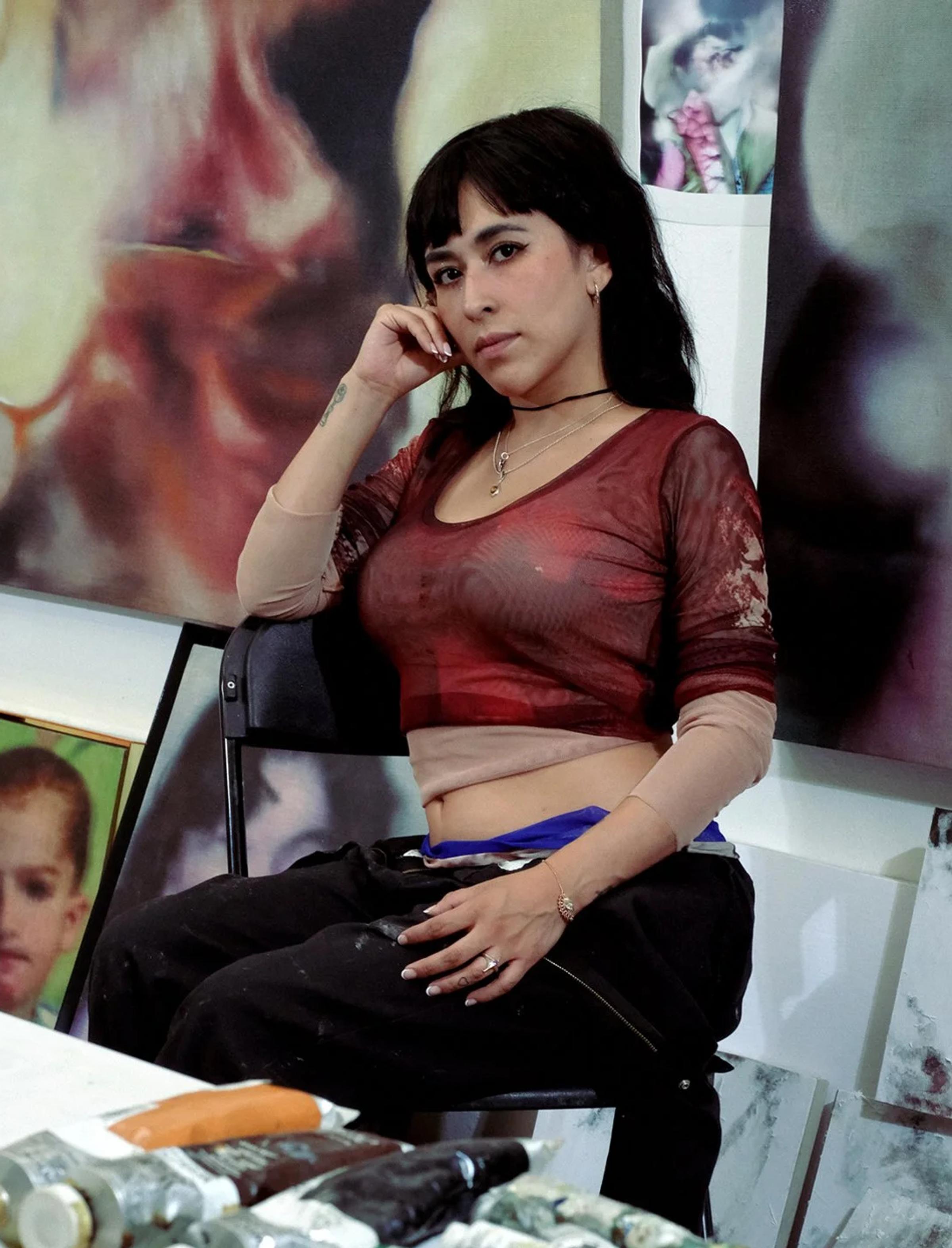
bP: Ángela, what is it about painting that continues to draw you in? What does it give you, whether in your thoughts, your feelings, or your everyday rhythm?
ÁL: Painting is a fascinating process of transfiguration. At its core, it allows me to explore human complexity, how our identity and emotions manifest in ways that are not easy to verbalise. What draws me in is the possibility of transforming the invisible into something visible: a memory, a feeling, a presence. Painting is not just a medium; it's a way of making sense of the chaos of being human. It gives me space to navigate between the physical and the emotional, the tangible and the intangible. With each brushstroke, each glaze, I try to reflect something I perceive as a constant movement within a specific reality; something that allows me to find threads that weave 'universes.' Some of those moments can bring a sense of calm, but many others bring a deep feeling of disorientation.
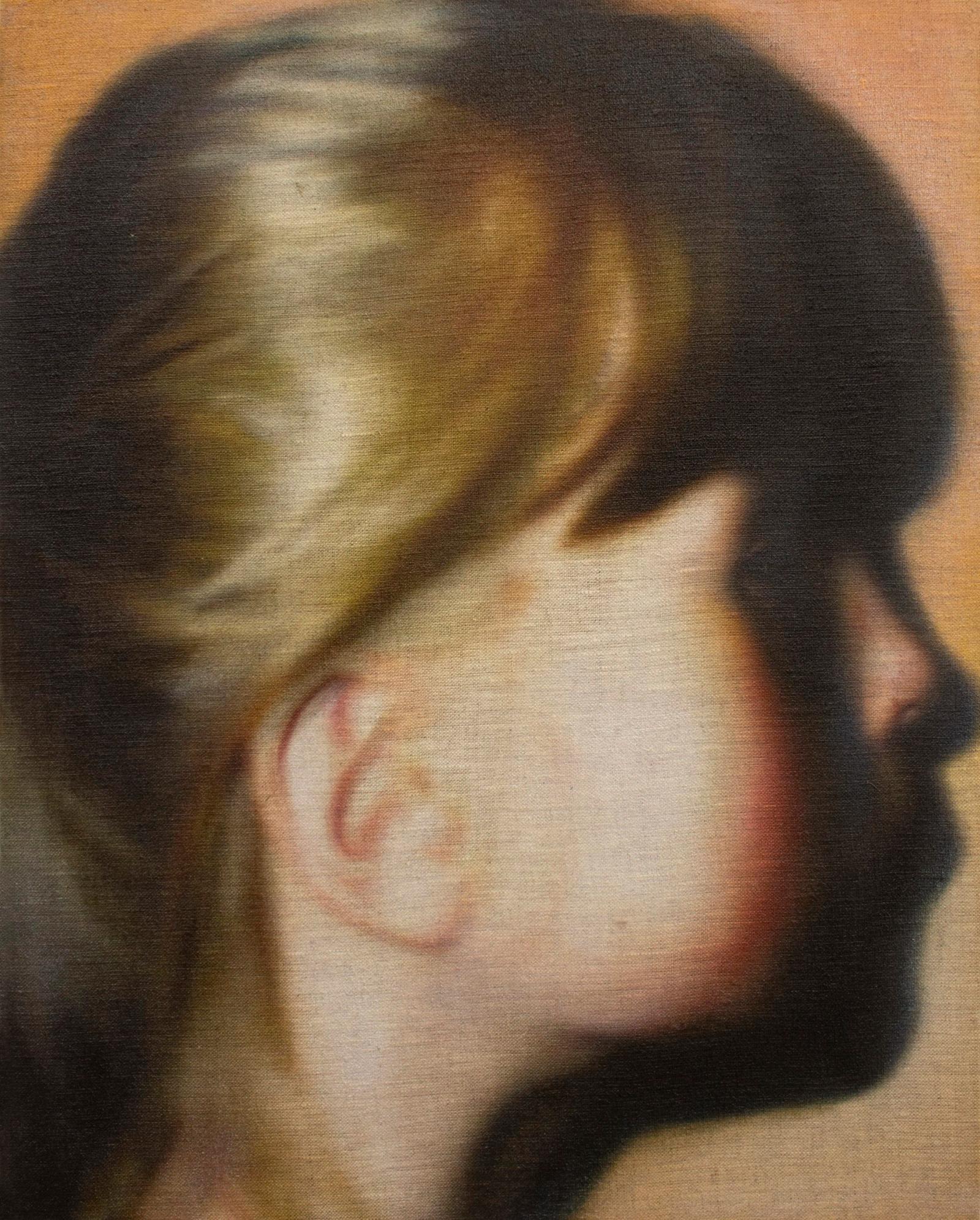
bP: Your portraits often blur or distort the face: do you see that as an act of protection, rebellion, tenderness, or something else? What are you revealing or withholding in that choice?
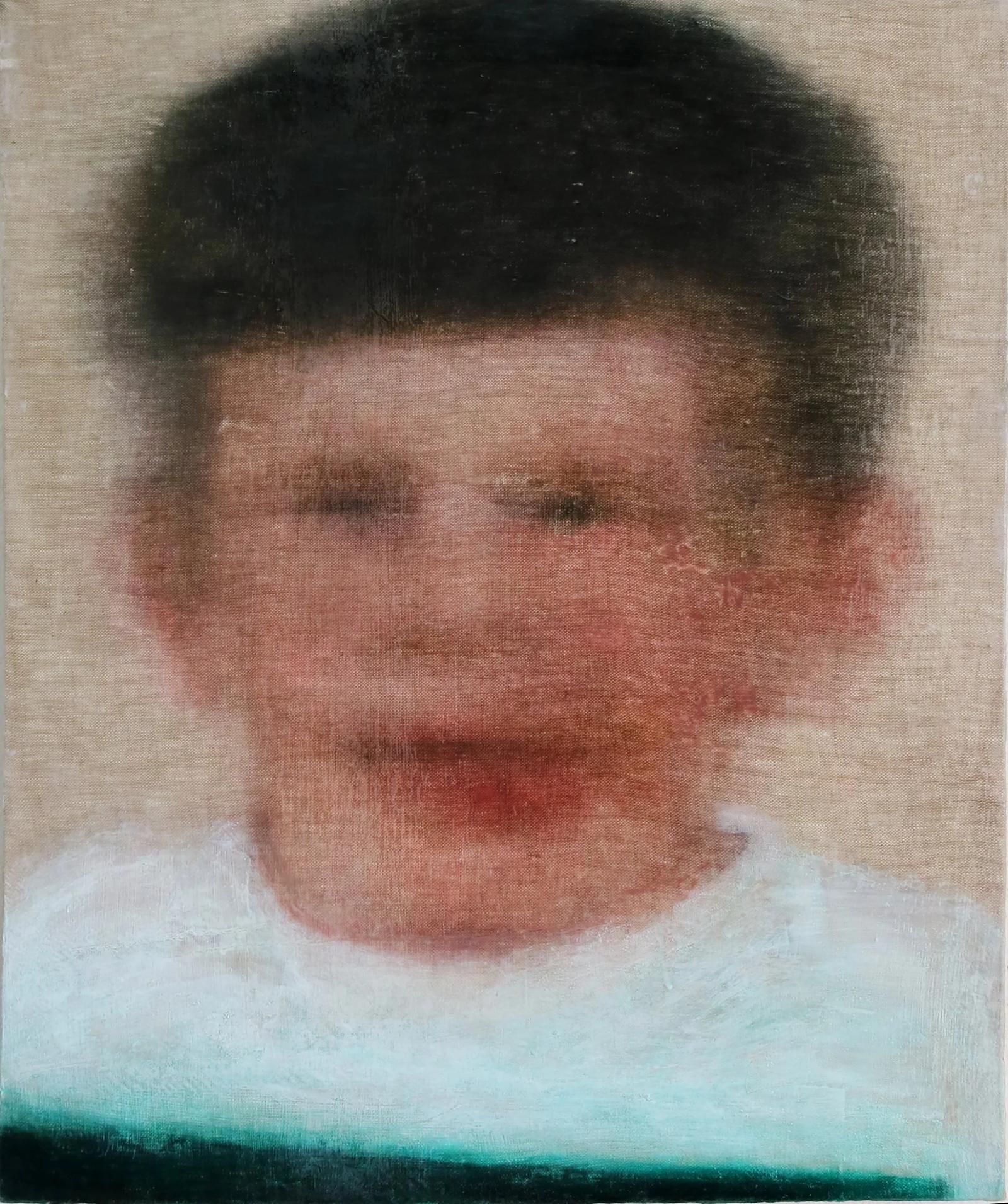
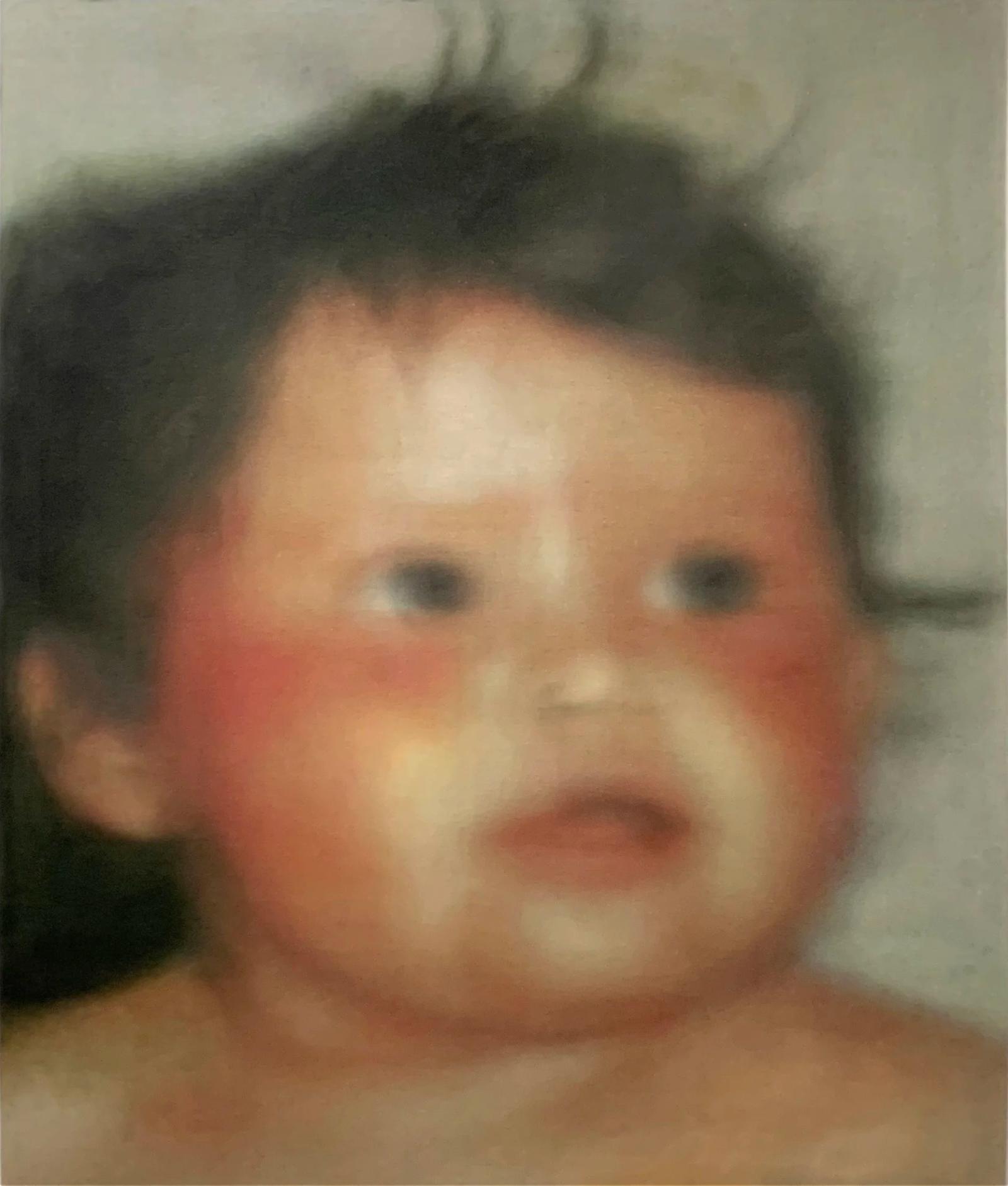
ÁL: It's a mix of all those things, though perhaps the closest to my intention is that I seek to strip the face of the obvious, of what's already predetermined. The distortion and blurring act as a kind of liberation: a way to make room for what lies beyond the face, for what isn't immediately visible. The eyes, for example, are such a deeply meaningful element that by removing them, by not making them clear, what I'm trying to reveal is the vulnerability of being, its fragility. The face becomes more than a representation: it becomes an emotional landscape where the viewer can project themselves, free from the constraints of the physical. I'm trying to reveal the trace of a presence, without letting identity be trapped in a gesture or a form that can be immediately read.
bP: You've called your bed more sacred than your studio, a space where much of your work begins. What is it about that intimacy that unlocks your imagination in ways the studio can't?
ÁL: My bed is, for me, a refuge where space opens up for deep reflection. It's in that place where ideas and images intertwine, where memory and the subconscious begin to weave their stories. While in the studio the action is more concrete, more physical; in bed creativity flows more freely, without the limitations of space or technique. In that intimate space, I allow ideas to grow in a less controlled way, and often what emerges there is something I later bring to the canvas. It's where painting begins to inhabit my thoughts before it materialises into form. It's not a place of execution, but a space of gestation.
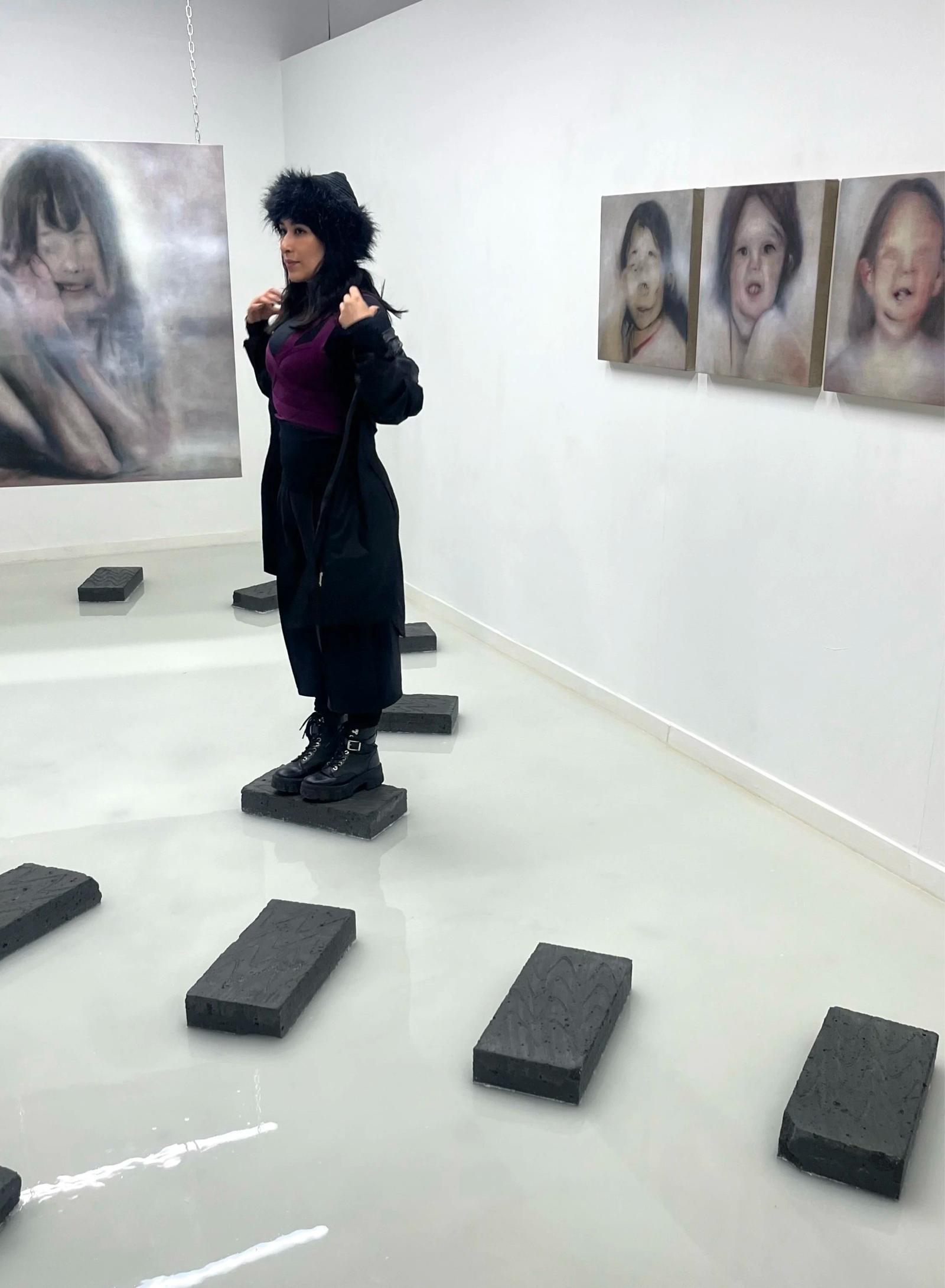
bP: Your recent show at Split in London stood out for its striking installation where visitors had to wade through water to experience the works. Can you share what inspired that decision and how you hoped it would shape the way people engaged with the exhibition?
ÁL: The exhibition at Split was more than a display of painting or an installation. It was an attempt to break the distance between the work and the viewer, to physically involve them by altering the space. Water, as an element, carries deep symbolism. It is a medium for transition between different states, something that could even be considered ghostly. I wanted visitors to feel immersed, as if they were entering a space of transformation. Just like painting itself, which is not static but a process that flows and evolves. I was interested in having viewers feel the work in a visceral way as they walked through the water. Not just seeing it, but experiencing it, with a sense of active participation. My aim was to create a multisensory experience that challenged expectations and opened up new forms of interaction between artwork, viewer, and exhibition space.
bP: As your practice continues to evolve what possibilities are you most curious about?
ÁL: My Bilis Negra (Black Bile) project explores clinical archives and was a way for me to approach certain questions about the individual, about being. Given the nature of those archives, I explored the notion of mutation in a particular way. Now, with my new project titled Máquinas que sueñan niños (Machines That Dream Children), I am also thinking about the mutation of the image and how the integration of new technologies into painting is something I find especially intriguing. I believe the relationship between the physical and the digital remains a fascinating field of exploration. How machines, like machine learning algorithms, can generate images that prompt reflection on the human, the non-human, and the artificial. But there is also something in the physical, in the tactile quality of painting, that always draws me in. My curiosity lies in how these two dimensions, the digital and the physical, can coexist without losing the essence of painting, that visceral connection between the work and the viewer.
Comments
Leave a comment