

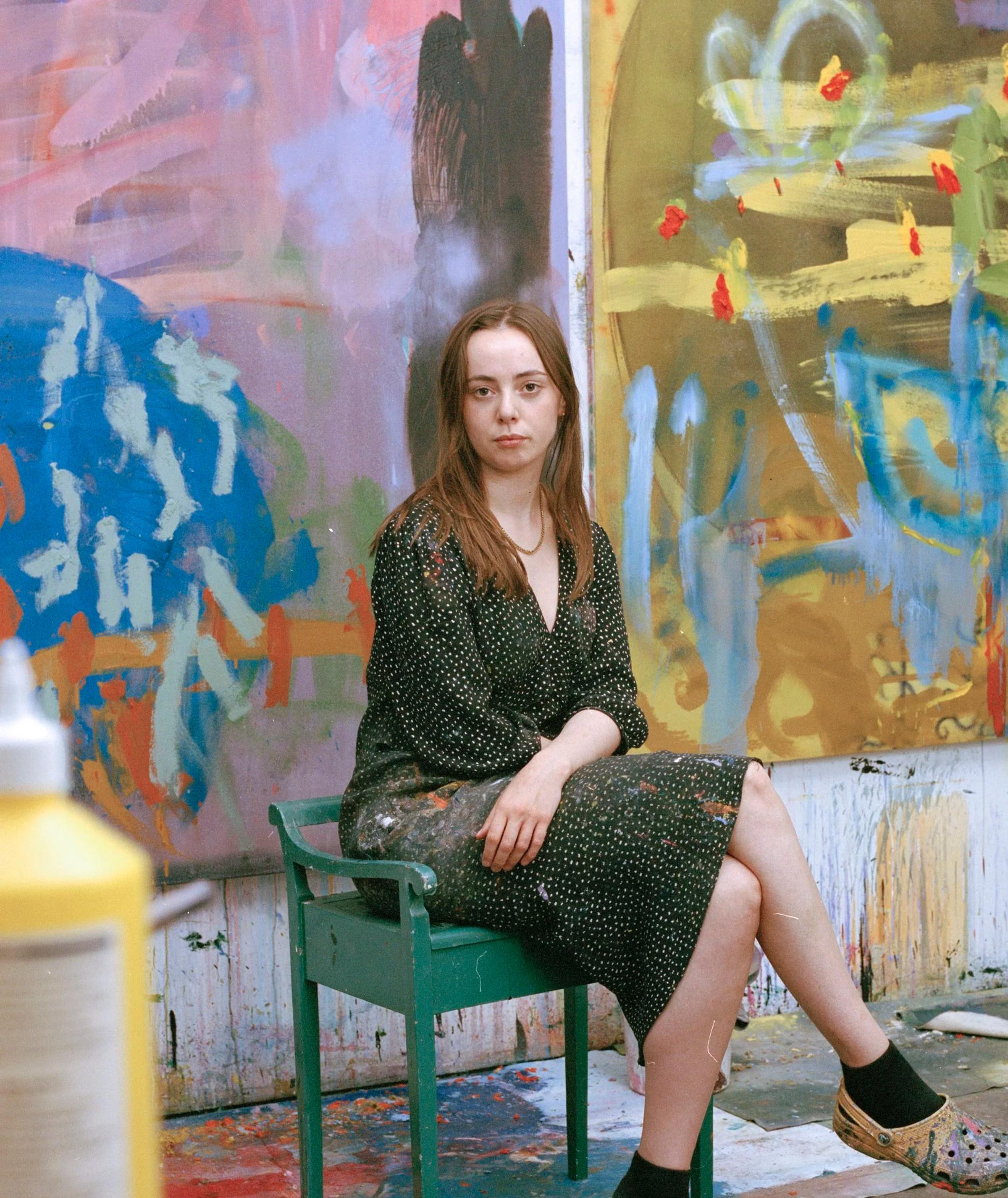
bP: Can you remember a defining moment when you knew painting was your path?
GS: I had bad undiagnosed dyslexia growing up, and I often found it frustrating to express myself. When I started properly learning how to paint at 13, it just clicked. It felt like I had finally found my language. That doesn't mean it's ever been easy, it's still a bit of a minefield, but it's a language that truly belongs to me, almost like a mother tongue. That feeling has only grown stronger over time. I know in my heart that I'm an artist. Each of my paintings feels like the same dialect, but each one speaks a different conversation.
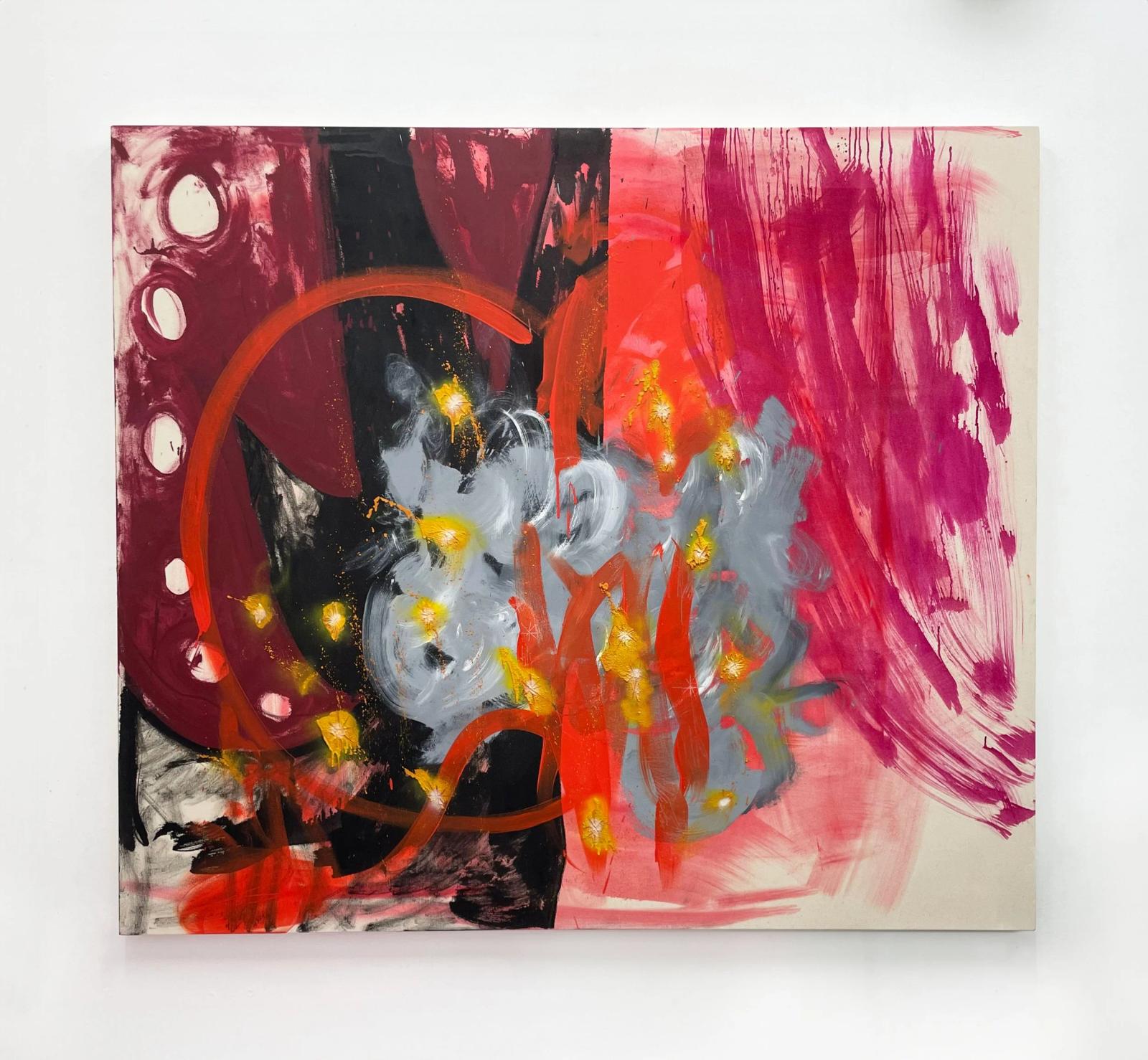
bP: What/Who have been some influences on your artistic journey?
GS: My Mum also studied painting at university before starting her career in education. I think our marks are quite similar. Watching her paint when I was a child had a big impact on me, she approached the canvas with such directness and fearlessness. Her style was visceral, bold, and completely unafraid of the surface. That confidence really stuck with me, and it's something I try to carry through in my own work. Another key influence was an amazing tutor I had during my foundation course at Camberwell. She was tough, but she really pushed me to dig into what I cared about, not just what I was good at. I think that's something often missing in secondary education. Before that point, I'd mostly been doing portraiture without really knowing why, other than the fact that I could do it. She challenged me to look deeper, and that changed everything.
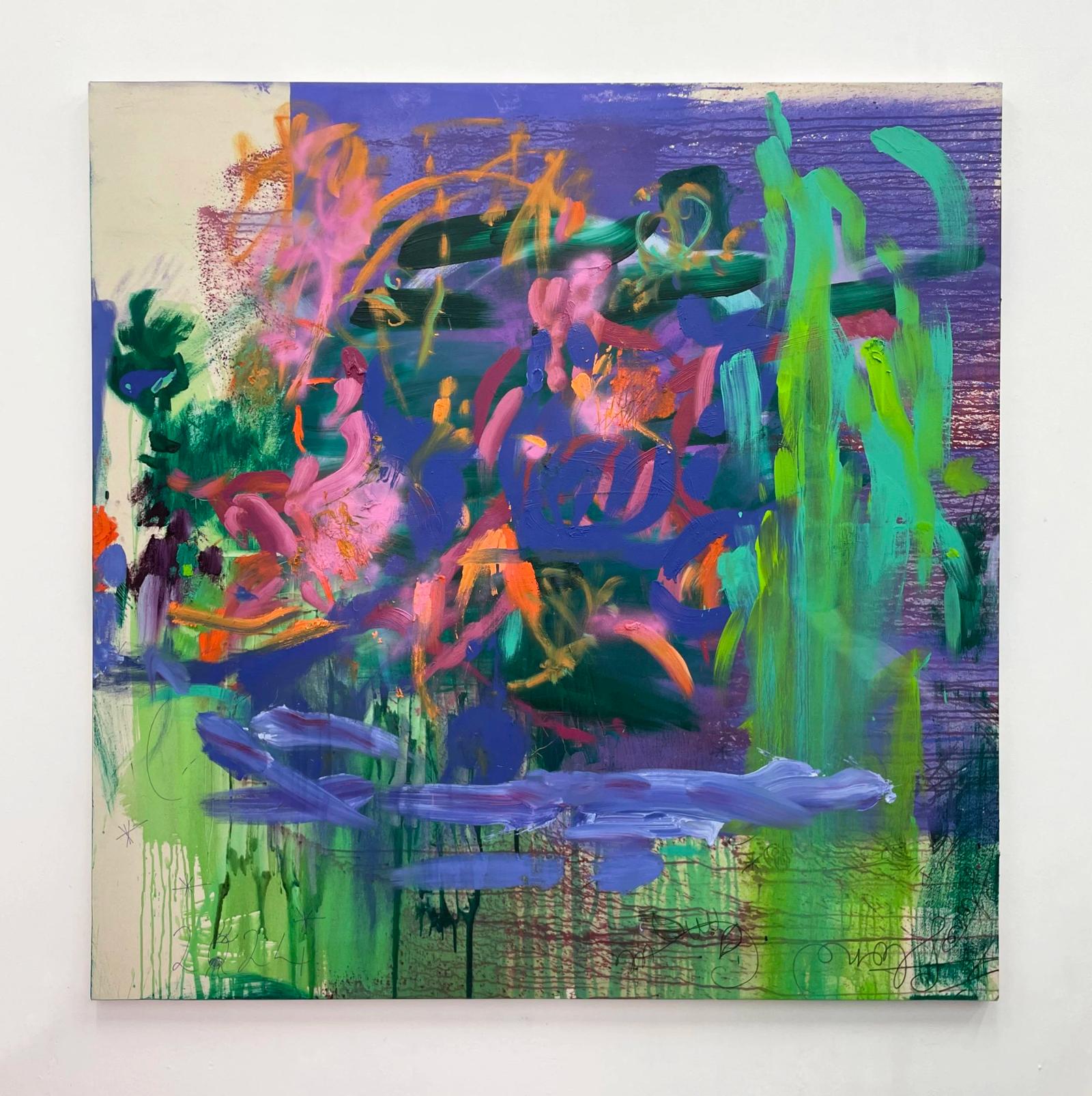
bP: You use unconventional mediums in your work, what draws you to these materials?
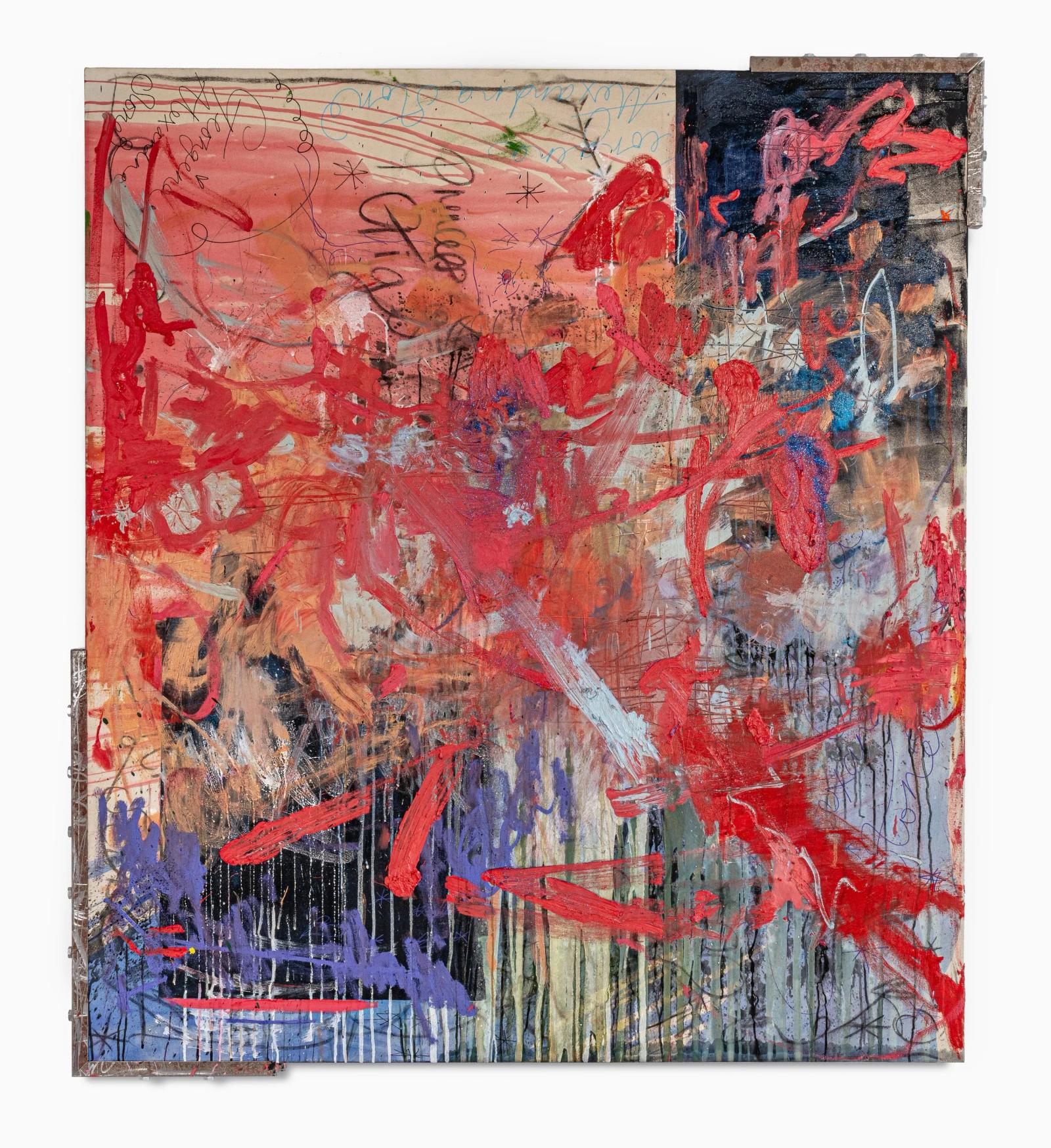
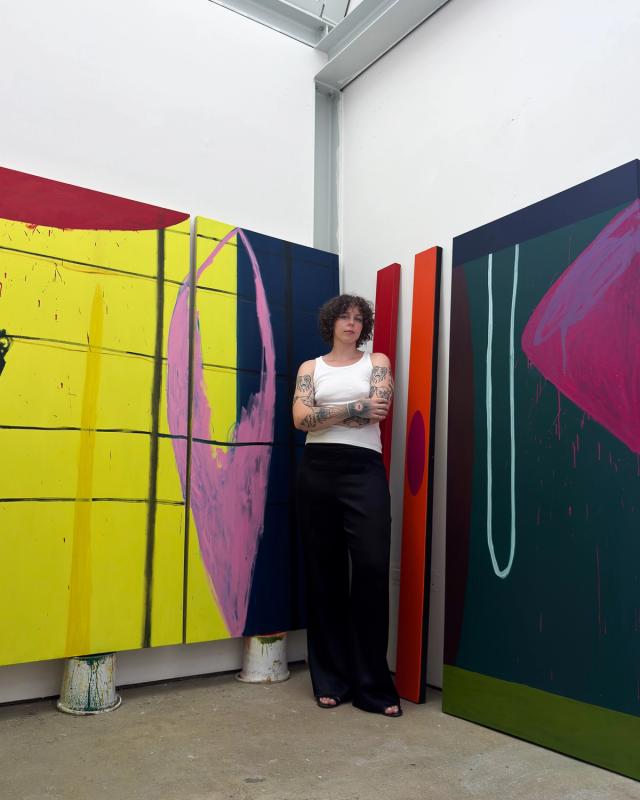
GS: I have always loved the playful element of painting, being completely immersed and consumed by its nature and supernature. To me, a painting can be made with any material. I am drawn to the idea that painting does not need to be confined by traditional approaches; it can take on new forms and find a home in unexpected places. I enjoy experimenting with materials that challenge the norms, pushing beyond their intended use. There is something exciting about watching these materials interact and sometimes even clash when combined. That tension continues to fuel my curiosity, particularly in exploring the physical aspects of the medium. For me, painting has no rules; it is about breaking boundaries and exploring new possibilities.
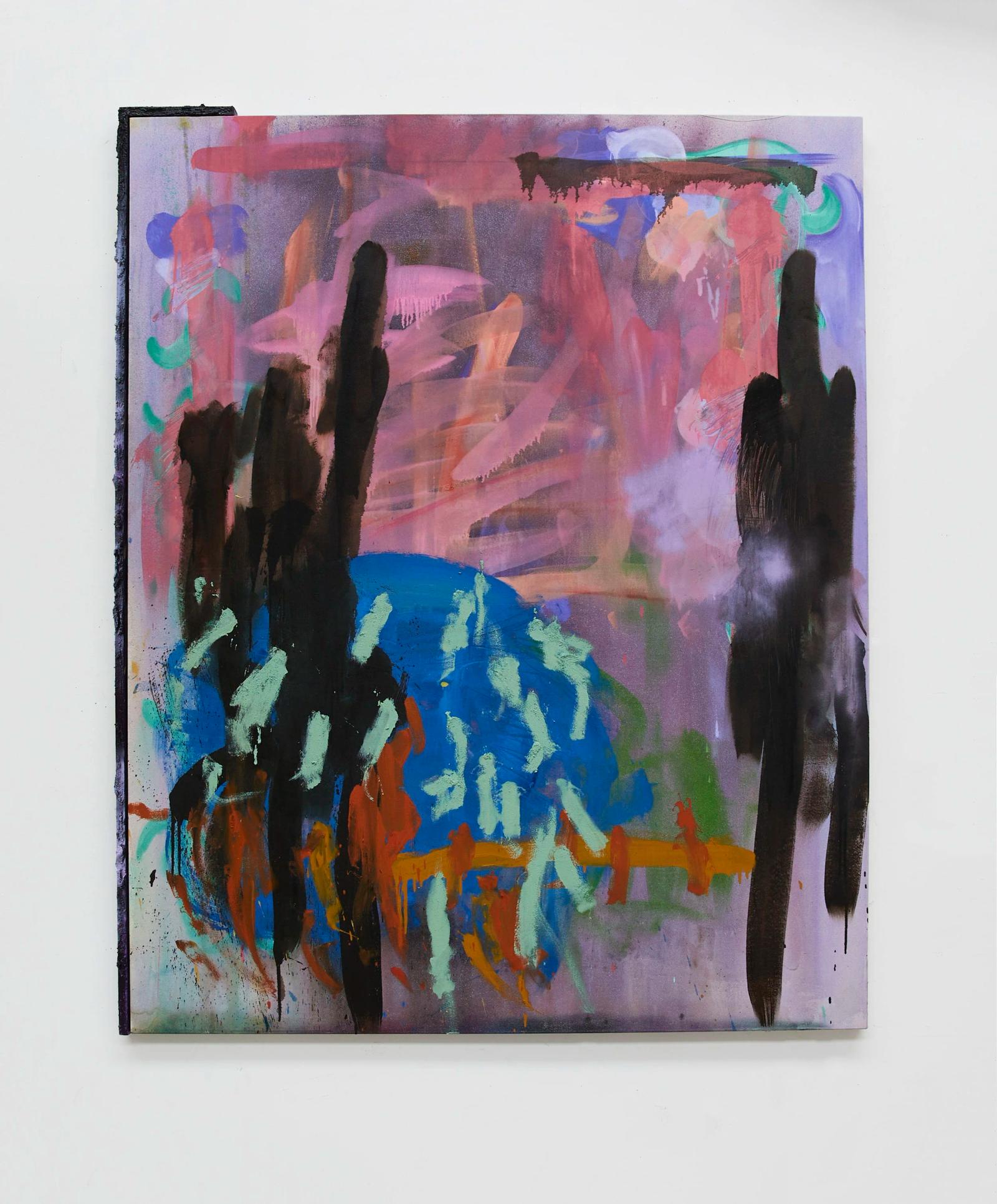
bP: Is there a particular memory or childhood experience that continues to shape your work?
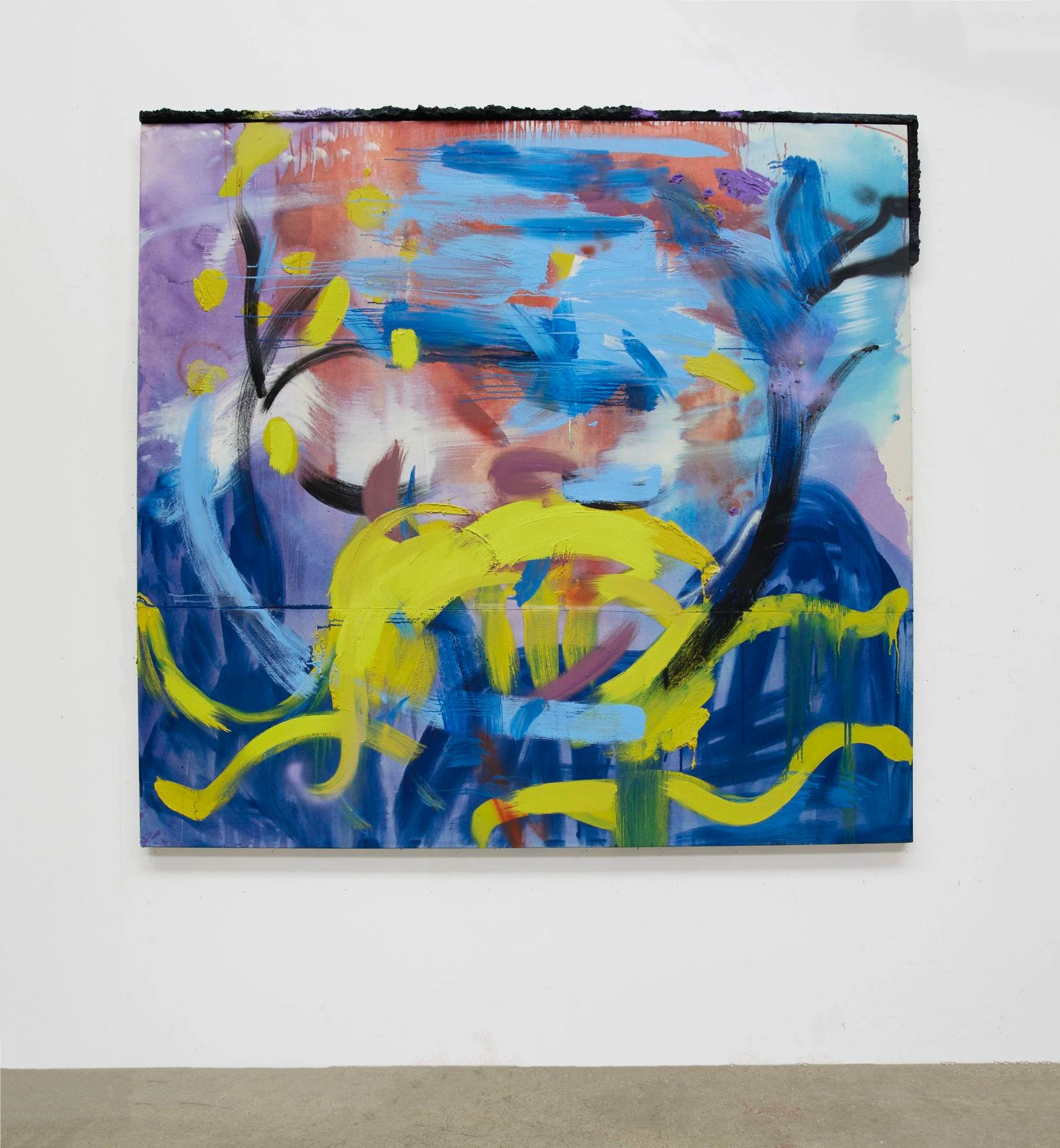
GS: As a child, I loved vintage Disney films, though it was never the stories that captivated me, it was always the colour combinations and the timeless, enchanting quality they possessed. The blues, pinks, and purples of Cinderella and Sleeping Beauty left a lasting impression on me, imprinting themselves into my internal palette. I think the colours from these films will continue to unknowingly influence my work. The nature of my work is often very grounded, there's a solid, physical quality to it, but there's always an element that makes me feel as though something supernatural is at play, as if the materials transcend their origins. I sense a subtle connection between the darker, more mysterious aspects of these films and the tension between domestication and aggression in my gestures. I see the philosophy of paint itself as a kind of fantasy, an enchantment, that continues to pull me in, much like the films did.
bP: Your process embraces both control and spontaneity, how do you navigate that balance?
GS: I would say that's where a lot of the tension lies in my work. When control and spontaneity are in sync, there's this fragile moment where the painting almost feels like it's breathing on its own. Trying to find that balance and letting it create its own new space, that's when I know it's time to put down the paintbrush. It's a delicate place to reach, and if the work is pushed too far toward either end, I know the painting is dead. It's about knowing when to step back and let it exist without forcing it.
bP: What does success within your painting practice/career mean to you?
GS: My paintings always need to feel like they belong to me before any other conversations can even begin. Success, to me, means making work authentically and staying loyal to my practice, not trying to force it into something it's not. It's about letting the work breathe, allowing for moments of stillness, breaks, and pauses when necessary. I know there will be lulls in my career; that's part of the rhythm of any creative life. But as long as I remain true to the process, and the practice stays loyal to me, then I feel I'm succeeding.
Comments
Leave a comment