

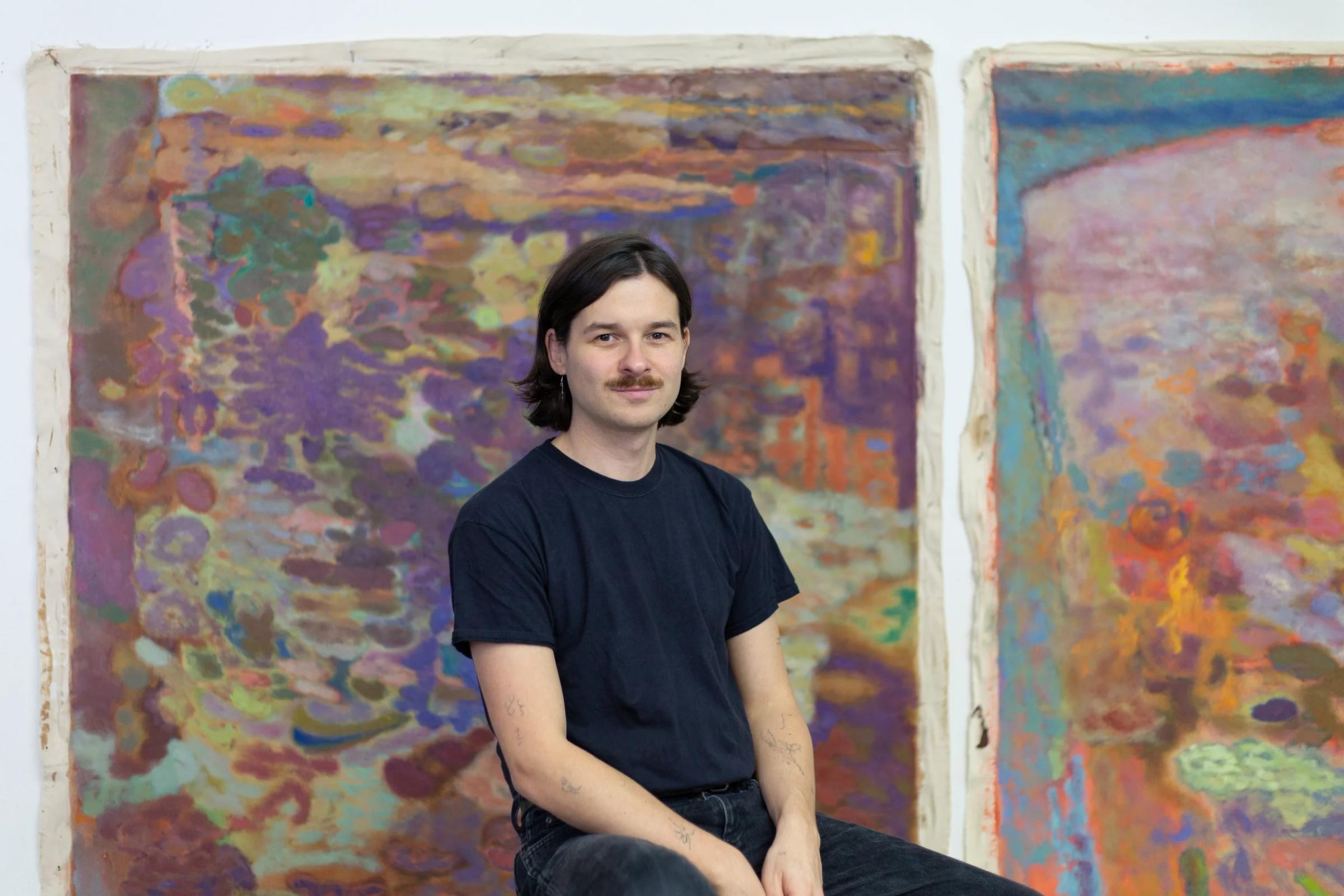
bP: What are your goals with your paintings and what are you seeking to explore or discover through your work?
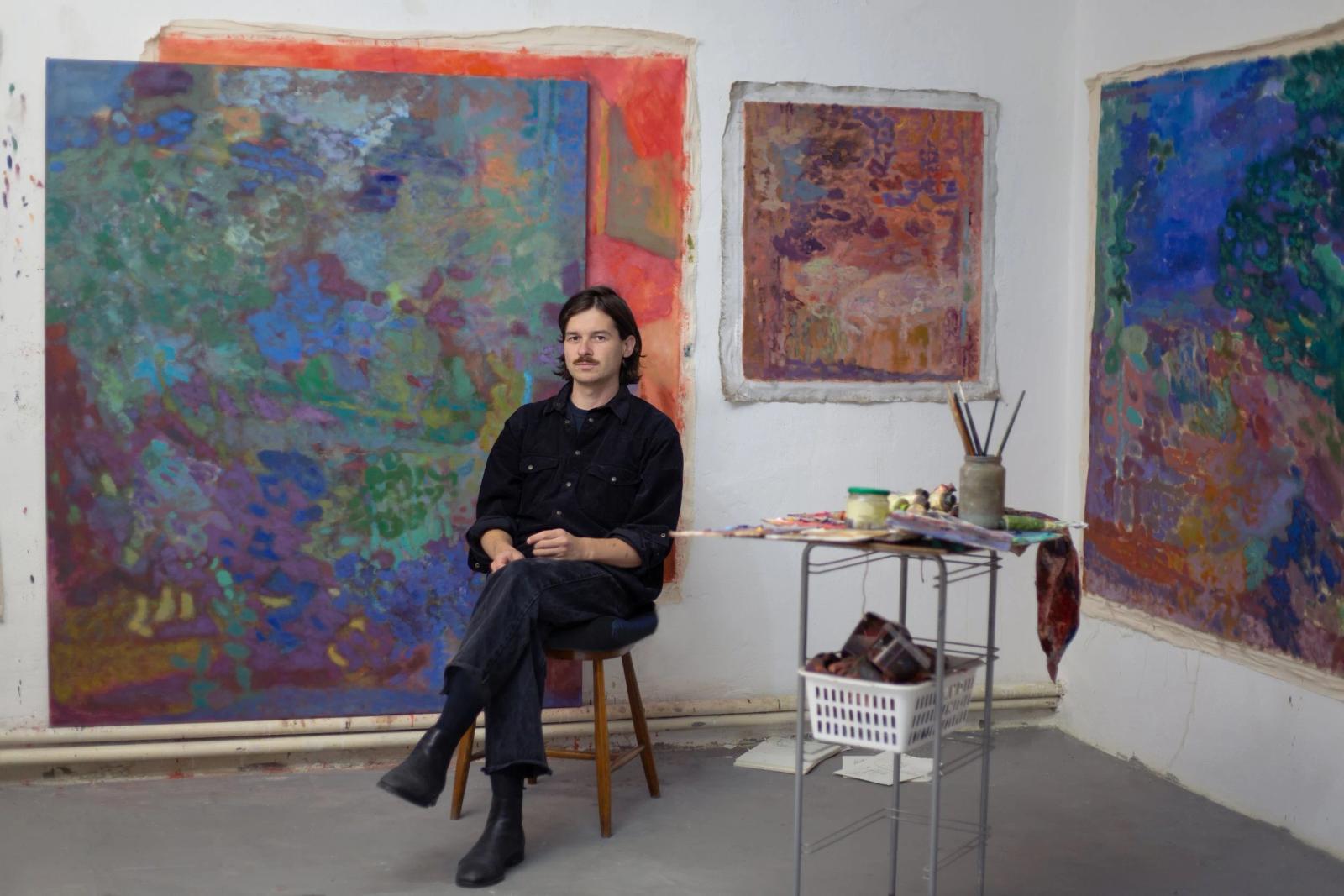
MZ: While painting, I rarely set clear goals, and if I do, they usually change quickly as the work progresses. I try not to confine things within strict boundaries, but rather to stay open to what emerges and happens around me in the process. I find it far more interesting to lose myself in painting than to know what will come next, even though that can sometimes be uncomfortable. The path through this process is a state of maximum sensitivity and concentration, which I try to reach while painting. It allows me to explore and recognize things that I might not have seen before in this light. It's a continuous dialogue with myself and a way of cultivating greater sensitivity toward my surroundings. Because I usually work on several canvases simultaneously, certain series or phases naturally appear and alternate over time. If I were to describe the themes of my paintings, they would relate to motifs rooted in landscapes and natural forms that gradually transform into mental landscapes with which they enter into dialogue. I find something similar, for instance, in the drawings of Arshile Gorky, whose work has long fascinated me. Although it might sound a bit unclear at first, I see a similar principle in contemporary experimental music based on improvisation, something I also practice. Often, a field recording serves as my starting point, which I then modulate and transform until the original surface remains only in traces, or disappears completely.
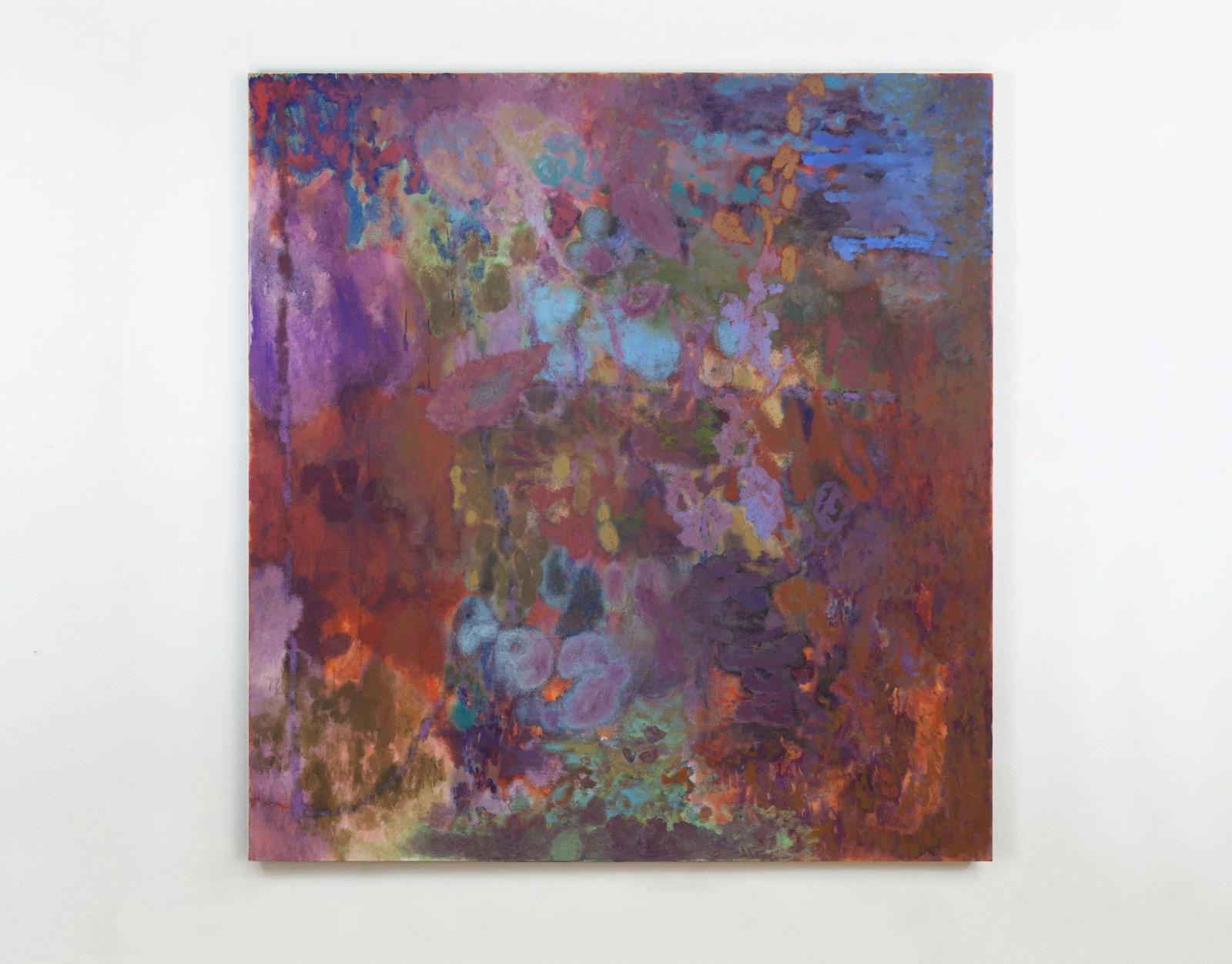
bP: How did studying in studios across Prague, Brno and Helsinki shape your artistic voice?
MZ: Each studio was very different, and throughout my studies I went through various approaches to visual art across different media. As I was getting familiar with contemporary art, I felt a need to express myself through other media besides painting. My earlier works in video and installation might appear more conceptual, but I think I was essentially dealing with the same concerns as in my current painting practice, only expressed through a different medium and strategy. Honestly, I don't find it very important to look back or to build a specific style or artistic brand. What matters to me is that every new work surprises me in some way, even a small detail that shifts the work in an unexpected direction and captures my attention. As for specific schools: in Prague and Brno, the heads of studios had a strong influence on my development. At the Faculty of Fine Arts in Brno, the atmosphere of the school around 2010 was very specific — I spent only two years there, but it was a formative period. The environment was highly experimental; the building itself felt almost more like a squat than a traditional academic institution, and the works created there were often quite eccentric. At the Academy of Fine Arts in Prague, the atmosphere was more traditional, yet the studio I attended was more progressive, with openness and an empathetic approach to discussion. In Helsinki, the system was set up differently, perhaps less personal. You didn't attend a studio with a single professor, but instead chose specific tutors for consultations based on your needs. There was excellent support and a very good environment for working. I also appreciated the opportunity to exhibit at a gallery in the city center. In Finland, I was also deeply enriched by the local environment and the landscape, which I explored through occasional travels.
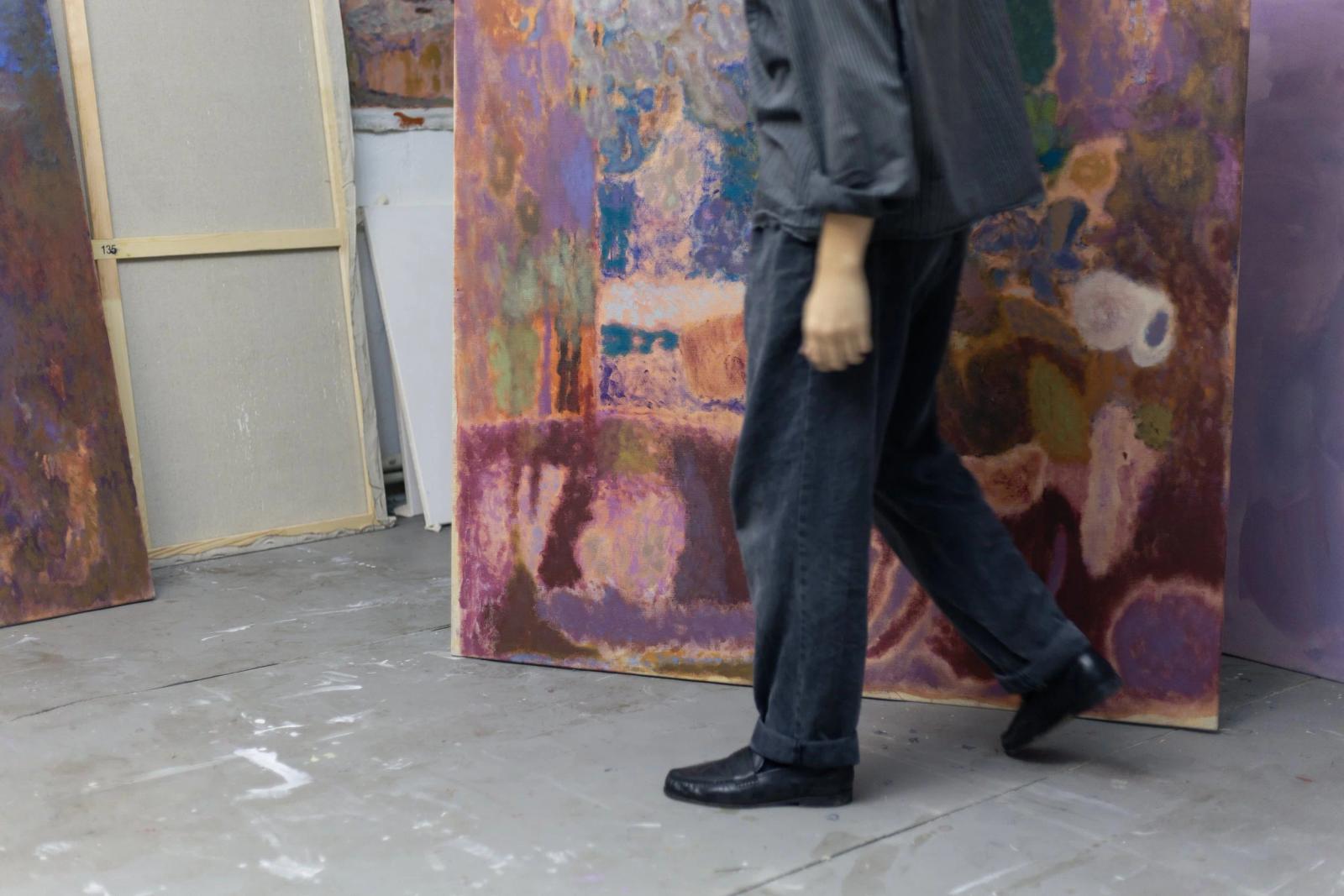
bP: How and why did you first start working with drawing as the foundation of your practice?
MZ: Drawing functions as the foundation of my work in the sense that it happens naturally and continuously, as quick records of shapes, compositions, and thoughts, made while traveling or in the studio. But I'm not interested in drawing as a preliminary sketch that I later simply transfer onto canvas. My paintings emerge slowly through constant overpainting, layering, and removing of paint. What interests me most is the moment when the image begins to reveal itself, almost as if it's painting itself. Sometimes I have to work my way toward that moment, which can take time. I might spend weeks or even months with a painting, not necessarily working on it every day, but often letting it stand in the studio and returning to it later. Observing, in many cases, becomes a more important part of the process than painting itself. My approach shifts according to my mental state and the environment I'm in, and drawing is often the most immediate way to capture something on the spot. In the studio, painting becomes a different kind of work — other factors come in, such as material choices and experiments with different media, like beeswax, which I've recently used in some of my paintings. These elements can create obstacles, but they open paths toward new spaces of discovery.
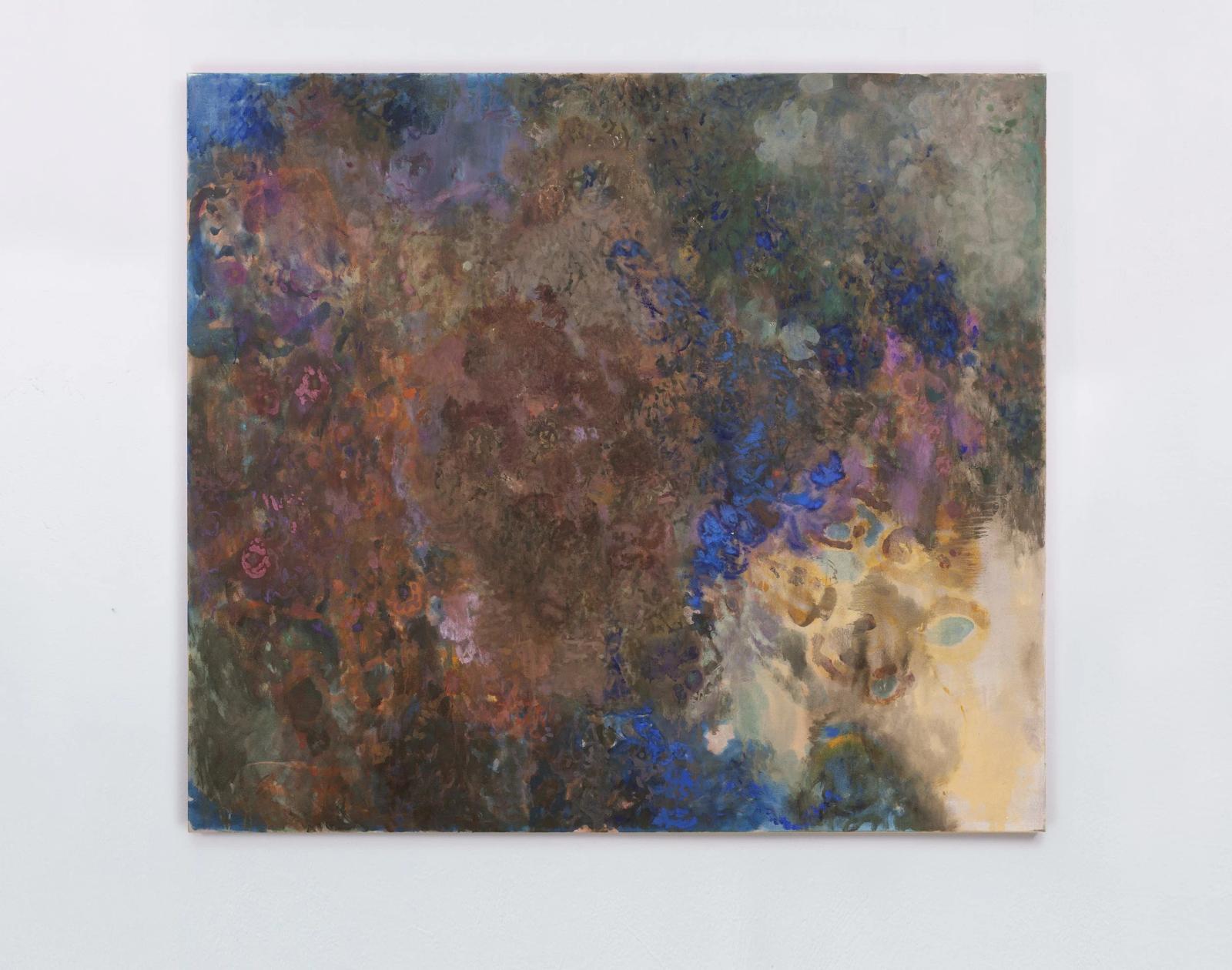
bP: Which artists, living or who have passed away, inspire you and why?
MZ: I find inspiration across a wide range of artists and influences — from music, which was actually my first means of expression and a gateway into visual art, to poetry and literature in general. If I were to name a few painters who feel close to me at the moment, I would mention Kai Althoff, Arshile Gorky, Pierre Bonnard, or Josef Šíma. Their ways of working with perspective and perception of landscape, exploring the boundaries between abstraction and realism, the personal and the universal, as well as their sensitivity to color and subject matter, resonate deeply with me. In Kai Althoff's work, I also relate to the connection between visual art and music. In the case of Josef Šíma, I'm particularly drawn to his connection with the French literary and artistic group Le Grand Jeu, whose poetry and writings have been a long-term source of inspiration for me.
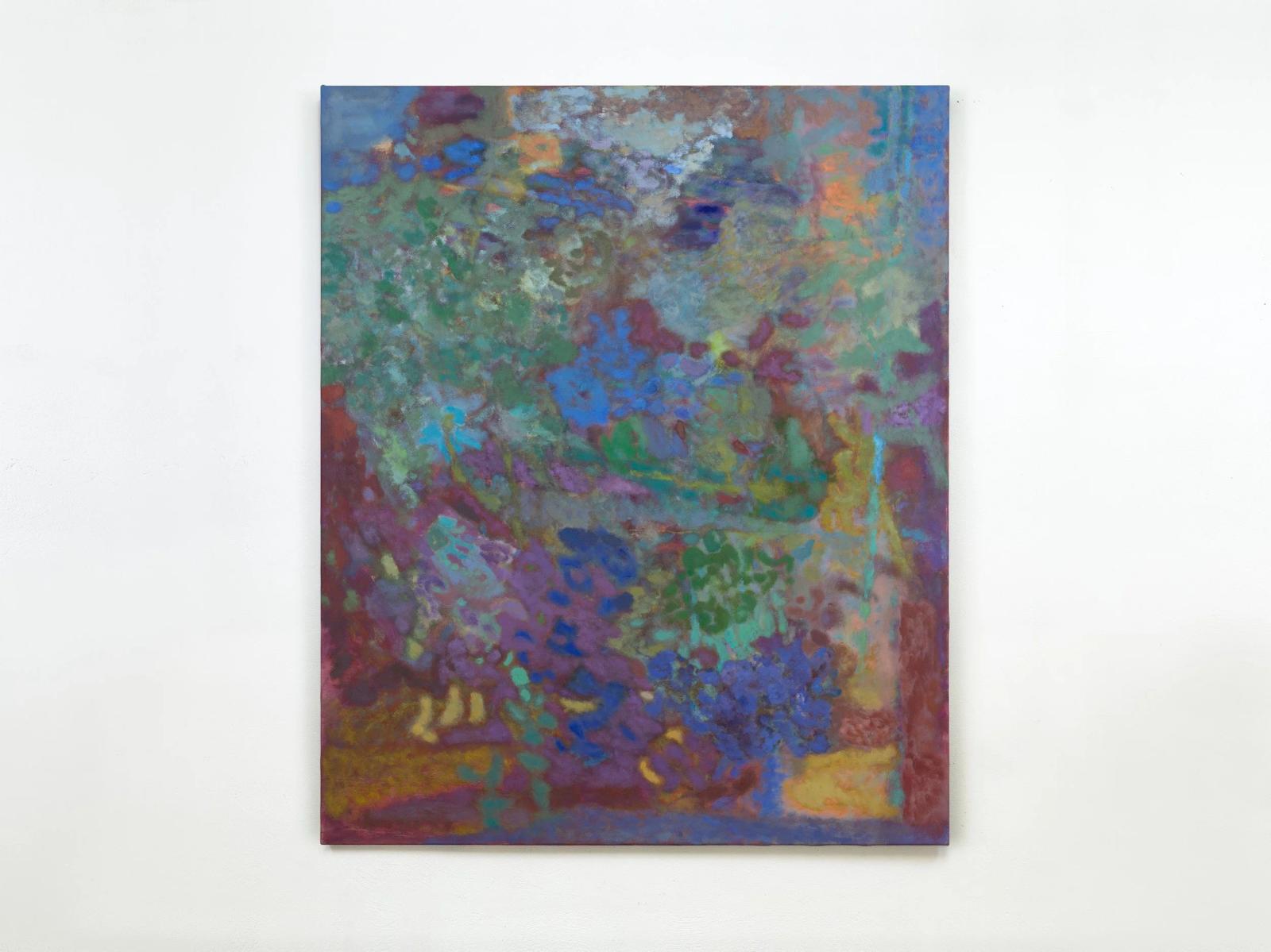
bP: Could you talk about the dialogue between what is seen and what is felt in your paintings?
MZ: Even though my paintings might appear abstract, it's important for me to begin from something concrete, something that remains visible to varying degrees. I don't see abstraction as escapism, but rather as a way of getting closer to an experience and to my relationship with the situation I'm painting. At times, I feel that through constant reworking I'm trying to capture a kind of movement, not in the physical sense, but a mental one, a flow that continues and somehow becomes fixed on the canvas. This is something I admire, for example, in the works of Pierre Bonnard, which at first glance appear as paintings of classical landscapes or interiors, yet many areas seem unfinished and abstracted, as if he resisted freezing the image. I think it's precisely this apparent incompleteness and openness that keeps drawing me back to his work. Perhaps this approach also stems from my background in music, where abstraction and flow are more explicit. But this paradox — capturing movement or vibration emerging from within a static image — is what continues to fascinate me about painting. A calm more restless than noise.
Comments
Leave a comment