

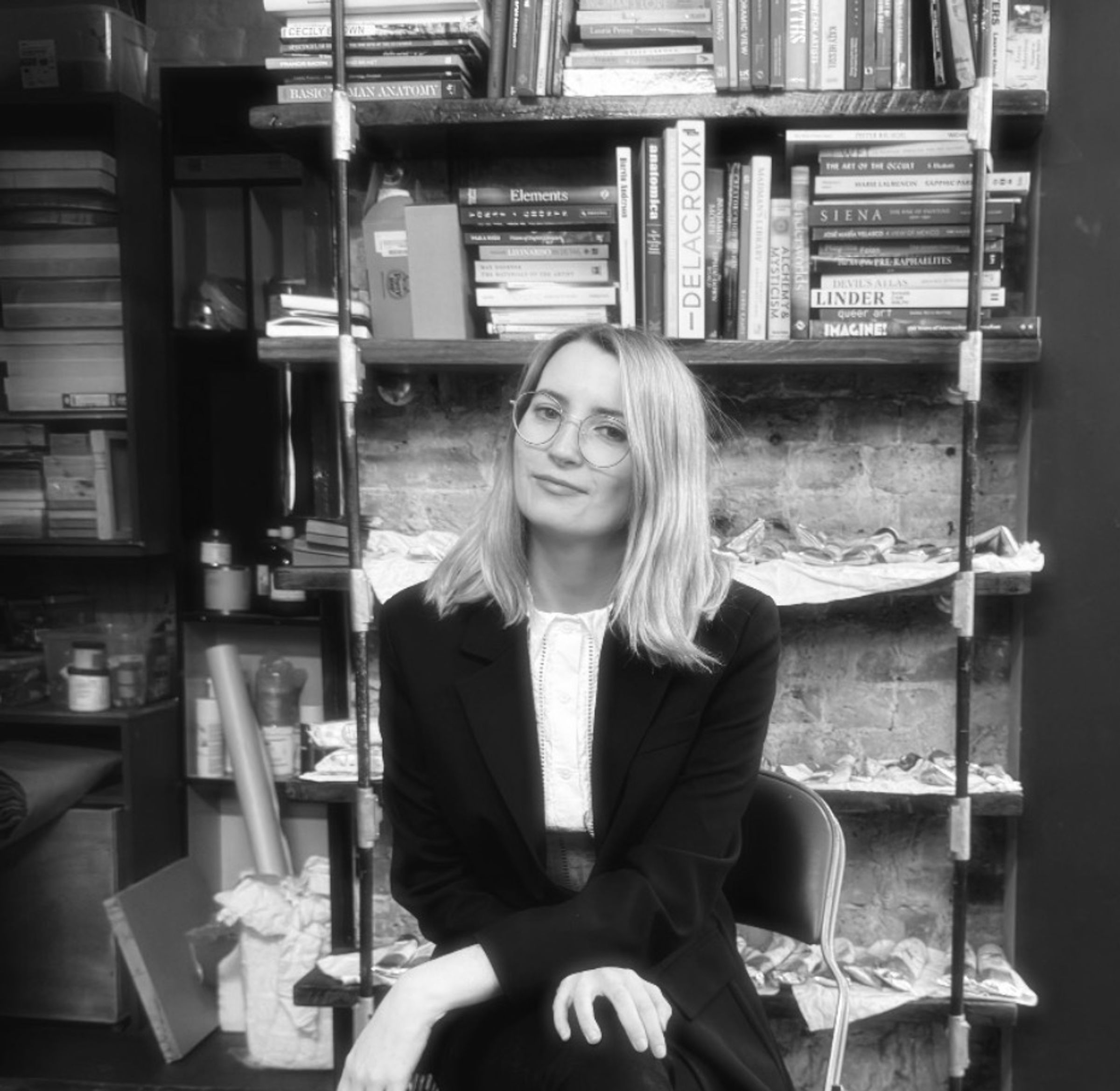
BB: I noticed you often describe your work as exploring dysfunction, but never in a purely negative sense. It seems like dysfunction becomes productive, creating new ways of seeing. Has exploring that word through art changed what it means to you?
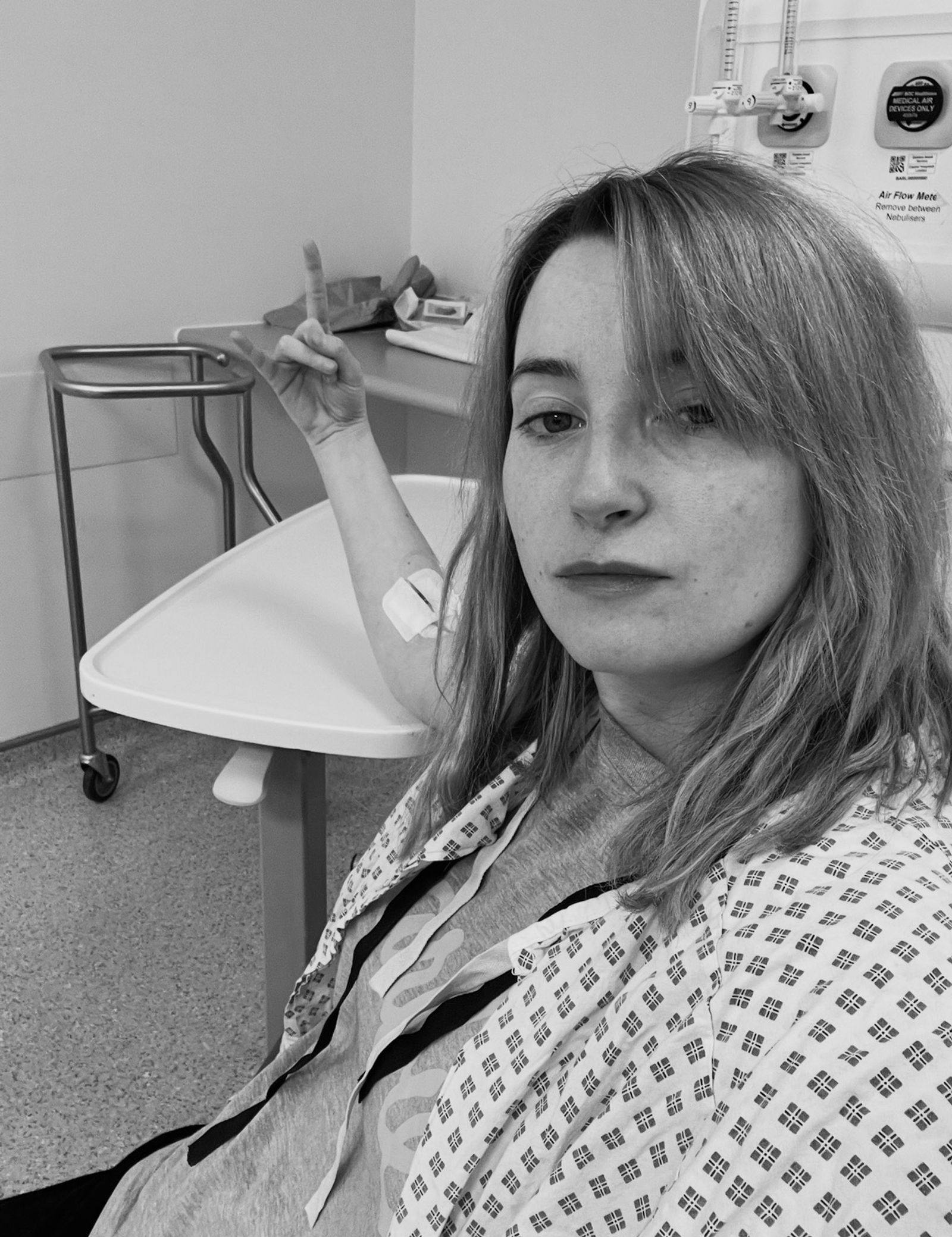
LF: Yes, definitely, I think ableist capitalist discourse perpetuates the idea that dysfunction is bad. I came of age with my disease during the early 2000s, before the social media revolution. As a teen it was hard for me to find a community with similar medical experience outside hospital wards, and there were huge taboos around stoma bags. I had my ileostomy installed at 19 years old. Now things are different. People with chronic illness can find and support each other online, and in my case there are Instagram influencers and famous people (Dame Tracey) with stoma bags bringing about great awareness and helping to deconstruct the taboo.
But thoughts such as - my body is a failure, it’s a state of being to be fixed / cured / triumphed over, had already been hammered home by the ableist narratives that still prevail. What happens to bodies that can’t be “cured”? Or bodies that unfortunately must live with pain and cannot transcend it? Like many living with chronic illness and disability, I felt my body was not perceived as having innate value. Like I was inhabiting a version of reality not as valid as everyone else’s.
For me I do not seek neat resolutions like radical self-love, or to be seen to triumph over pain, as this is not real life. Things are always in flux, with steps forward, steps backwards etc. My disease has no cure, it oscillates between giving me a state of (almost passing as) able-bodied during remissions, to complete shut-down. Then, only prescription narcotics can get me through the day. I cannot walk or bathe myself and feeding becomes a challenge.
This is dysfunction for me. It’s not fantastic but it’s not all negative either. It’s not productive or unproductive, it just changes my way of being to something different. When physical movement is restricted, often the conscious and subconscious minds reconstruct the world through memory and imagination. The traditional, linear, productive, forward-marching capitalist ways of seeing time and space break down. A new, richer, visual language or understanding of things can take over. This is what I look at in my art. Celebrating dysfunction is not a glorification of suffering, it’s acknowledging a more truthful and comprehensive picture of the realities of human experience.
The more diversity of realities and points of view we can access - the better. We need more empathy, more love. I believe fear fuels intolerance, division, hate. Fear of dysfunction, fear of getting older, fear of death – these catalyse greed, tribalism, war.
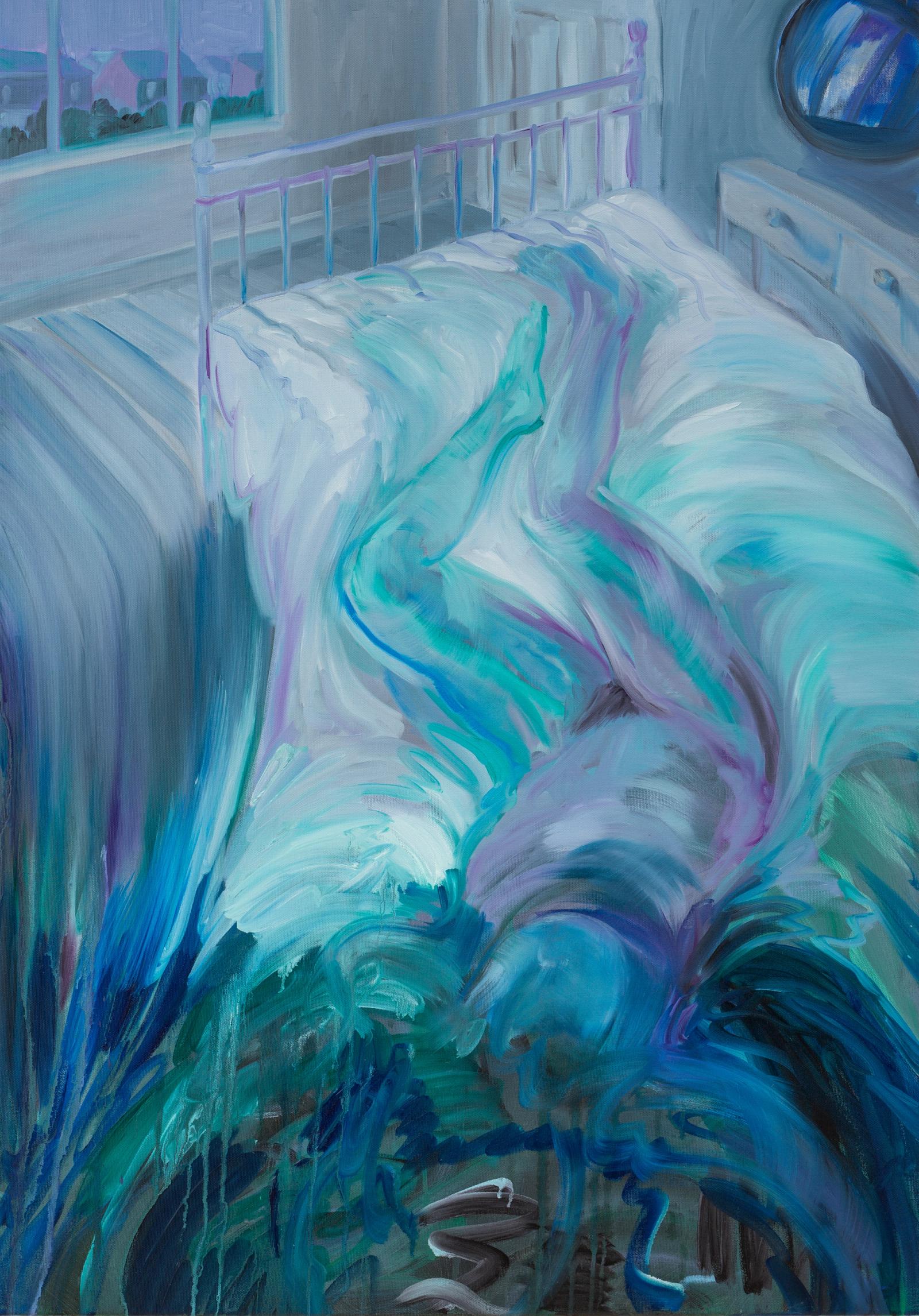
BB: Your paintings don’t work from direct observation. I wondered whether by removing the precedence of factual accuracy you pave the way for a different kind of truth. What does memory allow within your practice?
LF: Working from memory rather than from photos gives me a much more personal and subjective kind of truth. I am interested in the unconscious process by which emotion, time, and imagination are captured and refracted through memory. I hope to surprise myself every time I try to paint or draw something, relying on something shifting and fallible. This approach links into the dysfunction ideas: since memory is fluid and fragmented. My work tries to reflect reality's complexities and grey areas.
By using memory, fluid boundaries, and internal somatic truths, I hope my art can challenge the dogmatic politics and aesthetics inherent in ableism.
Working from observation still requires the use of memory though. I remember when I was a student at the Royal Drawing School, one of the tutors highlighted this. Hockney also spoke of it: you look hard at the life model but in that split second of turning your face away from the model to the page to draw a line, you are remembering the shape of that leg, that knee. There is always room in that moment for human error, for beautiful imperfection, instead of clinical accuracy. That is why, for me, AI will never make more interesting or more beautiful drawings than a human. We need human imperfection and malfunction.
BB: I noticed that despite drawing so heavily on your own experience, your paintings rarely feel closed, seeming to leave space for viewers to bring their own experiences into them. Is creating that openness a conscious choice?
LF: Oh yes, I think so. I try to keep the work open for a few reasons. It is important to me to draw from memory and lived experience. Just as they tell writers to write what they know, this is my relationship with visual art, too.
I make work that I need to see first and foremost, but nobody wants to create in a vacuum. I want to connect with others. Living with chronic illness for over 30 years is a very isolating experience. There’s a yearning to connect and find people who can feel and see what you feel and see. It’s a beautiful thing. I want to make art that catalyses other people’s memories, dreams, imagination, or makes them feel seen and understood. So yes, I try to be both present and absent in the work simultaneously.
Then the other layer to this openness is political, perhaps. At university I was very affected by the work of Hannah Arendt. She famously warned that unquestioning certainty is the death of critical thinking, leading to dogma and totalitarianism. Using memory deliberately embraces the unfixed debatable nature of truth. I hope that by making work that has this ungraspable, shifting, open-ended state, the art will encourage the viewer to engage in their own playful interpretations and debates. I hope the viewer will be led by their own response, rather than accepting a singular, authoritative narrative that I have imposed on it. I like that several truths can co-exist in tandem within the work, as this reflects real life.
BB: You speak very openly about discovering art history later in life and about wanting to challenge the idea that culture belongs to an elite. It made me wonder whether painting has also become a way of reclaiming these spaces for yourself and people with similar backgrounds?
LF: A self-identifying middle-class artist once asked me: “don’t you think it's alienating to embed references in your work from French literature, philosophy, and all these “high-brow” places? Especially as you’re a working-class artist, shouldn’t you try to connect with where you’re from?”
It prompted me to confront their questions.
I do not think references to a wider cultural history is necessarily exclusive or alienating. I like to think of the “high-brow” elements embedded in my work as claiming a stake in that cultural history, for other working class people like myself. I like to think that working-class artists are welcome to make art that references all of artistic and intellectual history, as well as popular culture and the aesthetics of where they’re from. Maybe it will be a welcome bridge of access. Perhaps a kid from where I am from decides to research my references a little further and discovers their own paths of exploration.
This is what fuels me in the studio. I persevere not because of any special innate talents. My skills are the product of a very misspent youth of sickness and convalescence - thousands of empty hours in isolation that I chose to fill with drawing and learning or else go mad with boredom. If anyone else had the same conditions and made those same choices, and spend all that time in the same way, I guarantee they would end up in a similar boat. It is all down to perseverance. So, please do not give up - never ever give up, trust me!
I am obsessively curious; I always want to know how to do X or Y. A great high school teacher told us all to “stay curious” and “never give up”. Simple and great advice.
I am white and cis-straight, which eliminates so many systemic hurdles already, which needs to be acknowledged. What I hope to bring to the conversation in the art world is the point of view of a Midlander, not a Londoner, a female artist from a working-class background, with an invisible disability, and whilst my work anchors me to a thread of sanity (and that is purpose enough), I hope to bring some representation to the people who can relate to where I am coming from, who feel unseen or excluded.
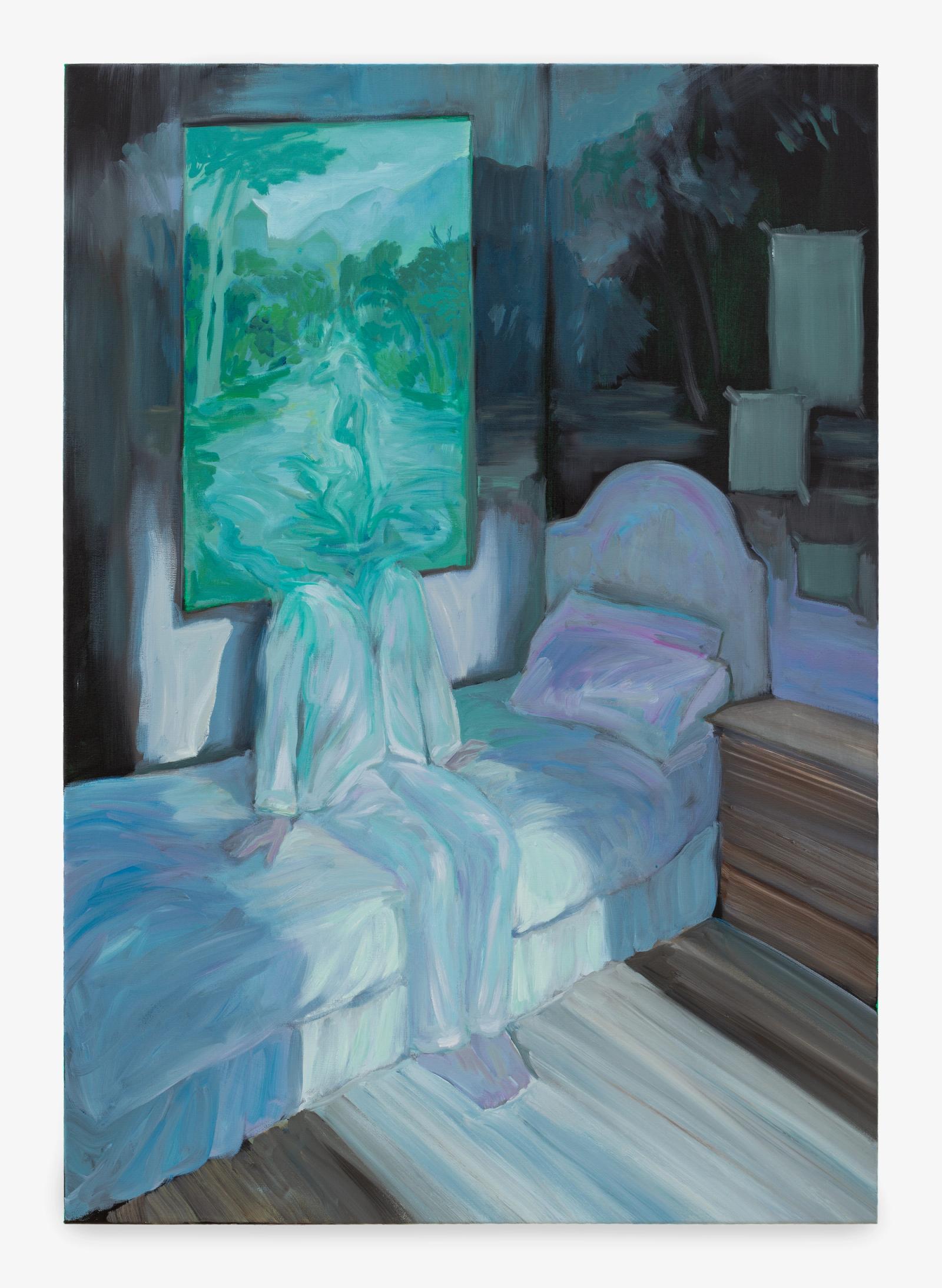
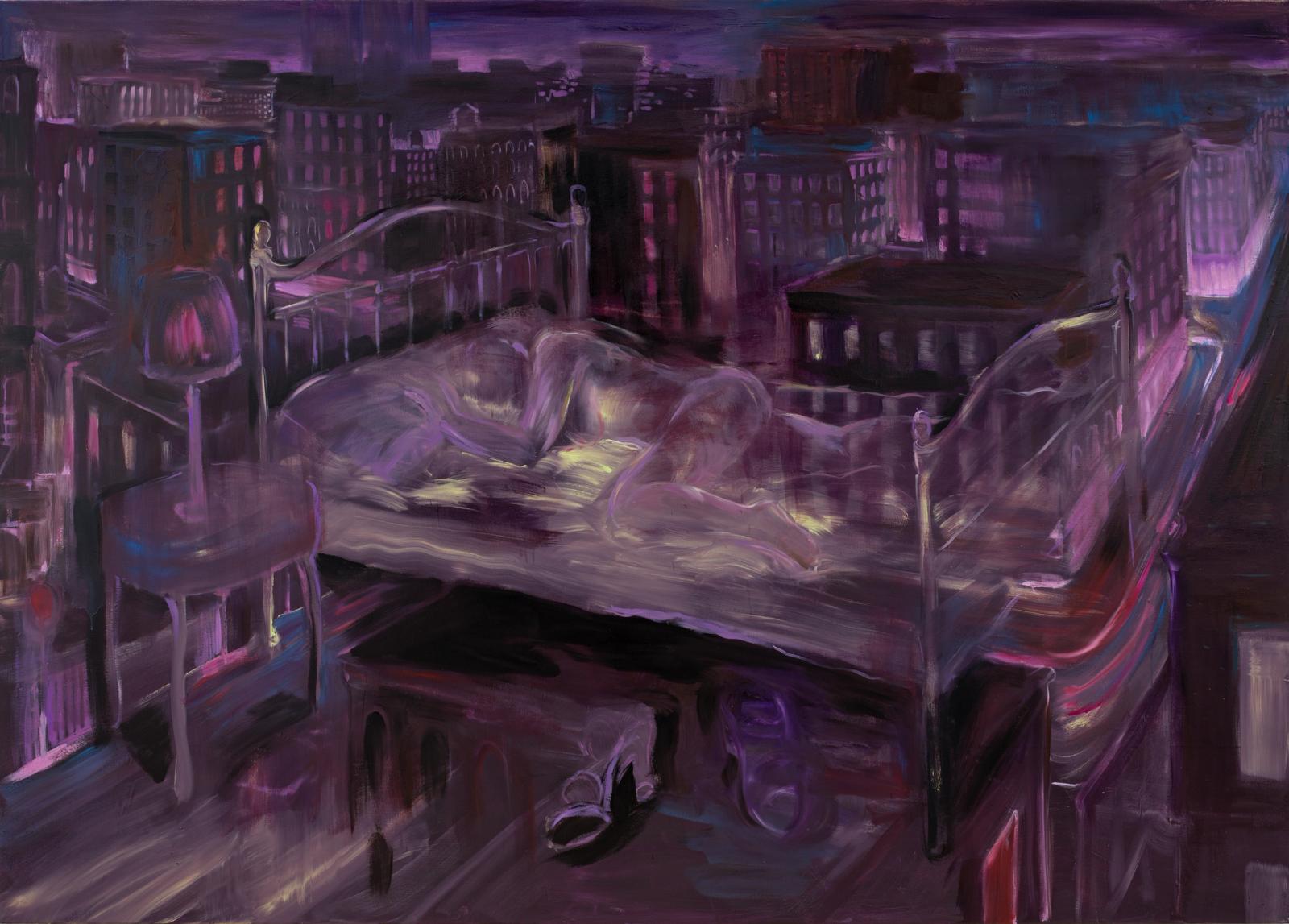
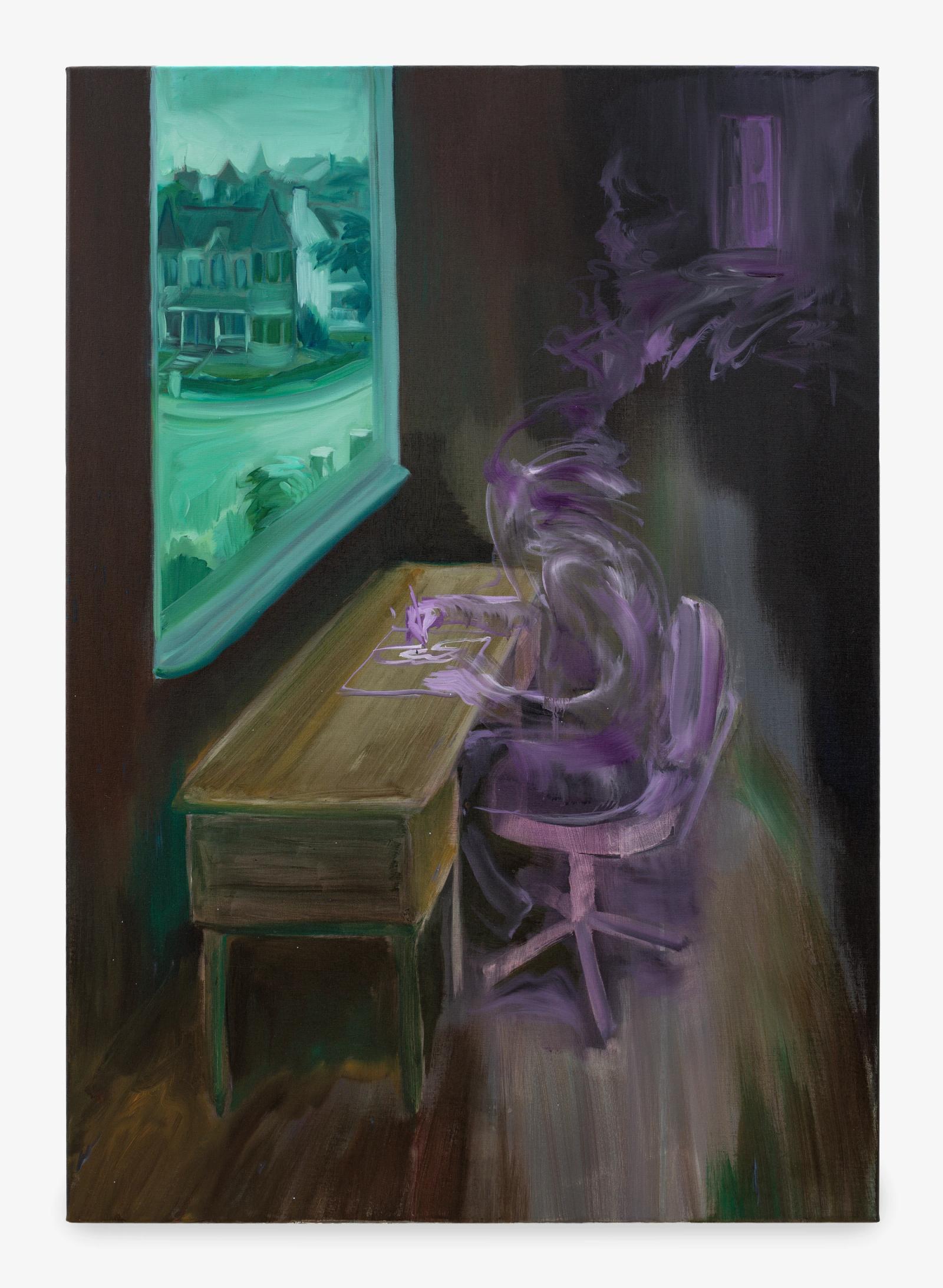
BB: Your figures often feel present and absent at the same time, never seeming fully solid as though they're slipping between memory and reality. Is ambiguity something you consciously preserve while you're painting?
LF: The figures are present and absent at the same time, just as I am also present and absent in the work at the same time. My autobiographical elements are there. I also want to step back to allow the viewer room to connect with what is there (or not there) on their own terms.
I never plan the paintings beforehand - but I can certainly pinpoint why elements have cropped up when I analyse the work afterwards. Just as psychotherapists pick their patients apart.
The figures are always ungraspable, as I find humans are innately ungraspable. How can anyone fully know anyone? Each person is an island with their own mysteries. We can never know the physical or psychological pain of the person next to us. It’s too great a mystery, so I try to reflect this. It’s important the figures are transient. I think this reflects how we move through space and time, our cells in constant motion and regeneration. Inside our bodies, as we breathe, every second some cell dies and one duplicates. Yet we’re all on one path and we need to embrace it, not fear it. To see and feel the transience, makes everything more delicious to savour, even the pain.
Comments
Leave a comment