

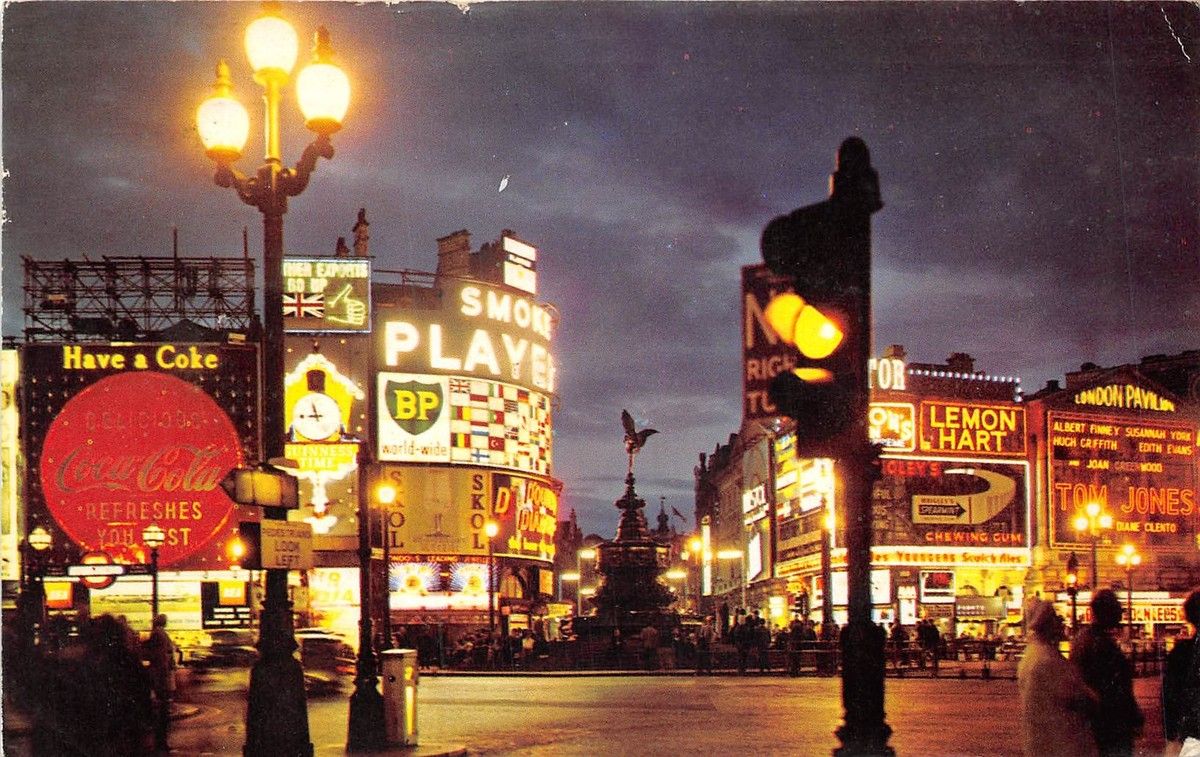
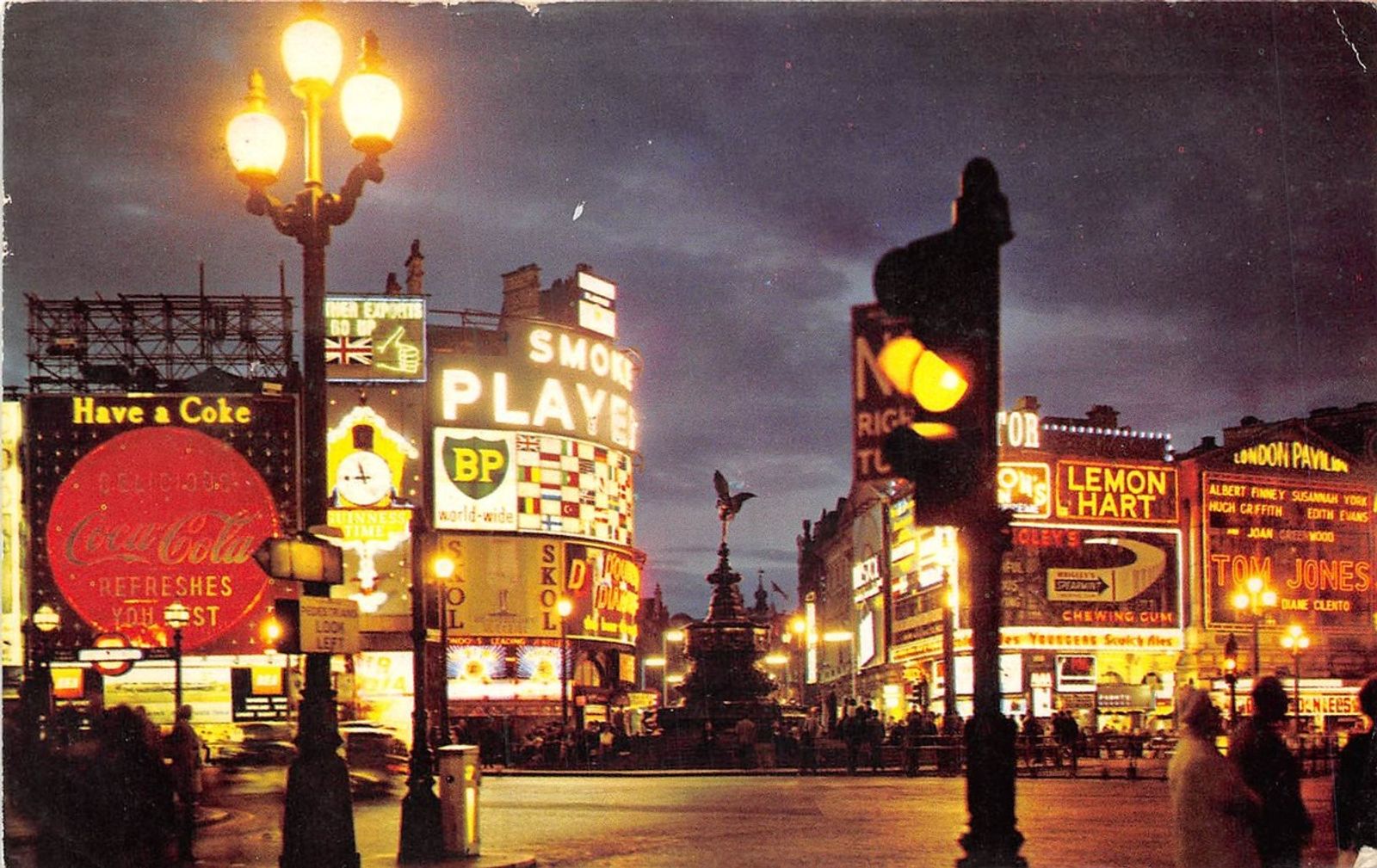
I wanted something to do. My laptop was open on the desk. The keys were grubby and starting to break. I looked at my notebook and scrawled a scratchy picture of a phone charger. I clicked on a few things and soon my recently-finished book shone from the screen. Seventy-three thousand words, each one a gift to literature. I pored over it. Totemic evidence of the fact that I had an agent, and that I was waiting for her verdict. It had been a year since she signed me, more or less, and in that time I had foregone the trappings of normal life. I utilised some savings, ignored the career ladder and earnt less than a thousand pounds to create a non-fiction novel. To prove my agented status to myself, I opened the agency’s website and looked for my name. I liked seeing my face nestled among their other authors. I was, however, not pleased with what I found.
“I utilised some savings, ignored the career ladder and earnt less than a thousand pounds to create a non-fiction novel.”
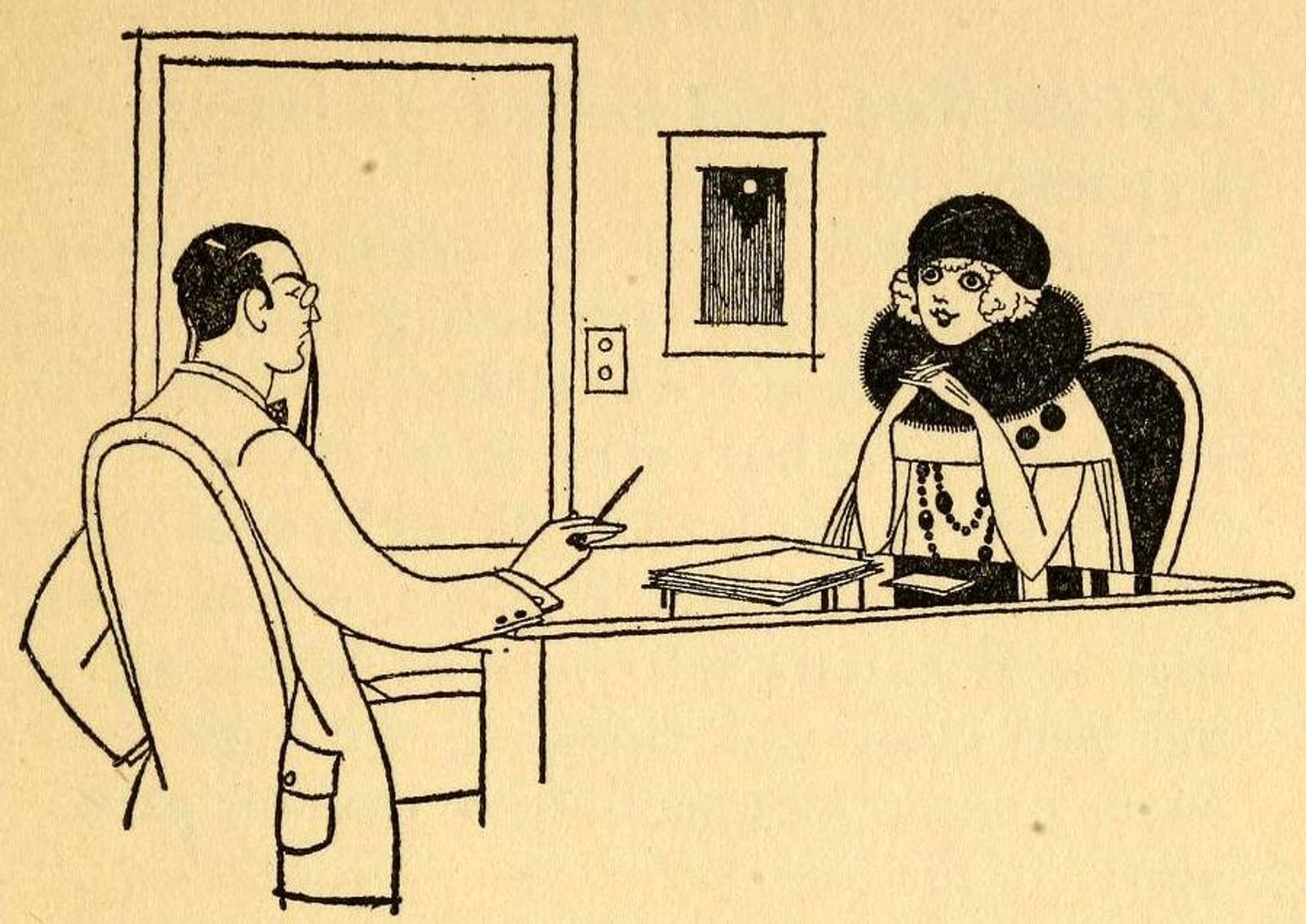
An illustration for Lawton Mackall’s Bizarre, Lauren Stout, 1922
This moment had been coming. My agent signed me on the basis of an idea. Her office was in an office block near an umbrella shop and she was excited when I told her the story wasn’t over. Leaning forwards on her sofa, I said I would know the book’s ending in a month. The previous year had been a technicolour whirl. Freewheeling around London on the trail of a lost pop art masterpiece, I tore through the homes of writers, designers, and art dealers. I dug up clues from nowhere, tracing the painting’s history from a sex scandal to the father of performance art. But I was not successful. Technicolour became greyscale. I couldn’t find the painting and the story had an unsatisfactory ending. My agent wasn’t worried. “In that case,” she asked, “What’s the book about? What question are you asking at the beginning that will be answered at the end?” I had no idea. “I’ll have a think,” I said.
“The previous year had been a technicolour whirl. Freewheeling around London on the trail of a lost pop art masterpiece, I tore through the homes of writers, designers, and art dealers.”
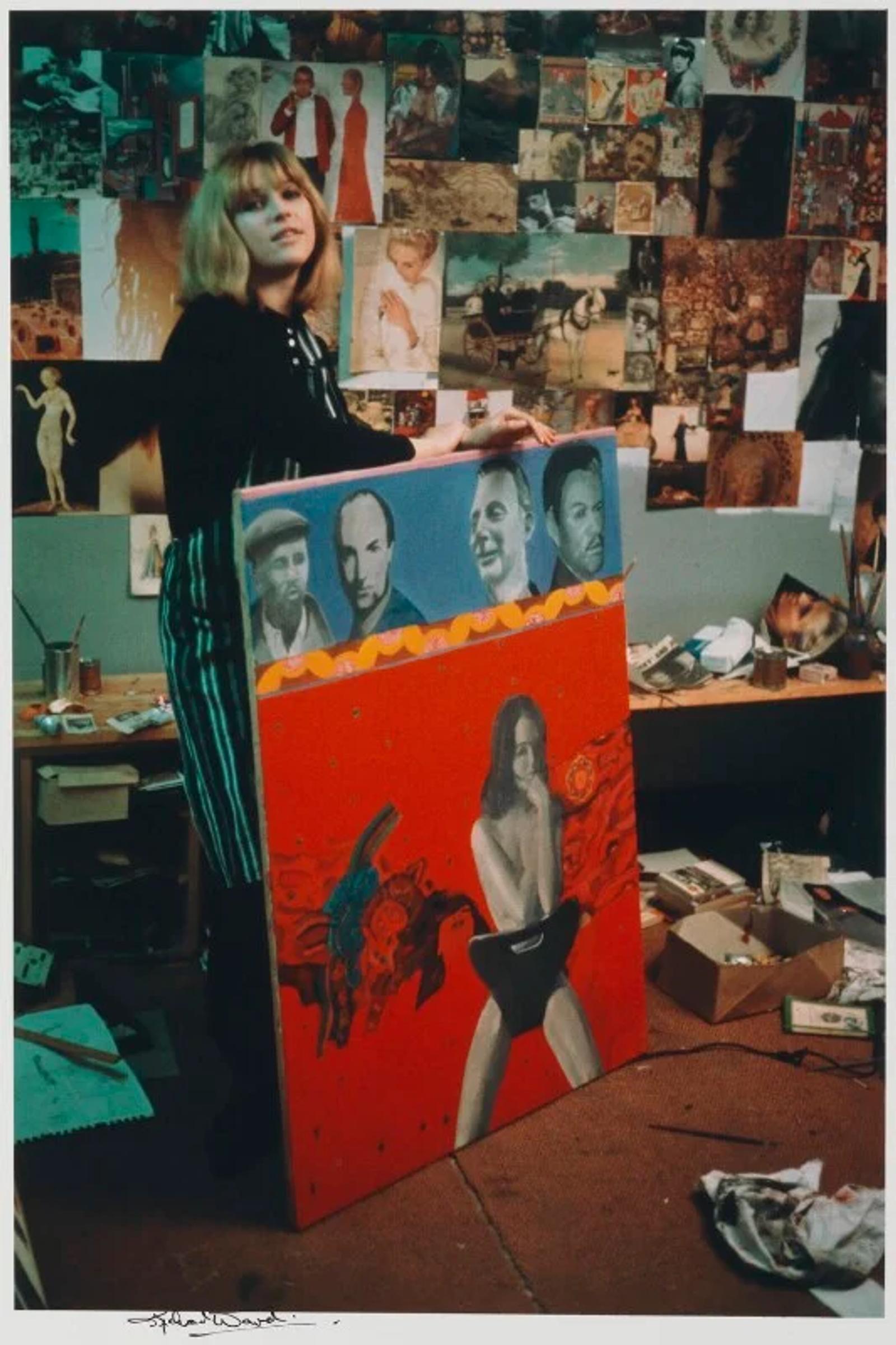
The lost painting I looked for. Pauline Boty, Michael Ward, 1964.
I had the time and space to think. I had come across an incredibly cheap place to live and viciously pursued living there. A Georgian manor in Greater London with flats upstairs, I also believed life there would be a centre of ideas and fun. Montmartre in the 1900s, London in the 1960s, New York in the 1970s. Not quite. For one, my flatmate resented me. Once, her brother was over from their native Germany for the Christmas period. She’d taken umbrage with a chore I hadn’t done and I heard her ranting to her brother in her room; “DREI UND ZWANZIG!” she kept repeating. I was twenty-three and, unknown to her, I had done GCSE German. Another time, I was having a few drinks with a couple who lived in the next flat. They were getting takeaway fish and chips and asked if I wanted to join them. I said yes. When the food arrived, they said they hated people watching them eat and went back to their room. So I ate alone in my kitchen. Montmartre this was not.
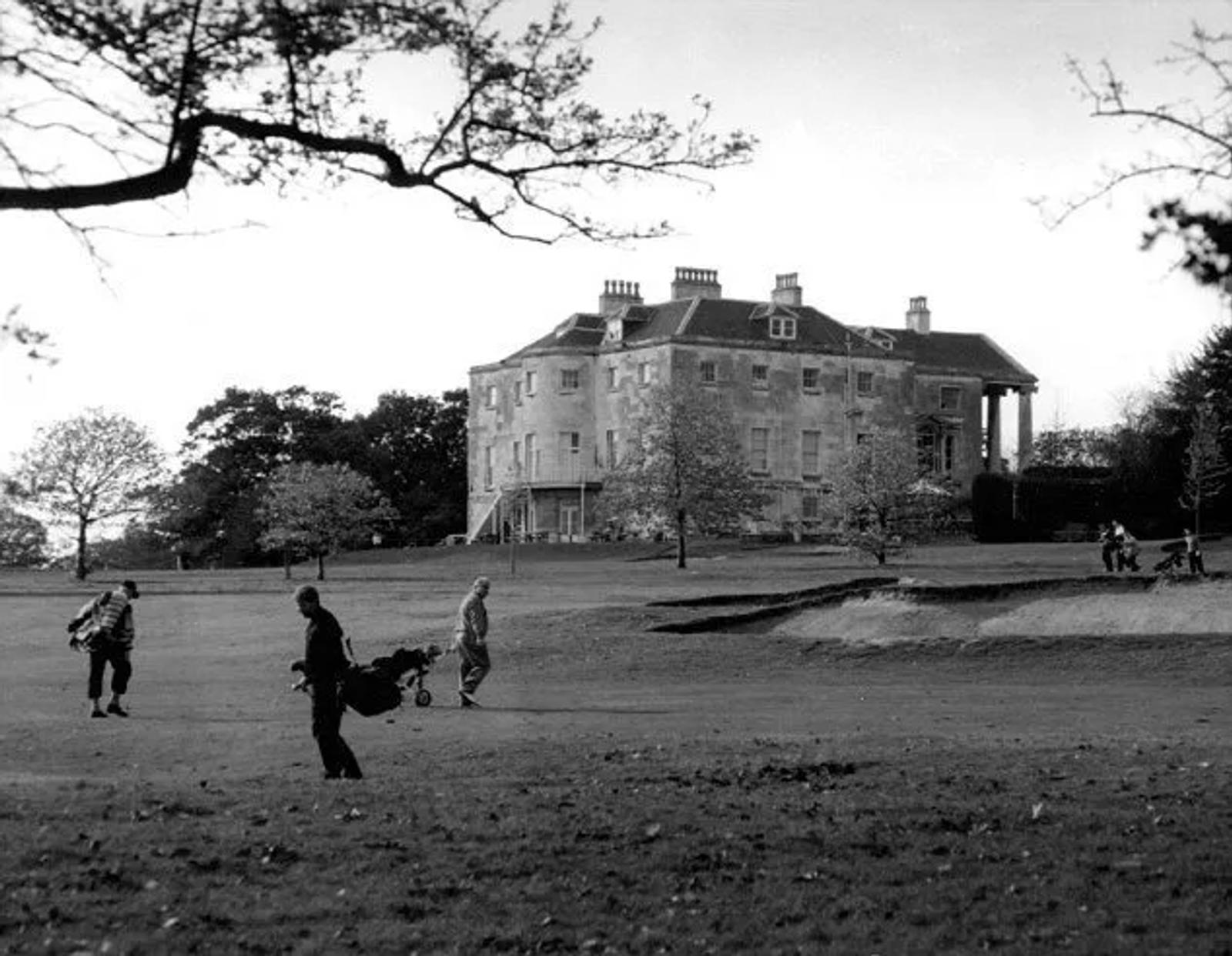
My place of residence. Beckenham Place Golf Club, Photographer unknown, 1996.
“When the food arrived, they said they hated people watching them eat and went back to their room. So I ate alone in my kitchen.”
Regardless, from there I could figure out the book’s subplot without worrying about money. I had built my life to service this cause. Living independently with savings to fall back on and an agent demanding words, I was in the promised land. I got what I wanted, but I wasn’t ready. My book was just an idea. There was no precedent in my portfolio for writing anything longer than a few thousand words, and now I was expected to forge an opus. At the beginning, I only fantasised about the fluff around a book: the epitaph, the acknowledgements, the cover, the dedications. This was what really excited me. Eventually I got serious and started writing. The first chapter came quickly and I sent it to her. While waiting for feedback, I fired over the second, then the third. Whenever she came back to me, her comments were always the same. “What is this book about?” The gaps between my submission and her feedback yawned into months.
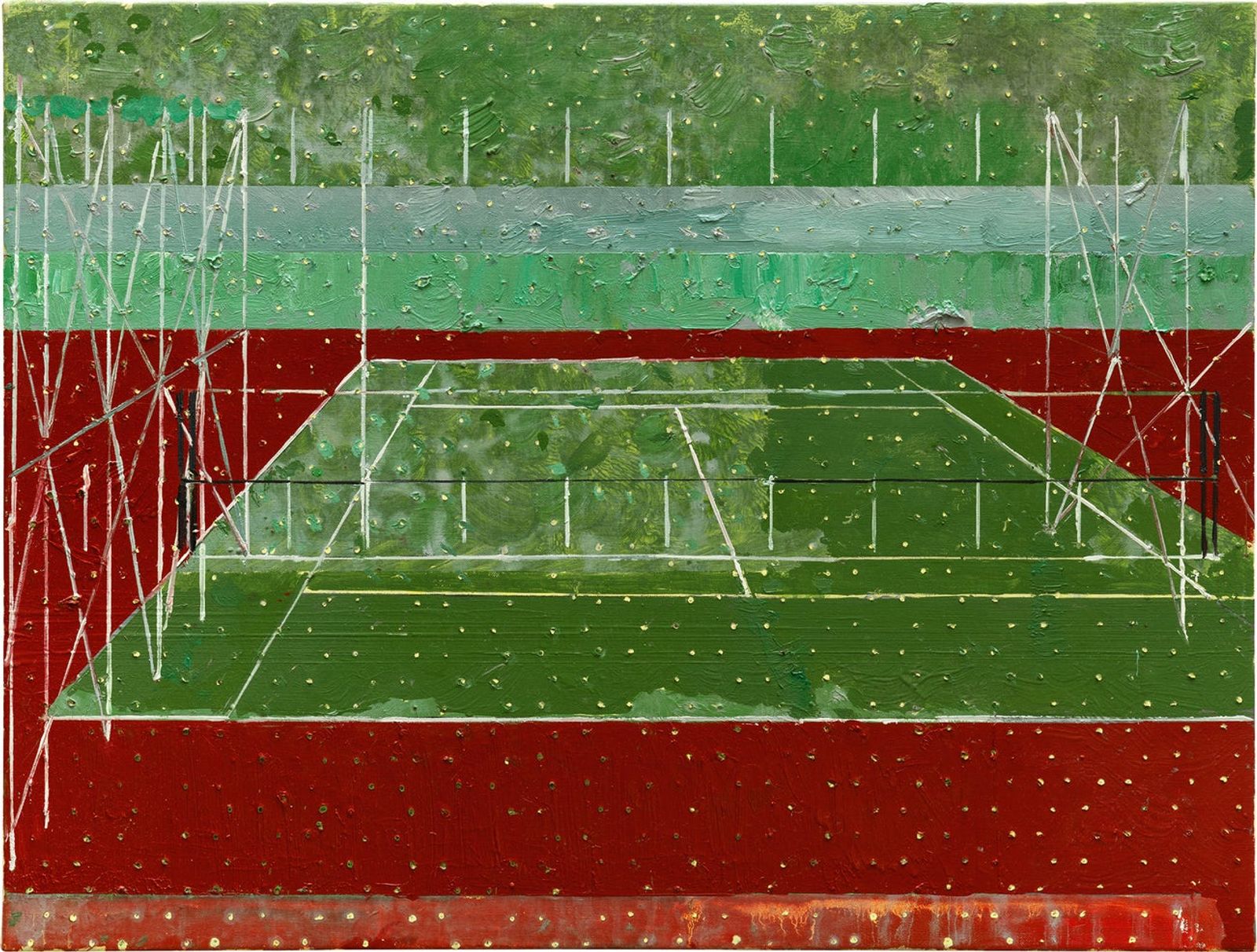
Country Club—Mixed Doubles, Hurvin Anderson, 2011
Dappled light, crisp lines, suburban endlessness. The ball left my racket and thudded against the chain-link fence on the opposite side of the court. While waiting for her to reply, I tried to fill my time by practicing tennis serves. Some went in, some didn’t. I only had three usable balls so after the third I would trudge over, pick them up, and serve from the other side. Things were not going well. Serving against yourself does not scream ‘successful writer.’ In those months, I made a crucial mistake. Another book idea had seeped into my brain and I was anxious to make it happen. I believed the new idea could be published quickly, but my agent told me to be patient. Angrily, impulsively, I submitted the book to her colleague. The regret was immediate. This was not the done thing. My agent was unhappy and told me so, the first thing she’d said to me in ages. I was hemorrhaging money and stressed, waiting for life to begin. The book was the gateway to my career. I was certain about this. I could appear on telly, critique for the broadsheets, and keep writing, but my book needed to come out first. At that time, it just languished between my laptop and hers. Lost in the cloud. A Google Doc with no editor.
“My agent was unhappy and told me so, the first thing she’d said to me in ages.”
Absent-mindedly, I sketched another phone charger as I scrolled through the agency’s clients. It was in alphabetical order and I could ordinarily be found nestled among the Gs. Except this time I wasn’t. My smile did not beam back at me. I started to panic and phoned my agent to no reply. Okay, I thought, she’s busy. Agents are busy. I phoned the office’s receptionist, who shared my concern and promised to get back to me. Minutes later, my agent emailed me to say that I’d been dropped. She thought she’d told me when I submitted the new idea to her colleague. I put my head in my hands. I really needed a job.

Comments
Leave a comment