

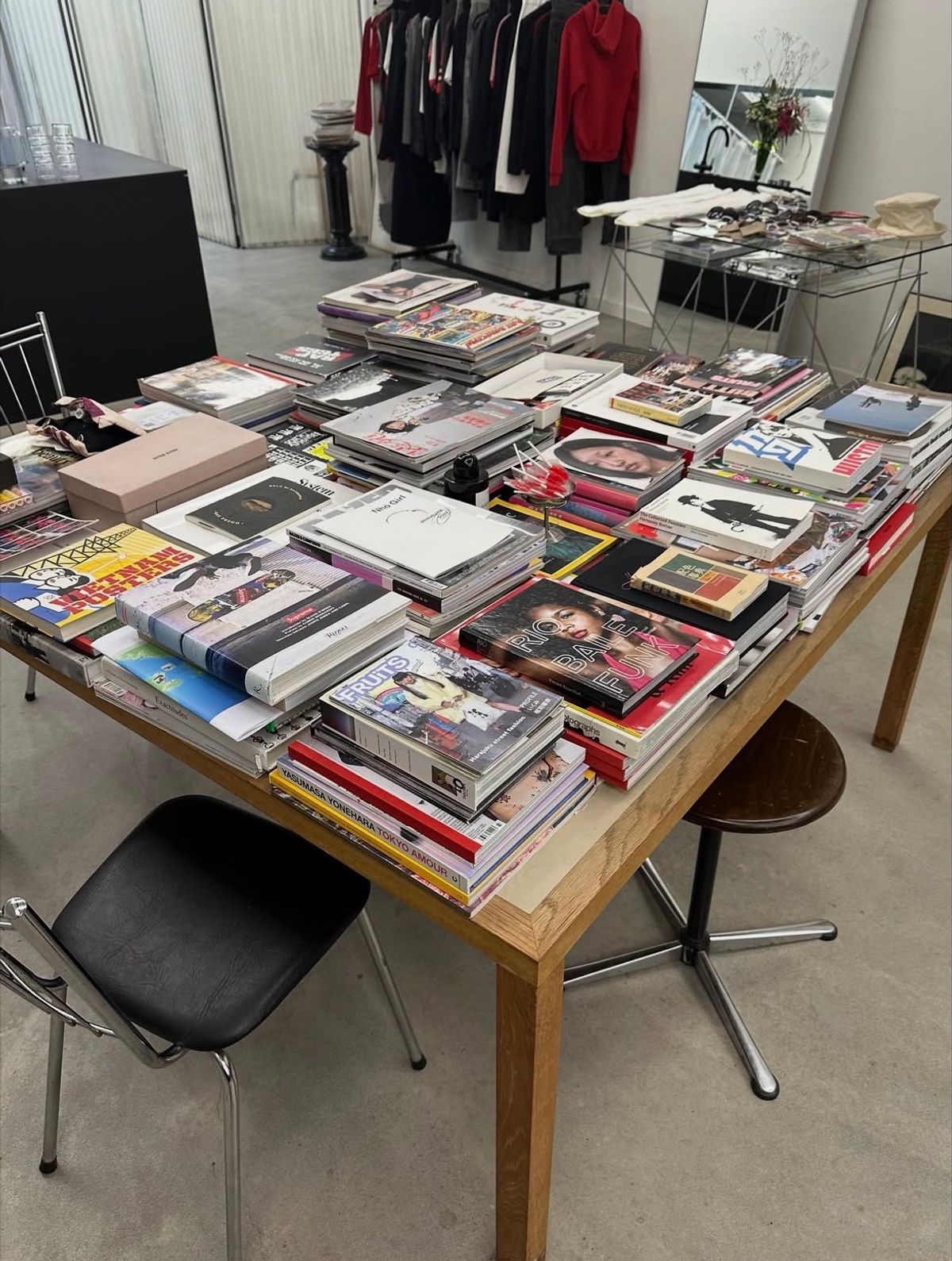
Walk into any of London's rare bookshops, whether Climax Books, IDEA, Claire de Rouen, or Reference Point, and there is always a Nobuyoshi Araki, a Comme des Garçons, an old i-D, and, if you are lucky, a Twin Peaks. These are the new Western canons, and not to be hypocritical, I have them all. In these rooms, these books are not there to be read page by page. They are the holy grails, the kind you would post on social media without a second thought. I don't know if you have noticed, but books have become the coolest object in fashion and art: the new It-girl accessory. I mean, even Dua Lipa has opened a library. It's the ultimate intelligence and style stamp. As a book nerd, I thrill at this new wave, but I do wonder: how did we get this far?

Image courtesy of Athena Mothership / Library Mothership, Photo by Dominique Croshaw.
For the past year and a half, I have been running Library Mothership, a personal library and nomadic curatorial project that carries books around the world. Recently I staged a project called Home Scanning, moving my flat into a gallery and inviting people to scan my domestic interiors along with the books. In a week, 77 visitors made 1,000 scans, forming the nascent shape of a digital Library Mothership. As usual, I posted some of the scans on Instagram, and one day an editor from a photography publication messaged me. They were worried about photographers losing income when their images circulate online, and their question was, in essence: does no one ever complain about copyright?
It is a good question. And the answer is: no one does. On social media, the trace back to an image's source is notoriously easy to lose. Photographers now depend on their work going viral on Instagram to build a name, and eventually a living, through the very same circulation that strips their authorship away. It is the condition of the medium, not an accident of it.
I answered with the case for artistic use, and with the fact that my scanning does more or less what every university library in the UK already does. My aim with Home Scanning was to build a space where people could handle my library without slipping into the consumerist reflex. If something catches your eye, you scan it as you would in a library. I wanted to revive an older, Robin Hood gesture: giving something away for free. In "In Defense of the Poor Image", Hito Steyerl argues that piracy and low-resolution copies unify a worldwide digital proletariat through the images and videos they share and pass on.
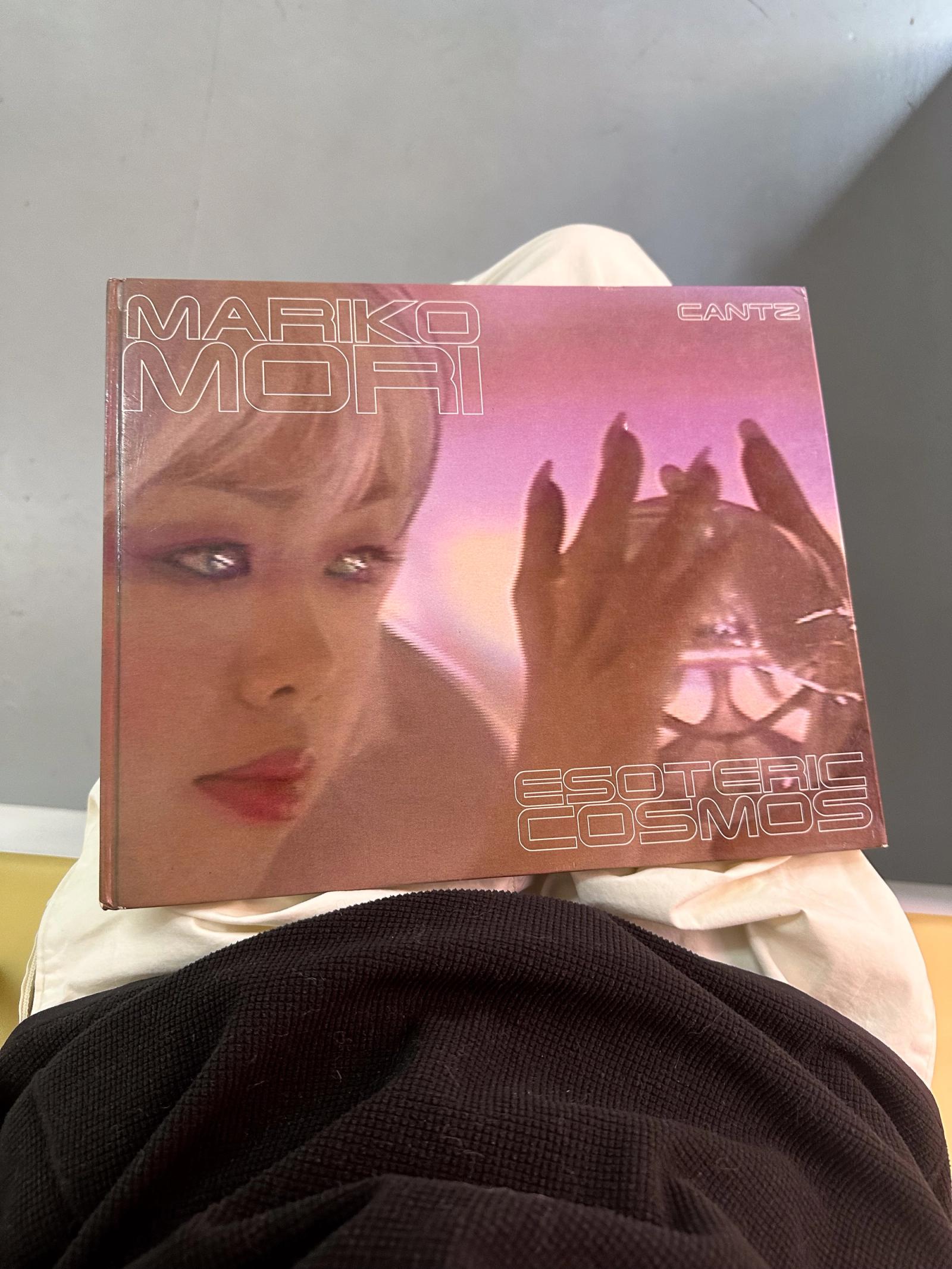
Image courtesy of Athena Mothership / Library Mothership.
But the internet Steyerl wrote about, nearly twenty years ago, was another world. The internet today is a Frankenstein created by mega-conglomerates, and it runs on circulation, or, as a fellow internet archivist put it, on being "a circulation jerk". By any logic, accounts like welcome.jpeg, which live entirely off sifting through and reposting other people's images, should not be able to become huge, profitable entities. And yet these proxy eyes are the essence of image-based social media platforms.
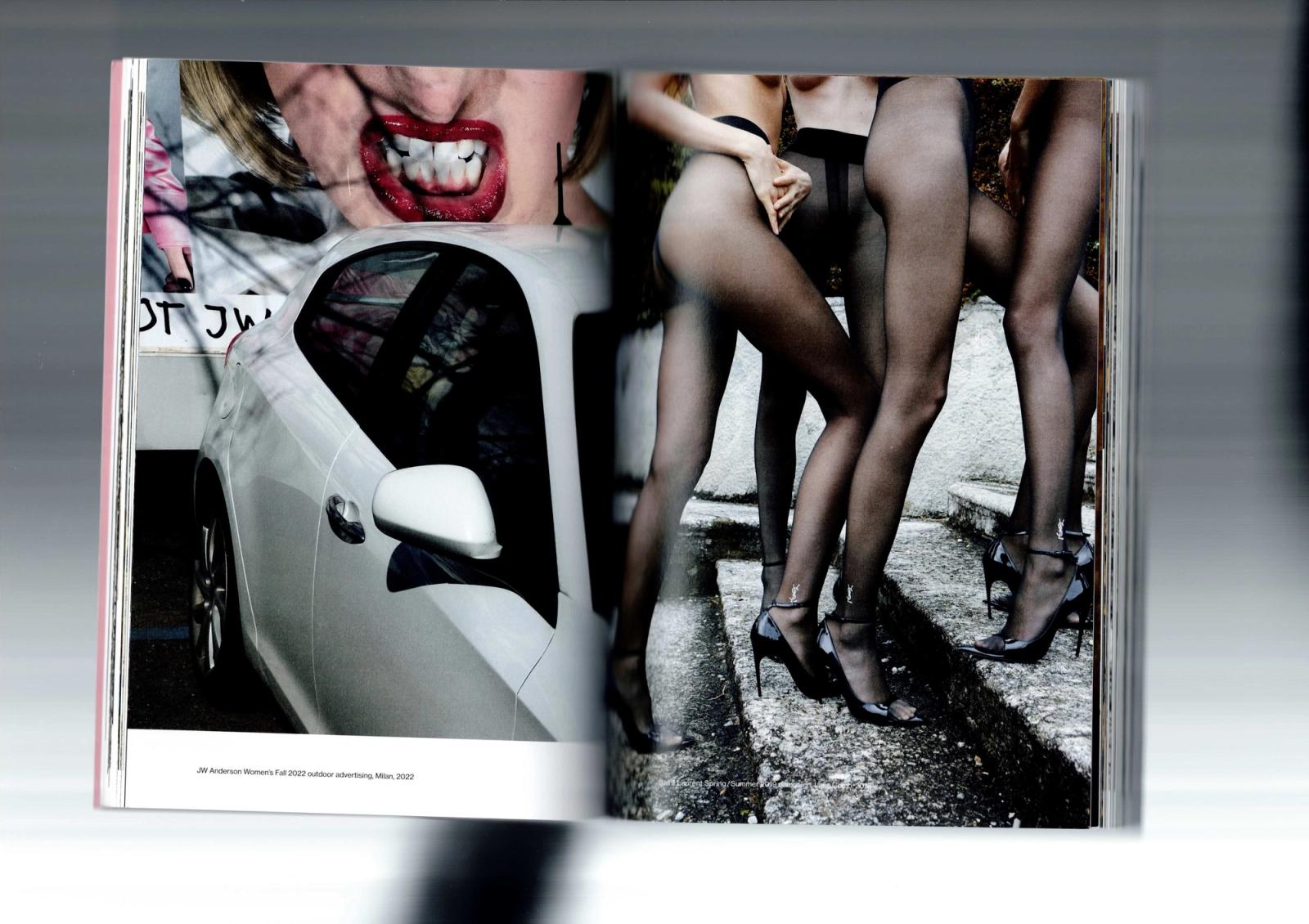
Scan from Juergen Teller, "I Want to Live", photograph © Juergen Teller, Scan by Athena Mothership / Library Mothership.
Books now have a strange relationship with social media. Admit it: most of us prefer to browse books as Instagram posts. Print is supposedly dead, and yet personal archives and independent libraries are multiplying. It leaves me wondering: are books really dead? Perhaps they are, and perhaps they are so dead that we have started to aestheticise them, now that their function has been hollowed out. "Only obsolete things can be aestheticised," Boris Groys writes in In the Flow. So the book has to be aestheticised, iconised, symbolised. And once a thing becomes a symbol, we consume it. Symbols sell.
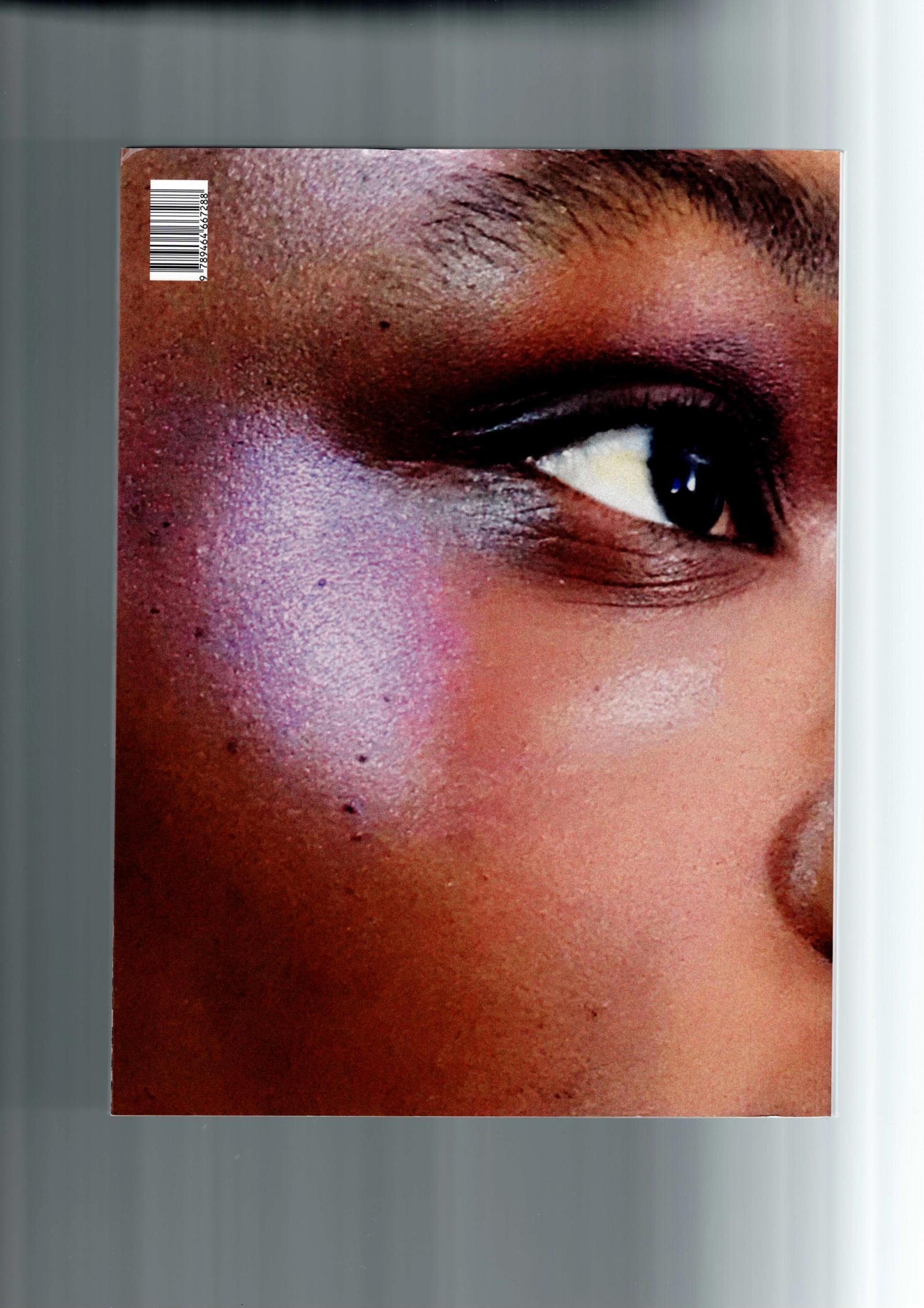
Scan from Juergen Teller, "I Want to Live", photograph © Juergen Teller, Scan by Athena Mothership / Library Mothership.
A friend of mine, a fashion photographer, once let slip that the trend now is to share books on Instagram by photographing the physical book rather than scanning what is inside it. Do not post the digital image from the magazine; post the open spread. Keep it raw. What we fall for is the screen-image that has already settled into paper and is now resurfacing on the screen again. What we love is simulacra layered on simulacra: the ultra-real copy of a copy.
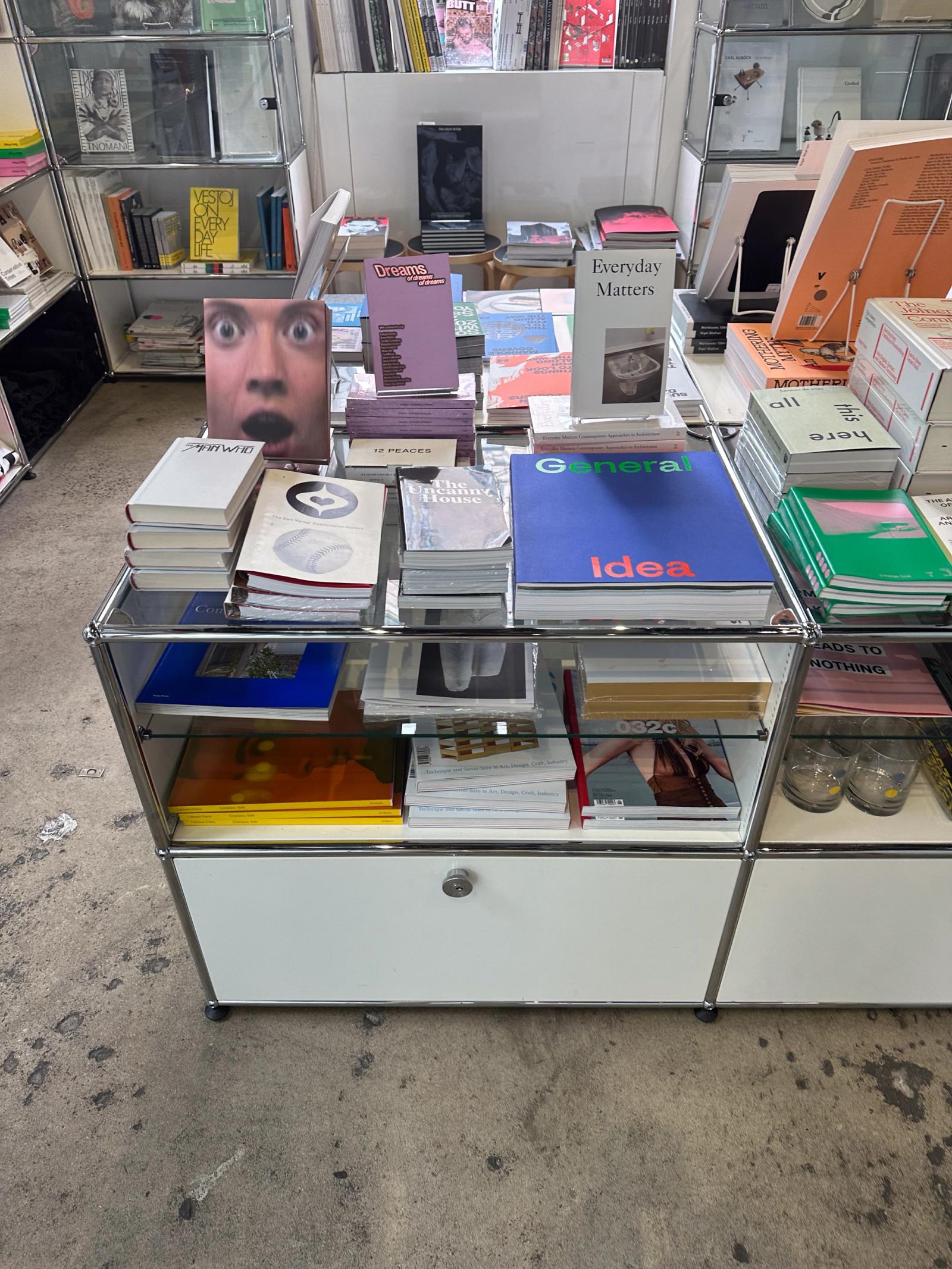
Image courtesy of Athena Mothership / Library Mothership.
To cultivate a taste in books, then, is to practise a small personal imperialism: we stitch ourselves into another culture through its books, whether the territory is Italian design, Japanese photography, eccentric cookbooks, or lost first editions, and in claiming them we quietly tame them. Of course, we are also recovering alternative histories, alternative knowledge, building a new vocabulary of taste for ourselves. But everything we unearth, every creation that came before us, becomes ours the moment we find it. A £5 Japanese vintage magazine in a dusty Jinbocho corner, one that resells at £90 in London becomes "my book", even though we did not make it, only discovered it. It is the same imperialist logic: the coloniser never claims to have created the new world, only to have found it. Through collecting, the object finally becomes part of the self. And the good thing is, books are not too expensive and not too cheap, which makes collecting them the next best thing to collecting art and fashion.
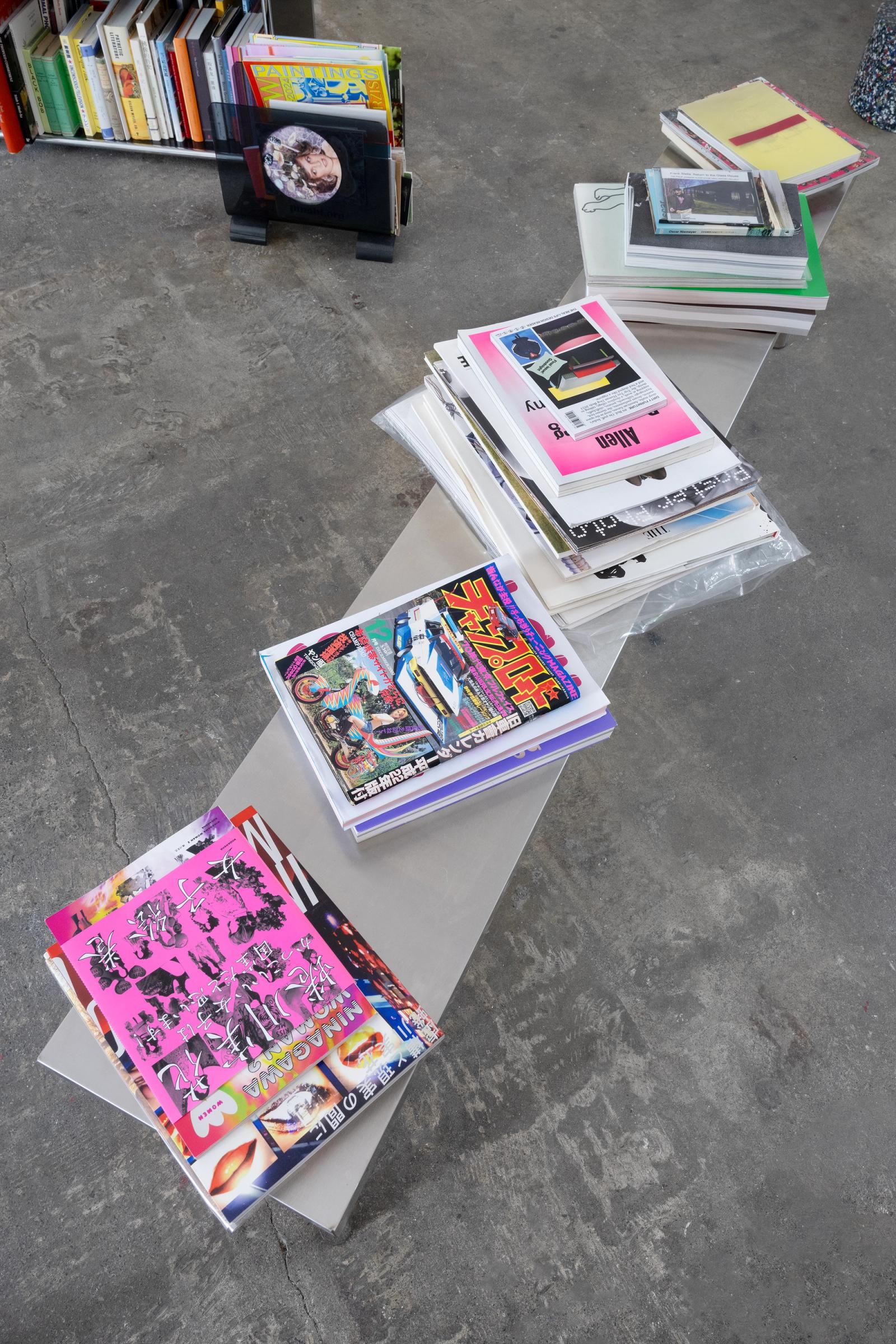
Image courtesy of Athena Mothership / Library Mothership, Photo: Dominique Croshaw.
Books are seductive because the world around them is seductive. I once read a mean Google review of a really cool London bookshop: "Books are overpriced here, Google first." Of course they are. But where is the fun if you hesitate, leave, and Google? My view is that books are never overpriced. Consider it from two angles. First, you are not buying the book; you are buying the experience. Second, AI companies are buying up old books on eBay in bulk to train their models and then shred them, so second-hand prices will only climb. My investment tip is to ditch gold and buy rare books. But I am not an economist. The same logic applies to a trendy vintage Balenciaga City bag on Vinted or Depop versus one bought from a curated designer archive. Both are overpriced, but the curated shop has done the digging, and what you are paying for is the aftertaste in your mouth that says "I shopped here".

mage courtesy of Athena Mothership / Library Mothership, Photo: Dominique Croshaw.
Our relationship with books has been redefined, shifting from reader and book to consumer and object. Books now are there to be fetishised, collected, hunted. A book can be for study, for inspiration, for critique, for posting, or simply for wanting. It is always an open relationship, and no rule dictates which relationship a reader is allowed to form.
In Home Scanning, I was sad that no one scanned my text-heavy books.
Comments
Leave a comment