
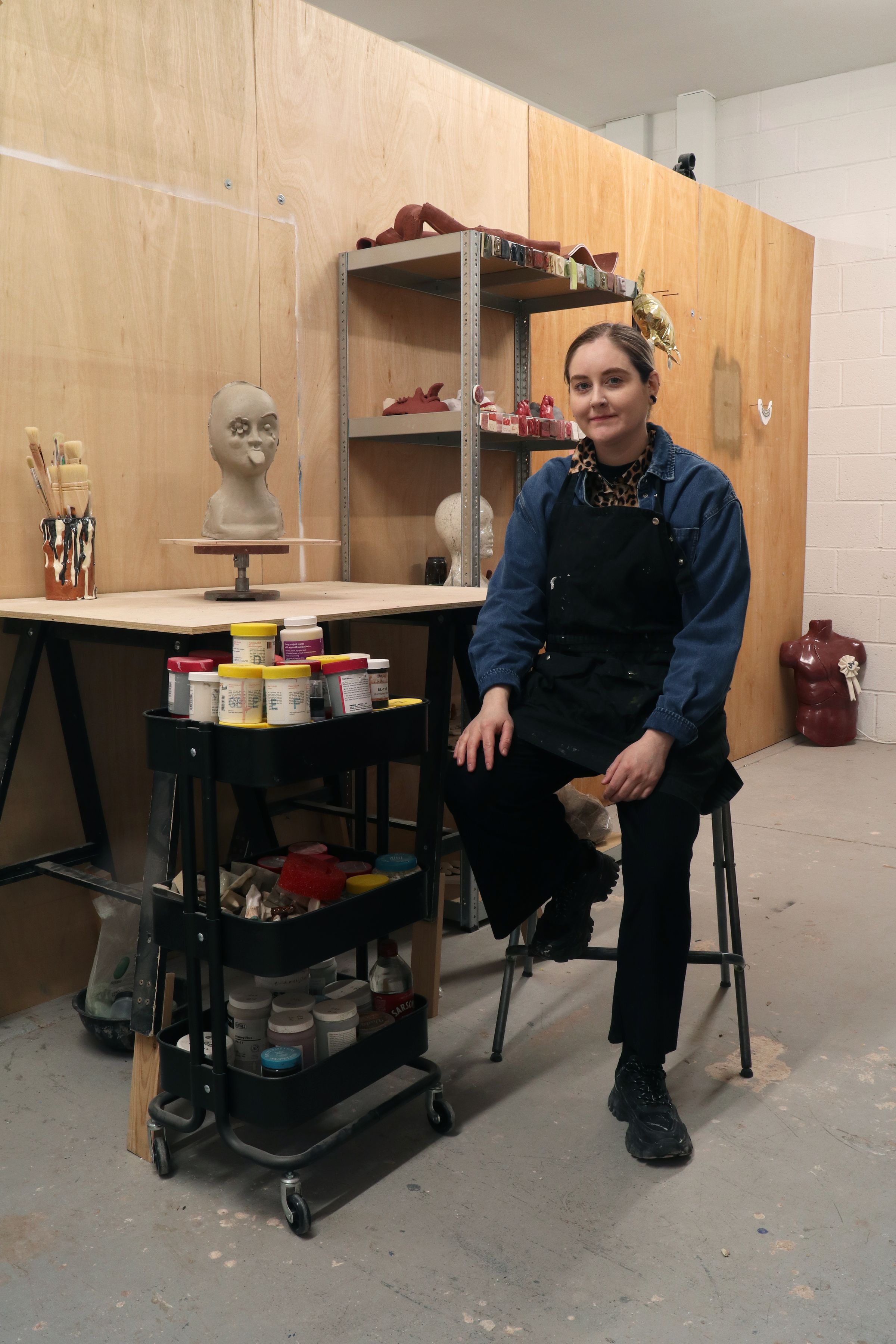
BB: You have said your sculptures are cast from your own body, but they don’t feel like self-portraits; you have mentioned holding the casts makes them feel like “something beyond” you. Is there a specific point in the process where the casts begin to take a life of their own?
EB: When I cast part of my body and remove it from the mould, there’s something that feels very definitely removed from myself. It’s recognisable, but it’s not quite me. It’s a bit like seeing a photograph of yourself or hearing your voice recorded, but taken a step further. The material change has something to do with it, from flesh to clay or another material, but also the fact that it’s no longer physically part of me.
Through that material transformation, the body also changes status. It's no longer read simply as a body part, but as a prop, costume, shell or stand-in for a body. It remains alive in a different way.
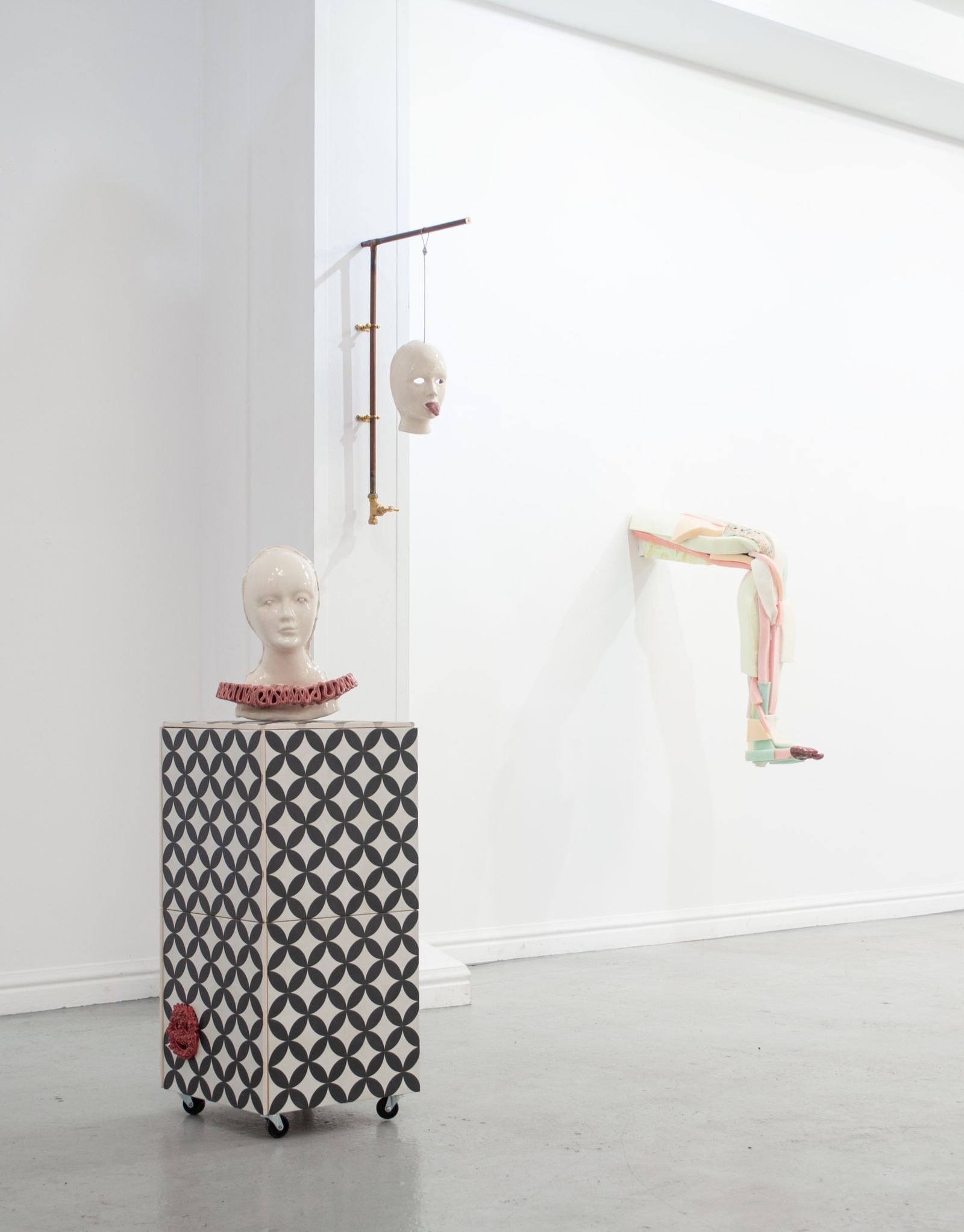
It goes even further when the cast is reanimated through what it becomes afterwards. In one work, my toes became ceramic toes on a leg made from foam, and then that leg has a life and identity of its own, beyond me. It starts with something very recognisable to me, but through the process of making it becomes something else.
BB: You’ve described clay as ‘having a mind of its own’. Has there been a specific piece where you and the clay have ‘collaborated’ on the finished piece after the material did something you didn’t expect?
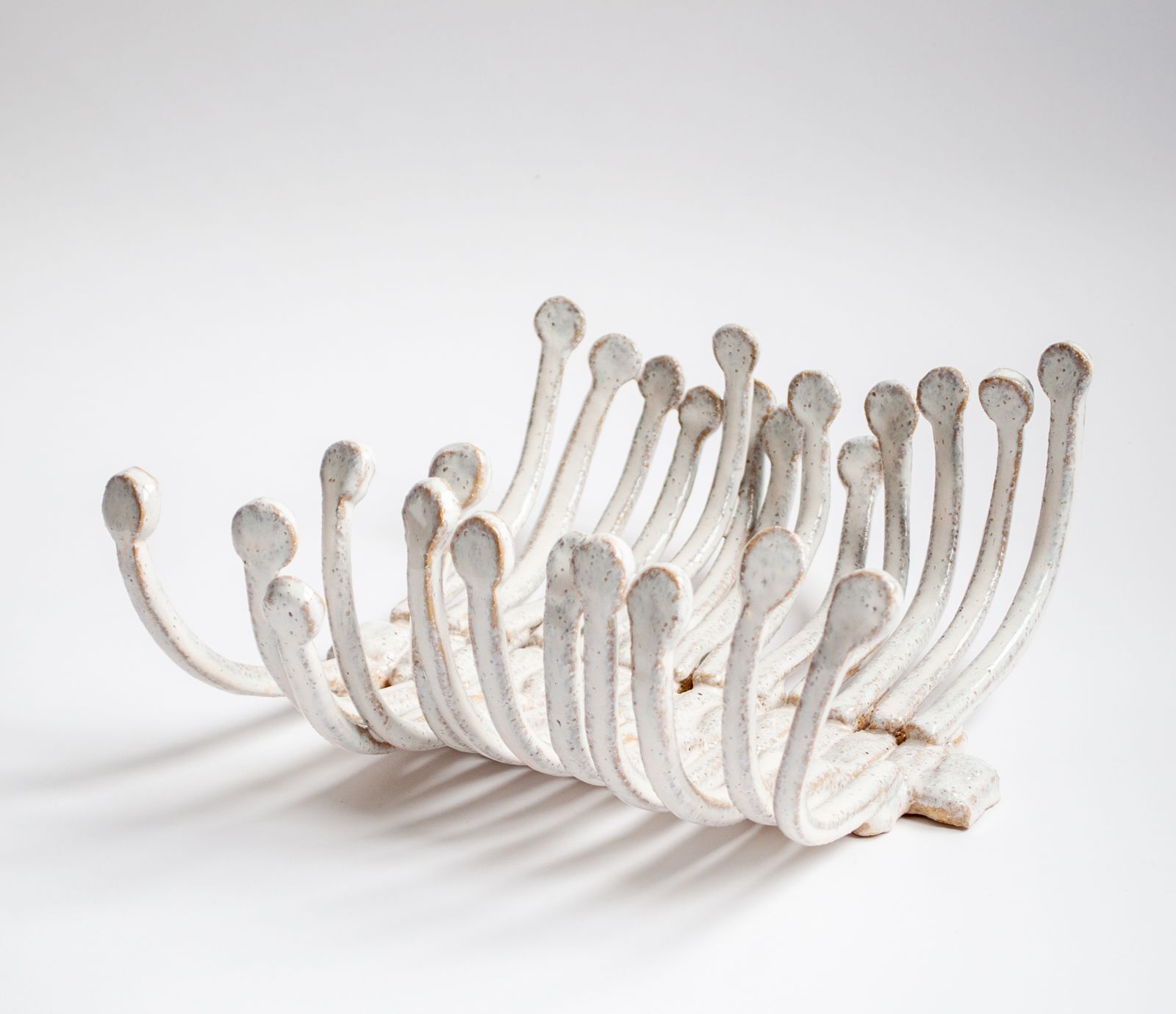
EB: Definitely. I made a set of ceramic ribs which were quite uniform before firing, but they slumped and warped during both firings. At first I was disappointed because I had a very specific idea of how they were going to look, but I’ve come to love that unpredictability and the agency of the material.
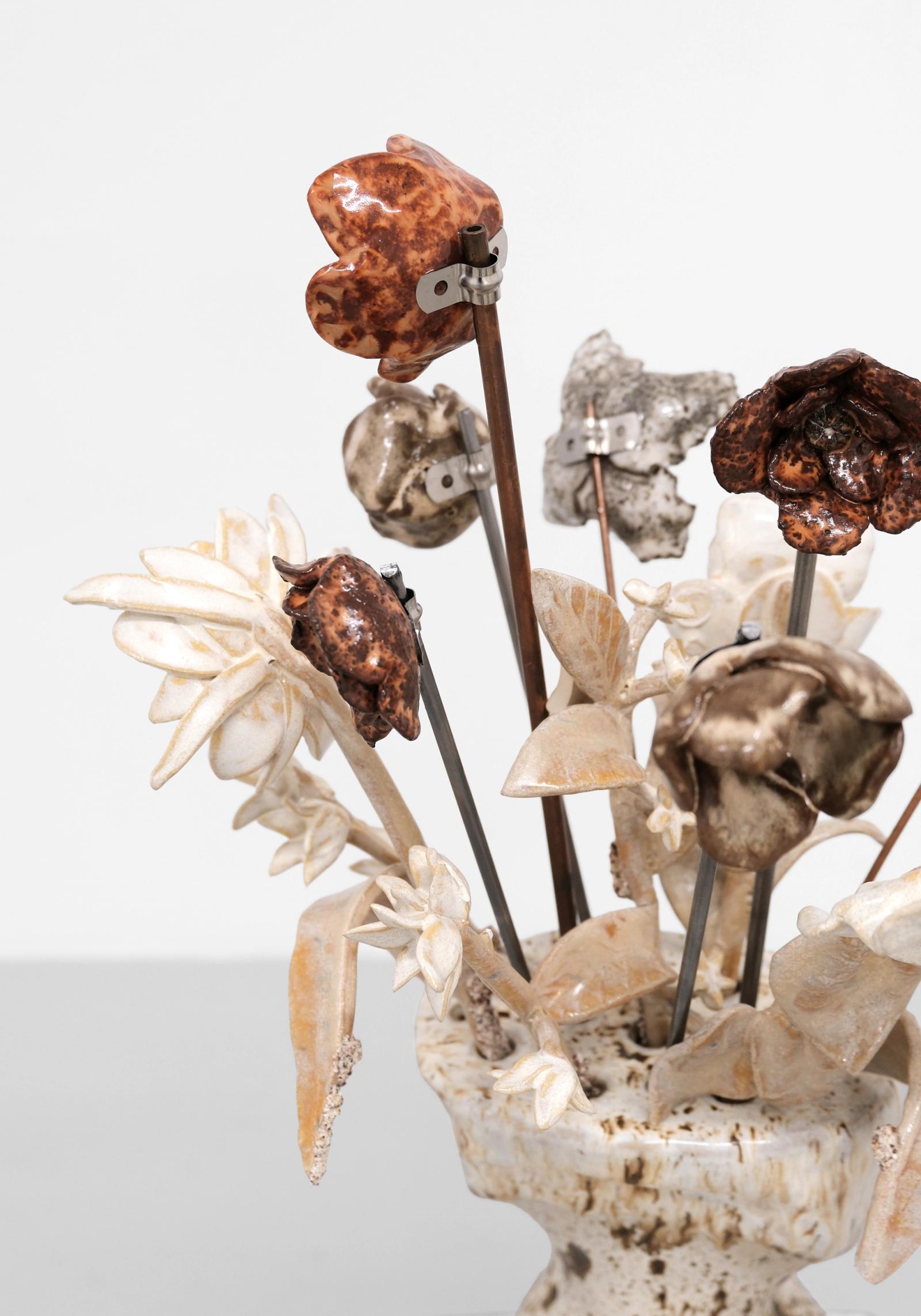
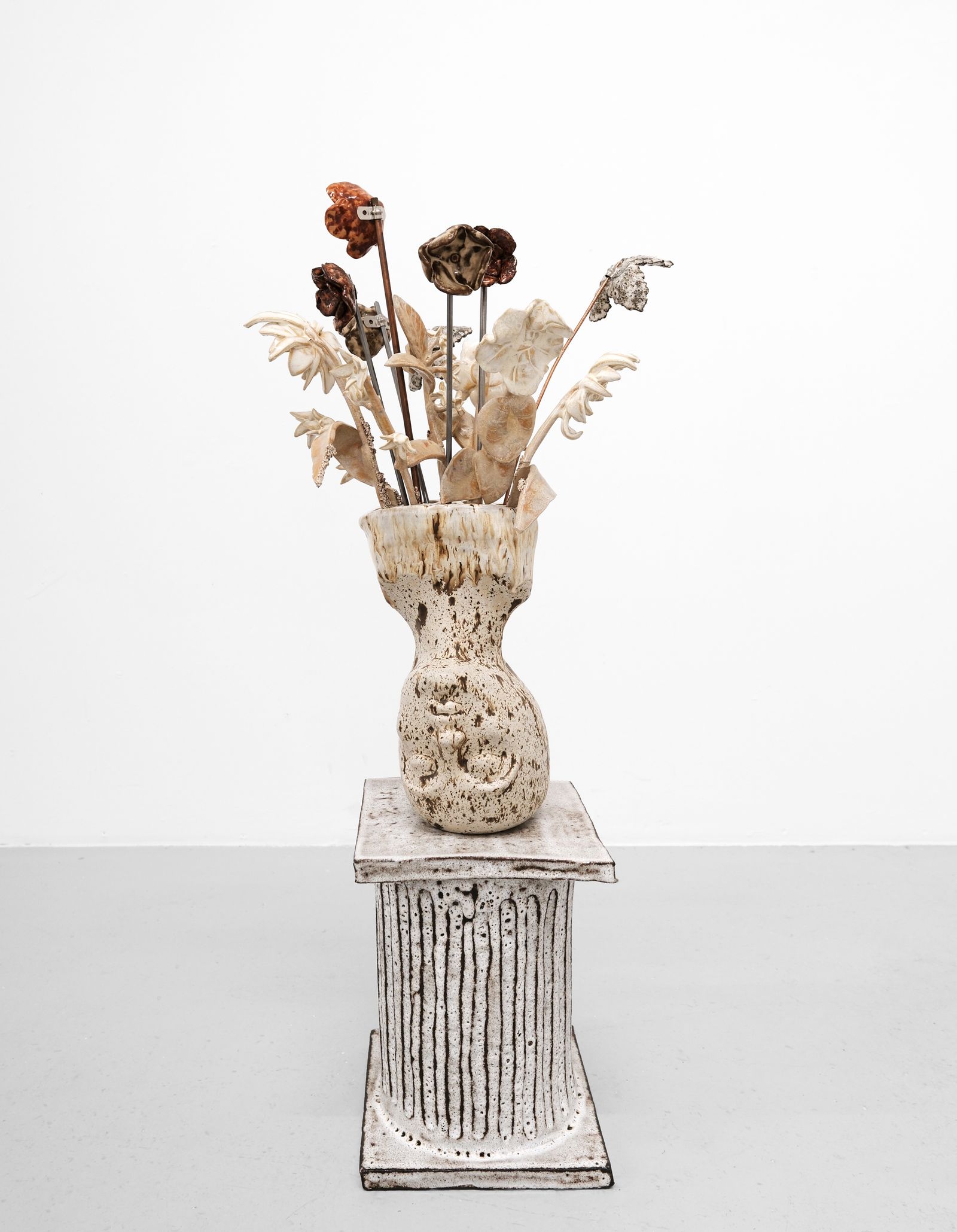
The work draws on my experience with illness and the impact it can have on the body and its internal systems. The fact that the ribs slump and deform has become part of that meaning for me. They almost seem to be responding to an external pressure, which connects to the pressures our bodies are constantly under, both physically and socially. I’ve recently started working more with stoneware clay, which moves much more during firing, and I’m interested in learning how to use that movement rather than trying to completely control it. I want to see how far I can push the material - flowers dropping, torsos slumping, forms collapsing.
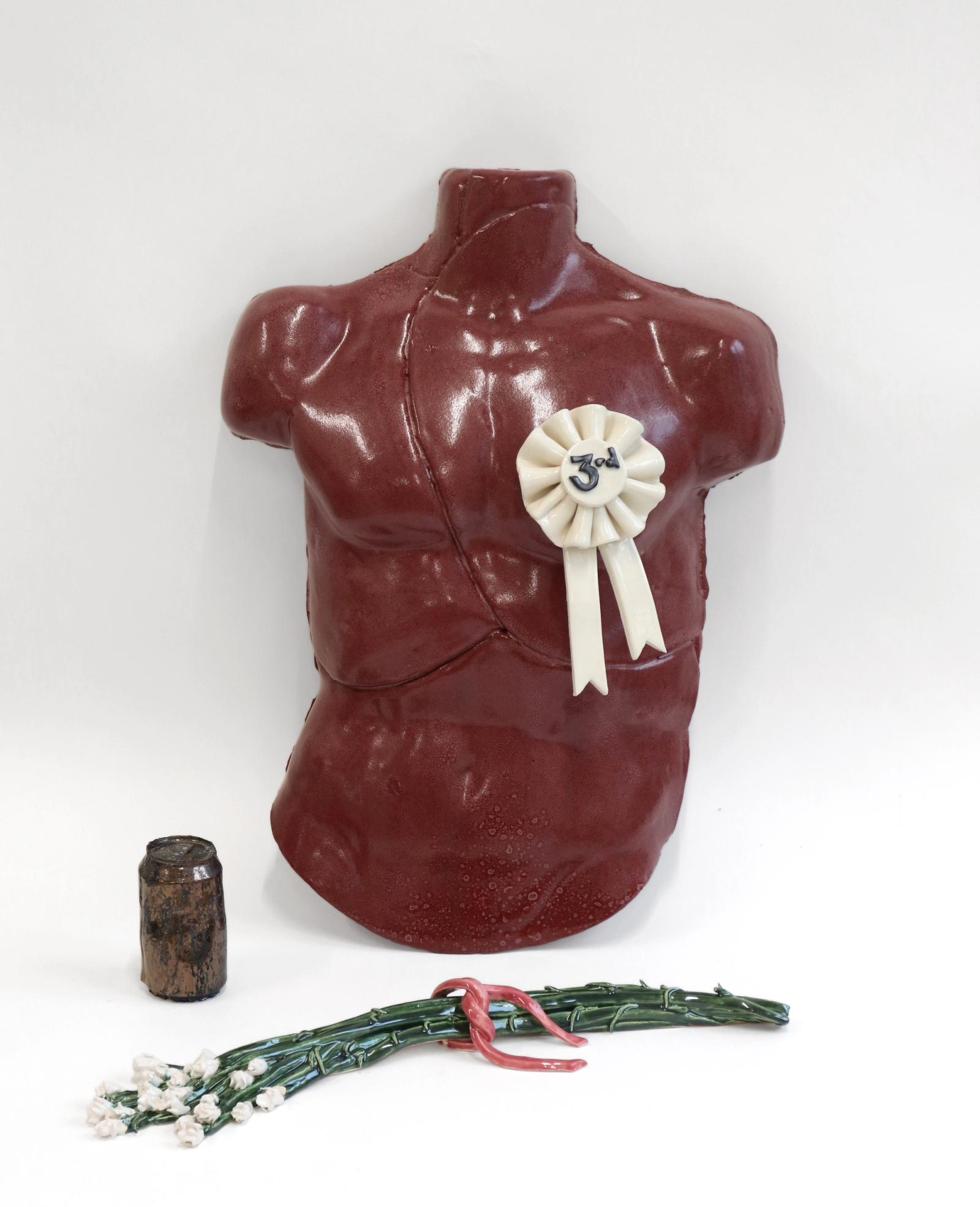
I have become really interested in casts of things departing from their original meaning. I have used a shop mannequin torso of an unrealistic, idealised body and, while the clay is still wet, let it slump against a wall, then taken it further by propping up certain points and not others in the kiln, to encourage further warping. It becomes apathetic, like it can’t quite hold itself up against the pressure of expectation. There’s something quite interesting in allowing the material to embody that sense of pressure, particularly when thinking about illness or disability.
BB: Clay is an incredibly fluid and alive material, yet after firing it becomes fixed forever. What interests you in this shift between possibility and permanence?
EB: I enjoy clay so much as a medium because of those qualities. You can create almost anything with it, but it’s incredibly fragile before firing. You can manipulate it and try to make it conform to what you want, but sometimes it pushes back. It moves, cracks, slumps or changes in ways you didn’t intend. If a piece survives drying and then two firings, it feels like a small triumph every time, particularly when I’m making larger sculptural or delicate works.
But it’s that tension between possibility and permanence that interests me most. It feels like a useful metaphor for an experience I increasingly recognise in my own work. A lot of the themes I explore involve the pressures society places on us and the tension between conformity and defiance. Once it has been fired, it enters this strange state of permanence and inaction. It becomes fixed. It can no longer move or respond in the same way. There’s something quite bodily about that for me, having the potential to change, but also encountering the limits of what your body can do.
Although the clay is fixed after firing, its meaning isn't. Firing marks the end of one process and the beginning of another. I start assembling ceramic body parts with foam, wood, copper and found objects, so while the material can no longer move, the work continues to transform.
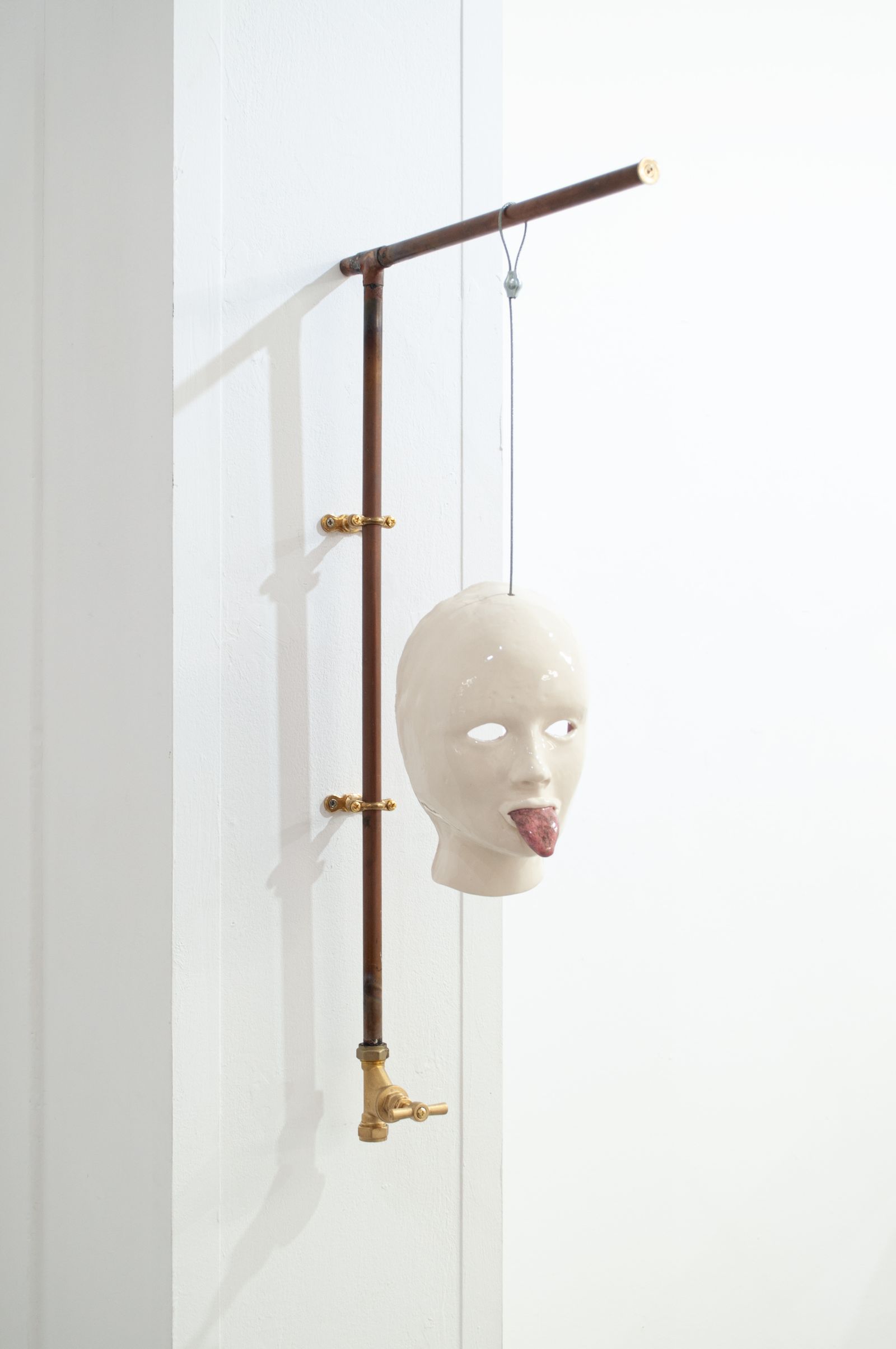
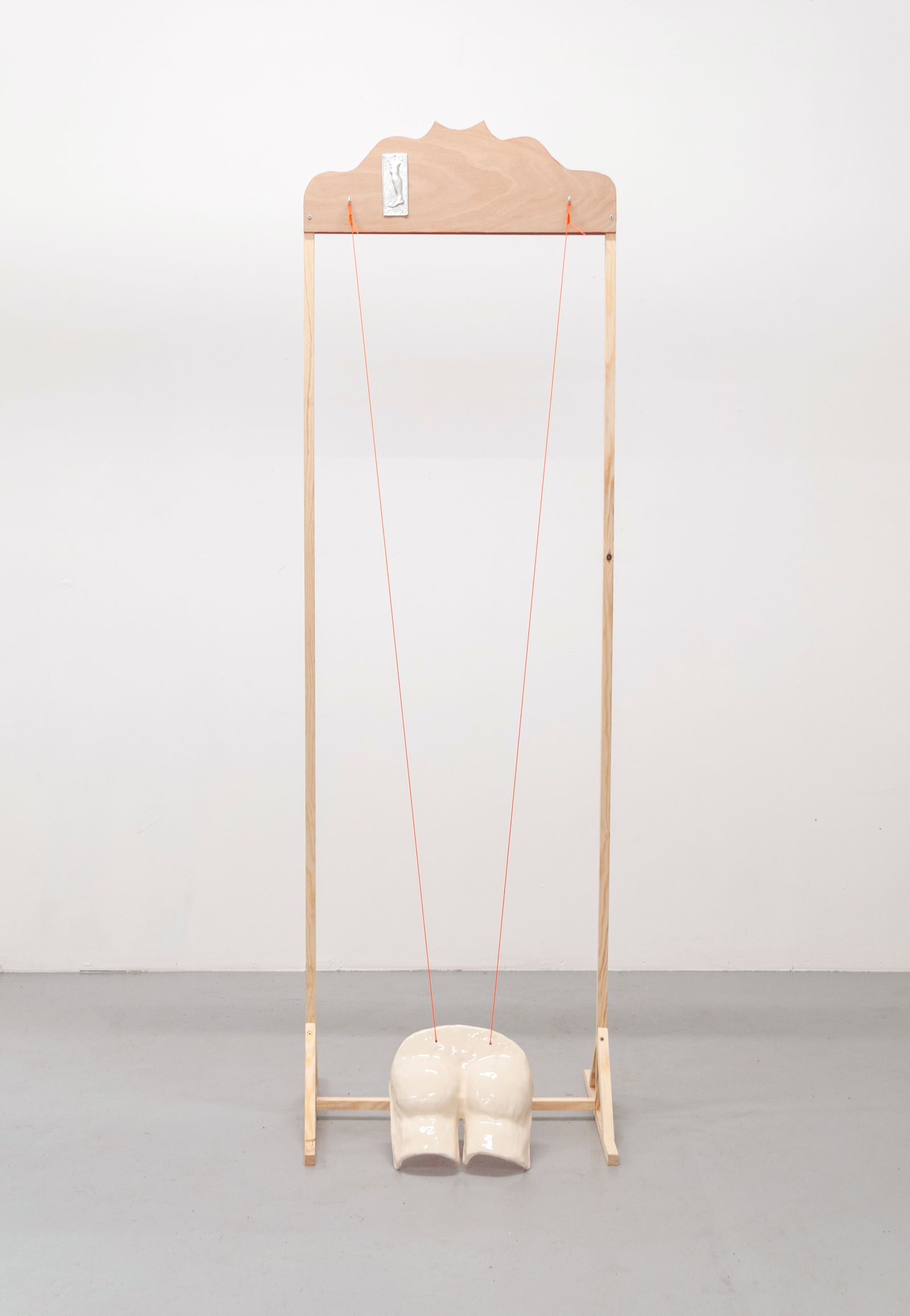
I'm constantly thinking in two registers. Ceramics demand patience because I can't really play with the pieces until they've been fired, but from the moment I begin making them I'm already imagining what they'll become. An arse becomes suspended from a guillotine-like puppet-show stand, or a ceramic mask becomes suspended from a copper pipe with a tap, both as if waiting to perform but still frozen in this state of inaction.
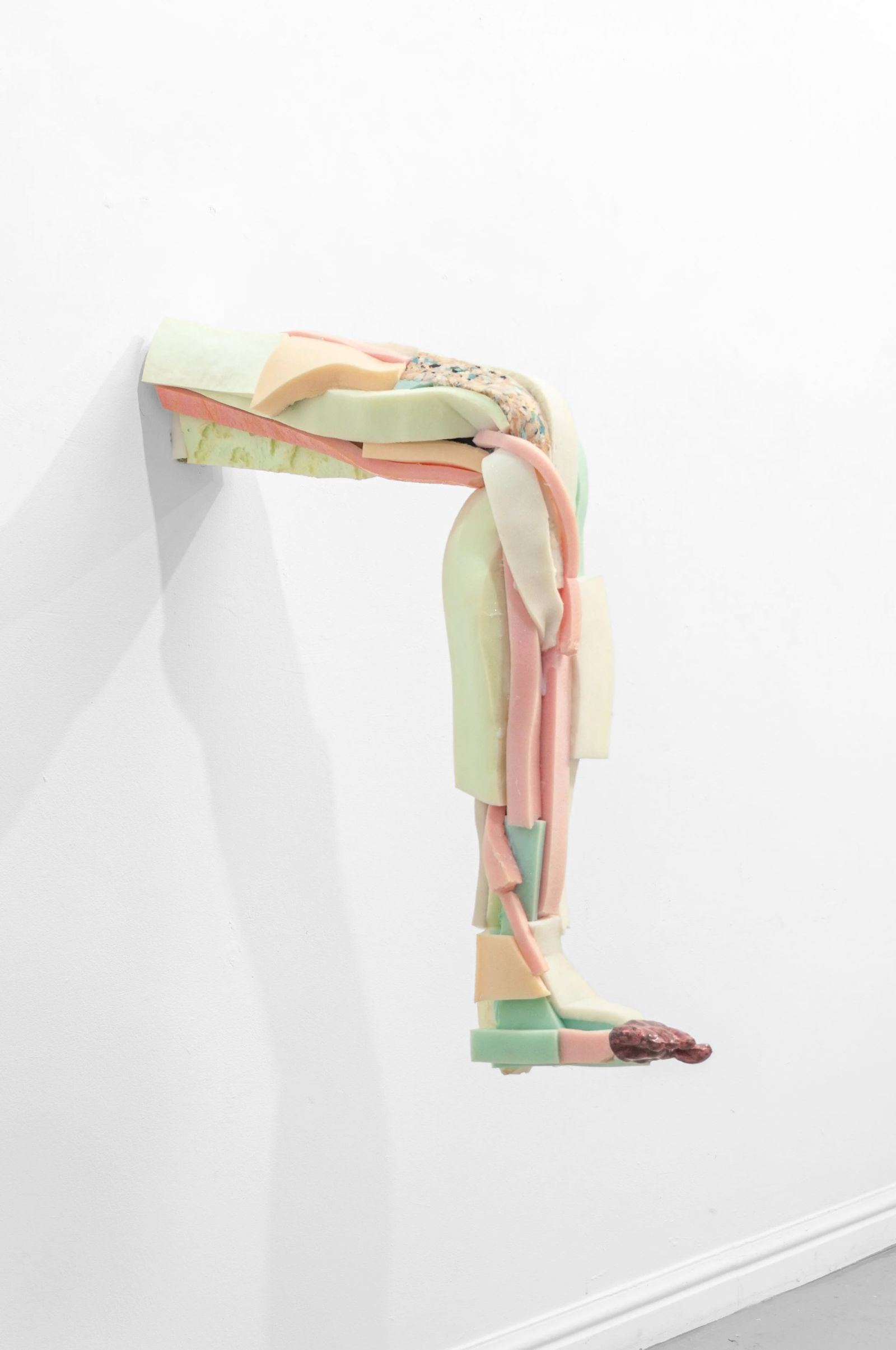
Emma Black, Rehearsal for a Pasquinade #3, Glazed ceramic, wood, foam, glue, pink grip, brackets, hinge, 2025, 82 x 55 x 42 cm. Photo credit: Josefina Sumar.
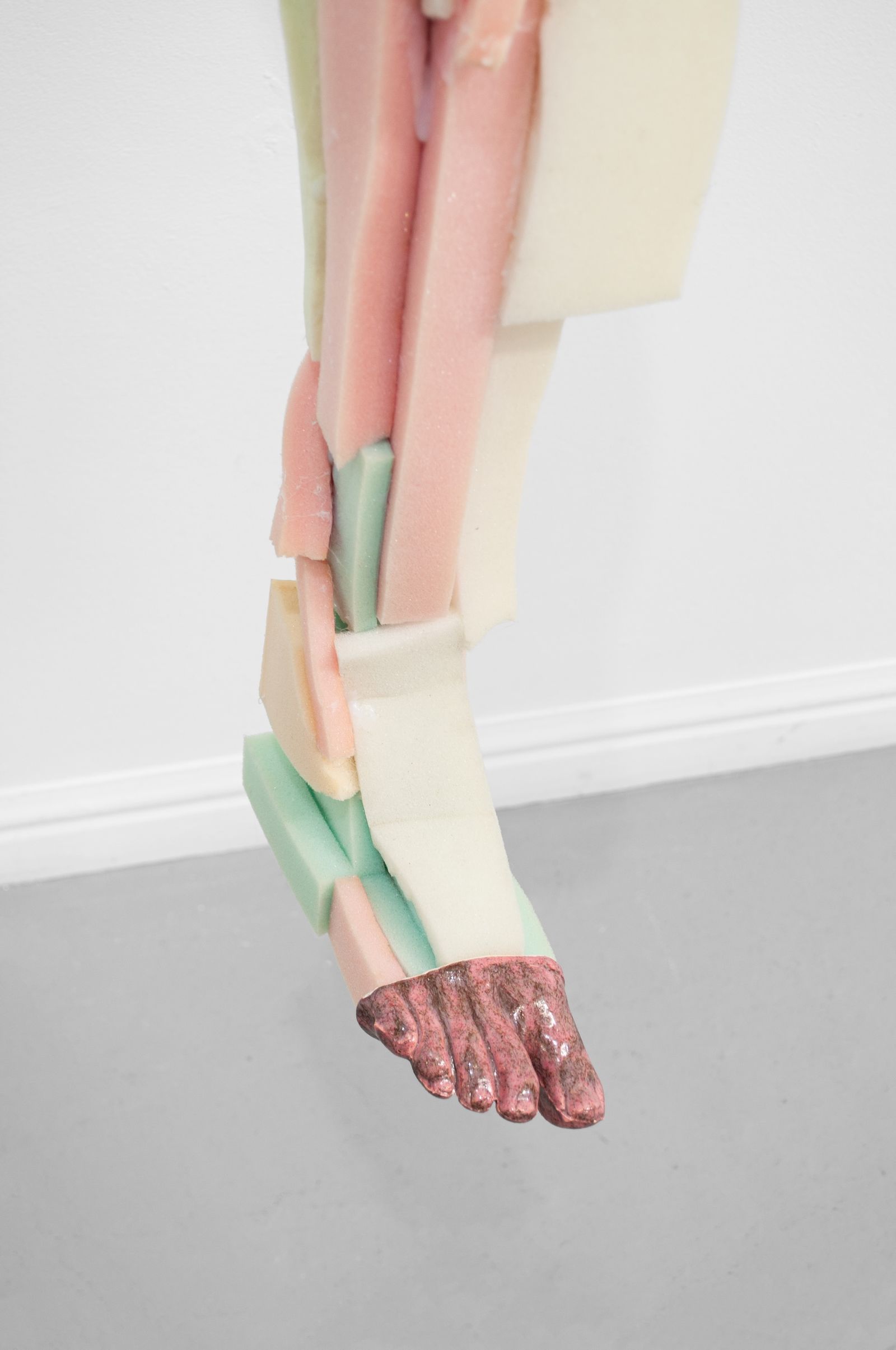
Emma Black, Rehearsal for a Pasquinade #3, Glazed ceramic, wood, foam, glue, pink grip, brackets, hinge, 2025, 82 x 55 x 42 cm. Photo credit: Josefina Sumar.
BB: My reading of your work was that it often sits somewhere between humour and discomfort, attraction and repulsion. What keeps drawing you to that space where those emotions overlap?
EB: We’re complex beings, and I don’t experience things very often as singular emotions or in isolation. I’ll often use humour in uncomfortable circumstances, or as a way of approaching difficult subjects, so that part of my personality naturally comes through in the work. It also becomes a way of drawing people in before asking them to engage with something more difficult.
I’ve always been drawn to the abject and to things that are slightly uncomfortable, perhaps because I have a familiarity with that feeling. At the same time, I’m quite a perfectionist, so some of the tension between attraction and repulsion comes from that too.
There’s also an element of surprise. A glossy ceramic surface can be very seductive and draw you towards something, but then you notice something unexpected or slightly grotesque. I like that moment when your initial assumption about something is disrupted. It makes you question why you found something attractive in the first place, or why something suddenly feels uncomfortable.
BB: The body shows up in parts in your work; torsos, ribs, teeth, masks, never whole. What does the absence of the whole lend to your work? Does absence become a subject in itself?
EB: The fragmented nature of the body reflects something about the nature of experience and memory, particularly when you’ve been through long-term illness. Things aren’t always linear, and certain parts of your body can come into focus and then disappear again. It’s also a way of exploring the tension between what is visible and what remains unseen.
Focusing on one part of the body draws it into focus and intensifies it. You start to think about what teeth actually do, for example: how they bite, salivate, chew and convey or hide emotions.
The absence of the rest of the body also allows the mind to fill in the gaps. What isn’t there can become almost as important as what is. What is hidden? What can’t we see? And what assumptions are we making about what we can’t see?
BB: Masks appear frequently in your work, but contrary to the usual concealment of a mask, they also seem to reveal. Is this a contradiction you actively pursue?
EB: That’s a really interesting point; I hadn’t necessarily thought of them in exactly that way, but I think you’re right. I suppose it isn’t an entirely conscious choice, but I’m interested in the mask as a fluid thing, and in the idea that we might have multiple masks that we wear in different situations.
Being neurodiverse, I feel that I’m often performing a role depending on the situation I’m in. Giving the mask agency is a way of saying that this is okay, and that it’s part of being human, but it also raises the question of what we see as real.
I’ve been particularly inspired by Claude Cahun’s use of masks and the idea that peeling back one identity or mask doesn’t necessarily reveal some kind of pure, authentic self. There’s simply another mask underneath. Cahun wrote: “Under this mask, another mask. I will never finish removing all these faces.”
I think of the mask as an active thing, rather than simply a prop or something that is temporarily put on. It can become part of us. Perhaps that’s why I’m interested in giving masks their own bodies and agency within the work.
BB: I feel your work often resists a singular meaning. How do you decide a balance between what to reveal and what to leave unresolved?
EB: The work I enjoy most by other artists is work that allows me to ask questions and create my own meanings and connections. Everyone brings their own experiences to a work, and for me it’s important that there isn’t a narrative imposed on the viewer too obviously.
I also don’t think I can make work in isolation with one fixed meaning. We’re complicated and we’re living in a world where so many things are happening at once. I’m influenced by everything around me in a particular moment or period of making - another artwork I’ve seen, something I’ve read, a TV series I’m watching. A lot of those things influence the work subconsciously.
I might be researching a particular subject or thinking about a specific topic, but lots of other connections inevitably enter into it. I also think ambiguity can be quite cheeky or humorous. I like playing with titles, or deliberately not revealing everything.
There's often a desire to arrive at an answer before we've really spent time with the work. I can tell you what it's about for me, but that might be completely different for you.
It’s a bit like a good TV series where you have to wait for the next episode. When it’s finally over, there can be a slight disappointment because the murderer has been revealed and the story is finished. I like staying in that space of not quite knowing.
And I think some things are personal. I don’t necessarily think everything needs to be revealed or explained. Sometimes leaving something unresolved allows it to remain alive.
Comments
Leave a comment