

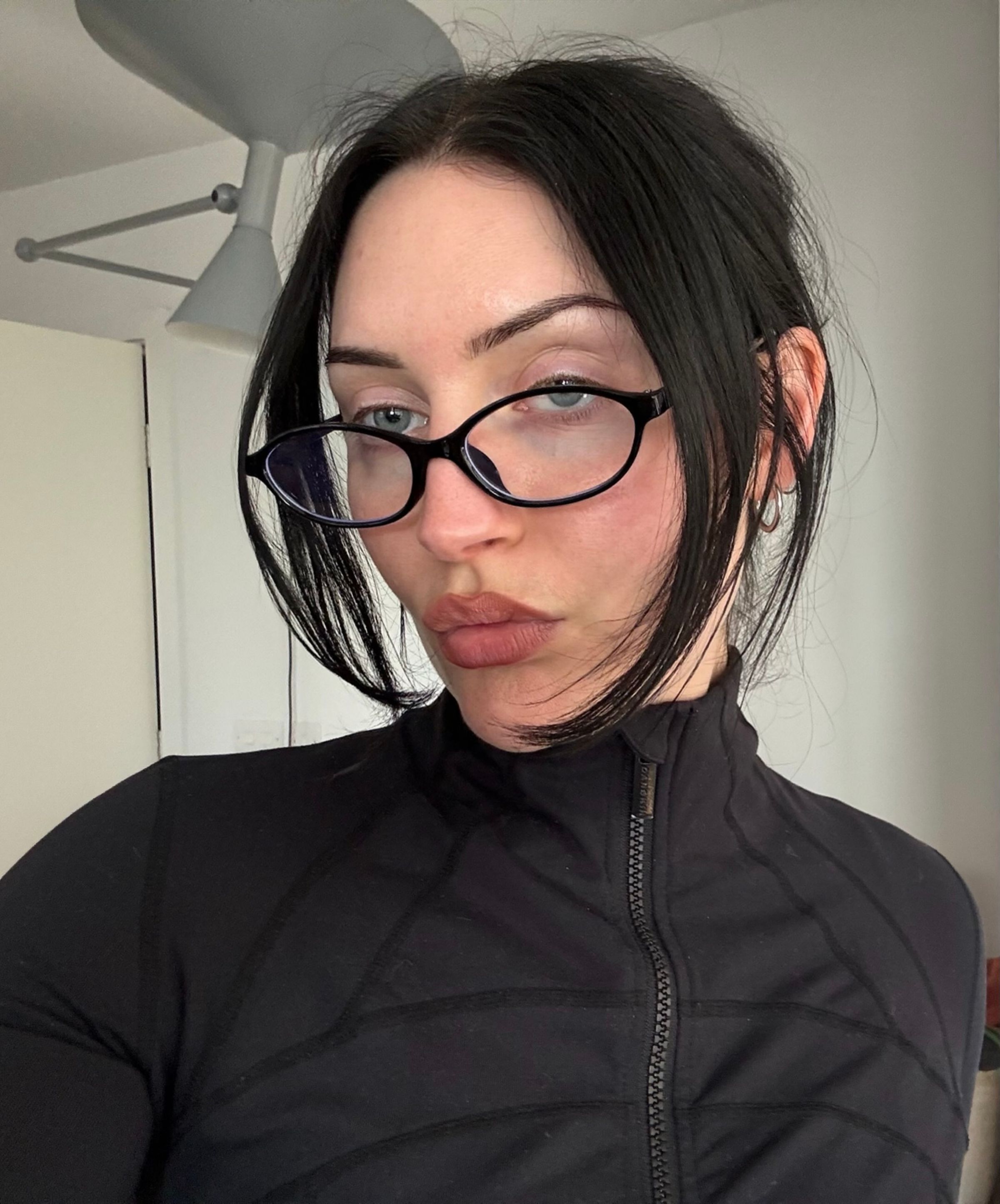
BB: Your work predominately moves between performance and writing. Performance asks to be witnessed, while writing can be encountered privately. Do you find those different forms produce different kinds of honesty?
O: Yesterday my friend told me that they see my writing as performance, which is a new thing for me to think about. But yes. My performance practice developed based on an avatar I created and started as images – me performing to the camera – so I always feel this kind of wall that sits between me and the audience. My writing is more about the thought behind the persona and the making of her, so it’s more aligned with the research side of my work, and that’s what I’m really invested in. When I write it is just me and my laptop in a quiet space – an extension of my mind almost – so I feel able to pour my brain out in a way that’s unselfconscious and raw. It doesn’t matter what I write in a way because I can’t read the faces of the readers.
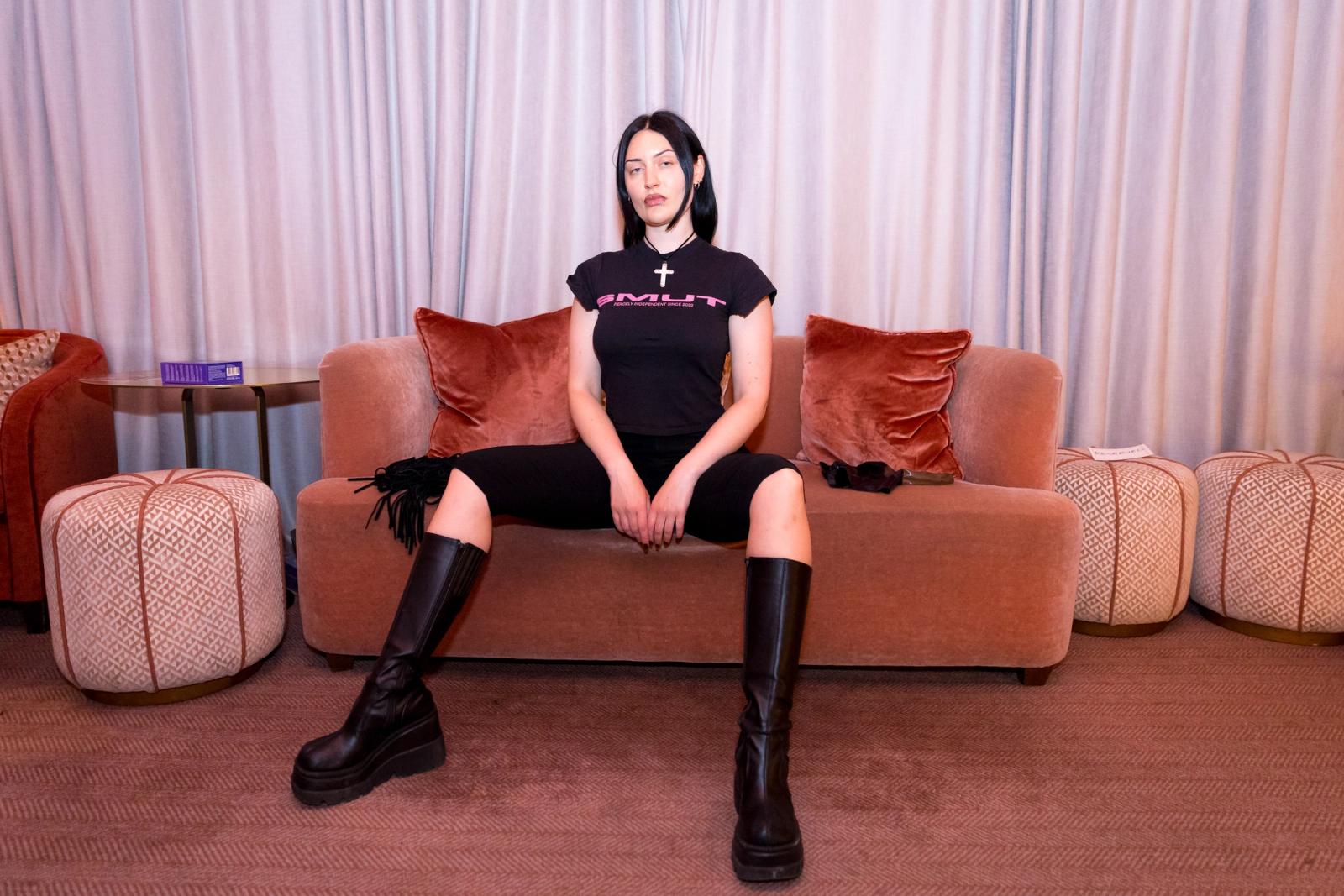
As someone who is highly sensitive and perceptive to those around me, I find this very helpful, because it allows me to be totally honest. I also think that performance is inherently manufactured in a way, because to perform is to stage. Even if the performance is intentionally unstaged, the performer is always aware that they are being watched, otherwise the performance wouldn’t be happening. And humans instinctively behave differently when this is the case.
BB: You've described the internet as opening up new possibilities for women to create and circulate their own images outside traditional artistic structures and have spoken about it as an artistic medium rather than simply a platform. What possibilities does it continue to offer your practice today?
O: In some ways I’ve begun to feel stunted by the internet. Partially because of censorship laws that make it very difficult for me to share what I actually want to. I loved how nuts the internet was when I was growing up, and I yearn deeply for that to return, but it’s advanced so much that the obscenity policing that existed offline now applies to the online, if not more so.
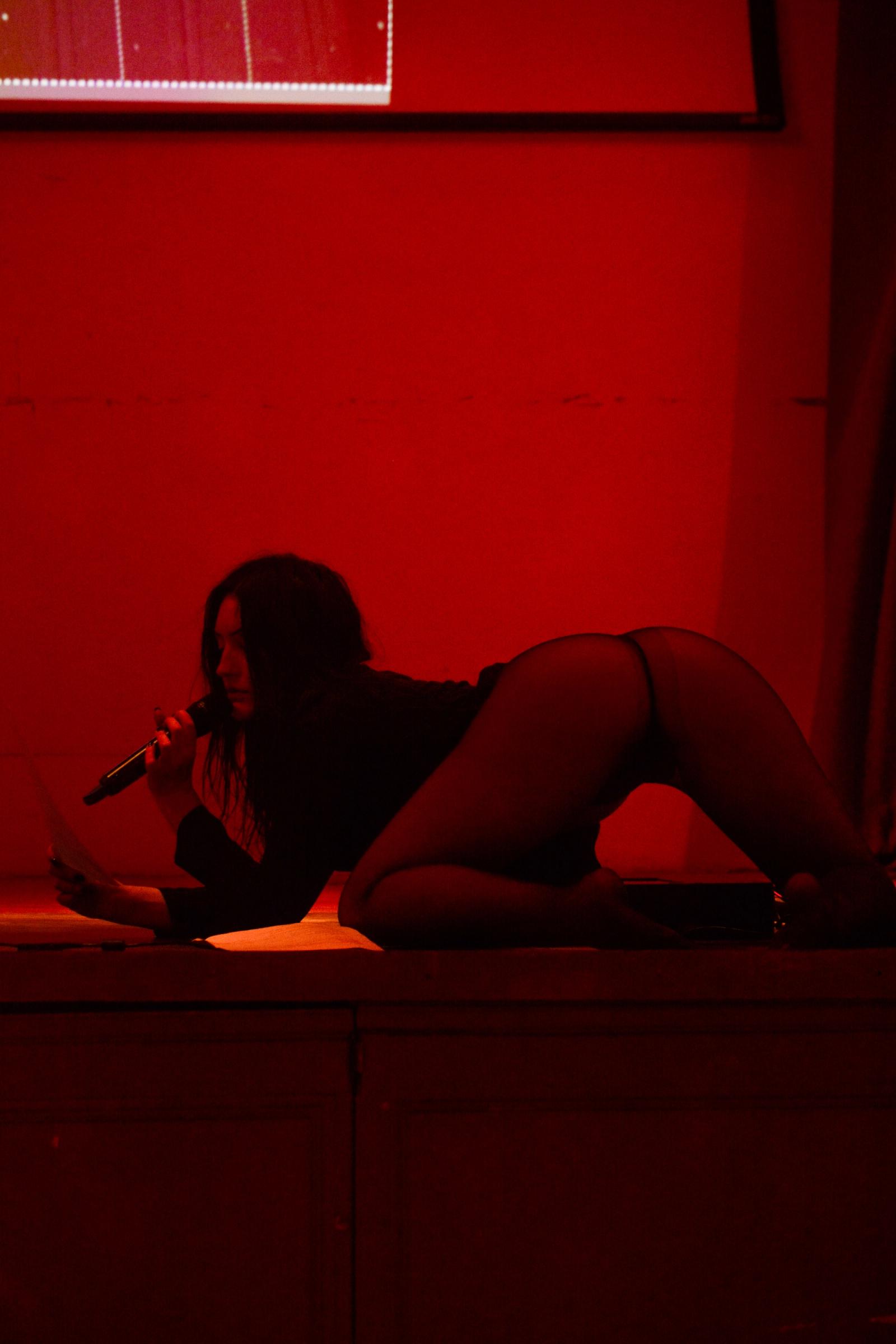
My practice started by sharing images and videos online, but digital space has become so oversaturated with imagery now that it can feel quite redundant to continuously put visuals into the ether. I think this is what pulled me to writing – because it's the least censored medium on the internet right now, and because I want to share something that holds attention. In light of that, to answer your question, online space has allowed that to flourish. I started writing on Substack three years ago and this brought me to where I am now, publishing in print and doing live readings. I’m craving a return to print matter, so that’s what I’m working towards at the moment.
BB: One thing I kept returning to in your work was the way looking never seems neutral, it often carries questions of desire, power and vulnerability. What is it about the act of looking that continues to hold your attention?
O: I’m naturally a voyeuristic person. I watched music videos on repeat as a child, was Googling smut from the age of seven, and knew I wanted to be a photographer of some kind from the age of eleven. Puberty hit around the same time I decided I would be a photojournalist, and suddenly my body had changed in a way that seemingly invited voyeuristic eyes onto me. I was being looked at in a way that felt intrusive, violent almost, and I think this made me hyper aware of what it means to be looked at in a way that shaped my interest in photography. In my late teens and early 20s I’d often carry around a 35mm camera, and I became conscious of how this looking-tool was perceived almost as a weapon, that it seemed to contain the same violence that I’d felt by unwanted male eyes on my body.
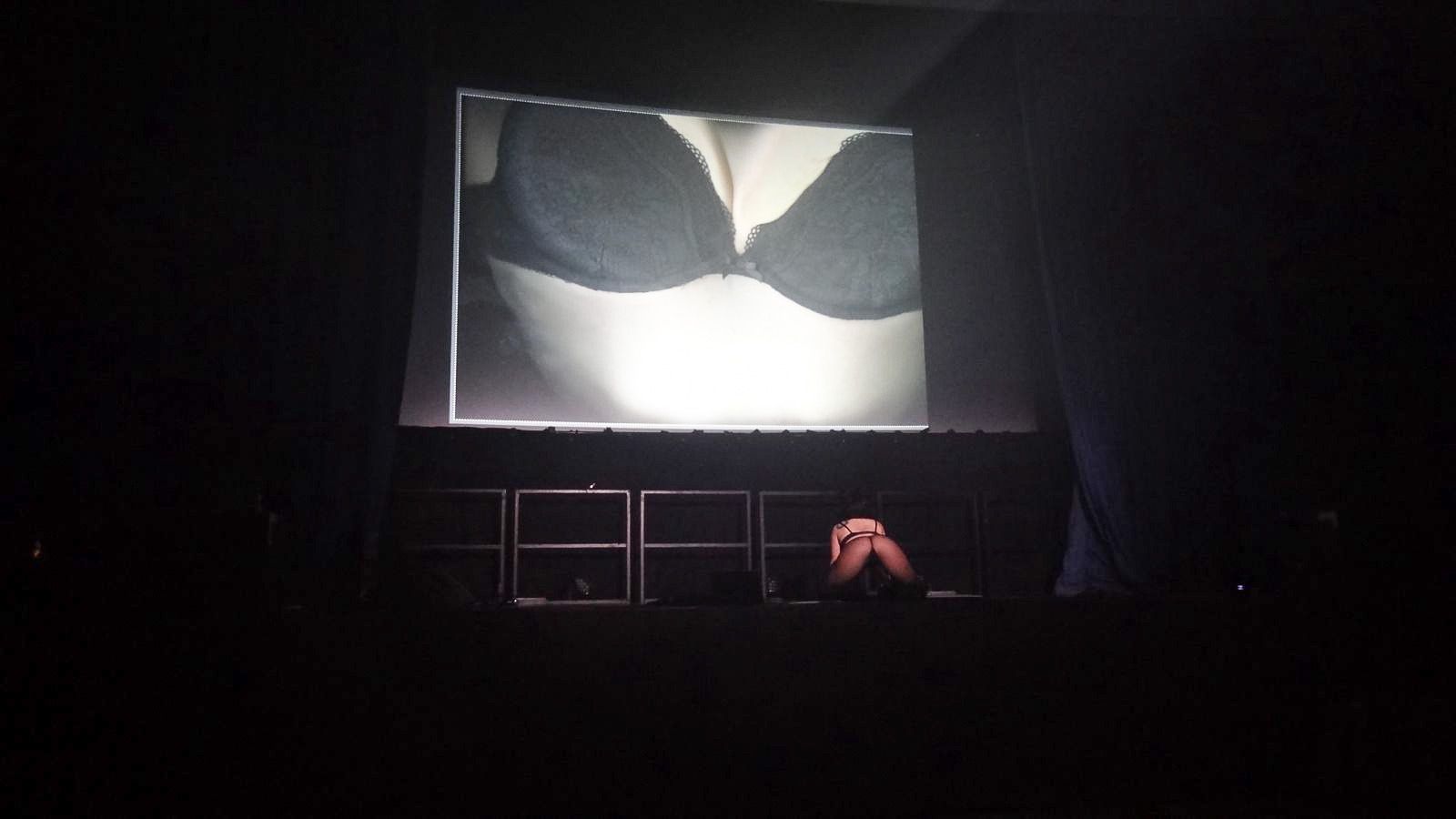
The history of photography and visual culture is so gendered, and the concept of what we want to look at is inherently shaped by this. So looking has all this fear and sense of threat contained in it which links to desire. As a woman who likes to look, I think it’s very interesting to play with this. I invite the gaze in with the ‘desirable’, and reflect it back at those observing me so they are suddenly looking at themselves. This can seem very confrontational or aggressive to people who are not used to being looked at, or at looking at themselves. And that’s what I want to look at.
BB: Your work often begins with lived experience but rarely ends there. At what point does an experience become an artwork for you?
O: What denotes an artwork is essentially perception, I think. I’ve always been more interested in experimenting with how people read other people, how we make sense of the things around us as opposed to being an artist. Who is to say what is and isn’t an artwork? Who is or isn’t an artist? It’s all just language and codes so that humans can understand each other. I almost operate on this feedback loop of, once the thing I’ve made or shared via my lived experience is put into the world, I learn new things about that experience based on how it is perceived and I take this to inform new ideas. Probably because I’m an insatiably curious person who wants to understand why we operate the way we do, so I don’t really declare what is and isn’t an artwork, rather, those who look at me – as in my performances, writing, images – do. Because that’s their way of making sense of it, or of me?
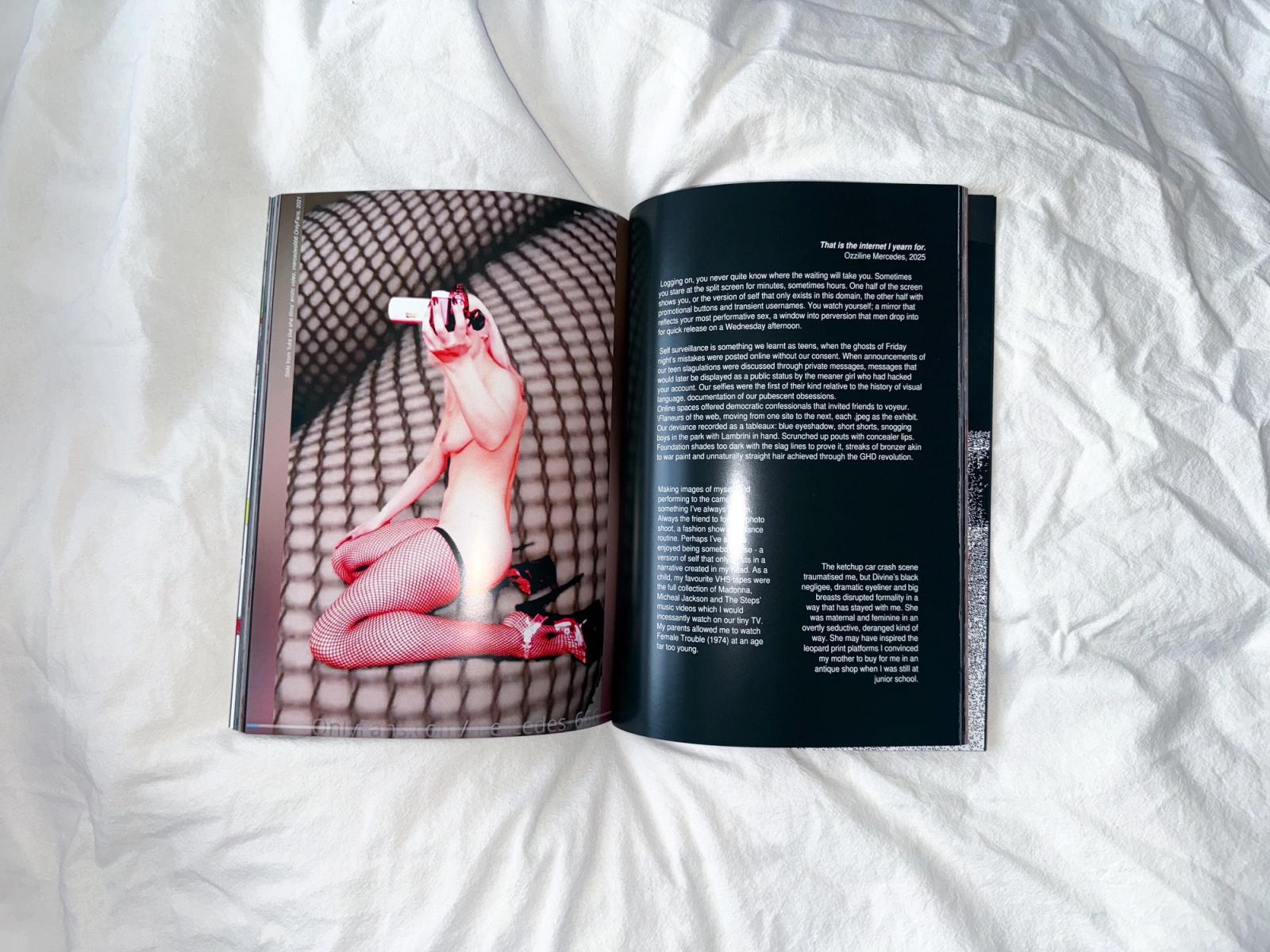
That is the internet I yearn for, text + image by Ozziline for BOOT Mag, 2025.
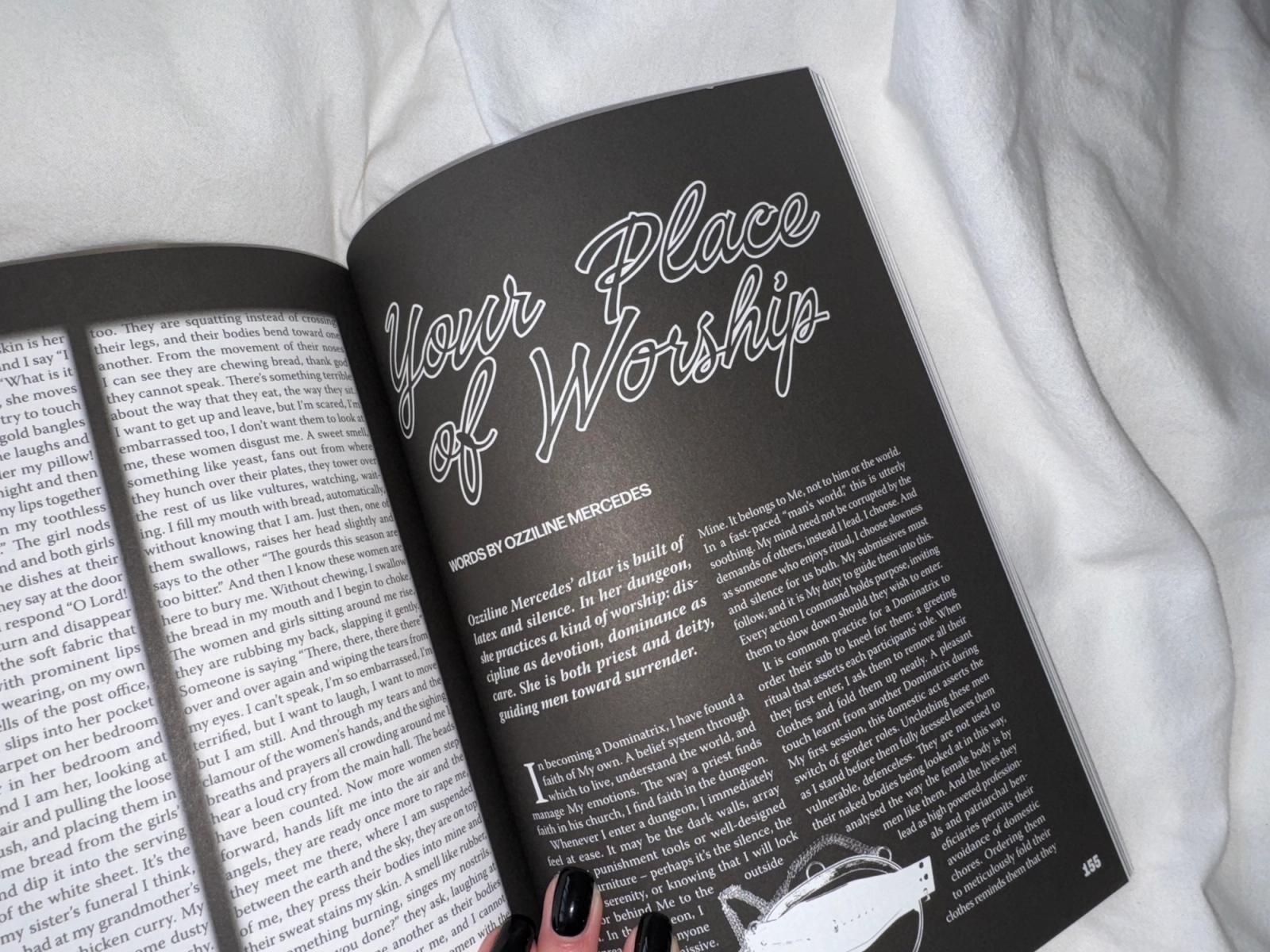
Your Place of Worship, text by Ozziline for Worms Magazine, 2025.
BB: Your practice combines research, performance and storytelling without drawing firm boundaries between them. What interests you about working across these different modes?
O: Well, I’ve never really loved boundaries in general, I think things should be able to just exist. Boundaries are a thing we create to protect ourselves or the way we are understood, and that permeates the way a person makes work too. But I also think these mediums, if you like, naturally bleed into one another. Every new thing is made up of ideas that already exist, so research can become the performance or the story, and that performance or story can later determine new research, like symbiosis. Performance and storytelling hold hands, as they’re a form of delivering an idea that feels as close to my mind and body as possible but in a readable way. They’re a form of communication, if anything.
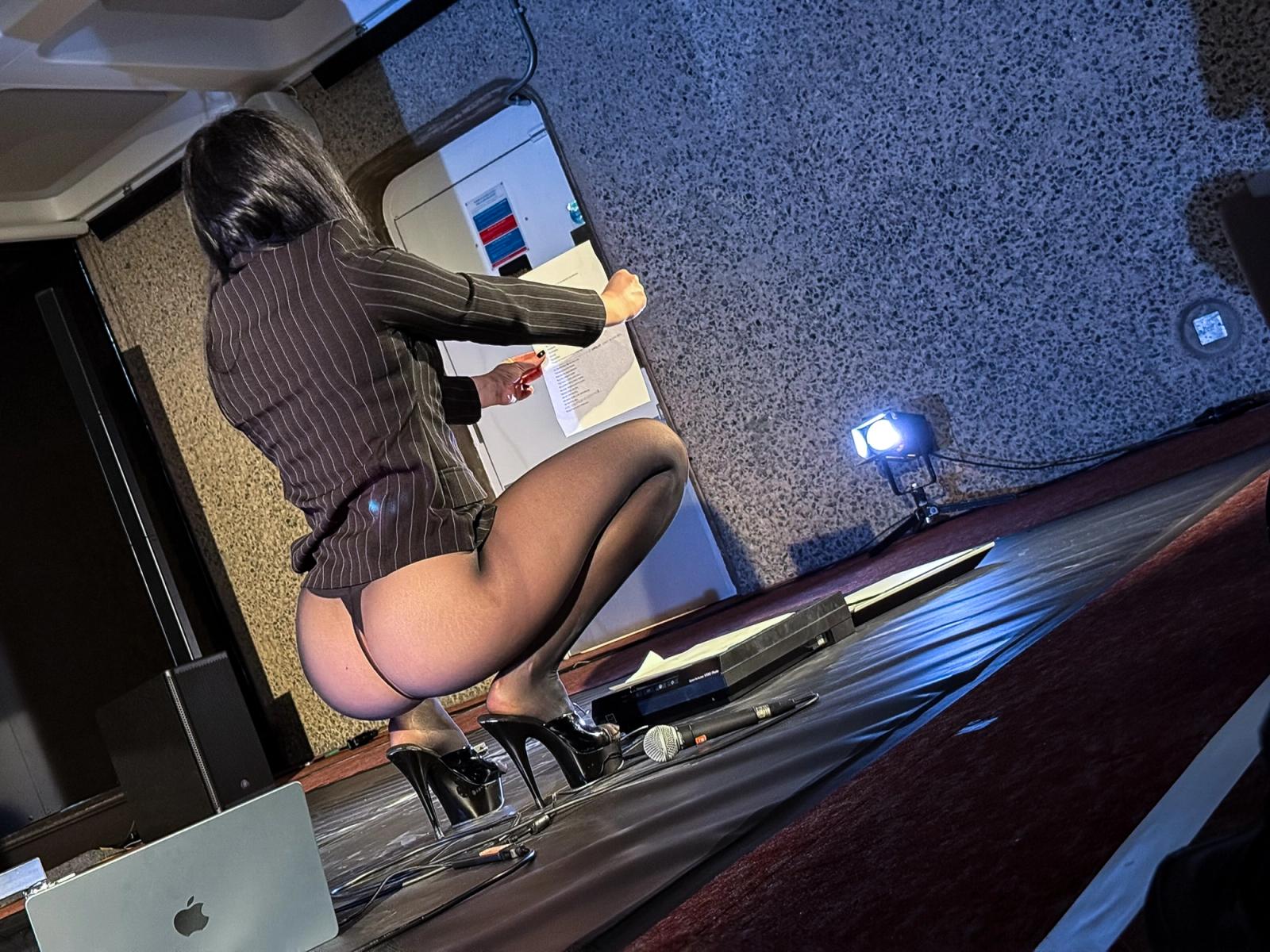
BB: As your work increasingly enters galleries and institutions, have you noticed audiences engaging differently with erotic labour when it's encountered through art?
O: Probably yes, but it's hard to tell. It's noticeable that the people interested in my work tend to already have an interest or understanding of the erotic. Talking about sex in relation to labour is still a contentious subject that doesn’t wholly fit with the parameters set by the art world. There’s still disdain around what denotes fine art or commercially viable art, and I am very aware that my work is confrontational in a way that doesn’t leave a whole lot to the imagination, so I think it appeals to those interested in the research behind it all. I’m mostly interested in how erotic labour acts as a lens to examine the wider human condition, in a kind of anthropological philosophical way.
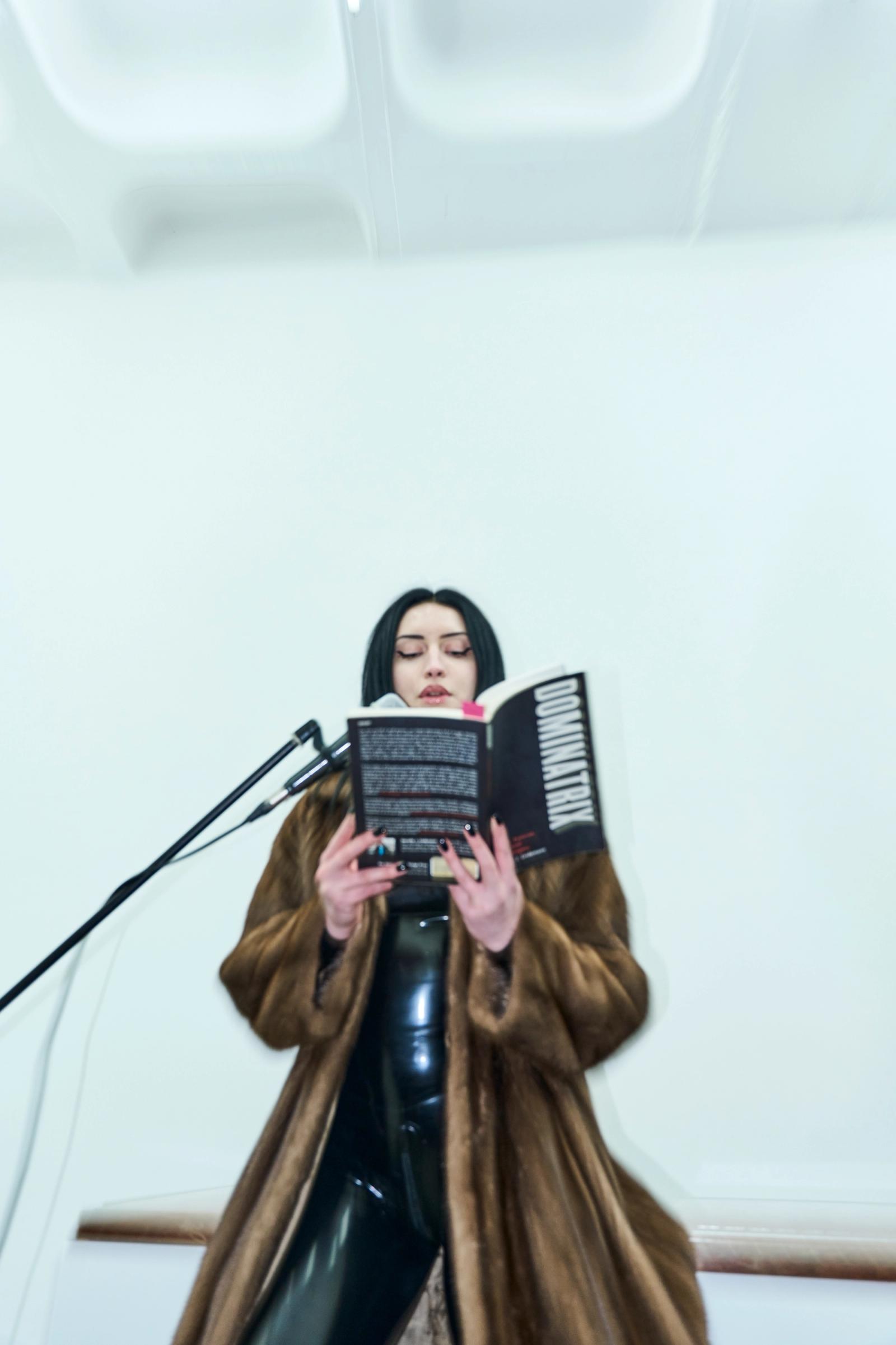
I think any work that depicts the real can be conceptually overlooked, so the rawness of my images and performances require a desire to look beyond what meets the eye. I find that my work is often misunderstood by those who don’t have a contextual background relating to sex and art. Only when we converse or they read my writing are they able to encounter it and thus erotic labour differently, because it’s such a complicated and layered topic that it requires active engagement.
Comments
Leave a comment