

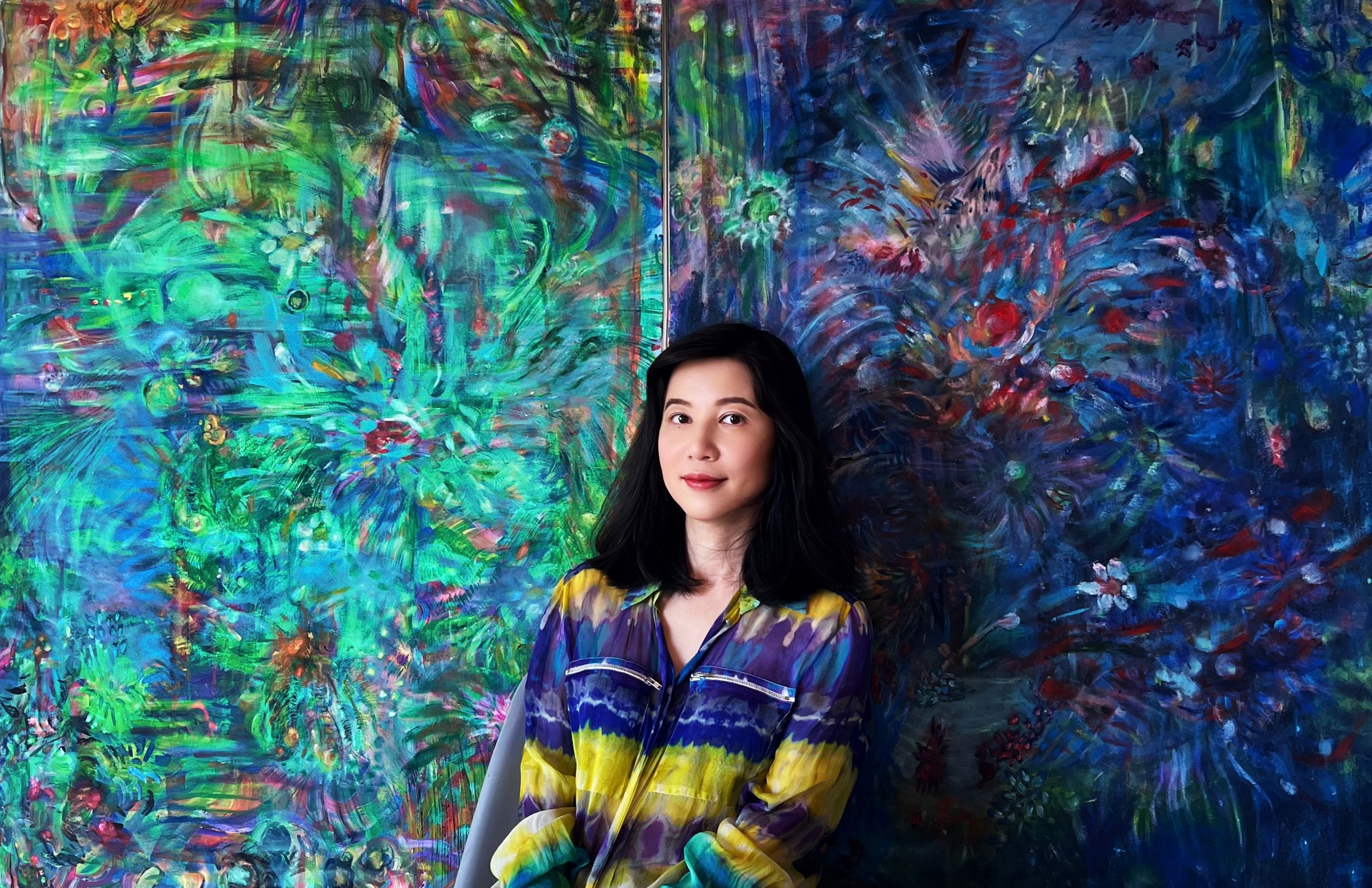
BB: Many discussions of memory emphasize its instability, but you seem to both accept this instability and treat it positively. How has your relationship with memory changed through painting?
YM: Yes. I think the instability of memory is precisely what makes it so beautiful. To me, memory is also a kind of imagined construction. Although it reconstructs scenes, people, and emotions from the past, those experiences are actually recreated by our minds in the present. In that sense, the past is a masterpiece of the present moment, and I find that fascinating.
Almost all of my work is about expressing the beauty of this process of reconstruction. Whether my memories are stable or not is therefore unimportant. Their instability is, in fact, my creative companion.
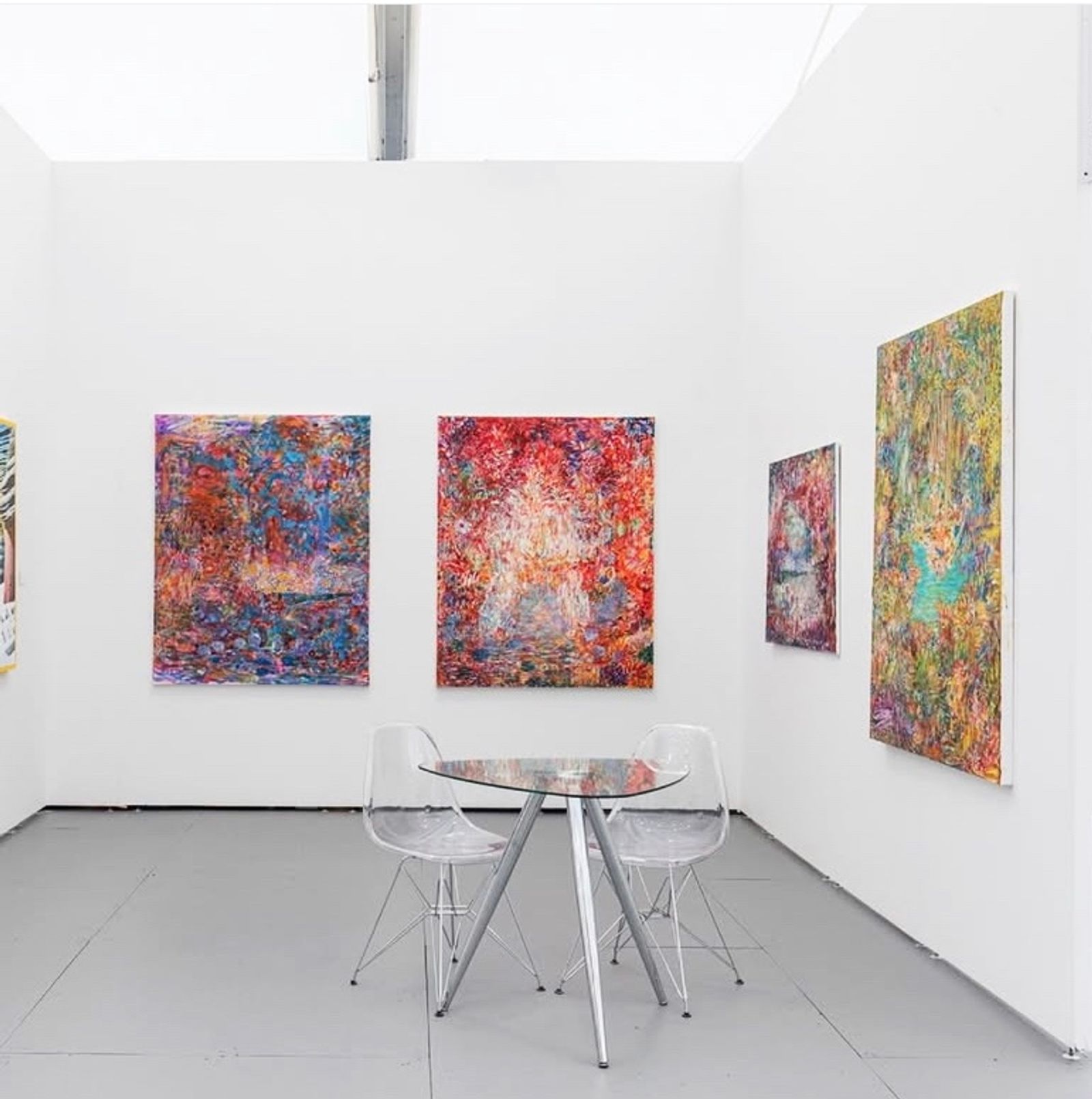
BB: Your work seems to deliberately remove the certainties of factual accuracy and recognizable spaces. What does abstraction and ambiguity allow you to express that representation might not?
YM: I believe there are many ways for art to communicate, but its most fundamental driving force is human emotion. Because we experience certain feelings, we construct spaces and related elements into something fixed, what we call factual accuracy and spatial stability. We create these structures to preserve those feelings.
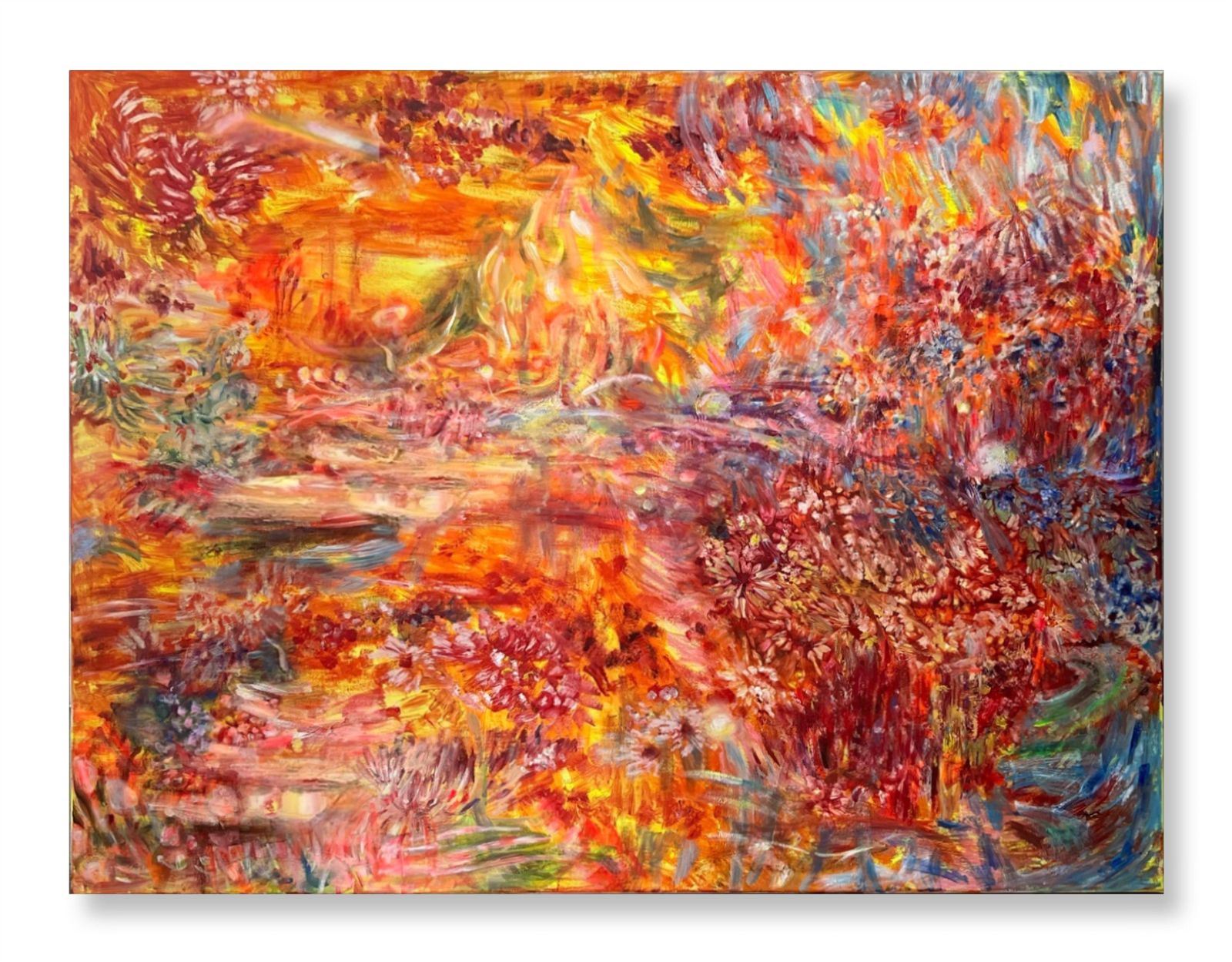
My intention is to deconstruct them, reducing everything back to colour. After all, everything we perceive visually exists only because it absorbs certain wavelengths of light and reflects others as colour. I believe our inner emotions also possess color. Longing and emotion themselves reflect a certain kind of light within the night.
When all of these structures are deconstructed, a quiet afternoon spent by a lakeside in the past becomes an abstract, ambiguous field of color and light. Representational painting could never fully achieve this.
By the way, I think this is also why music is able to transcend language.
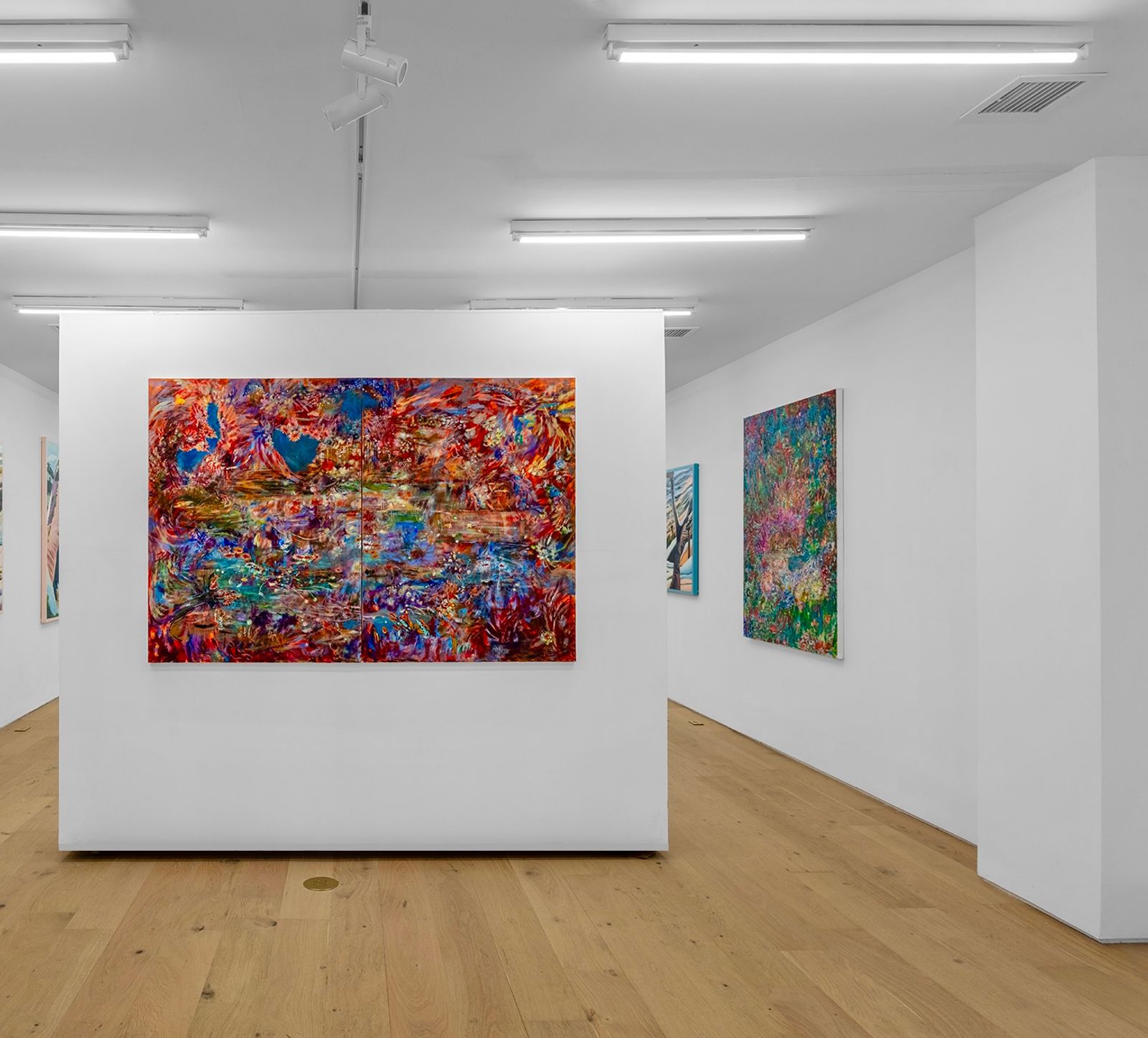
BB: I noticed that the places in your work often seem to become catalysts for memory rather than destinations in themselves. How has painting changed the way you experience those places?
YM: Yes. I think remembered places exist to anchor a particular feeling. A catalyst is a place in the present that suddenly awakens a memory. When that happens, the present scene and the past scene overlap.
I treat them as a single entity, deconstruct them together, and express that process through painting.
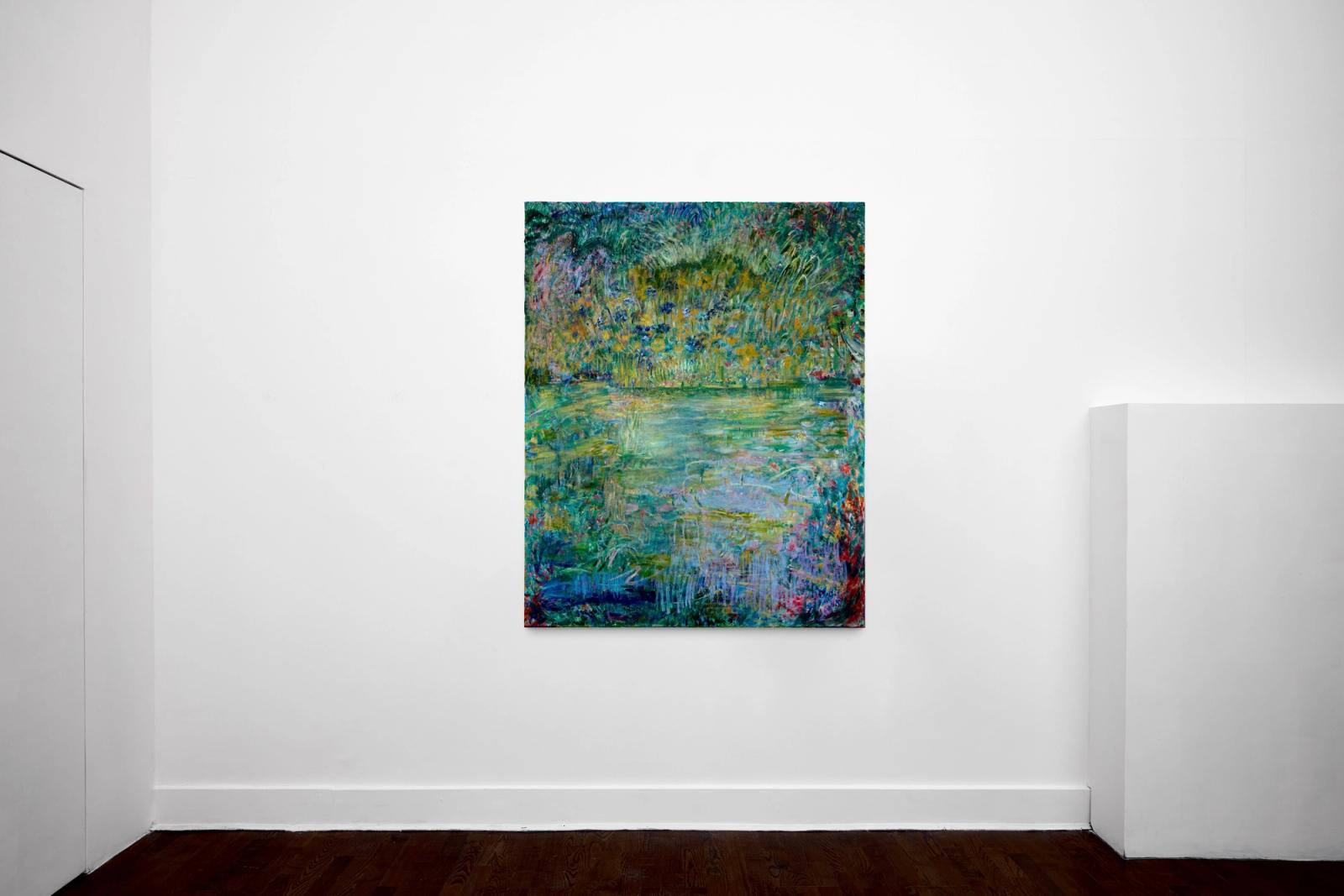
BB: At a time when contemporary art often seems more comfortable dwelling in tension than resolution, I noticed your paintings repeatedly arrive at moments of peace. What draws you toward that?
YM: I'm very glad you noticed that, because creating moments of tranquility is exactly what I want to express. It is also the emotional state I reach when I complete a painting. It is a state of mind that I continually seek in my own life, and it is my creative process itself that leads me there.
Although every painting is different, they all follow the same creative journey. I hope that when someone experiences one of my paintings, it feels like watching a flamenco dancer perform. The music is full of rhythm; the dancer's swirling skirt and expressive fingers are constantly in motion. As you take in every detail, it is as though you have witnessed the entire performance. Then the music stops.
What remains is tranquility. To me, tranquility is the silent continuation of beautiful things.
BB: You often describe your process as intuitive, but your paintings are also built through many layers rather than a single expressive act. How do those two ways of working relate to one another?
YM: Yes. The starting point of my creative process is always intuition.
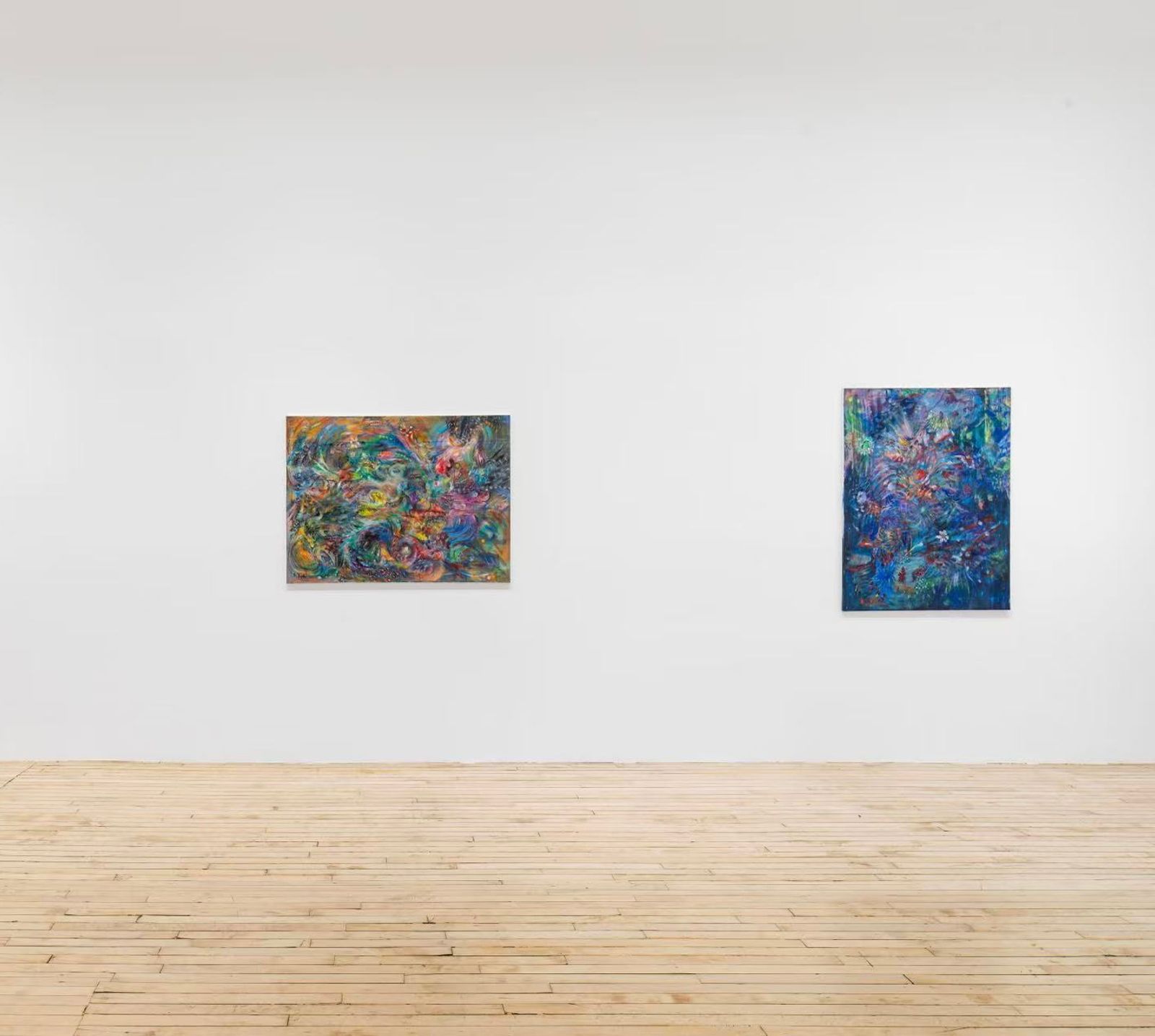
For example, some of my works are being exhibited this month at Latitude Gallery in New York. I find the gallery's name interesting—"latitude" itself refers to a point within three-dimensional space, while July 2026 represents another point along the timeline of time. The paintings, the visitors, and the gallery together form a scene, and all of it preserves my emotions and experiences.
Perhaps when I return to this gallery a year later, or enter a similar space somewhere else, that memory will be triggered. The feelings I had at that moment will awaken my desire to create.
From there, I begin constructing the work according to its internal structure. I first reconstruct the scene, the point in space, and the point in time. It is a process of excavation. Guided by intuition, I imagine what I saw. If I were to translate it into color, what color would it become?
Most of the time, however, there is no single color, because the narrative of memory begins to unfold. Gradually, I transform both past and present emotions into color as well. The multiple layers of brushstrokes become the process of telling that story. At the same time, they allow me to relive the emotions I felt then, or express the emotions I experience while creating.
Once the narrative has been fully expressed on the canvas, what I feel is tranquility.
A painting completed in a single burst is more like expressing an opinion. A painting built through many layers is more like telling a story.
Comments
Leave a comment