

BB: Looking back across your exhibitions, have you noticed yourself returning to certain questions and themes?
YL: At its core, my practice is an ongoing inquiry into the human condition, its vulnerability, its complexities, and the subtle resonance of shared human sensations that define who we are. But for me, exploring human interiority cannot be separated from how we physically navigate space. The core question I keep returning to is: How do we see, how do we feel, and how can the spatial architecture itself amplify those internal states?
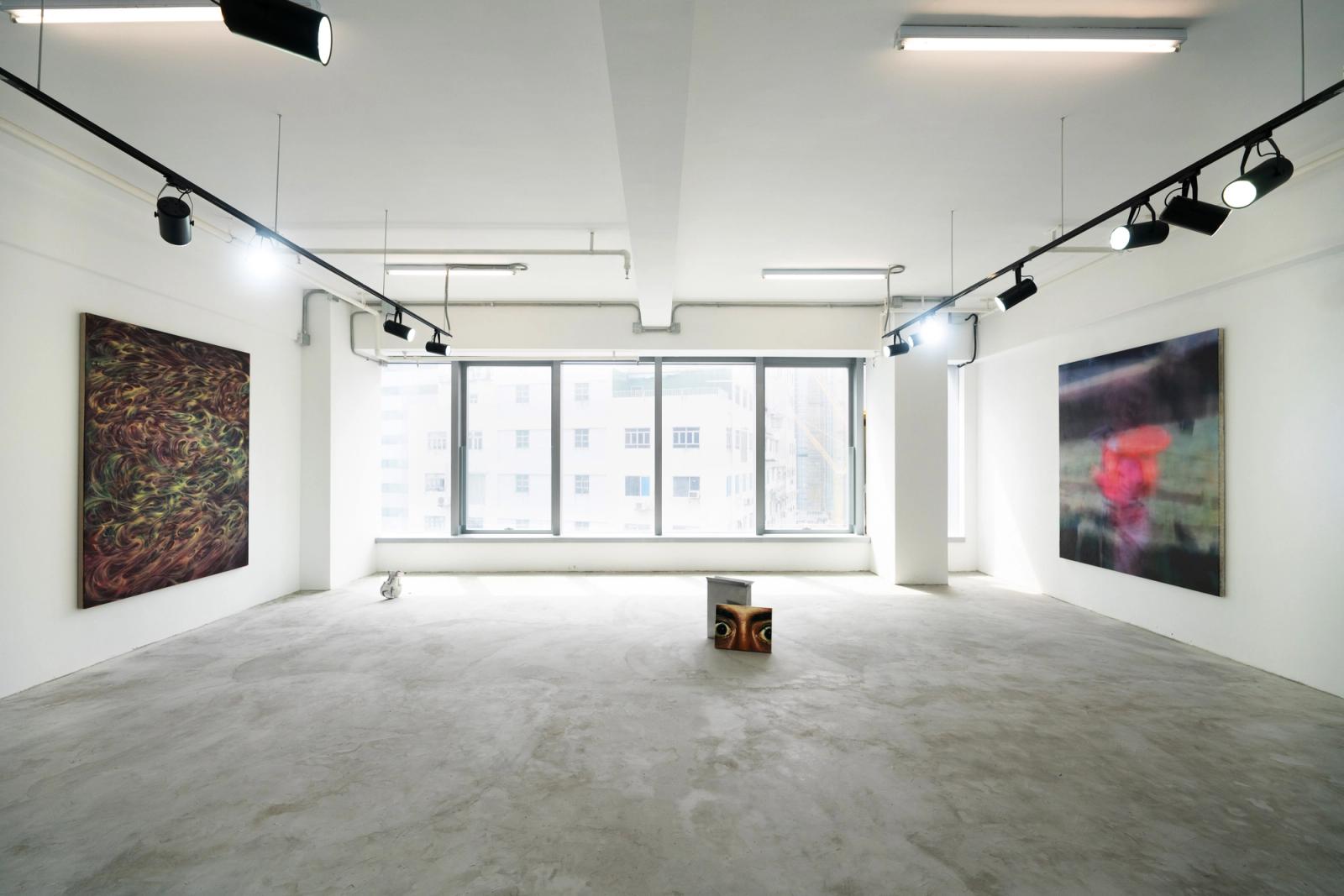
I treat the exhibition space as an active psychological landscape rather than a neutral backdrop. I like bringing various medium such as painting, new media, and sculpture together into a single environment, testing how far a room can be stretched to host competing medium-specific rhythms. By manipulating scale, lighting, and proximity, I aim to create an experience rich in sensory tension and dynamism.
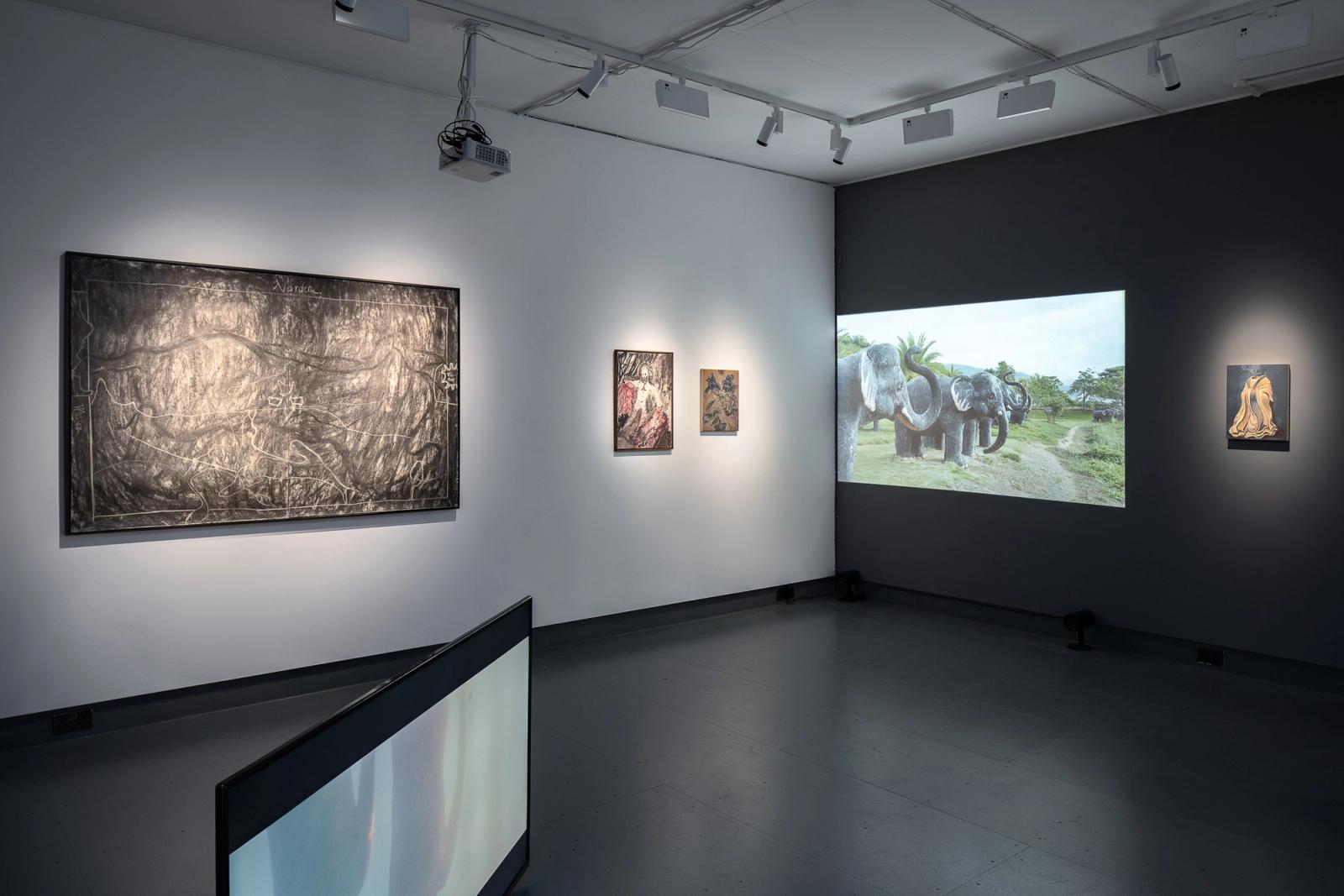
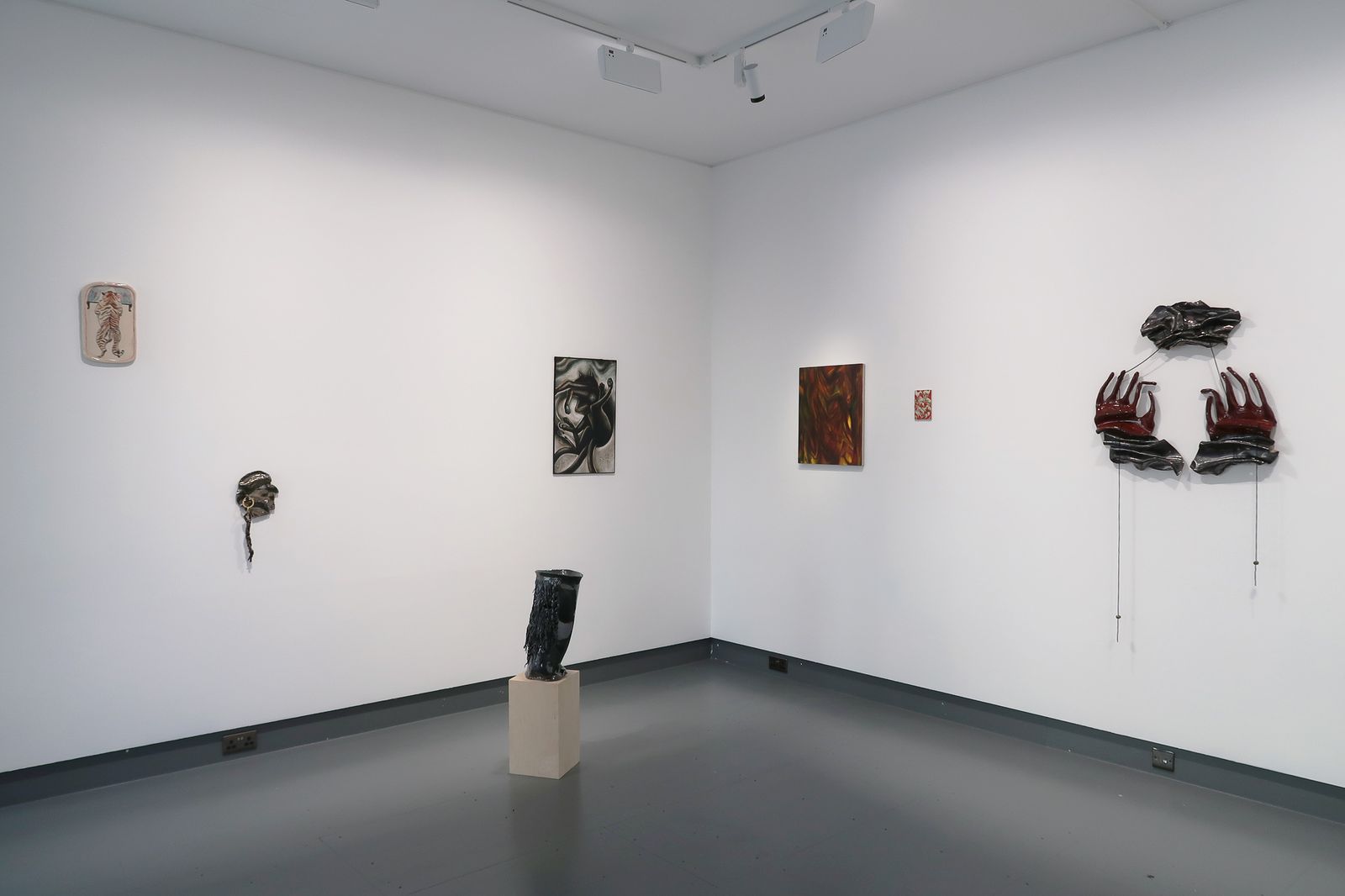
In Becoming Creatures at Tabula Rasa, for instance, I created a friction between two massive, immersive video screens, one on the floor, one on the wall, and anchored them with some small, spotlit paintings nearby, offering visitors a quiet visual sanctuary when the media became overwhelming. In It Is Better to Be Cats Than to Be Loved, I restricted each work to a strict maximum dimension, granting them equal visual weight so their individual sensations could resonate without overpowering one another.
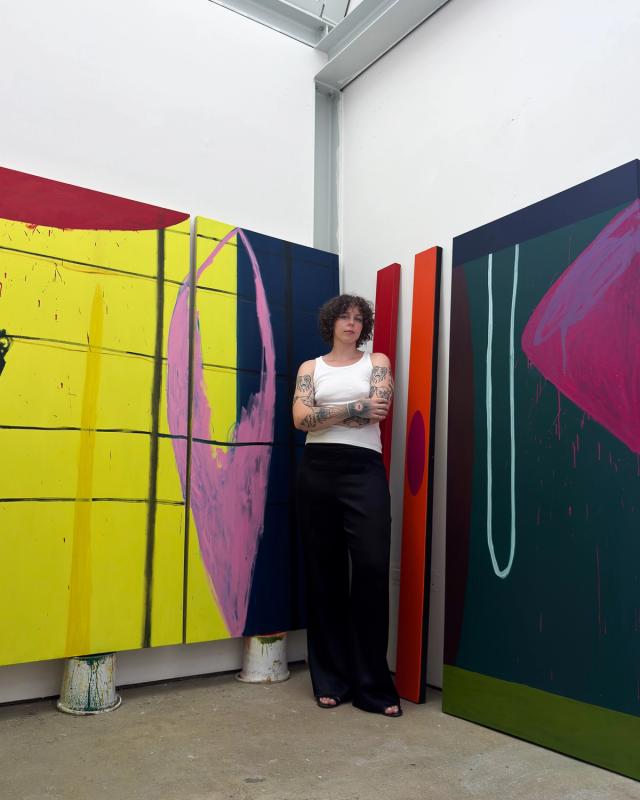
Similarly, in And the safe spots become impassable, a group show I co-curated with Ethan Yip during Art Basel Hong Kong 2024, we used dramatic shifts in scale to alter physical perception. Placing a massive painting by Katarina Caserman in direct dialogue with an expansive work by Jack Warne, and in between them miniature sculptures, forced the body to constantly calibrate its attention. You move from being confronted by a canvas larger than yourself to leaning into something minuscule, stepping physically and mentally into another world.
Whether in a white-cube gallery or a historic venue like the chapel, my goal remains the same: to use spatial orchestration to mirror human feeling, guiding the viewer through moments of intimacy, confrontation, and stillness.
BB: Where does planning an exhibition begin for you?
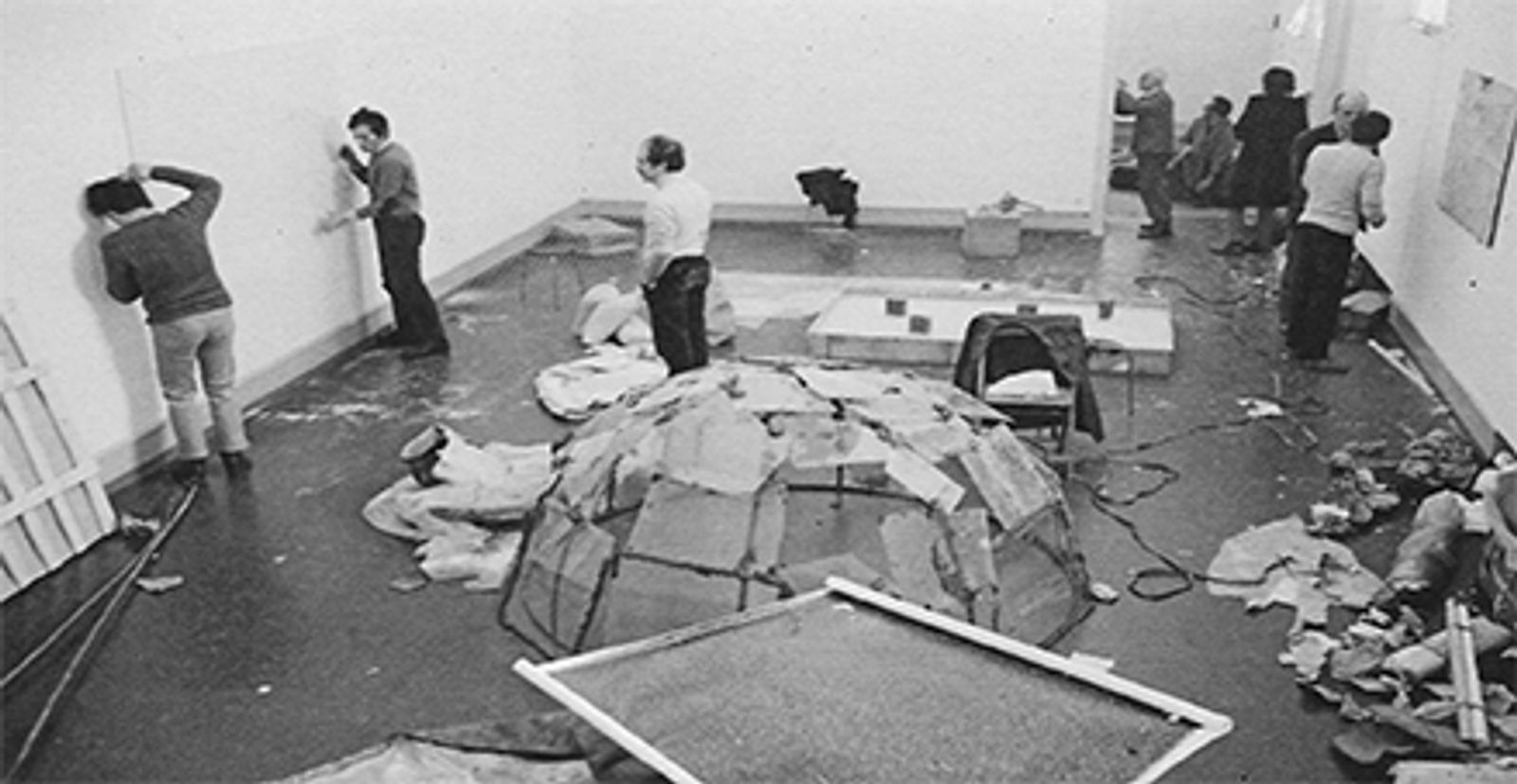
YL: One curator I deeply admire is Harald Szeemann. What makes Szeemann so captivating is the tension in his methodology: while his archives reveal meticulous research and deep scholarly rigor, his exhibition-making was defined by radical freedom and spontaneity. I remember reading about his landmark 1969 exhibition, Live in Your Head: When Attitudes Become Form, at Kunsthalle Bern, which sparked enormous debates and excitements at that time. He invited conceptual and Arte Povera artists, among them Joseph Beuys, Joseph Kosuth, Giovanni Anselmo, and Mario Merz, to freely express themselves, transforming the exhibition hall into a site of active creation. He handed a great deal of curatorial power to the artists themselves and to the space they were engaging with, acting almost like a conductor rather than an architect placing everything into position himself. That approach has greatly influenced me.
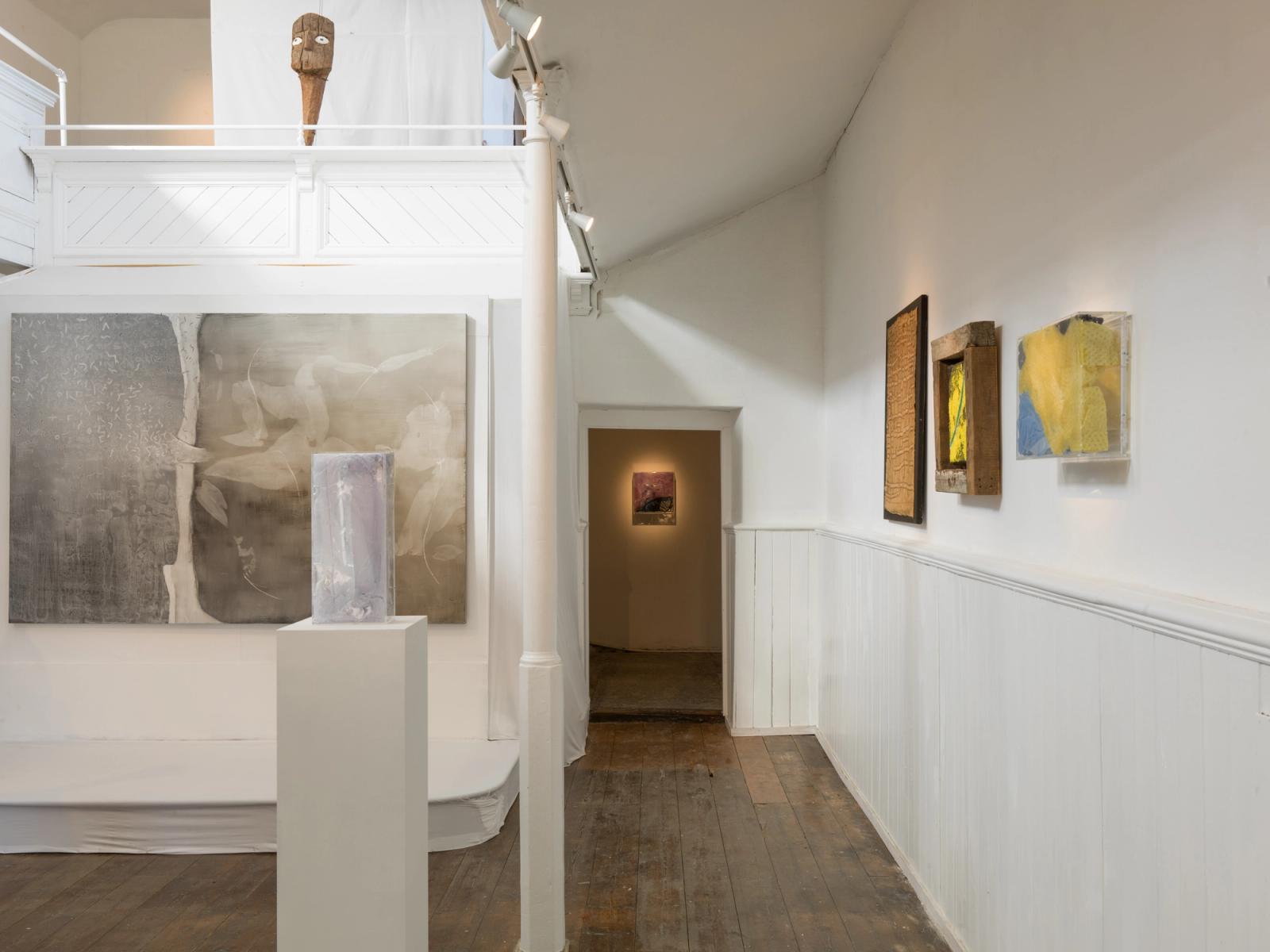
I’ve always tried to encourage artists to contribute to an exhibition's concept, rather than simply consigning existing work from their portfolio. I usually start by approaching one or two artists, or by drafting a proposal myself using current works from their portfolio, and then put it to them directly: I have this idea in mind — do you feel inspired by it? Does your practice speak to this concept? It is through this approach that I develop the final presentation of work together with the artists. I seldom know the complete checklist of works I’ll be working with until one or two weeks before installation. That growing suspense over the months leading up to it, it is nerve-wracking, but also it's half the fun (XD). This time, with The Pliable Wall, a few artists ultimately created new works for the show after extensive discussions about the venue, the concept, the time of year, and the audiences who would see it.
On the more practical notes, the beginning of an exhibition occurs in different ways. When I was working at a gallery, if a show required curation, I would usually start from the artists we were planning to show, then think about how to relate them to other artists I was interested in but hadn't yet had the chance to exhibit — or think about how an artist's practice relates to the venue. For example, I used to work at a gallery based in both Beijing and London, so introducing a Chinese artist to a UK or European audience meant thinking about how to translate their practice into a language the local audience could receive.
But it can also go the other way. In the context of an independent project, a venue that is more of an open book to start with, I have to let different thoughts come together organically: the venues I have access to, the ideas that have lately occupied my mind, and the artists whose practice I've been following but haven't yet had the opportunity to work with. When all of these factors come together, the exhibition takes shape.
I should stress that I'm not an institutional curator, I curate for galleries and for independent spaces, so I don't need a constant subject or research focus for an exhibition to happen. That is a very academic and rigorous way of working, and I believe curation can be approached in many ways.
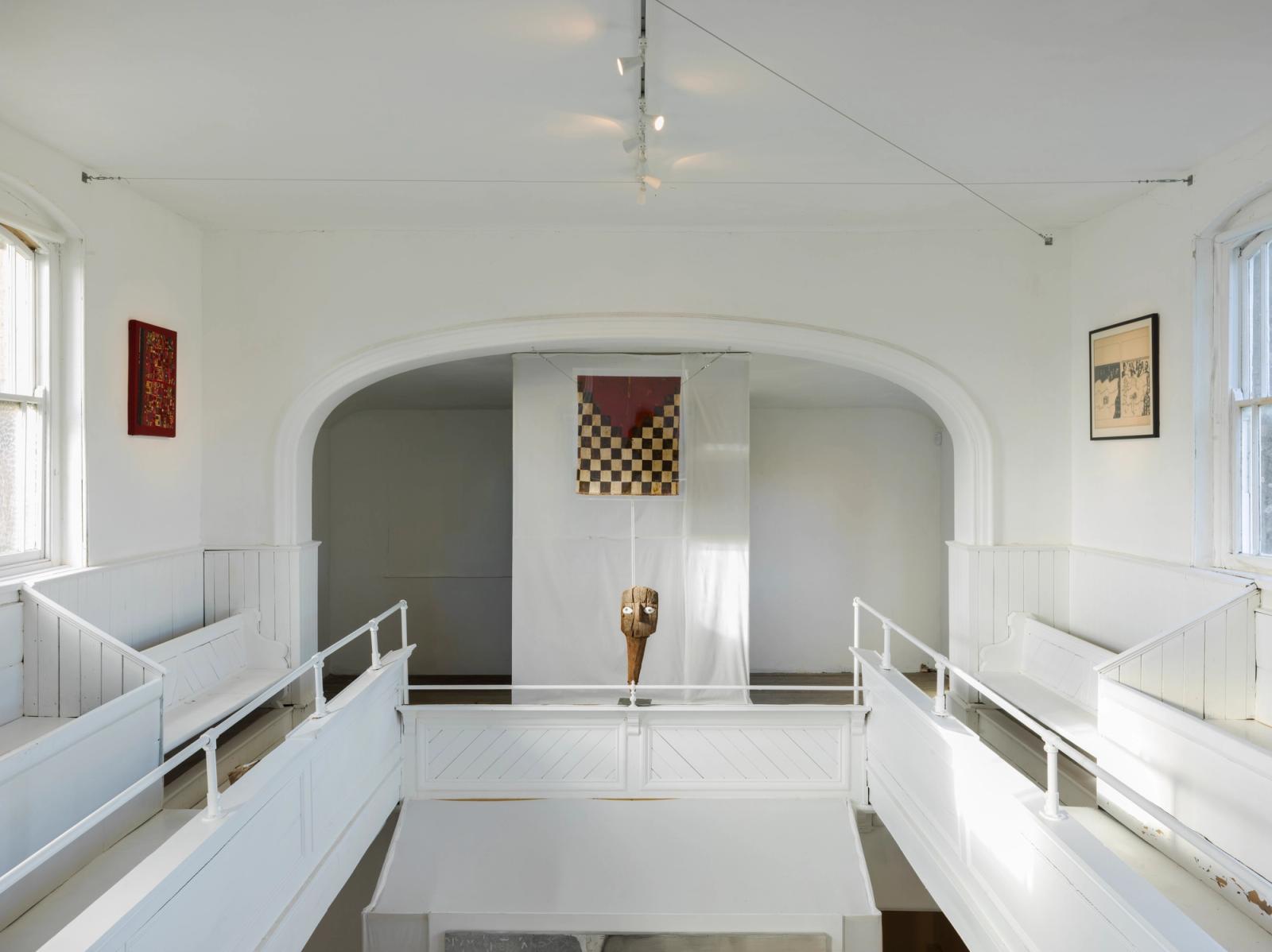
BB: In your exhibition The Pliable Wall, you have staged the show in a former chapel, and the setting feels inseparable from the exhibition's thinking. What interests you about allowing a site to become part of the exhibition's curation?
YL: I think this continues from the previous question. Site is a very important factor in the final outcome of an exhibition, it's where visitors feel embraced as they walk in, and it sets a particular way of thinking, a particular atmosphere. I believe this works as much for me as it does for the viewer: it allows both of us to form thoughts by understanding the relationship between the artwork and the space, and that is something I am genuinely interested in.
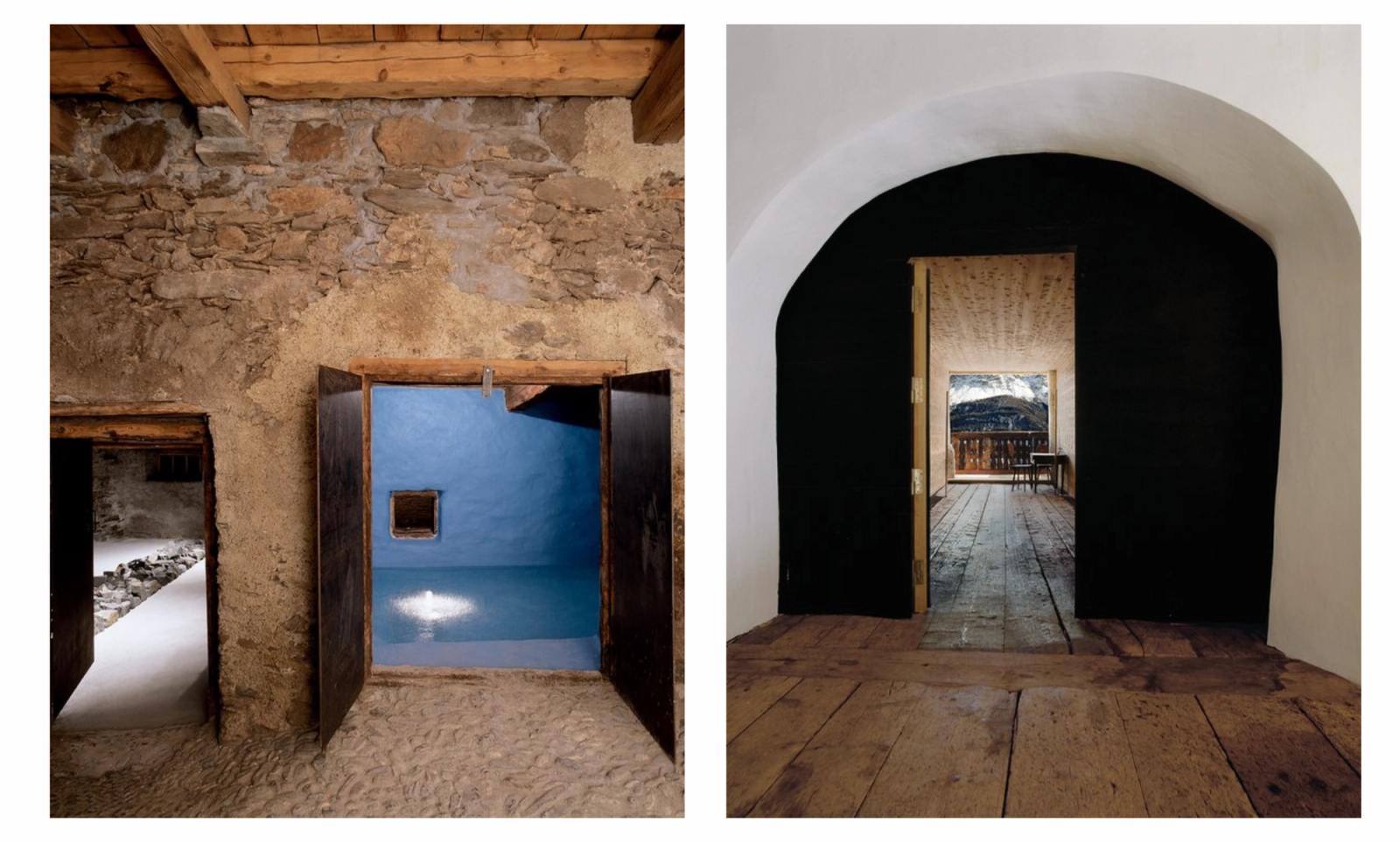
On top of that, as I've become more mobile in recent years, I no longer need to be tied to one place or one fixed group of artists, being exposed to different places and culture have become a weekly practice, almost a way of life. I try to keep an open mind to new influences, always exploring how to integrate them into my own world in a peaceful and productive way. For example, I recently visited the Engadine region in Switzerland and became fascinated by the traditional Engadine farmhouse—a building style that goes back to the 15th and 16th centuries. Unlike traditional farmhouses (such as in the UK) where the house, barn, and stables are separate buildings, these massive stone structures brought everything under one single roof.
It defines a particular experience of life specific to the dwellers. When you step inside, you enter through a large arched doorway into a vast central hall that was originally built for driving in wagons loaded with hay. From this big, open working area, you pass through a small, low door tucked into the thick stone walls, leaving the workday behind as you step into a warm, cozy wooden room. Passing through that threshold gives you a tangible feeling of transition—moving from labour into rest, without ever stepping outside.
Many of these houses have been restored by the Swiss architect Hans-Jörg Ruch, who works with a brilliant principle: whatever he adds must be reversible, and he deeply respects how the original space was meant to function. He refuses to slice up these grand agricultural spaces into tiny hotel rooms or separate apartments. Instead, he keeps the original volume intact, letting new uses naturally flow into the old space. A great example of this is his work with the artist Not Vital, where they transformed an entire historic house into a single artist's studio and home. By keeping it whole rather than dividing it up, they brought back the soul of what the house always was—a space where work, daily life, body, and art all live under one roof.
BB: In The Pliable Wall, you have placed works from different historical moments into conversation, from Pre-Columbian objects to contemporary art. What helps you draw meaningful connections between works from such divergent historical moments?
YL: This gets into the specific thinking behind The Pliable Wall. I think it starts with my professional path. I took my first full-time job in the UK after graduating in 2017, at Paul Hughes Fine Arts, a gallery focused on Pre-Columbian South American and Andean antiquities, both textiles and sculpture. I spent three formative years in a field I had never encountered before.
What's more, the gallery taught me how to see this work in a particular way. Its outlook was never simply to present these objects as relics of the dead or of the past. First, we tried to present their original context; second, we traced the history that continued after these civilisations were, in effect, halted — whether by the Spanish or by time itself. In doing so, the gallery was always trying to revive a dialogue between these Pre-Columbian objects and living or twentieth-century artists, dialogues that aren't ones we invent, but ones already written into history and into artists' own writing. These objects have long featured in the collections and foundations of artists and collectors, the Josef and Anni Albers Foundation, for instance, and Max Bill, as well as many contemporary artists, designers, and writers, among them Bruce Chatwin, Mario Testino, and Damien Hirst, and architects such as Rafael Viñoly. This education and this background gave me different ways of understanding both ancient and contemporary art.
I then spent another five years in the ultra-contemporary art world, absorbing different ways of understanding the art market and how to promote an artist's work. That upbringing across two very different parts of the art world shaped how I see art — eclectic, driven as much by the visual as by historical facts, open and fluid.
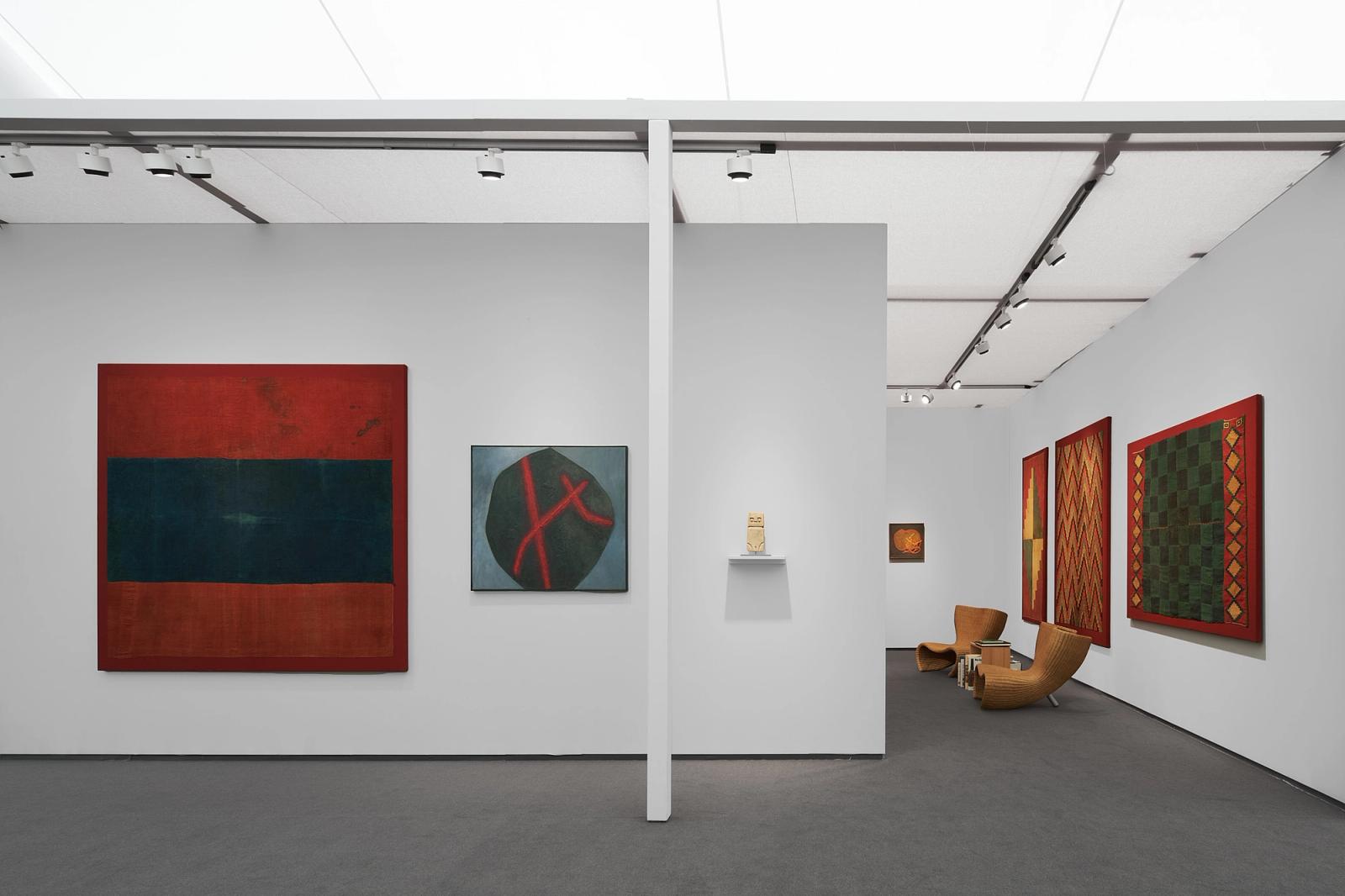
Of course, none of this comes together without the right venue. I've known this chapel for five years. It was a deserted chapel before that; it belongs to the Duke of Somerset's estate, and before that, I understand, it was a community school, and before that again, a functioning chapel, since around 1848. Having known this space for so long, and increasingly, as I travel more, thinking about the idea of home, of returning somewhere I feel safe and rested, the idea kept forming in my mind. When I saw the chapel again last year, together with the artists whose work I'd followed and the new pieces I had seen, it all came together at once. I said to myself, and to Paul, that this was the time to do this exhibition: I had always wanted to work with these objects, with this chapel, and with these artists, and it felt like the moment to bring it all together.
BB: Your exhibitions have drawn from ideas which sit beyond the constraints of fine art. What does interdisciplinary thinking allow you to explore?
YL: I'll try to keep this brief. Ultimately, what you make is a reflection of yourself, and I've come to realise that my own way of learning has never been linear. I like to circle around a subject, go deep into it, then step away to explore something else, before coming back to see the same subject with new eyes. You could call it a little dyslexic, but for me, keeping a distance from something lets you see a different side of it. You have to come above the water for ample air before you can dive deep underwater again and feel that sensation of losing your breath. Interdisciplinary thinking, for me, is a way of unsettling my senses and my thinking; it constantly gives me new impulses and motivation to keep learning, and to propose new ways of seeing that not everyone has considered.
I'd also stress that, with current advances in AI, knowledge itself is no longer the scarce resource, access to it has become so manageable, as long as you have the curiosity to explore and ask questions. What matters now is making meaningful connections between different pieces of knowledge, and that is what defines who we are. In the past, people placed a great deal of emphasis on how deeply you could go into a single subject, because that required time, commitment, and resources. Technology has largely removed those barriers. But the human brain is still remarkable in how it bonds things between the gaps, between two seemingly unrelated subjects that somehow connect within our own neural pathways. So interdisciplinary thinking motivates people to keep making new connections within knowledge that, on the surface, everyone already understands. It's how you interpret those connections that brings value to contemporary discourse, and to human history.
Comments
Leave a comment