

Rain hammered onto a dark field in Suffolk. A floral pop-up tent struggled for survival. A graduate suffered inside. If any part of my body touched the walls, water would gush onto me. To sleep, I just had to lie extremely still and wait until the man nearby stopped talking about Boomtown. I was four days into a four-day Ed Sheeran festival where Ed Sheeran played every evening. Needing the money and with nothing else to do, I signed up to work the bar. Strange people were everywhere. One evening, over staff drinks, a man next to me said, “Well some people still think there’s an all powerful being in the sky that solves all their problems,” to which a girl opposite replied, “I’ve had seven strokes and I believe God saved me from the last one.” Silence. What on earth was I doing there? I didn’t want any new friends and the fee was dreadful. How was this getting me nearer to the career of my dreams?
“What on earth was I doing there? I didn’t want any new friends and the fee was dreadful. How was this getting me nearer to the career of my dreams?”
At university I had made my choice. I was going to be a writer. In other disciplines I copied and emulated people I admired, but in writing I sounded like myself. It represented the quickest route to honesty, and honesty was originality. I called that my ‘honesty theory’ and started building a portfolio. Ideally I’d write about art, but any culture would do, so I wrote exhibition reviews, theatre reviews, travelogues, and interviews for various non-paying websites. In my third year I started an ill-fated arts magazine, and then I graduated. At home, I decided to put my money where my mouth was. Armed with the dangerous combination of arrogance and the belief that my writing was valuable, I tried to make it work
“Armed with the dangerous combination of arrogance and the belief that my writing was valuable, I tried to make it work”
Not long after the Ed Sheeran festival, I was invited for a meeting with an arts listings app. The app had an editorial section and I thought I could write something for them. They did too. I arrived at their east London office and was ushered into a small white room. The bosses stood behind standing desks, coding. I wondered whether this was what art businesses were now, clinical code-machines. They laid out what they were willing to offer me: An editorial internship where I wrote them a monthly 3,000 word essay on a subject of their choosing. It was unpaid, they said, but it may develop into something paid if they liked what I’d done. I said yes. Over the next few weeks, the 0p per word fee dawned on me and I became furious. I sent an email telling them I was above working for nothing.
“Over the next few weeks, the 0p per word fee dawned on me and I became furious.”
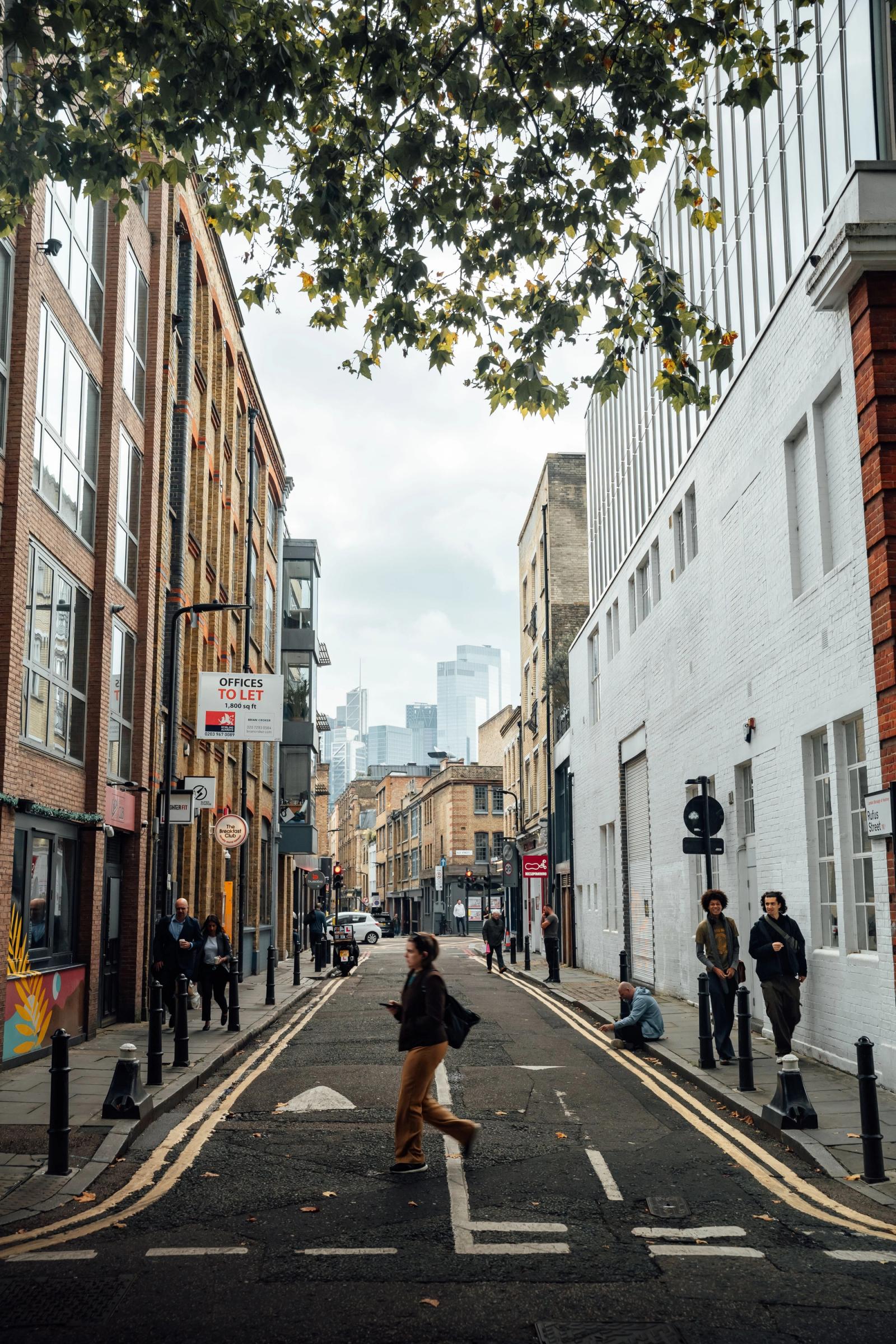
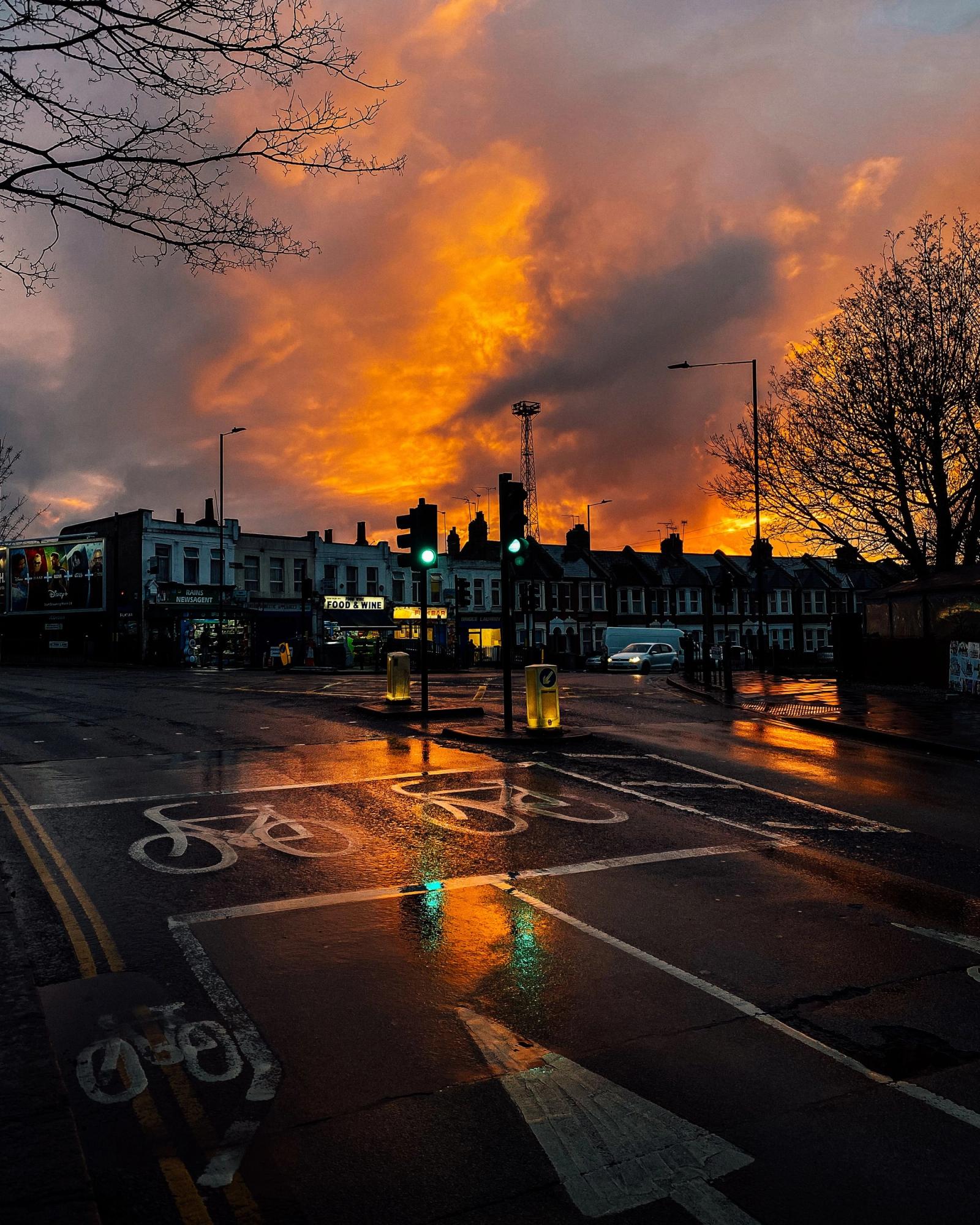
An East London street. Miguel González, 2024
Believing my own hype, I turned to the other extreme. The husband of someone I’d met at a private view was a founding partner of a serious new media venture, and he’d agreed to meet with me. I believed he’d offer me a job, but he forgot to tell me their address so I went to the central London address I saw listed on their Companies House page. I arrived on time and greeted a receptionist who told me I was in the wrong place. This was bad. I felt a career slipping through my fingers. The partner texted me the right address and I began running towards the West End. After flying down busy streets, weaving around cars, knocking over tourists, I eventually arrived at the right place. Slick with sweat, I shook the partner’s hand and crumpled on a chair in a meeting room. We had a brief conversation and he gave me the number of their arts editor, to pitch some articles. Over the phone, she asked me sensible questions I couldn’t answer and rejected all of my ideas.
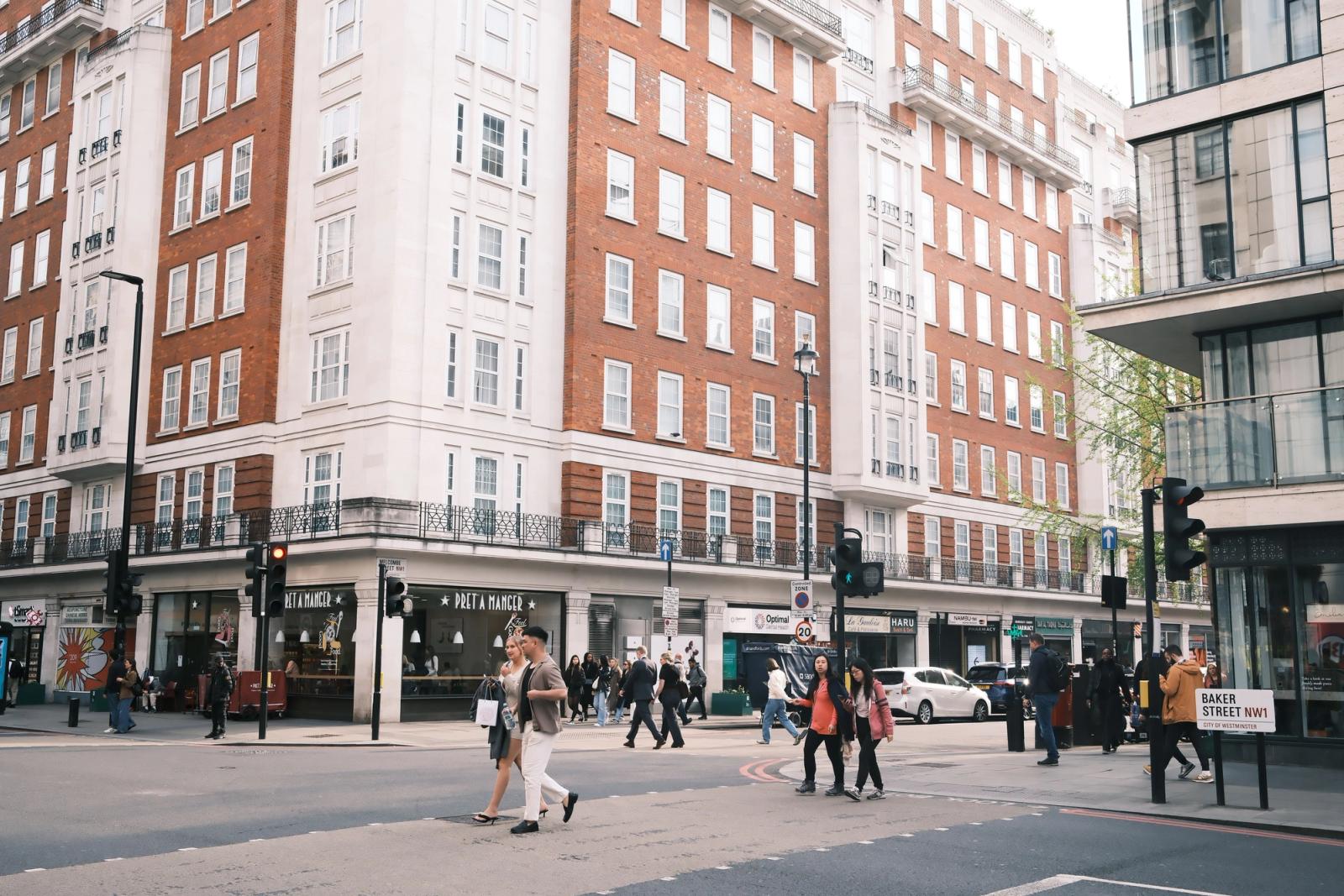
A West End street. Mingyang Liu, 2025
“Slick with sweat, I shook the partner’s hand and crumpled on a chair in a meeting room.”
Weeks were becoming months when I got an interview with an arts publisher. It was a boutique operation in an unfashionable part of south London. I met the owner in his suburban office and chatted away for an enjoyable hour. The interview was going so well that he invited me to his election party. “Back in Greece,” he explained, “we have big parties and drink a lot whether we win or lose.” I was ecstatic. You don’t invite a job candidate to a party if they haven’t got the job. “Bring your friends,” he said, and I invited two. When the evening came around, we walked into an empty room save for the Greek, the couple who lived upstairs, and a stack of frozen pizzas. We were an hour late. No-one else arrived. It became clear that my friends and I accounted for half of the party. We opened a few beers and looked at the big TV. As the results rolled in to reveal an entirely expected crushing defeat, one of my friends began an hours-long argument with my potential future employer and hastily shortened my career in the publishing industry.
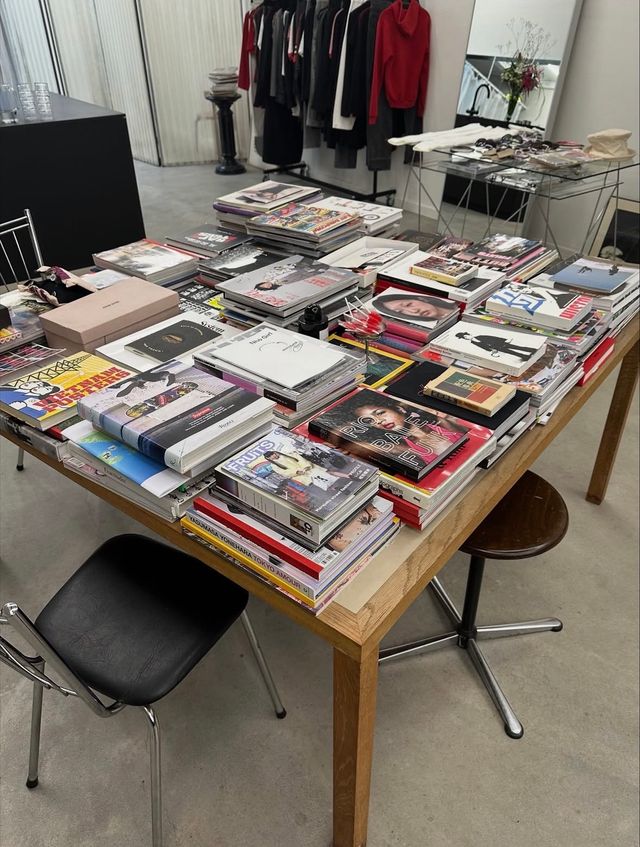
Overcast suburbia. Andrei I, 2021
When I was losing hope, a break presented itself. An embryonic arts magazine, bankrolled by a superstar’s son, was looking for contributing writers. I pitched a series of interviews with London’s jazz scene and soon found myself on the phone with a keyboard player. He talked as he walked from his flat to the street, where I heard tires move across wet tarmac. It was going well. This was more like it. But there was a problem. I was using my sister’s phone to record, unaware that we shared a cloud storage account. When the interview ended, I sent the recording to myself and permanently deleted it from Izzie’s phone. When I opened my phone to start transcribing, the recording was gone. Nowhere. It no longer existed. I slammed my fist on the desk once or twice. The resulting article read as a curious approximation of an interview, with quotes around sentences I was pretty sure he said.
“The resulting article read as a curious approximation of an interview, with quotes around sentences I was pretty sure he said.”
A new year was about to dawn when I saw something both encouraging and familiar. I had been scrolling through an arts jobs website and my eyes rested on the words “Editorial Internship, paid opportunity.” Excited, I clicked and kept reading. Though it was a full-time minimum wage job, it represented a start in the art world. I soon began to frown. The job would include writing a monthly 3,000 word essay on a subject of their choosing. This was, I realised, the paid version of the job I made a point of turning down a few months earlier. I could’ve cried. My application was not successful.
Comments
Leave a comment